


Think of calming chews less like a heavy-duty prescription and more like a soothing cup of chamomile tea for your dog. They’re nutritional supplements formulated with natural ingredients designed to gently take the edge off common stressors – think separation anxiety, fireworks, or trips to the vet – without making your dog drowsy.
Understanding How Calming Chews Support Your Dog
It’s a helpless feeling watching your dog pant and pace during a thunderstorm or start whining the second you reach for your keys. Calming chews are designed to be a supportive tool in these very moments. Their goal isn't to sedate your dog, but to promote a natural sense of ease, helping to dial down the intensity of their anxiety without changing their wonderful personality.
So, how do they actually work? These supplements use specific ingredients that support a healthy nervous system. Some might help the brain produce more serotonin, the natural "feel-good" chemical, which helps stabilise their mood. The aim is simply to create a calmer state of mind, making it easier for your dog to cope with tricky situations and even engage better with training.
A Gentle Aid, Not a Quick Fix
It’s really important to have the right expectations. Calming chews aren't a magic wand that will instantly resolve deep-seated anxiety. They're one piece of a much larger puzzle.
- Situational Support: For predictable events like car journeys or Bonfire Night, giving a chew beforehand can help keep your dog from getting overwhelmed.
- Daily Wellness: If your dog struggles with ongoing issues like separation anxiety, daily use can help build up a foundation of emotional resilience over time.
- A Training Partner: A less anxious dog is a much better learner. These chews can make behavioural training more effective by helping your dog stay focused and calm enough to absorb what you’re teaching them.
A common worry is that calming aids will make a dog sluggish or lethargic. A well-formulated calming chew should simply reduce anxious behaviours, allowing your dog to stay alert, playful, and engaged – just a more relaxed version of themselves.
It’s no surprise that owners are looking for proactive ways to support their pets' well-being. The UK pet calming-products market hit around £600 million in 2022, and it’s still growing. This trend really shows a shift towards using vet-formulated, science-backed supplements as part of a daily welfare routine, especially for dogs living in busy urban environments.
Ultimately, by helping foster a more balanced emotional state, calming chews for dogs lay the groundwork for a happier, more confident companion. They can empower your dog to navigate the world with a little less fear, which only strengthens the incredible bond you share. If you're exploring different ways to help your pet, you might find our guide on supplements for dogs with anxiety helpful.
The Natural Ingredients That Promote Calmness
To really get to grips with how calming chews work, you have to look past the clever packaging and delve into the natural ingredients inside. These aren't just random additives; they're compounds chosen specifically to work with your dog’s own biology to foster a sense of well-being. Think of a well-made chew like a skilled orchestra, where each ingredient plays its part to create a harmonious, calming effect.
Instead of just sedating your dog, these ingredients support the body’s natural stress-management systems. They help rebalance the nervous system, making it far easier for your dog to cope with frightening situations like fireworks, trips to the vet, or being left on their own. Let’s take a closer look at some of the most effective and scientifically-backed calming agents you'll find in high-quality chews.
L-Tryptophan: The Mood Stabiliser
You’ve probably heard of L-tryptophan in connection with that sleepy feeling after a big turkey dinner, but its role in promoting calmness is much more sophisticated than that. It’s an essential amino acid, meaning your dog’s body can't make it, so it has to come from their diet.
In a calming chew, its main job is to act as a building block for serotonin. Serotonin is a vital neurotransmitter, often called the brain's "feel-good" chemical, and it’s a key player in regulating mood, sleep, and even appetite.
By providing the raw material for serotonin, L-tryptophan helps to stabilise your dog's mood, which can reduce anxiety and aggression without making them drowsy. This makes it a fantastic foundational ingredient for managing more persistent, generalised anxiety.
L-Theanine: The Focus Promoter
Found naturally in green tea leaves, L-theanine is another powerful amino acid that works directly on the brain. It has an impressive ability to increase the levels of calming neurotransmitters like GABA (gamma-aminobutyric acid) and dopamine, while at the same time turning down the "excitatory" brain chemicals that fuel stress and anxiety.
You can almost picture L-theanine as a volume knob for your dog’s anxious brain signals. It helps to reduce the intensity of fear and panic without dulling their personality or energy.
One of the standout benefits of L-theanine is its knack for promoting a state of alert relaxation. This means your dog can feel calm yet stay focused—incredibly useful during training sessions designed to overcome fear-based behaviours.
This diagram shows how these ingredients work in concert to reduce stress, improve coping skills, and support your training efforts.
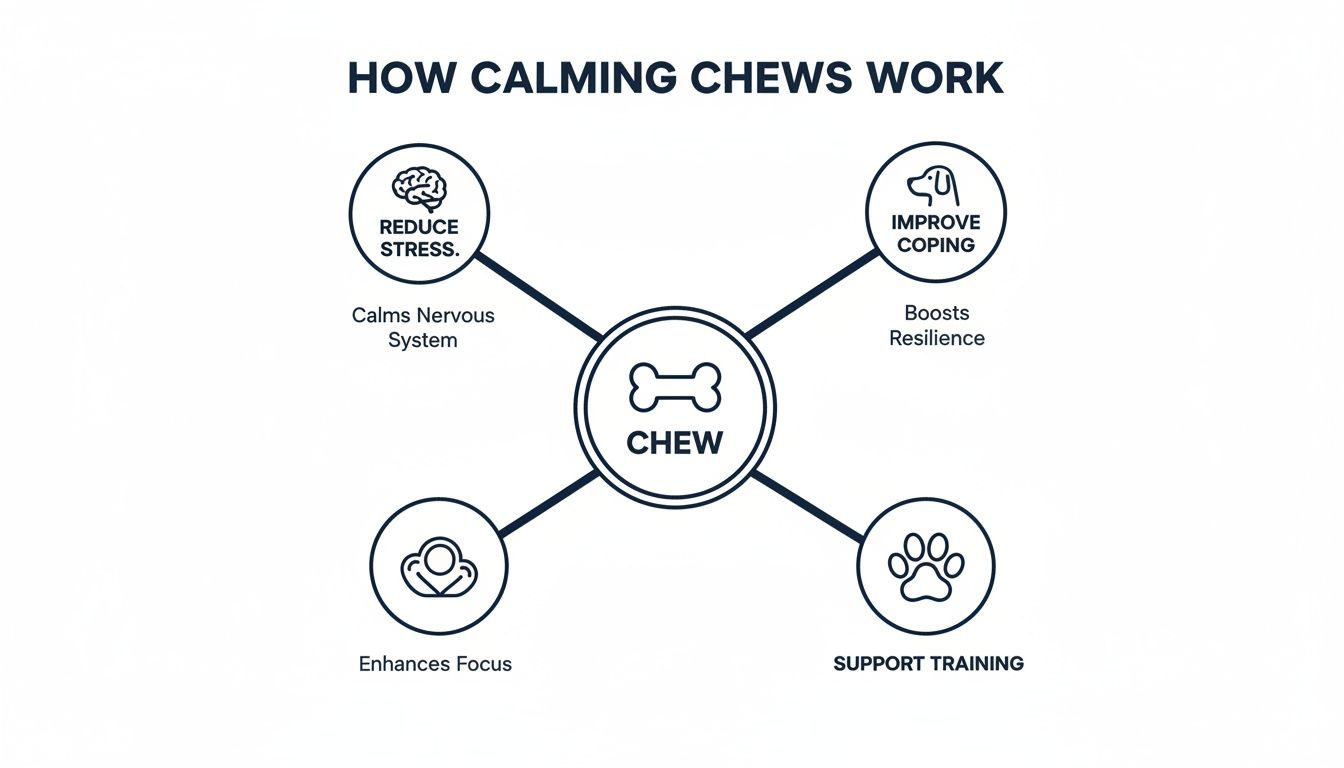
As you can see, the goal of a great calming chew is to provide multi-faceted support, tackling both the emotional and behavioural sides of anxiety.
Herbal Heroes: Chamomile and Valerian Root
Herbal remedies have been trusted for centuries to soothe nerves, and it turns out their benefits extend to our canine friends, too. Two of the most common and effective herbs you'll find in calming chews are chamomile and valerian root. You can learn more about the wider world of herbal dog calmers in our detailed guide.
- Chamomile: This gentle flower contains compounds like apigenin, which binds to specific receptors in the brain to reduce anxiety and bring on a mild calming effect. It's especially good for settling an upset stomach, which often goes hand-in-hand with stress.
- Valerian Root: Known for its mild sedative properties, valerian root is excellent for dogs who struggle to settle or get restless. It works by boosting GABA levels in the brain, helping to quieten an overactive nervous system.
These herbs add a gentle, soothing layer of support, making them a perfect fit for managing specific, stressful situations.
The Power of a Synergistic Blend
The real magic of the best calming chews for dogs lies in the thoughtful combination of these ingredients. A premium formula doesn't just toss a few herbs into a mixer; it creates a synergistic blend where each component enhances the effects of the others.
For instance, L-tryptophan lays the groundwork for a stable mood, L-theanine dials down acute anxiety, and chamomile helps soothe both the mind and the body. This multi-pronged approach ensures your dog gets comprehensive support, helping them feel more secure and confident every day. It’s this balanced formulation that separates a truly effective supplement from a simple treat.
How to Choose a Safe and Effective Calming Chew
Walking down the pet aisle or browsing online, you’re faced with a dizzying number of options. So many brands, so many promises. How do you sort through it all to find a calming chew that’s not only safe but will actually work for your dog?
Let's cut through the marketing noise. Here’s a straightforward guide to help you pick a high-quality product you can feel good about giving your furry friend.
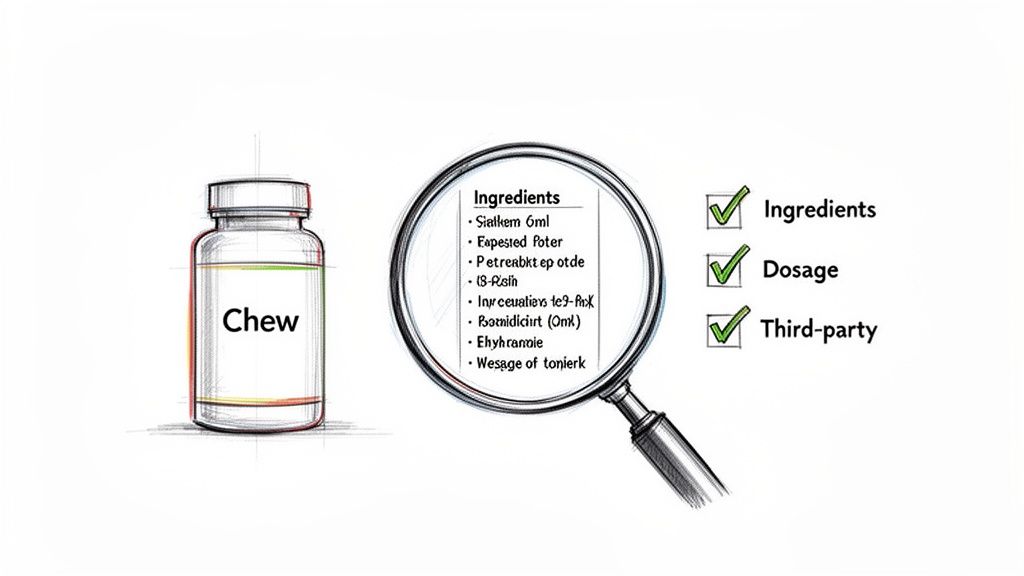
It all starts with becoming a bit of a detective and learning to read the label properly. A brand that’s truly proud of its product will make it easy for you to see exactly what’s inside.
Look Closely at the Ingredients
First things first, flip the packet over and read the ingredient list. Vague phrases like “proprietary blend” are a bit of a red flag. This can be a way for companies to avoid telling you how much of each active ingredient is in the chew, making it impossible to know if the dose is even effective.
What you want to see is a clear, specific list of ingredients with their quantities. Look for names you recognise from our earlier discussion—things like L-tryptophan, L-theanine, and gentle herbs like chamomile.
Pay just as much attention to what’s not on the list. The best formulas steer clear of:
- Artificial Fillers: Things like corn, soy, and wheat that are often just used to bulk up the product without adding any real value.
- Artificial Colours and Flavours: Your dog really doesn't care what colour their chew is. Natural flavours are always a better bet.
- Harsh Preservatives: Look for natural alternatives to keep the chews fresh and safe.
Prioritise Independent Testing and High Manufacturing Standards
A company can say anything it wants about its own product, but independent verification is what really counts. This is where third-party testing comes in, and it's a huge marker of quality. It means an outside lab has checked the product for purity and potency, making sure it’s free from nasty contaminants like heavy metals or pesticides.
Think of third-party testing as an impartial quality control check. It confirms that what's on the label is actually what's in the chew, giving you confidence in the product's safety and integrity.
Where the chews are made is also a big deal. Products made in certified facilities, especially those following the strict quality control found in European manufacturing, are a great sign. It means every single batch is produced to the highest possible safety standards. Our guide to vet-recommended dog chews dives deeper into these quality indicators if you want to learn more.
A Quality Checklist for Your Dog's Calming Chews
When you're trying to decide, it can be helpful to have a quick checklist. Use this table to easily compare different products and make sure you're choosing a safe, high-quality option for your dog.
| Quality Check | What to Look For | Why It's Important |
|---|---|---|
| Clear Ingredient List | Specific, active ingredients listed with their exact quantities per chew. | Vague "blends" hide dosages, so you can't be sure if the chew is effective or even safe. |
| No Nasty Additives | A formula free from artificial colours, flavours, and unnecessary fillers like corn or soy. | Your dog doesn’t need synthetic additives. A clean formula focuses on what works. |
| Vet-Approved Formulation | A mention that the product was formulated or approved by veterinarians. | This shows the ingredients and dosages are grounded in science and chosen for canine health. |
| Third-Party Lab Testing | A certificate or statement confirming independent testing for purity and potency. | It’s your proof that the chew is free from harmful contaminants and contains what the label claims. |
| Clear Dosing Instructions | Dosage guidance that is precise and based on your dog's weight. | "Give 1-2 chews" isn't helpful. Proper dosing is crucial for the product to work effectively and safely. |
| High Manufacturing Standards | Made in a certified facility, especially one that meets European standards (e.g., GMP-certified). | Guarantees that every batch is made with consistent quality and safety controls. |
By keeping these points in mind, you can confidently choose a product that will genuinely support your dog.
Look for Clear Dosage and Professional Formulation
A reliable calming chew is almost always formulated with expert input. Look for brands that mention their formulas are vet-approved, as this tells you the ingredients and doses are backed by science and designed with a dog’s well-being in mind.
The packaging should also have clear, simple instructions on how many chews to give based on your dog's weight. Anything vague is a sign to be wary. Getting the dose right is key for both safety and results, so stick with brands that provide that clarity.
Ultimately, arming yourself with this knowledge lets you see past the flashy marketing. You can make a choice based on transparency, quality, and real science. Selecting the right calming chew is a big part of supporting your dog’s well-being, ensuring they get gentle, safe, and effective help when they need it most.
Getting the Most Out of Calming Chews
So, you’ve picked out a high-quality calming chew and you're ready to see it work its magic. But to get the best results, it’s not just about what you give, but how and when you give it. These supplements aren’t a magic wand; their success really hinges on smart timing and the right dose for your individual dog.
Think of it this way: you wouldn't take a painkiller after the headache is gone. The same logic applies here. Getting the timing and amount just right is what makes all the difference.
The first port of call is always the product label. Any good brand will give you clear, weight-based instructions. This isn’t just a suggestion—it's your essential starting point to make sure your dog gets a safe, effective amount of the active ingredients.
Finding the Right Dose for Your Dog
Every dog is different. Just like people, they have their own unique metabolism and sensitivity levels. While the packaging provides a solid guideline, you might need to make small tweaks to find what works best for your companion. It’s always a smart move to start with the lowest recommended dose for your dog’s weight and just watch how they respond.
This 'start low, go slow' approach lets you gauge their reaction without giving them more than they need. If you notice a positive change but think there's room for improvement, you can then gradually increase the dose, always staying within the recommended daily maximum.
Here’s a simple breakdown for figuring out the right amount:
- Stick to the Weight Chart: Use the manufacturer's guidelines as your foundation. They’ve done the research.
- Start Low and Go Slow: Begin with the minimum suggested amount for their size. Give it a few days to see the effects before you consider increasing it.
- Watch and Learn: Pay close attention to your dog. Are they a bit more settled? Less reactive? These observations are your best guide for fine-tuning the dose.
Situational Stress vs. Daily Support
How you use calming chews for dogs really comes down to the kind of anxiety you’re trying to manage. Are you dealing with predictable, one-off events, or is it a more constant, underlying nervousness?
The secret to success is being proactive. Calming chews aren't an instant fix; they work by giving the natural ingredients time to get into your dog’s system and gently take the edge off before the stress really hits.
For those known triggers—think vet appointments, car trips, or the dreaded Bonfire Night—timing is crucial. Giving the chew 30-60 minutes before the event usually hits the sweet spot. This gives those active ingredients enough time to be digested and start working their calming wonders, helping your dog feel more prepared to cope.
For more generalised issues like separation anxiety or a constantly nervy disposition, a daily routine is often the better path. Providing a chew every day helps maintain a consistent, stable level of the calming ingredients. This builds a kind of emotional foundation, helping to balance their mood and lower their overall anxiety long-term. In this case, the chew becomes less of a quick fix and more of a cornerstone of their daily wellness, fostering a lasting sense of calm and security.
Combining Calming Chews with Behaviour Training
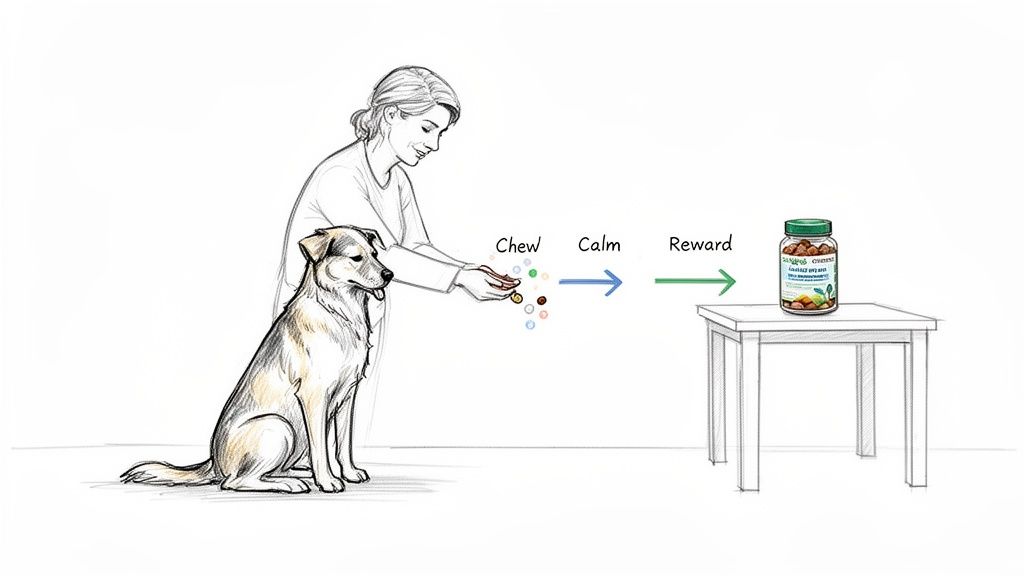
If you see calming chews as a magic bullet, you're missing their true potential. The best way to help an anxious dog is to think of these chews not as a quick fix, but as a powerful ally that makes your training efforts much more effective.
The logic is simple: a calmer dog is a more trainable dog. When a dog is swamped by fear or stress, their brain is in full-on "fight or flight" mode. It's nearly impossible for them to learn new, positive ways of coping when all they can think about is surviving a perceived threat.
A calming chew can gently dial down that stress, bringing your dog back below their anxiety threshold. This opens up a crucial window of opportunity where they're finally relaxed enough to listen, focus, and actually absorb the lesson you're trying to teach.
Creating a Receptive Mindset for Training
Positive reinforcement is the cornerstone of modern dog training, but it only works if your dog is in a headspace to make good choices. An anxious dog simply can't get there on their own. This is where a well-timed calming chew can completely change the dynamic of a training session.
It helps them switch from reacting emotionally to thinking a bit more logically. Instead of panicking at the sight of another dog, they might be calm enough to look to you for guidance, giving you the chance to reward that calmer behaviour.
This creates a brilliant positive feedback loop:
- The Chew Reduces Initial Anxiety: This makes your dog less likely to have a knee-jerk reaction to a trigger.
- The Dog Can Focus on Training: Now they can actually engage with you and learn the new behaviour you want.
- Positive Reinforcement Builds Confidence: Rewarding them for being calm teaches them that good things happen when they don't panic.
- New Habits Form: Over time, this process helps rewire their brain, turning that scary trigger into something that predicts a positive outcome instead of fear.
Think of it like this: trying to teach a terrified dog is like trying to have a serious conversation in a loud, chaotic nightclub. A calming chew helps to turn down the music, so clear communication and real learning can finally happen.
This synergy is incredibly useful for specific training goals. For instance, giving a chew before working on getting them used to loud noises (like traffic) can stop them from getting overwhelmed. It can also help a dog settle during crate training, slowly turning the crate from a scary box into a safe den.
Practical Tips for Integrating Chews and Training
To get the best results, timing and consistency are everything. You need a simple, repeatable plan that directly connects the calming effect of the chew with your training. This is how your dog builds a strong, positive association.
Here’s a straightforward approach for combining calming chews for dogs with your behaviour plan:
- Plan Ahead: Know exactly what you want to work on. Is it reacting to the lead? Fear of visitors? Have a goal in mind.
- Time It Right: Give the calming chew about 30-60 minutes before you start the training session. This gives the active ingredients enough time to get to work.
- Keep Sessions Short and Sweet: Begin with very brief, low-pressure training sessions. The aim is to always end on a high note, well before your dog has a chance to get stressed.
- Be Generous with Rewards: Use high-value treats and lots of praise to reward every tiny step in the right direction. You're reinforcing the calm behaviour you want to see more of.
By pairing the physiological support of a calming chew with the psychological support of positive training, you're creating a complete strategy. This not only makes your training more successful but also deepens the trust and strengthens the bond you share, helping your dog become a happier, more confident companion.
Got Questions? We've Got Answers
Even after getting the full picture of what calming chews are and how they work, it's completely normal to have a few more questions pop up. You're trying to do the absolute best for your dog, and that means being 100% confident in your choices.
Here, we'll tackle the most common queries we hear from dog owners just like you, with direct and straightforward answers to clear up any lingering doubts.
Are Calming Chews Safe to Use Every Day?
Yes, for most dogs, high-quality calming chews are designed to be perfectly safe for daily, long-term use. Unlike strong prescription sedatives, these chews work by gently supporting your dog’s natural ability to manage stress. They are formulated to be non-addictive and easy on their system.
In fact, for dogs dealing with ongoing issues like separation anxiety or general nervousness, daily use is often the best approach. It helps maintain a steady level of the active ingredients in their system, building a reliable foundation of calm. Just be sure to stick to the recommended dose for your dog's weight. And of course, if your companion has any health conditions or is on other medication, it's always smart to have a quick chat with your vet first.
How Long Does It Take for Calming Chews to Work?
How quickly you'll see a difference really depends on what kind of anxiety you're tackling. Think of it in two ways: immediate support for specific events and long-term balance for everyday worries.
- For predictable stress (like fireworks or a car ride): You'll want to give the chew about 30 to 60 minutes beforehand. This gives those natural ingredients enough time to get to work and promote a sense of calm before the stressful thing actually starts.
- For general anxiety: When you're dealing with a more constant state of worry, consistency is your best friend. You might notice small, positive shifts in your dog's mood within a few days, but the real, lasting benefits often become clear after 2 to 4 weeks of daily use. This is because the ingredients are gradually helping to regulate their system for more consistent emotional balance.
Can I Give These to My Puppy?
That's a great question, and the answer is a firm "it depends" on the specific product and your puppy's age. Many premium calming chews are safe for puppies, but usually only once they're over 12 weeks old. It is absolutely crucial to check the product label for specific age and weight instructions before giving any supplement to a young dog.
A puppy’s body is still growing, and their little systems are far more sensitive. For this reason, you should only ever use products that are explicitly marked as safe for their age group. Always start with the lowest possible dose and keep a close eye on how they respond.
When it comes to puppies, a quick call to your vet is especially important. They can help you decide if a supplement is the right choice for your pup's individual health and development.
Will Calming Chews Make My Dog Drowsy?
No, a well-made calming chew shouldn't knock your dog out or act like a sedative. The whole point is to ease their anxiety and help them relax, not make them lethargic. When given the right dose, your dog should just seem calmer and less bothered by their triggers, all while keeping their normal energy and spark.
Think of it like this: the chews are meant to turn the 'volume' down on their anxiety, not switch off the 'lights'. Your dog should still be your happy, playful companion—just a less worried version. If you ever notice them seeming unusually sleepy, it could be a sign the dose is a bit too high for their metabolism, so try scaling it back.
What if the Chews Don't Seem to Be Working?
If you've been giving the chews consistently for over a month and aren't seeing the results you hoped for, don't worry. There are a few things to consider. First, double-check that you're following the weight-based dosage guidelines correctly. Sometimes, a tiny adjustment is all it takes.
Next, remember that chews work best when they're part of a bigger plan. They help create a calmer, more receptive mind for learning, but they aren't a magic wand. For the best results, pair them with positive, patient behaviour training that addresses the root cause of the fear.
Finally, every dog is an individual. While these natural ingredients help the vast majority of dogs, they might not be the perfect fix for every single one. If you've tried adjusting the dose and combining it with training with no luck, a chat with your vet can help you explore other options tailored to your dog's unique needs.
At Tipaw, we believe a calmer dog is a happier dog. Our vet-approved, natural calming chews are formulated in Europe to the highest quality standards, providing a safe and effective way to support your companion's emotional well-being. Make stressful days a thing of the past and discover a more peaceful life together.


