


It’s heartbreaking to see your dog in distress. Whether it's the startling boom of fireworks or the quiet panic that sets in when you pick up your keys to leave, you just want to help them feel safe. It’s no wonder so many UK dog owners are now looking into herbal dog calmers as a more natural way to soothe their companion’s frayed nerves.
Why UK Pet Owners Are Choosing Herbal Dog Calmers
Watching a dog you love struggle with anxiety is tough. The constant pacing before a car journey, the shaking during a storm, or coming home to find they’ve chewed the furniture out of sheer panic—these are all signs of a truly distressed animal. In search of a solution, many are looking for gentler, more proactive ways to support their dog's emotional health.
This is where herbal calmers fit in. Before jumping to strong prescription medications, many owners are drawn to plant-based supplements that offer a softer approach. It's helpful to think of them less as a magic 'cure' and more like a comforting cup of chamomile tea for your dog—a natural boost to help them cope, often without the heavy side effects.
A Growing Trend Rooted in Real Need
The move towards natural pet solutions isn't just a fad; it’s a response to a very real and growing problem. Our modern lifestyles, especially shifts during the pandemic, have thrown a spotlight on just how common anxiety is in dogs. One UK survey revealed that a massive 73% of dog owners said their dogs showed signs of separation anxiety.
This has created a real need for effective, accessible calming aids and has helped drive the UK's pet care market, now valued at around £6.8 billion. Products like chews and supplements made with chamomile and valerian are flying off the shelves. You can dive deeper into the data on the UK's growing pet calming market to see the full picture.
This widespread issue has pushed owners to become more educated about their options. They're seeking out products that fit into a more holistic view of their dog’s health, focusing on overall wellness rather than just masking symptoms.
The Appeal of a Natural Approach
So, what’s the big draw for herbal options? When you talk to dog owners, a few key benefits come up again and again:
- Gentle on the System: Many natural ingredients are well-tolerated by dogs, which is a huge plus if you're looking for something you can use regularly under your vet's supervision.
- Fewer Side Effects: Compared to some pharmaceuticals, well-formulated herbal calmers are less likely to cause heavy drowsiness or make your dog seem 'out of it'.
- Proactive Support: They’re great for managing both low-level, everyday anxiety and for getting ahead of predictable triggers, like an upcoming vet visit or a long car ride.
Ultimately, choosing a herbal calmer is about providing gentle, supportive care that feels both effective and right for your dog. It gives you a way to help your anxious friend face stressful moments with a bit more confidence, making life better for you both.
A Closer Look at the Most Effective Calming Herbs for Dogs
When you start exploring herbal dog calmers, the ingredient list can look a bit daunting. With so many different plants and extracts, how do you know what actually works and what’s just filler? The secret is understanding that the best formulas aren’t just a random assortment of herbs; they contain specific ingredients chosen for their proven, natural calming properties.
Many of these herbs work by gently supporting the brain’s own calming pathways. Imagine your dog's nervous system is like a busy motorway. Sometimes, things get a bit too fast and frantic, with the 'accelerator' (excitement, fear) pressed to the floor. Certain herbs help the body produce more of a neurotransmitter called GABA (gamma-aminobutyric acid), which acts like a natural 'brake pedal', gently slowing down the traffic in the brain and restoring a sense of balance.
This is all about using a gentle, plant-based solution as a bridge to help an anxious dog feel more secure and content.
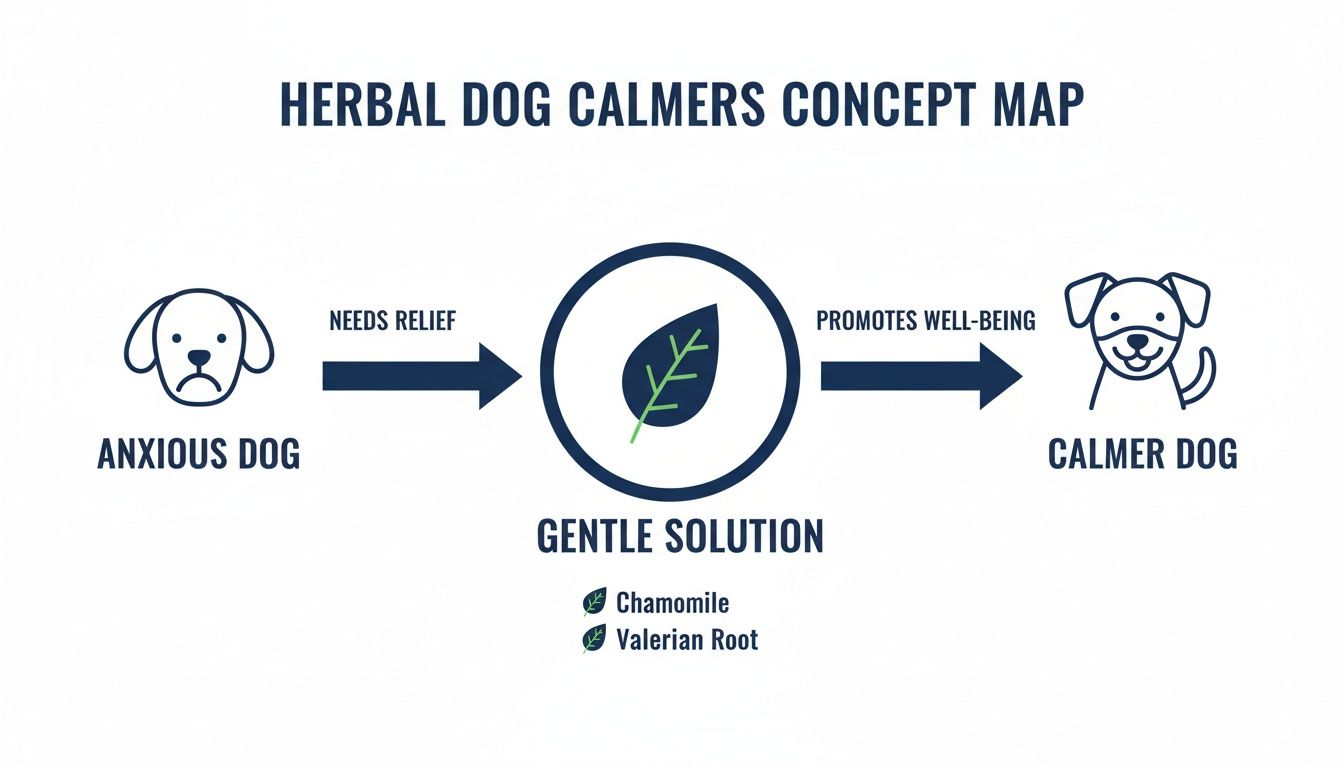
Let’s dive into some of the most common and effective herbs you'll come across in high-quality supplements.
Chamomile: The Gentle Soother
When you think of a calming cup of tea, chamomile is probably the first thing that pops into your head. It has a very similar gentle, soothing effect on our dogs, too. This small, daisy-like flower has been a go-to mild relaxant for centuries.
The magic lies in a compound called apigenin, which binds to specific receptors in the brain to create a subtle calming sensation. This makes it a fantastic choice for dogs with mild, general anxiety or those who just find it hard to switch off at night. It's often the perfect starting point if you're new to herbal support.
Valerian Root: The Nervous System Regulator
Now we’re moving onto something a bit more potent. Valerian root is often called upon for more moderate anxiety, especially the kind triggered by specific events like fireworks, thunderstorms, or a trip to the vet. Its earthy smell might not be our cup of tea, but for many dogs, it’s incredibly effective.
The active compounds in valerian root help increase the brain's levels of GABA. As we know, GABA is the "brake pedal" neurotransmitter that quiets down over-excited nerve cells, bringing about a feeling of relaxation.
Key Insight: Unlike some heavy sedatives that can leave a dog groggy, valerian root works by helping to regulate the entire nervous system. This can be brilliant for reducing restless pacing and other nervous behaviours. It often works best when given for a few days leading up to a known stressful event.
It’s worth noting that for a very small number of dogs, valerian can have the opposite effect and be stimulating. This is a great reminder of why it’s so important to "start low and go slow" with any new supplement.
Passionflower: The Stress Reducer
Passionflower is another fantastic herb that’s particularly good at taking the edge off for dogs who get wound up easily. You'll often see it blended with chamomile and valerian to create a well-rounded, synergistic calming effect.
Just like valerian, passionflower works its magic by boosting GABA levels in the brain, helping to quieten an overactive, worried mind. Its main benefits are:
- Easing Nervous Tension: It’s great for dogs that show physical signs of stress, like trembling or panting.
- Encouraging Relaxation: It helps dogs relax without causing heavy drowsiness, making it useful for daytime support.
- Aiding Behavioural Training: By lowering a dog's anxiety threshold, it can make them much more receptive to training and behaviour modification work.
Lemon Balm: The Mood Lifter
Part of the mint family, lemon balm has a lovely, citrusy scent and is known for its ability to soothe stress and gently lift the mood. While it's a milder herb, its effects can be really noticeable for dogs who struggle with situational worries.
Lemon balm has a clever dual action: it helps reduce levels of cortisol (the main stress hormone) while also supporting GABA. This approach not only calms the nervous system but also encourages a more positive, less worried emotional state. It's a great option for dogs who get agitated or upset when left alone.
L-Tryptophan: The Serotonin Precursor
Okay, so this one isn't technically an herb, but L-Tryptophan is an essential amino acid you’ll find in almost every top-tier calming formula—and for good reason. You’ve probably heard of it as the compound in turkey that makes you feel relaxed and sleepy after Christmas dinner!
L-Tryptophan is a crucial building block for serotonin, the "feel-good" neurotransmitter that plays a massive role in regulating mood, anxiety, and sleep. When the brain has enough L-Tryptophan, it can produce more serotonin, which helps create a natural sense of well-being and calm. This makes it invaluable for tackling generalised anxiety and stress-related behaviours from the inside out.
To help you keep track, here's a quick summary of these popular calming ingredients.
A Quick Look at Popular Calming Herbs
| Herb | How It Works (Simplified) | Best For (Common Uses) | Typical Format |
|---|---|---|---|
| Chamomile | Contains apigenin, which creates a mild calming effect in the brain. | Generalised anxiety, restlessness, trouble settling at night. | Powders, chews, tinctures. |
| Valerian Root | Increases levels of GABA, the brain’s “brake pedal” neurotransmitter. | Situational stress (vet visits, fireworks), moderate anxiety, restlessness. | Powders, capsules, chews. |
| Passionflower | Boosts GABA to quiet an overactive mind and ease tension. | Nervous tension (panting, trembling), situational anxiety, training support. | Often blended in chews/powders. |
| Lemon Balm | Reduces the stress hormone cortisol and supports GABA. | Agitation, restlessness, separation-related anxiety, mood support. | Tinctures, powders, chews. |
| L-Tryptophan | An amino acid that the body uses to create serotonin (“feel-good” chemical). | Generalised anxiety, stress-related behaviours, mood instability. | Included in most formulas. |
Remember, the most effective supplements often combine several of these ingredients to create a balanced formula that addresses anxiety from multiple angles.
How to Choose a Safe and High-Quality Supplement
Walking down the pet aisle, you're faced with a wall of herbal dog calmers. They all promise a peaceful, happy pup, but how do you know which ones are safe and which are just clever marketing? The secret is to become a savvy pet parent and learn what to look for on the label, beyond the flashy promises.
Choosing the right supplement isn't about grabbing the prettiest packet. It’s about digging a little deeper into the ingredients, checking the manufacturing standards, and understanding the brand's commitment to quality. A little bit of research now means you can feel confident you're giving your dog the very best.

Look for Standardised Extracts
Ever seen the term 'standardised extract' on a supplement and just glazed over it? Don't. It's actually one of the most important things to look for. Think of it like this: a non-standardised supplement might use ground-up valerian root, but the amount of the active calming ingredient could be all over the place. One batch might be super potent, the next might be weak – a bit like making a cup of tea and never knowing how strong it’ll be.
A standardised extract, on the other hand, is your guarantee of consistency. It ensures that every single dose contains a precise, measured amount of the active compound. This means you get predictable results every single time, which is exactly what you need when you’re trying to manage your dog's anxiety safely.
Prioritise Third-Party Testing and Transparency
So, a brand says its product is pure and potent. How can you be sure they're not just saying that? The answer is third-party testing. The best companies voluntarily send their products to an independent lab to be put through their paces. This process confirms a few crucial details:
- Purity: It checks for nasty contaminants like heavy metals, pesticides, or mould.
- Potency: It confirms the product contains exactly what the label says it does. No more, no less.
- Safety: It ensures the supplement is genuinely safe for your dog to consume.
When a brand invests in this kind of testing, they're showing you they have nothing to hide. Look for a quality seal or a statement on their website that mentions it. It's a massive green flag.
The UK's herbal calmer market has grown incredibly fast, which has unfortunately highlighted a few problems with consistency. While ingredients like chamomile and L-theanine are popular, the science often comes from small studies. This has pushed responsible manufacturers to insist on standardised extracts to guarantee every batch is safe and traceable.
Choose Reputable UK-Based Brands
There’s an extra layer of peace of mind that comes from choosing a brand that operates under strict UK and EU manufacturing standards. These regulations are some of the toughest in the world, covering everything from where ingredients come from to the quality of the final product. A company that follows these rules is far more likely to be producing a top-notch supplement.
Plus, a UK or European brand usually means better customer support and accountability. If you have a question, it's much easier to get a straight answer from a company that understands and abides by local regulations. This focus on vet-approved formulas and natural ingredients is central to our philosophy at Tipaw. If you want to dive deeper, you can explore our detailed guide on finding the best calming supplement for your dog.
By keeping these three things in mind—standardised extracts, third-party testing, and a reputable brand—you can cut through the noise and make a choice you feel good about. It's all about empowering yourself to give your anxious dog the safe, effective support they deserve.
Putting Herbal Calmers to Work for Your Dog
Knowing which herbs might help your dog is one thing, but using them effectively is a whole different ball game. It’s not just about tossing your dog a chew and hoping for the best. To see real results, you need to understand your dog as an individual, choose the right product, and introduce it in a way that sets them up for success.
The aim is to build a positive, predictable routine. Think of it as bridging the gap between knowing about calming supplements and making them a genuinely helpful part of your dog's overall behavioural support plan.
Step 1: Play Detective – Know Your Dog’s Triggers and Tells
Before you even think about buying a calmer, you need to put on your detective hat. The first job is to pinpoint exactly what sends your dog’s anxiety levels soaring. Is it the rumble of thunder, the sound of your keys jangling as you prepare to leave, or the doorbell ringing?
Once you know the triggers, you need to learn your dog's specific "tells." Anxiety isn't always loud barking or chewing the furniture. Often, the early warning signs are much quieter.
- Subtle Clues: Look for things like excessive lip-licking, big yawns when they aren't tired, showing the whites of their eyes (often called "whale eye"), or tucking their tail low.
- Obvious Signs: These are the ones you can't miss – restless pacing, panting even when it's not hot, trembling, hiding away, or simply being unable to settle.
Getting good at spotting these signals means you can offer a calming supplement before the panic fully sets in, which is far more effective.
Step 2: Pick the Right Format
Herbal calmers come in a few different forms, and what works best really depends on your dog’s personality and your daily routine. The goal here is to make giving the supplement a completely stress-free experience.
- Chews: This is usually the easiest route. Most are made to taste like a treat, so your dog will happily gobble them down. They’re perfect for fussy eaters or when you need a quick, no-fuss option.
- Oils or Tinctures: Liquids give you fantastic control over the dose. You can measure it precisely and either give it directly or, much more easily, just mix it into their dinner. This is brilliant when you’re figuring out exactly how much your dog needs.
- Powders: Like oils, powders are designed to be sprinkled over food. They can be a great budget-friendly choice, especially if you have a large dog who needs a bigger serving.
If you have a suspicious dog, don't just shove it in their face. Let them have a good sniff first. You could even put a tiny bit on their paw to let them lick it off, helping to build a positive first impression.
Step 3: Start Low and Go Slow
With any new supplement, the absolute golden rule is "start low and go slow." Every dog is different, and what works for one might not work for another. Don't be tempted to jump straight to the maximum dose recommended on the label.
Best Practice: Begin with half, or even a quarter, of the suggested dose for your dog's weight. Stick with this tiny amount for a few days while you keep a close eye on your dog, watching for any changes in their behaviour – good or bad.
This careful, steady approach lets your dog’s body get used to the herbs and helps you find their personal "sweet spot"—the smallest amount that gives them the calming support they need without making them groggy. If you don’t see any difference after a week or so, you can slowly increase the amount, but always stick within the product's guidelines.
This whole process is a journey that takes a bit of patience. For a deeper dive into all the options available, our guide on natural dog anxiety remedies offers more comprehensive insights. Just remember, these supplements are one tool in your toolbox, working best alongside consistent training and a stable, loving environment.
When You Need to Speak with Your Vet
While herbal dog calmers can be a brilliant tool for managing mild to moderate anxiety, they aren’t a cure-all or a substitute for professional veterinary advice. It’s best to think of them as one part of a supportive toolkit, not a standalone fix for every problem. Knowing when to put the supplements aside and pick up the phone to your vet is a crucial part of being a responsible dog owner.
Your vet is your most important partner in your dog's health and happiness. It’s absolutely vital to get a proper veterinary diagnosis to rule out any underlying medical conditions. Things like chronic pain, thyroid problems, or even neurological issues can often look a lot like anxiety on the surface. Without a professional check-up, you risk just masking the symptoms of a more serious problem.
Red Flags That Require a Professional Opinion
Sometimes, a dog's behaviour goes far beyond simple nerves. If you spot any of the following signs, it's a clear signal that you need to book an appointment with your vet or a certified animal behaviourist straight away.
- Sudden or Severe Anxiety: If your usually chilled-out dog suddenly becomes extremely anxious, seemingly overnight, that needs looking into.
- Worsening Behaviours: You've been trying herbal calmers and training techniques, but the anxiety is actually getting worse, not better.
- Aggression: Any kind of aggression—be it growling, snapping, or biting—that stems from fear or anxiety needs immediate professional intervention.
- Destructive or Self-Harming Actions: This can include anything from frantically chewing furniture to self-mutilation like licking or chewing their paws raw.
These behaviours point to a level of distress that gentle herbal support alone just can't fix. For a deeper dive into what to look for, our guide on the common signs of anxiety in dogs is an invaluable resource.
Your vet’s first job is to eliminate any potential medical reasons for your dog's behaviour. Once health issues are ruled out, they can help you build a comprehensive plan. This might involve stronger prescription medication, a referral to a behaviourist, and yes, potentially even vet-approved herbal calmers as part of that bigger strategy.
Ultimately, your vet can give you a proper diagnosis and a structured plan that combines behavioural modification with the right support. Herbal calmers are most effective when they're used alongside this professional guidance, helping your dog feel more secure while you work on the root cause of their anxiety together.
Frequently Asked Questions

When you're exploring herbal dog calmers for the first time, it’s natural to have questions. Let's run through a few common queries to give you the confidence you need to help your anxious dog.
How Long Do Herbal Dog Calmers Take to Work?
The honest answer is, it depends entirely on the ingredients. Some active compounds, like L-theanine or L-tryptophan, get to work quite quickly, often showing an effect within 30 to 60 minutes. This makes them fantastic for predictable stresses, like a vet visit or an approaching thunderstorm.
On the other hand, traditional herbs like valerian root tend to work best with consistent use. Think of them as building up a foundation of calm over several days, offering more stable support for dogs with generalised, day-to-day anxiety. Always read the product label for specific advice.
Can I Give My Dog Herbal Calmers Every Day?
Many herbal formulas are designed to be safe for daily use, which is a real help for dogs dealing with ongoing, low-level stress. But before you make it part of their daily routine, it's absolutely crucial to have a chat with your vet.
Your vet will give you the green light based on your dog's individual health, making sure the supplement is a good fit and won't clash with any other treatments. For specific events like Bonfire Night, you’ll likely only need to use them on an as-needed basis.
A key takeaway is that mild side effects, such as drowsiness or an upset stomach, are most common when a dose is too high. This is why the "start low and go slow" approach is so important. If you notice any concerning reactions, stop and contact your vet immediately.
Are They Safe with Other Medications?
This is a big one, and it's a question that only your vet can answer. Just because something is "natural" doesn't mean it's free from interactions. Certain herbs can interfere with prescription medications, especially sedatives, anti-anxiety drugs, and even some heart medications.
Never mix supplements and prescribed medicines without getting a clear go-ahead from your vet first. Their expertise is the only way to ensure you're keeping your dog safe while managing their anxiety effectively.
For a range of vet-approved, natural supplements designed with your dog's safety and well-being in mind, explore the solutions at Tipaw. Discover our calming formulas and more by visiting our online store.


