


When you're on the hunt for the best salmon oil for dogs, you’re really looking for a pure, potent source of Omega-3s, specifically EPA and DHA. These incredible fatty acids are the key to unlocking better health for your dog, helping to reduce inflammation, create a wonderfully shiny coat, and support their joints and heart.
Why Salmon Oil Is Your Dog's Ultimate Wellness Boost

Think of your dog's daily food as the foundation of their health. If that’s the case, then high-quality salmon oil is the master key that unlocks their full wellness potential. It’s so much more than a simple trick for a shinier coat; it's a powerful supplement that works deep within your dog's body to support their most vital systems.
The secret is in its rich concentration of specific Omega-3 fatty acids. A dog's body can't produce enough of these essential fats on its own, which is why adding a good supplement to their diet is such a game-changer. When you choose the best salmon oil, you're giving them a direct pipeline to these health-boosting compounds.
The Core Benefits of Salmon Oil
The two stars of the show in any good salmon oil are Eicosapentaenoic Acid (EPA) and Docosahexaenoic Acid (DHA). Each has a special job, but they work together to keep your dog feeling their best. Their presence is what makes a supplement truly effective.
Here’s a quick look at what this dynamic duo can do:
- Softer Skin, Shinier Coat: Omega-3s strengthen the skin's natural barrier from the inside out. This helps lock in moisture, reduce dryness, and soothe the kind of irritation that leads to endless itching and scratching. The result? That glossy, healthy coat every dog owner loves.
- Smoother Joints and Better Mobility: EPA is a natural anti-inflammatory. It gets to work calming down inflammation in the joints, which can ease the stiffness and discomfort that comes from an active life or conditions like arthritis.
- A Sharper Mind: DHA is a vital building block for the brain and nervous system. For puppies, it’s crucial for cognitive development, and for senior dogs, it helps keep their minds sharp and engaged.
- A Stronger Heart: These fatty acids are also brilliant for cardiovascular health. They help maintain healthy blood pressure and support a steady, strong heart rhythm.
Adding a quality salmon oil to your dog’s routine isn't just about fixing one problem. You're giving them systemic support that benefits their skin, joints, brain, and heart all at once.
To put it simply, here’s a quick guide to what you can expect from a great salmon oil supplement.
Quick Guide To Salmon Oil Benefits For Dogs
| Area of Benefit | Key Omega-3 Fatty Acid | Observed Improvement |
|---|---|---|
| Skin & Coat | EPA & DHA | Reduced itchiness, less dandruff, and a noticeably glossier coat. |
| Joints & Mobility | EPA | Eases stiffness from arthritis and supports overall joint flexibility. |
| Brain & Cognition | DHA | Supports puppy brain development and helps senior dogs stay mentally sharp. |
| Heart Health | EPA & DHA | Contributes to healthy blood pressure and a steady heart rhythm. |
| Immune System | EPA & DHA | Helps regulate immune responses and reduce chronic inflammation. |
As you can see, the benefits are wide-ranging, touching nearly every aspect of your dog's long-term health and daily comfort.
Why Quality Makes All The Difference
It’s important to remember that not all salmon oils are created equal. Where the salmon comes from, how the oil is processed, and how pure the final product is all dramatically affect its potency and safety. A low-quality oil might have very little of the good stuff or, even worse, could contain harmful contaminants.
This is exactly why Tipaw's commitment to vet-approved supplements is so important. We ensure our formulations provide the right balance of EPA and DHA from clean, pure sources. It’s our way of giving you complete confidence that you're making the best choice for your dog's health and happiness for years to come.
Understanding The Power Of Omega-3s: EPA And DHA
To really get why salmon oil is such a big deal for dogs, we need to look at its star players: Omega-3 fatty acids. The name sounds a bit science-y, but the idea is simple. Think of them as the "good fats" that are absolutely essential for your dog's body to work properly, but which they can't make enough of on their own.
That last part is crucial. Just like we need to get certain vitamins from our food, dogs depend on their diet to get these powerful fats. This is why a top-notch supplement isn't just a nice-to-have; it's a core part of keeping them healthy.
When we talk about the best salmon oil for dogs, we're really talking about two specific Omega-3s: Eicosapentaenoic Acid (EPA) and Docosahexaenoic Acid (DHA). These aren't just any old fats. They're long-chain fatty acids with very specific, very important jobs in your dog's body.
Meet The A-Team: EPA And DHA
Let's get to know what each of these powerhouses actually does. A simple way I like to think about it is like this:
-
EPA is the body's 'firefighter'. Its main job is to create substances that cool down inflammation. If your dog is dealing with achy joints, flaky skin, or allergies, unchecked inflammation is often the culprit. EPA gets to work, helping to dial everything back to a healthy, comfortable level.
-
DHA is the 'master builder'. This fatty acid is a key building block for the brain, central nervous system, and the retina of the eye. For growing puppies, DHA is critical for smarts and good vision. For our older companions, it helps keep their minds sharp and supports cognitive function.
These two work in tandem, creating a powerful one-two punch that supports your dog’s health from nose to tail. From a puppy’s first wobbly steps to a senior dog’s well-deserved rest, EPA and DHA are quietly working in the background.
The real magic of salmon oil is that it's packed with EPA and DHA in a form dogs can actually use. Their bodies can absorb and put these fats to work straight away, making salmon oil much more effective than plant-based sources like flaxseed.
How They Work On A Cellular Level
So, what’s actually happening inside your dog when they get their daily dose? It all goes down at the cellular level. Every single cell in your dog's body is wrapped in a membrane, which acts like a bouncer, controlling what gets in and out.
When your dog digests salmon oil, the EPA and DHA are integrated right into these cell membranes. This makes the membranes more flexible and fluid, which is fantastic for cell-to-cell communication and overall health.
Take joints, for example. This process helps to quieten the pro-inflammatory signals that cause pain and stiffness. In skin cells, it helps fortify the skin's natural barrier, locking in moisture and keeping allergens out. The benefits are widespread because the work is being done at the very foundation of your dog's biology. To dive deeper into this topic, you can find a more extensive overview in our guide to understanding Omega-3 fatty acids supplements for dogs.
This cellular support is exactly why you see such a broad range of benefits from salmon oil. You’re not just masking a symptom; you’re building a healthier dog from the inside out.
How Salmon Oil Transforms Your Dog's Skin And Coat

One of the first things people notice when they start giving their dog salmon oil is the incredible difference it makes to their coat. A dull, flaky coat or itchy skin isn't just a cosmetic issue; it's often a sign that something is off balance internally. This is where Omega-3s get to work, restoring health from the inside out.
Think of your dog’s skin as a brick wall. The Omega-3 fatty acids, especially EPA and DHA, are like the strong mortar holding the bricks together. If that mortar is weak, the wall becomes leaky, letting essential moisture escape and allergens sneak in.
That’s what leads to common problems like dryness, dandruff, and that relentless scratching. By rebuilding this natural barrier, salmon oil helps lock moisture in and shield the skin from irritants in the environment.
Tackling Itchiness And Irritation
Constant scratching is miserable for a dog. It’s a clear sign of discomfort, and salmon oil’s powerful anti-inflammatory properties get right to the heart of the problem.
Rather than just covering up the symptoms, the EPA in the oil helps to calm the inflammatory response that fuels issues like seasonal allergies. Many breeds popular in the UK, from Westies to Labradors, are prone to skin sensitivities, making salmon oil a fantastic, natural way to bring them some relief.
The journey from a brittle, dull coat to a soft, glossy one is often the clearest proof that salmon oil is working. This transformation you can see and feel is a brilliant indicator of your dog's improved health on the inside.
A Real-World Example
Picture a Golden Retriever called Barney who dreads the spring. Every year, he scratches himself raw, leaving his skin red and his beautiful coat looking patchy. His owner decides to try adding a daily pump of high-quality salmon oil to his food.
Within a few weeks, the frantic scratching starts to ease off. The angry redness begins to fade. Fast forward a couple of months, and Barney’s coat isn't just growing back – it’s softer and has a deep, healthy shine it never had before. It's a classic example of the powerful internal work of Omega-3s becoming visible on the outside.
From Dull To Dazzling
A healthy coat isn’t just about looking good; it protects your dog and keeps them insulated. The best salmon oil for dogs nourishes hair follicles at the source, encouraging stronger, healthier growth.
This leads to some brilliant changes you’ll definitely notice:
- Less Shedding: By strengthening each hair at the root, salmon oil can help get excessive shedding under control.
- Richer Colour: The nutrients can make your dog's natural coat colour look deeper and more vibrant.
- Silky Smooth Feel: Improved hydration and stronger hair shafts result in a coat that’s noticeably softer to the touch.
For a well-rounded approach, supporting your dog's skin means providing all the right nutrients. You can dive deeper by reading about the best supplements for dog skin and coat health, which work hand-in-hand with salmon oil. Honestly, seeing that healthy sheen return is one of the most rewarding parts of caring for your dog.
Supporting Strong Joints And Active Mobility
It’s tough for any dog owner to watch their best friend start to slow down. That familiar stiffness after a nap, or a reluctance to jump into the car, are common signs of joint discomfort, especially in older dogs or breeds prone to issues like arthritis. This is where the powerful anti-inflammatory properties of salmon oil really come into their own, offering a natural way to support your dog’s mobility and keep that spring in their step.
Think of your dog’s joints like the hinges on a garden gate. With time and use, they can get a bit creaky and stiff. Inflammation is like the rust that makes things worse, causing pain and restricting movement. The EPA (Eicosapentaenoic Acid) in salmon oil acts like a high-quality lubricant and rust-remover all in one, working to cool that inflammation right at the source.
The results aren't just clinical—they're the kind of changes you can see every day. A dog that used to hesitate before hopping onto the sofa might suddenly do it with confidence. A senior companion who lagged on walks might start pulling on the lead again with renewed excitement. These are the small victories that show their joints are feeling better, letting them move with more freedom and joy.
How Omega-3s Protect And Soothe Joints
The great thing about salmon oil is that it’s not just for managing existing problems. It's a fantastic proactive tool for dogs of all ages. By consistently helping to regulate the body's inflammatory response, Omega-3s support the long-term health of cartilage and the fluid that lubricates the joints.
This is especially important for very active dogs or breeds genetically predisposed to joint trouble. Starting them on a good supplement early can help maintain healthy joint function well into their golden years. The key is consistency. A daily dose builds up the levels of EPA and DHA in their system, creating a constant buffer against inflammation.
In the UK, where family favourites like Labradors and German Shepherds are so common, proactive joint care is a must. According to Vets Kitchen, a respected UK pet health brand, the Omega-3s in salmon oil directly support joint health by reducing inflammation. This is backed by studies showing mobility improvements of up to 40% in arthritic dogs after just 12 weeks of supplementation. With the Kennel Club reporting that over a quarter of UK dogs over eight suffer from joint degeneration, salmon oil is a safe and effective way to provide support, potentially avoiding treatments that can average £500 per year. Find out more about the benefits of salmon oil for dogs on vetskitchen.co.uk.
The Visible Signs Of Improved Mobility
When your dog’s joints feel better, their whole personality can seem to brighten up. The positive impact of the best salmon oil for dogs often shows up in their behaviour and a renewed enthusiasm for the things they love.
Here are a few improvements you might notice:
- More Enthusiasm for Walks: A dog with comfortable joints is more likely to get excited when they see you grab the lead.
- Easier Movement: Getting up from a nap, climbing stairs, or jumping into the car may become visibly less of a struggle.
- Increased Playfulness: You might see a return of those playful bows and a willingness to chase a ball around the garden.
- Better Posture: Less stiffness often leads to a more confident stance, rather than a hunched or guarded posture.
By soothing internal inflammation, salmon oil helps your dog feel more like themselves again. It’s not just about masking pain; it’s about addressing one of the root causes of their discomfort, which leads to a real improvement in their quality of life.
For dog owners looking for a complete joint health strategy, salmon oil is a cornerstone. It also works brilliantly alongside other supportive measures. To learn more about protecting your dog’s joints, check out our guide on choosing the best joint supplement for dogs, which can perfectly complement the benefits of Omega-3s. Ultimately, supporting your dog's mobility means giving them back the joy of an active, happy life.
Boosting Your Dog's Heart and Immune Health From Within
While the glossy coat and easier movement are the benefits you can see, salmon oil is also working its magic behind the scenes, supporting two of your dog’s most vital systems: the heart and the immune response.
Imagine your dog's circulatory system as a complex network of motorways. The Omega-3 fatty acids in salmon oil are like a highly skilled maintenance crew, keeping traffic flowing smoothly and preventing biological traffic jams. This internal support is crucial for long-term health, particularly for breeds that are genetically prone to heart problems.
Keeping the Internal Highways Clear
The Omega-3s in salmon oil, especially EPA and DHA, are real powerhouses for cardiovascular wellness. They help manage triglycerides—a type of fat circulating in the blood—and keep them in a healthy range. This is key to ensuring blood can flow freely, delivering oxygen and nutrients to every part of your dog's body without a hitch.
On top of that, these amazing fatty acids have anti-arrhythmic properties, which is a technical way of saying they help maintain a normal, steady heartbeat. For any dog owner, that’s incredibly reassuring to know you're actively supporting their most important organ.
A Stronger, More Balanced Immune System
A dog's immune system is its personal security detail, always on patrol against illness and infection. For it to work properly, it needs to be balanced. Sometimes, the system can go into overdrive, leading to chronic inflammation, which is the sneaky culprit behind many health issues, from allergies to autoimmune conditions.
This is where the EPA in salmon oil really shines. It helps to regulate the body's inflammatory response, making sure the immune system reacts to genuine threats without overreacting and causing collateral damage.
A well-regulated immune system is the very foundation of good health. By supporting a balanced inflammatory response with Omega-3s, you're helping your dog’s body fend off illnesses much more effectively from the inside out.
This measured approach is fundamental to building your dog’s overall resilience and well-being.
The Evidence for Heart and Immune Support
The science backs this up. Heart health is a growing concern for UK dog owners, with conditions like hyperlipidemia (high levels of fat in the blood) affecting around 12% of middle-aged pets. Research consistently shows that diets supplemented with fish oil can lead to significant reductions in total cholesterol by up to 25%. Pooch & Mutt advises daily feeding based on size to maintain these benefits, while the British Heart Foundation has noted Omega-3's positive anti-arrhythmic effects, which is crucial as 8% of UK dogs face cardiac issues. You can discover more insights about these findings on ncbi.nlm.nih.gov.
Practical Benefits You Can Count On
Adding the best salmon oil for dogs to their daily food offers a powerful one-two punch of cardiovascular and immune support. The benefits are clear and simple:
- Supports Healthy Blood Pressure: Helps keep their entire circulatory system running smoothly.
- Aids in Managing Triglycerides: Keeps blood fats at a healthy, normal level.
- Promotes a Steady Heart Rhythm: A cornerstone of long-term heart health.
- Balances Immune Response: Helps dial down the inflammation that can drive allergies and other conditions.
This dual-action support makes salmon oil one of the most effective supplements you can give your dog for lifelong wellness. It’s not just about fixing a problem today; it’s about building a healthier, more resilient dog for all the years to come.
How To Choose A High-Quality Salmon Oil Supplement
Walking down the pet aisle, you’re faced with a wall of supplements, and almost all of them promise a shinier coat and healthier joints. But when it comes to salmon oil, the promises on the bottle don't always match what's inside. Not all oils are created equal.
Think of it like choosing a good olive oil. You instinctively know that terms like "extra virgin" and "cold-pressed" signal a purer, more beneficial product. The same logic applies here. A little bit of knowledge goes a long way, helping you see past the marketing fluff and find a supplement that will actually make a difference to your dog's health.
This visual guide shows how salmon oil provides foundational support for both heart and immune health.
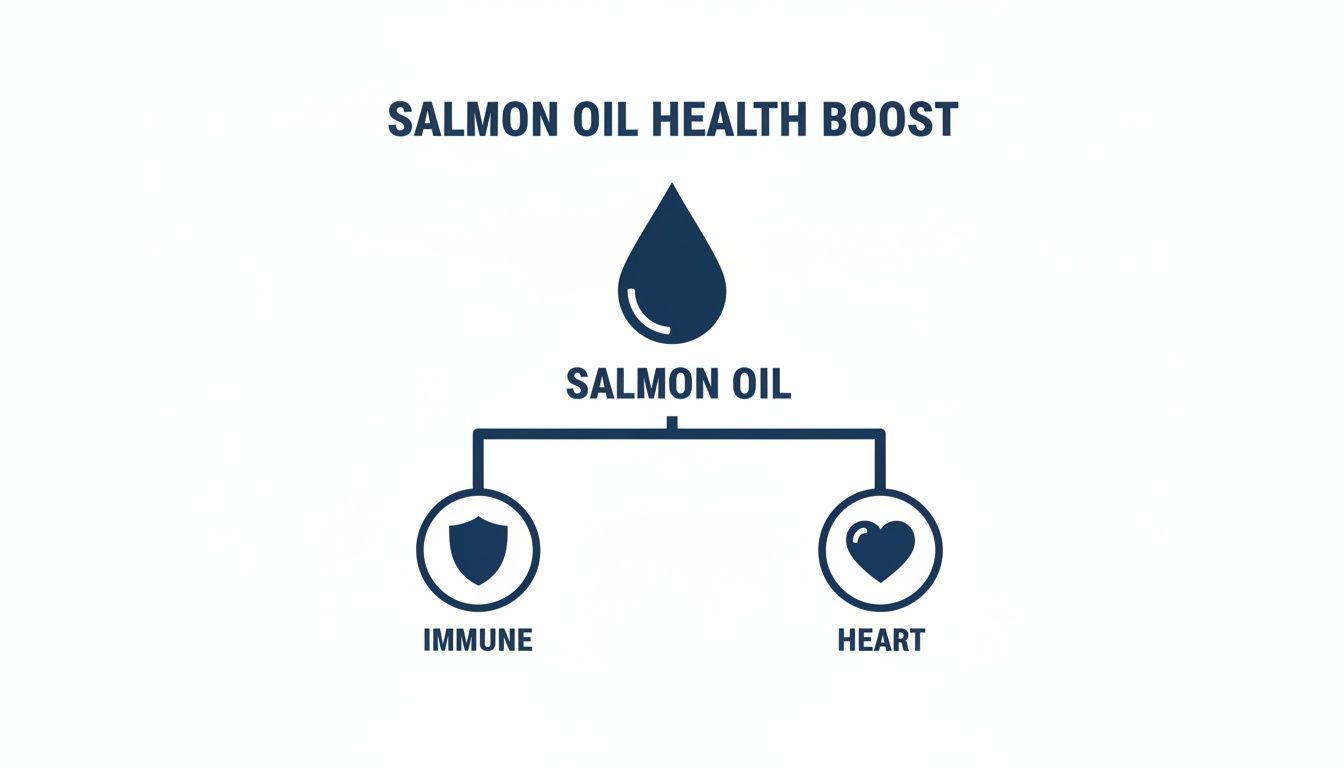
As you can see, investing in a top-tier salmon oil is a direct investment in your dog's core wellness. Let’s break down exactly what to look for.
Check The Source: Wild-Caught Is Best
First things first: where did the salmon come from? A fish's habitat and diet directly shape the quality of its oil.
-
Wild-Caught Salmon: This is the gold standard, no question. Wild salmon swimming in cold, clean waters eat a natural diet of smaller fish and crustaceans. This results in an oil that’s naturally packed with the good stuff—Omega-3 fatty acids (EPA and DHA)—and lower in the inflammatory Omega-6s.
-
Farmed Salmon: While not inherently bad, farmed salmon are often fed a diet that can change the fatty acid profile of their oil. The result is often a less potent product with a less-than-ideal ratio of Omega-3s to Omega-6s.
Always check the label for a clear statement that the oil comes from wild-caught salmon. It's one of the strongest indicators of a superior product.
Understand The Processing Method
How the oil gets from the fish into the bottle is just as crucial as the source. The delicate Omega-3 fatty acids are incredibly sensitive to heat, which can destroy their beneficial properties.
The best processing method is cold-pressing. This technique extracts the oil without using high temperatures, which means the full potency and structure of the EPA and DHA are preserved. It’s the only way to ensure your dog gets the powerful anti-inflammatory and brain-boosting benefits you're paying for.
If a bottle doesn't mention its extraction method, be wary. A lack of transparency usually hints at a high-heat process designed to get more oil out, but at the cost of quality.
Scrutinise Potency and Purity
A reputable brand will be upfront about what’s in its product. This is where you need to put on your detective hat and look for two critical details on the label: potency and purity.
Potency Check: EPA and DHA Levels
The label must clearly state the amount of EPA and DHA per serving, usually in milligrams (mg). These are the active ingredients doing all the hard work. Vague phrases like "rich in Omega-3s" are meaningless marketing speak. You need hard numbers to know if the oil is potent enough to have a real effect.
Purity Check: Third-Party Testing
Even wild fish can be exposed to environmental toxins like heavy metals (mercury, lead) and PCBs. The best brands don't just say their oil is pure—they prove it. They voluntarily send their batches to an independent, third-party lab for analysis. This testing verifies that the oil is free from harmful contaminants. Look for a guarantee of third-party testing for purity on the packaging or the company's website.
To make this easier, here’s a quick checklist to help you compare products on the shelf.
Quality Checklist For Salmon Oil
| Quality Factor | What To Look For (High Quality) | What To Avoid (Low Quality) |
|---|---|---|
| Source | Clearly states "Wild-Caught Salmon." | Vague terms like "Ocean Fish" or sourced from farmed salmon. |
| Processing | Labelled as "Cold-Pressed." | No mention of extraction method (likely high-heat processed). |
| Potency | Specific EPA and DHA amounts listed in milligrams (mg). | Only lists "Total Omega-3s" or uses generic, unquantified claims. |
| Purity | Mentions third-party testing for heavy metals and contaminants. | No mention of purity testing or independent verification. |
| Ingredients | Minimal ingredients: just salmon oil and a natural preservative. | Artificial flavours, colours, fillers, or synthetic preservatives. |
This checklist is your best tool for cutting through the noise and identifying a genuinely beneficial supplement.
Consider The Form: Liquid vs Capsules
Finally, consider the practical side of things. How will you give the oil to your dog every day? Salmon oil typically comes in two forms.
-
Liquid Pump Bottles: This is usually the easiest and most popular option. A few pumps over your dog’s dinner and you’re done. It allows for precise dosing and easy mixing. Just make sure the bottle is opaque to protect the fragile oil from light, which can cause it to go off.
-
Capsules: Capsules are great because they offer a pre-measured dose and protect the oil inside from air, keeping it fresh for longer. You can give them as a treat or snip the end and squeeze the oil onto their food. However, they can be a bit fiddly, especially if you have a large dog that needs several capsules per day.
By using these checkpoints, you can move from feeling overwhelmed to feeling confident. You'll be able to pick out a salmon oil that is pure, potent, and perfectly suited to support your dog's health for years to come.
Got Questions About Salmon Oil? We've Got Answers
It's one thing to read about all the fantastic benefits of salmon oil, but it's another to figure out the practical side of things. It's completely normal to have questions before adding something new to your dog's routine.
Let’s get into the details so you can feel confident you're doing it right.
How Much Salmon Oil Should I Give My Dog?
Getting the dose right is crucial, and it’s almost always tied to your dog's weight. Give too little and you won't see the benefits; too much can lead to an upset tummy. The best place to start is always the manufacturer's label, as the concentration of EPA and DHA can differ quite a bit from one brand to another.
A great tip is to go slow. Start with half the recommended amount for the first few days. This gives your dog’s digestive system a chance to get used to the new addition before you build up to the full dose.
Are There Any Side Effects to Worry About?
For the most part, salmon oil is incredibly safe. When side effects do pop up, they’re usually minor and often happen when the oil is introduced too quickly. The most common issue is a bit of digestive upset, like loose stools or diarrhoea. This almost always clears up by simply backing off on the dose and reintroducing it more gradually.
And yes, you might notice that classic "fishy breath." It's totally harmless and easily managed with good dental care and regular brushing.
The best salmon oil for your dog is one you introduce thoughtfully. Start slow, watch how they respond, and you’ll avoid most potential tummy troubles, making it a positive experience for everyone.
Can Puppies Have Salmon Oil?
They absolutely can—and they should! The DHA found in salmon oil is a vital nutrient for a puppy’s developing brain and eyes. Adding it to their diet is a brilliant way to support their cognitive function, making training a bit easier, and promoting healthy vision from the very beginning.
How Long Does It Take to See a Difference?
This isn't an overnight fix, so a little patience goes a long way. The benefits build up over time. You'll probably spot the first changes in their skin and coat, often within 3-4 weeks. Their fur might look shinier and feel noticeably softer.
For the deeper, anti-inflammatory benefits that support joint health, you'll need to wait a bit longer. It can take around 6-8 weeks for the Omega-3s to accumulate in their system and really get to work on a cellular level.
At Tipaw, our entire approach is about giving dog owners access to vet-approved, natural solutions that genuinely work. Our supplements are formulated with purity, safety, and effectiveness at their core, so you can have complete peace of mind. To find the perfect support for your dog's health journey, explore our range at https://www.store-tipaw.com.


