


It's a scene most dog owners know well: you look out into the garden, and there’s your best mate, happily grazing on the lawn as if it were a gourmet salad bar. The good news? A dog eating grass is, for the most part, perfectly normal behaviour.
More often than not, it's a completely harmless quirk. This habit can stem from all sorts of things, from ancient instincts and simple boredom to a subtle sign that they might need a bit more fibre in their diet.
So, Why Do They Really Do It?
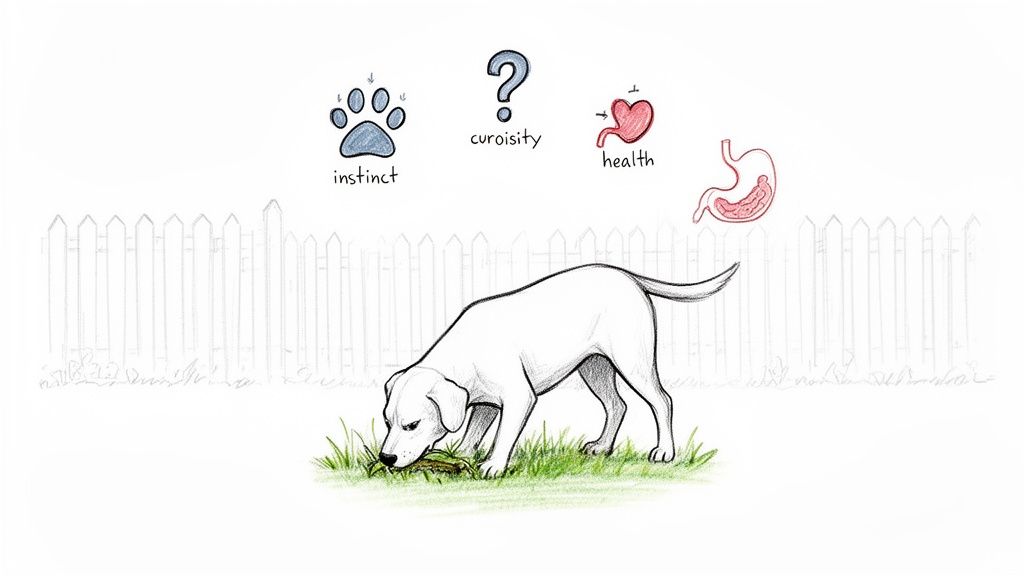
If you've ever found yourself asking, "Why on earth is my dog eating grass?", you're not alone. It's one of the most common questions vets and behaviourists hear. This guide is here to help you get to the bottom of it, moving past the old wives' tales and looking at what modern science actually tells us.
We’ll dig into the most likely reasons, exploring everything from deep-seated evolutionary traits to clues about their current diet. By the end, you'll have a much clearer picture, helping you tell the difference between a dog having a casual nibble and a dog whose grass-eating might signal a trip to the vet is in order.
Think of it as learning to speak another little bit of their language. Armed with this knowledge, you’ll be better equipped to care for your dog, whether that means adjusting their diet or just finding a more engaging toy to keep them busy.
Is It Instinct or Illness?
It can be a bit strange, even a little worrying, to see your dog happily munching on the lawn like a miniature cow. But more often than not, this behaviour is perfectly normal. It’s a throwback to their wild ancestors, who would have naturally ingested all sorts of plant matter from the stomachs of their prey. So, before you panic, remember you might just be watching a deep-seated instinct in action.
There’s a stubborn myth that dogs only eat grass to make themselves vomit when they feel ill. While a dog might occasionally be sick after a grassy snack, it's rarely the main reason they do it. Most dogs that eat grass show no signs of feeling unwell beforehand. In fact, studies have found it’s an incredibly common habit, with almost 70% of UK dog owners saying their pet grazes at least once a week. You can dig into more details about this quirky canine trait on verm-x.com.
The real skill is learning to tell the difference between a dog simply following a harmless, ancient instinct and one whose behaviour might be a red flag for something else.
The Link Between Diet and Digestive Health
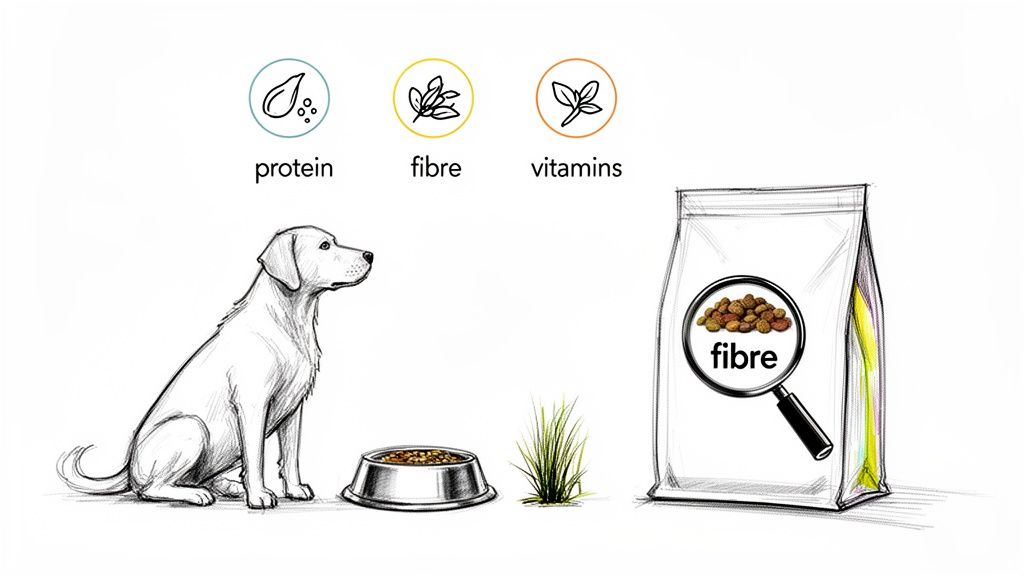
Have you ever wondered if your dog's grassy snack is a subtle hint that something’s missing from their dinner? Sometimes, the answer to the question “why is my dog eating grass?” can be found right in their food bowl.
If a dog's diet is low in dietary fibre, they might instinctively seek out roughage elsewhere to aid their digestion. Think of it as them trying to self-medicate with the resources available—in this case, your lawn.
This compulsion to eat non-food items, a behaviour known as pica, can sometimes be a red flag for a nutritional gap. A truly balanced, high-quality diet should provide everything a dog needs, meaning they shouldn't feel the urge to go foraging for nutrients in the garden.
Ensuring your dog’s food contains adequate fibre can often reduce their urge to graze on the lawn. A healthy gut is key to overall well-being.
Boosting their digestive health might be more straightforward than you think. Understanding how supplements like prebiotics and probiotics for dogs can help create a balanced gut environment is a great place to start. A happy tummy often leads to less interest in a lawn-based snack.
How Boredom and Anxiety Can Trigger Grass Eating
Sometimes, the answer to "why is my dog eating grass?" has less to do with their stomach and more to do with what's going on in their head. A dog left alone for hours on end might start munching on the lawn simply to have something to do. It can become a self-soothing habit, a bit like how a nervous person might bite their nails.
This is especially common with high-energy breeds. If they don't have a proper outlet for all that built-up energy and frustration, the lawn can become their go-to activity.
The Behavioural Link
In the UK, it’s increasingly recognised that behavioural factors like boredom and stress are major drivers behind this habit. A dog that isn't getting enough mental or physical stimulation will often invent its own entertainment, and chewing grass is an easy option. You can find more details on this behavioural connection over at thepetlabco.com.
For an anxious or bored dog, chewing on grass can become a default coping strategy. Addressing their mental and emotional needs is key to changing the behaviour.
Giving your dog more to do can make a world of difference. Think about introducing puzzle toys to keep their brain busy, or simply adding an extra walk or play session to their day. For dogs who seem particularly on edge and need a bit of extra help, it might be worth exploring calming treats for dogs to help them feel more relaxed.
When To See Your Vet About Grass Eating
Most of the time, a bit of casual grazing is nothing to worry about. It’s a perfectly normal dog behaviour. However, there are times when it can signal something more serious is going on, and you’ll want to get your vet involved.
The real tell-tale sign is a change in behaviour. A sudden, almost frantic desperation to eat grass, especially if it’s followed by repeated vomiting, is a definite red flag.
To help you figure out what’s what, we've put together a simple decision tree.
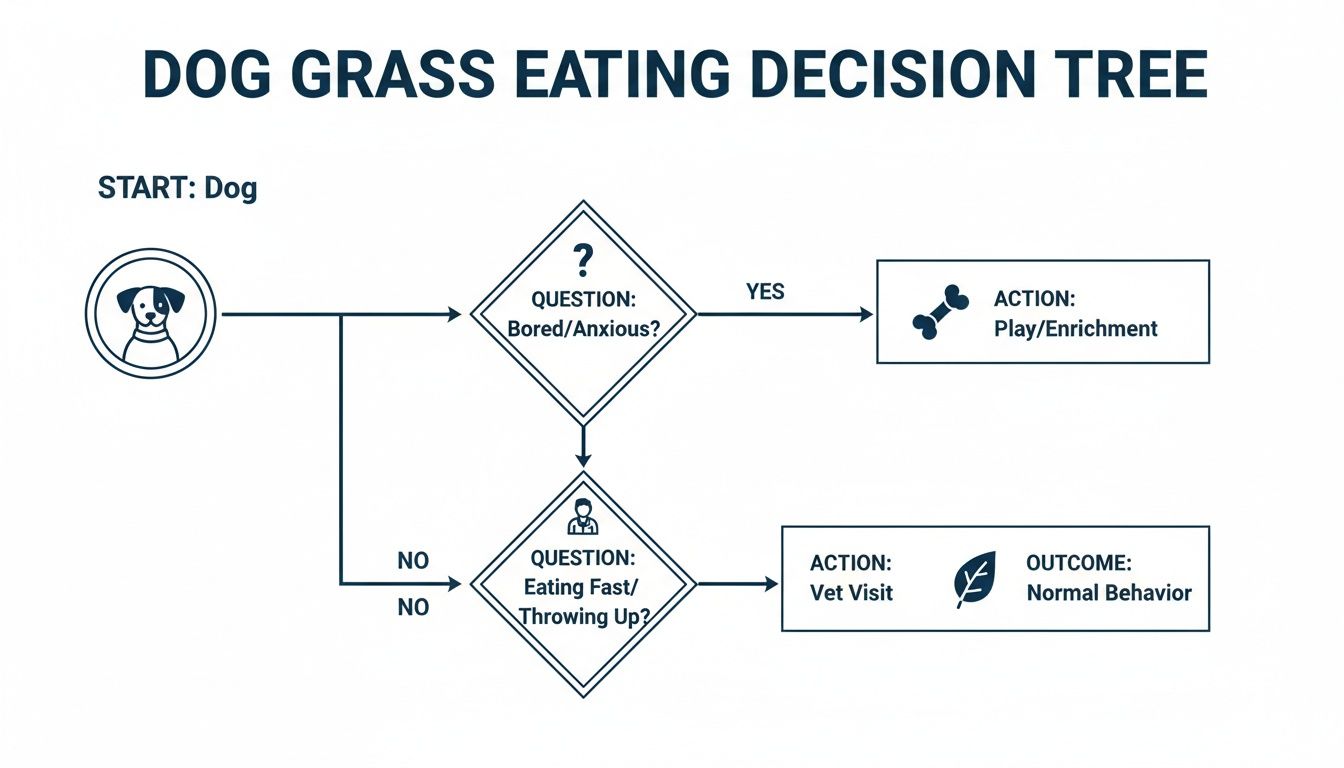
This guide should give you a clearer picture of whether you're dealing with a simple habit or a potential health issue.
Harmless Habit vs A Reason To Call The Vet
It can be tough to know when to worry. This table breaks down the key differences between typical grass-eating and signs that warrant a professional opinion.
| Symptom Checklist | Normal Behaviour (Usually No Concern) | Red Flag (Consult Your Vet) |
|---|---|---|
| Frequency | Occasionally, seems selective about which blades to eat. | Sudden, compulsive, or a dramatic increase in frequency. |
| Vomiting | Rarely vomits, or maybe just once. Seems fine afterwards. | Vomiting repeatedly, or brings up yellow bile. |
| Other Symptoms | Acting completely normal, energetic, and happy. | Accompanied by lethargy, diarrhoea, weight loss, or loss of appetite. |
| Signs of Pain | No signs of discomfort. | Whining, pacing, a bloated or tense abdomen, or reluctance to be touched. |
| Observed Behaviour | Seems relaxed, almost like they're just tasting it. | Frantic, gulping down any grass they can find without chewing. |
Remember, you know your dog best. If their grass-eating seems out of character or is paired with any of the red flags above, a quick call to the vet is always the safest bet.
If you're noticing any of these worrying signs, it's always best to seek professional advice. You can also learn more about managing digestive issues by reading our guide on finding a trusted dog stomach upset remedy.
A crucial point to remember is the danger of chemically treated lawns. Many pesticides and herbicides used in parks, gardens, and even private lawns are toxic to dogs. If you suspect your dog has ingested grass from a treated area, don't wait for symptoms to appear—contact your vet immediately.
Here’s what you can do if your dog’s grass-eating has you worried.
Knowing why they might be doing it is half the battle. Now, let's look at some practical steps you can take to get to the bottom of the behaviour and make sure your dog is happy and healthy.
Start With Their Food Bowl
First things first, take a good look at their diet. Is it giving them everything they need, especially when it comes to fibre? Sometimes, a simple tweak to their meals, like adding a bit more fibre-rich food, is all it takes to stop them from seeking out a grassy snack. This can help fill any nutritional holes that might be causing the craving in the first place.
Tackle Boredom and Anxiety
Next, think about how much they’re getting to do each day. A dog without a job to do will often invent one, and sometimes that job is "lawn mower."
Upping their daily walk, throwing a few puzzle toys into the mix, or even a quick training session can work wonders. It gives them a positive way to channel their energy, which can cut down on grazing that’s really just a sign of boredom or stress.
Keep Their Environment Safe
Finally, always be mindful of where they're choosing to graze. When you’re out and about, keep a close eye on your dog, especially in new places. It's crucial to guide them away from any lawns that might have been treated with pesticides or herbicides.
Taking these simple steps can give you peace of mind, helping you feel confident that their grass-eating is just a harmless quirk, not a sign of something more serious.
Your Top Questions About Dogs and Grass-Eating Answered
Let's dive into some of the most common questions we hear from dog owners across the UK about this slightly odd, but very normal, behaviour.
So, Should I Stop My Dog From Eating Grass?
Honestly, most of the time, there’s no need to panic or intervene. If your dog is just having a casual nibble here and there, and you're confident the grass is free from pesticides, weed killers, or other chemical nasties, it's usually harmless.
The time to step in is when the behaviour changes. If the eating seems desperate or frantic, if your dog looks unwell, or if you have any doubt about the safety of the grass, it's best to gently guide them away.
I’ve Heard Dogs Eat Grass to Make Themselves Sick. Is That Right?
This is probably the biggest myth out there! It’s a classic chicken-and-egg scenario. While it’s true some dogs are sick after eating grass, the science suggests it’s not their main intention.
In fact, studies have found that fewer than 25% of grass-eating dogs are regularly sick afterwards. Most of them don't even show signs of an upset tummy beforehand, which tells us that inducing vomiting probably isn't the point of the exercise.


