


When it comes to your dog's joint health, an ounce of prevention is truly worth a pound of cure. A proactive plan built on ideal weight management, controlled low-impact exercise, and a joint-friendly diet is your best defence against arthritis. These three pillars work in harmony to minimise stress on their joints and keep inflammation at bay, starting from day one.
Why Arthritis Prevention for Your Dog Starts Today
So many of us see arthritis as something that just happens when dogs get old. It's a problem to deal with if and when the limping starts. But honestly, that’s a huge misunderstanding of how the disease works. The foundations for healthy joints are actually built years—sometimes a whole decade—before you ever see a single sign of stiffness.
Every single stage of your dog's life, from their clumsy puppy phase to their active adult years, is a chance to build up their resilience against this painful condition. Learning how to prevent arthritis isn't just for senior dogs; it's a game plan for every dog owner. The small, consistent choices you make every day about what they eat, how they play, and even how your home is set up can make a world of difference to their comfort and mobility later in life.
Understanding the Enemy: Canine Arthritis
At its core, canine arthritis—or osteoarthritis (OA)—is a degenerative disease that wears away the protective cartilage in your dog’s joints. Think of cartilage as the smooth, slippery cushion that allows bones to glide past each other without friction. When that cushion breaks down, bone starts rubbing on bone. The result is inflammation, pain, and that tell-tale stiffness.
While getting older is a factor, it’s rarely the only culprit. Several other things can speed up this process:
- Genetics and Breed Predisposition: It's a fact that some breeds, like Labradors, German Shepherds, and Golden Retrievers, are just more genetically wired for joint issues. Conditions that develop early in life, like hip dysplasia, can pave the way for arthritis down the road. You can learn more about this connection in our guide on what is hip dysplasia in dogs.
- Past Injuries: An old cruciate ligament tear, a bad fracture, or even joint surgery can permanently change the mechanics of a joint, leaving it more vulnerable to wear and tear.
- Excess Weight: This one is huge. Carrying even a couple of extra pounds puts constant, damaging pressure on your dog’s joints, massively accelerating the breakdown of that precious cartilage.
- Repetitive High-Impact Activity: Years of weekend warrior activities, like leaping for a frisbee or pounding the pavement on daily runs, can lead to cumulative damage over time.
The most powerful thing to realise is that you have a huge amount of control over many of these risk factors. You can manage your dog’s weight, choose the right kind of exercise, and feed them a diet that actively protects their joints.
The Proactive Prevention Mindset
The biggest shift you can make is moving from a reactive to a proactive approach. Don't wait for a problem to show up. Instead, actively build a stronger, more resilient dog from the inside out. This guide is here to show you exactly how to do that, moving past vague tips to give you concrete, actionable steps.
We’ll dig into the core pillars of joint health—weight, exercise, and nutrition—and show you how to weave them into your everyday life. By taking these thoughtful steps now, you're not just preventing a disease; you're investing in a future full of comfortable walks, playful afternoons, and a happier, more mobile life for your best friend. The time to start isn't when they start to slow down. It's now.
Your Dog's Weight: The Single Biggest Factor in Joint Health
If there’s one golden rule for preventing arthritis, it’s this: every extra kilo your dog carries places an immense, unnecessary strain on their joints. While we often jump to supplements or specific exercises, managing your dog's weight is, without a doubt, the single most powerful action you can take to protect their long-term mobility.
This isn't about crash diets or deprivation. It’s about making smart, consistent choices that add up to a lifetime of healthier, happier joints.
The science is crystal clear. Keeping your dog at an ideal body weight is one of the most effective ways to stave off arthritis, a particularly pressing issue in the UK where canine obesity is on the rise. In fact, research shows that heavier dogs are a staggering 77% more likely to suffer from arthritis in multiple joints, a stark contrast to just 10% in lean dogs. This statistic alone highlights just how much obesity accelerates joint wear and tear. You can dive deeper into these UK-specific findings on the growing canine arthritis concern at DoggieUK9.com.
This diagram neatly lays out the core pillars of arthritis prevention, with ideal weight forming the crucial foundation.
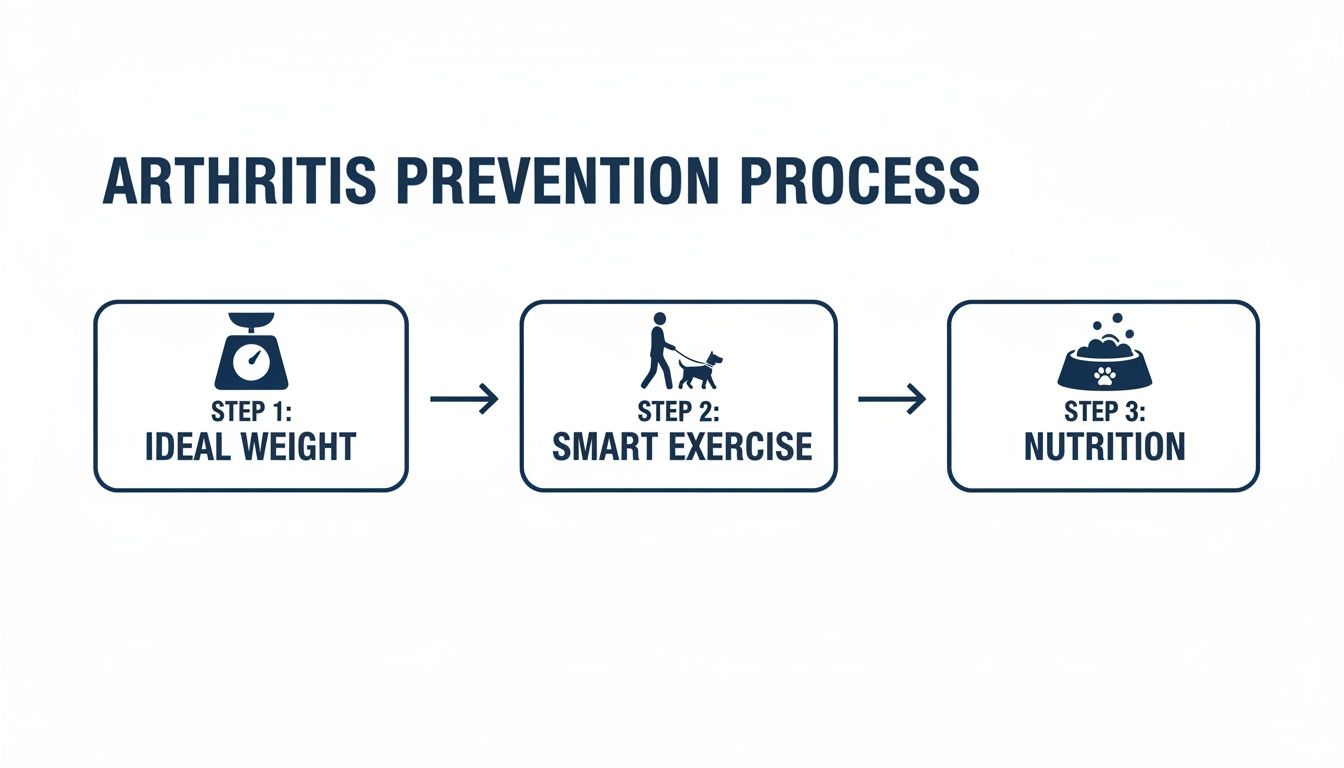
As you can see, a healthy weight is the starting point. It allows smart exercise and good nutrition to have the greatest possible impact on your dog's joint health.
Moving Beyond the Scales with the Body Condition Score
For a moment, let's forget about the number on the scales. A far more practical tool for assessing your dog’s weight at home is the Body Condition Score (BCS). Vets rely on this system because it focuses on body shape and fat coverage rather than just kilograms, which can be misleading across different breeds. The most common scale runs from 1 (dangerously thin) to 9 (severely obese).
The target for optimal joint health is a BCS of 4 or 5 out of 9. This is the "lean ideal" where you are actively protecting their joints from future damage.
So, how do you perform a BCS check at home? It’s a simple hands-on assessment.
- The Rib Check: Gently run your hands along your dog’s sides. You should be able to feel their ribs easily, covered by just a very thin layer of fat. If you have to press hard to find them, your dog is likely carrying too much weight.
- The Waist Check: Stand over your dog and look down. You should see a clear, hourglass-shaped waist between their ribs and hips. If their body looks more like a tube with no defined waist, they're carrying excess fat.
- The Tummy Tuck: Now, look at your dog from the side. Their abdomen should tuck up from the chest towards their hind legs. A belly line that is straight or hangs down is another tell-tale sign of being overweight.
What this looks like will vary by breed, of course. A lean Whippet will naturally have more prominent bones than a stocky Labrador, but the principles of feeling the ribs and seeing a defined waist apply to both.
Actionable Steps for Weight Management
Achieving and maintaining that ideal BCS of 4-5 comes down to two key areas: getting portions right and being smart about treats.
1. Calculate Food Portions Accurately
The feeding guides on dog food bags are just a starting point. Your dog's actual needs depend on their age, breed, activity level, and whether they've been neutered. Use the manufacturer's recommendation as a baseline, but always be prepared to adjust it based on your dog’s BCS. A proper measuring cup is a must—don't just guess!
2. Choose Low-Calorie Treats
Treats are often the main source of hidden calories. You don't have to stop giving them, but you do need to be clever about it.
- Healthy Swaps: Instead of high-fat commercial biscuits, offer small pieces of carrot, green beans, or apple. My dogs go wild for a crunchy bit of cucumber.
- The 10% Rule: Factor treats into their daily calorie count. A good rule of thumb is that treats should make up no more than 10% of their total daily food intake.
- Break It Down: Your dog will appreciate the frequency of rewards more than the size of each one. Break larger treats into tiny pieces to make them go further during training or just for being a good companion.
Bringing this all together, a consistent weekly routine can make a world of difference. Here’s a sample plan to give you an idea of what that might look like.
| Day of the Week | Morning Meal (Example) | Evening Meal (Example) | Healthy Treat Allowance | Low-Impact Exercise |
|---|---|---|---|---|
| Monday | 100g vet-approved kibble | 100g vet-approved kibble | 2-3 small carrot sticks | 30-min lead walk (on grass) |
| Tuesday | 100g vet-approved kibble | 100g vet-approved kibble | Small spoonful of plain yoghurt | 20-min gentle sniffing walk |
| Wednesday | 100g vet-approved kibble | 100g vet-approved kibble | A few blueberries | 30-min lead walk (on grass) |
| Thursday | 100g vet-approved kibble | 100g vet-approved kibble | 2-3 pieces of dried fish skin | Rest day or gentle garden play |
| Friday | 100g vet-approved kibble | 100g vet-approved kibble | Small pieces of apple | 30-min lead walk (on grass) |
| Saturday | 100g vet-approved kibble | 100g vet-approved kibble | 1 dental chew (low-cal) | 45-min varied walk (paths/grass) |
| Sunday | 100g vet-approved kibble | 100g vet-approved kibble | A few green beans | 20-min gentle sniffing walk |
Remember, this is just a template. The key is consistency in portioning and making mindful choices about extras.
Partnering with Your Vet
Bringing up your dog's weight with your vet can feel daunting, but it’s absolutely essential. Frame the conversation around health and prevention, not blame. Your vet is your best ally on this journey. By going in with an open mind, you can work together to create a plan that ensures your dog stays lean, active, and comfortable for many years to come.
Building Stronger Joints with Smarter Exercise
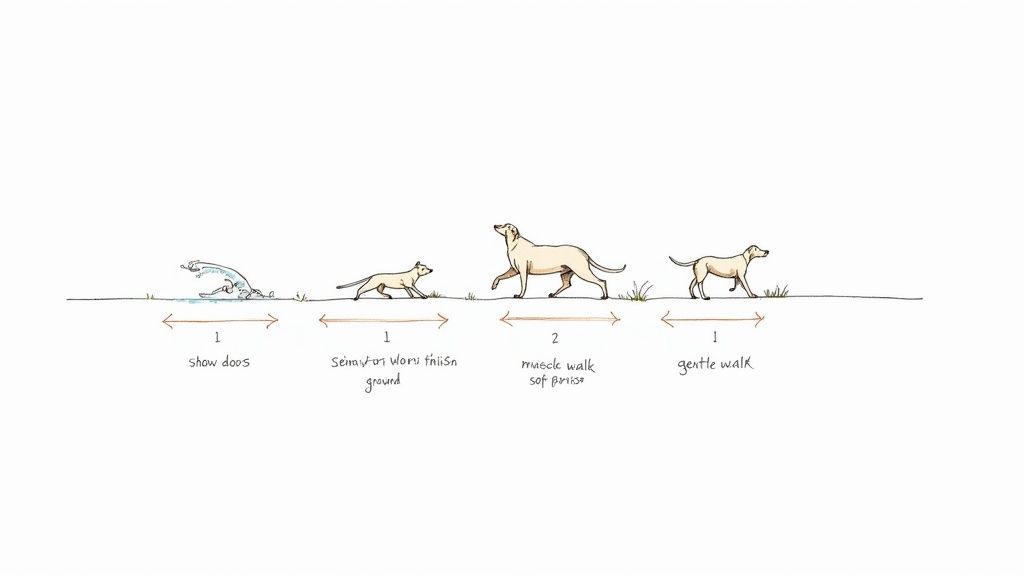
When it comes to preventing arthritis, exercise can feel like a bit of a double-edged sword. We know it’s vital for burning calories and keeping muscles strong, but the wrong kind of activity can easily do more harm than good. It can actually accelerate the very wear and tear we’re trying to prevent.
The trick is to stop thinking about high-intensity, exhausting workouts. Instead, we need to focus on smart, low-impact movements that build a robust support system around their joints. Strong muscles act like natural shock absorbers, stabilising the joints and taking the pressure off.
Regular, gentle exercise also gets the synovial fluid moving. Think of it as the oil that lubricates their joints and delivers nutrients to the cartilage, keeping it healthy and resilient. It’s a cornerstone of any serious prevention plan.
The Low-Impact Exercise Philosophy
The aim here is simple: get your dog moving in a way that strengthens their body without punishing it. Low-impact activities minimise the jarring force on their joints, which is especially important for breeds already prone to joint issues, young puppies whose growth plates are still developing, and of course, our senior dogs.
Let’s put it this way. Running on hard pavement is like hitting the joint with a tiny hammer with every single stride. Swimming, on the other hand, is like moving through a supportive cushion. Both are great exercise, but their long-term effects on the joints are worlds apart.
In the UK, where sedentary lifestyles can be a real problem for our dogs, this philosophy is crucial. Consistent, controlled exercise from a young age is one of our most powerful tools. We know from UK studies that arthritis affects at least 1 in 5 dogs, with most getting diagnosed between the ages of 8 and 13. Yet, research consistently shows that active dogs can have 30-50% lower rates of osteoarthritis. This is because that gentle, regular movement is what keeps their cartilage healthy. You can read more about the condition in this guide to canine osteoarthritis at Daxocox.co.uk.
Joint-Friendly Activities for Every Life Stage
A one-size-fits-all approach to exercise just doesn't work for dogs. What's right for a bouncy puppy is completely different from what an adult dog needs. You have to adapt their routine to protect them at every stage.
For Puppies (Under 12-18 months)
A puppy’s growth plates are soft and incredibly vulnerable to damage. Pushing them too hard, too soon, can set them up for a lifetime of joint problems.
- Keep it short and sweet: Think multiple 5-10 minute play sessions throughout the day, rather than one long, exhausting walk.
- Stick to soft surfaces: Short, controlled lead walks on grass or dirt paths are perfect. Try to avoid hard pavements as much as possible.
- No forced running or jumping: Discourage lots of repetitive jumping for toys or long-distance running until their growth plates have closed. Your vet can give you the best advice on timing for your specific breed.
For Adult Dogs
Now is the time to really build and maintain the muscle mass that will support their joints for years to come.
- Get them swimming: If you can, swimming or hydrotherapy is the gold standard of low-impact exercise. The water supports their body weight, taking all the stress off the joints while providing brilliant resistance for building muscle.
- Try scent work: This is a fantastic way to engage their mind and body without any high-impact stress. Simply hiding treats around the garden encourages them to move, stretch, and sniff naturally.
- Consistent lead walks: A good, brisk walk is fantastic. The key is consistency – avoid being a "weekend warrior" and cramming all their exercise into two days.
A Personal Tip: I’ve found that my own Labrador does much better with two shorter 30-minute walks each day during the week, rather than one long, gruelling hike at the weekend. It keeps her muscles toned and her joints lubricated, and we've completely avoided that post-hike stiffness she used to get.
High-Impact Activities to Limit or Avoid
Look, a game of fetch now and then isn't going to cause a disaster. But certain activities, when done over and over, can be really detrimental to long-term joint health. It’s all about balance and moderation.
Here are a few of the main culprits to be mindful of:
- Repetitive ball or frisbee chasing: Those sudden stops, sharp turns, and high-impact landings put an immense amount of strain on the shoulders, elbows, and knees.
- Lots of running on pavement: That hard, unforgiving surface sends shockwaves straight up through their limbs with every step.
- Agility with high jumps: While a great sport for some dogs, repetitive high jumping can be damaging, especially for heavier breeds or those with a history of joint issues.
- Uncontrolled play with much larger, rougher dogs: This can easily lead to accidental injuries and strain on developing or ageing joints.
Think about simple ways you can modify these games. Instead of launching a ball for a full-speed chase, roll it along the ground for them to find. Instead of a long run on the pavement, go for a "sniffari" in a local park, letting them explore at their own pace. By making these small adjustments, you can build a fitness routine that sets them up for a lifetime of comfortable, pain-free movement.
Fueling Joint Health Through Diet and Supplements
While keeping your dog lean and active are the cornerstones of joint care, what you put in their bowl is just as vital. Think of it as providing the raw materials to actively build and protect their joints from the inside out. A proactive diet isn't about counting calories; it's about strategically including specific nutrients that fight inflammation and support healthy cartilage.
It’s a bit like building a house. A healthy weight and smart exercise provide a solid foundation and frame. But it's the right nutrition that provides the high-quality bricks and mortar needed to keep the whole structure sound for years to come.
The Power Players in Your Dog's Bowl
Certain nutrients are absolute game-changers for canine joint health. They work to soothe inflammation, lubricate joints, and support the cartilage that cushions your dog’s bones. Getting these into your dog’s regular meals is one of a powerful, preventative step you can take.
The real heavy-hitters are:
- Omega-3 Fatty Acids (EPA & DHA): These are potent, natural anti-inflammatories. They work at a cellular level to dial down the inflammatory response that breaks down cartilage and causes pain.
- Glucosamine: This is a natural compound and a core building block for cartilage. Supplementing it helps your dog's body repair and maintain this vital joint cushion.
- Chondroitin Sulphate: Often paired with glucosamine, chondroitin helps cartilage hold onto water, which is essential for its shock-absorbing abilities. It also helps block the enzymes that eat away at cartilage.
These nutrients work as a team, creating a protective environment inside the joint and slowing the degenerative processes that lead to arthritis.
Adding Joint Support Through Everyday Food
You don't always have to reach for a separate supplement to boost your dog's joint health. Many top-quality dog foods are now formulated with joint support in mind, and you can also add certain whole foods to their diet.
When you're shopping, look for foods that list ingredients like oily fish (salmon, mackerel, sardines), green-lipped mussel, or added fish oils high up on the ingredient list. These are fantastic sources of EPA and DHA. Some foods are also fortified with glucosamine and chondroitin.
My Advice: Don't just trust the marketing on the front of the bag. Flip it over and read the guaranteed analysis. Look for specific levels of EPA, DHA, glucosamine, and chondroitin to make sure you're getting a meaningful amount, not just a token sprinkle.
When to Bring in Joint Supplements
A fantastic diet is your first line of defence, but supplements can be an incredibly valuable addition. This is especially true for at-risk breeds or as any dog enters their middle-aged years. A quality supplement provides a concentrated, reliable dose of these key nutrients every single day.
The supplement world can be a bit of a minefield, though. It’s crucial to choose a product from a reputable company that uses high-quality ingredients. For a much deeper dive into what makes a great supplement, exploring a guide on natural dog joint supplements can give you the clarity you need to choose wisely.
To help you get started, here's a quick rundown of the most important nutrients and where you can find them.
Key Nutrients for Canine Joint Health
This table summarises the essential nutrients that support your dog's joints, what they do, and where to find them in food or supplements.
| Nutrient | Primary Function | Common Sources |
|---|---|---|
| Omega-3s (EPA/DHA) | Reduces joint inflammation | Oily fish (salmon, sardines), fish oil supplements, green-lipped mussel |
| Glucosamine | Helps build and repair cartilage | Shellfish, joint supplements, fortified dog foods |
| Chondroitin | Supports cartilage elasticity and blocks destructive enzymes | Animal cartilage (bovine, porcine), joint supplements |
| Green-Lipped Mussel | A source of Omega-3s, glucosamine, and other anti-inflammatory compounds | Supplements, some specialised dog foods and treats |
This gives you a good starting point for evaluating your dog's diet and potential supplement needs.
Most importantly, always have a chat with your vet before starting any new supplement. They know your dog's specific situation and can tell you if a supplement is needed, recommend a trustworthy brand, and confirm the correct dosage. Starting this conversation early turns supplementation from a reactive fix into a smart, preventative strategy.
Spotting Trouble Early with Your Vet
While managing your dog’s diet and exercise is crucial, it’s only half the battle. The other half is forging a strong, proactive partnership with your vet. Think of yourself as the world's leading expert on your dog's day-to-day life—their habits, their quirks, their every little move. This unique insight makes you the first and most important line of defence in spotting joint trouble before it really takes hold.
Catching the earliest whispers of discomfort is a game-changer. It allows you and your vet to step in with simple, effective measures that can dramatically slow down the progression of arthritis.
This means learning to see what your dog can't tell you. The first hints of joint pain are rarely as obvious as a limp. They're often subtle shifts in behaviour that are all too easy to brush off as your dog simply "getting older." But knowing what to look for is a skill every dog owner can, and should, develop.
The Easily Missed Early Warning Signs
Our dogs are masters at hiding pain, a throwback to their wild ancestors where showing weakness was dangerous. So, becoming a keen observer of their movement and mood is key to preventing arthritis from creeping in undetected. I always advise owners to run through a quick mental checklist every week or so.
Keep a close eye out for these subtle clues:
- Subtle Stiffness: Do they seem a bit creaky or slow to get up after a long nap or first thing in the morning? This often eases off after they've been moving for a few minutes.
- Hesitation: Have you noticed a new reluctance to do things they once did with gusto? Maybe they pause before jumping into the car, onto the sofa, or tackling the stairs.
- Changes in Gait: Take a moment to watch them walk towards you and then away from you. Do you notice a slight head bob? A shorter stride on one leg? Do their back legs seem to move closer together than they used to?
- Behavioural Shifts: Pain can make even the sweetest dog a bit grumpy. A new reluctance to be petted, groomed, or a general increase in irritability can be a massive red flag. You can learn more about these subtle cues in our detailed guide on the common signs of arthritis in dogs.
Being attuned to these small changes is your superpower. I always tell my clients to document them. A quick note or even a video on your phone can be incredibly helpful when you speak to your vet, turning a vague feeling into concrete evidence they can work with.
Making Annual Vet Visits Count
Regular check-ups are non-negotiable, even for a dog that seems perfectly healthy. These visits are your chance to go beyond routine vaccinations and turn the appointment into a strategic planning session for your dog’s long-term health. This is where you bring your observations to the table and work with your vet to assess your dog's individual risk profile.
The challenge of underdiagnosis in the UK is significant. One report highlighted that while 51.7% of dogs show clinical signs of arthritis, a staggering 97% of these cases may go untreated by vets. Early and breed-specific screening is the key to changing this.
Vets across the UK are increasingly urging for proactive hip and elbow X-rays for at-risk breeds like Labradors and German Shepherds. Getting these done as early as 4-6 months can catch developmental issues like dysplasia before osteoarthritis even has a chance to set in. It’s a vital part of a smart arthritis prevention strategy.
Your Questions Empower Your Vet
To get the most out of your annual visit, you need to go in prepared. Don't be afraid to advocate for your dog and steer the conversation toward long-term joint health.
Here are some essential questions to have in your back pocket:
- Based on my dog's breed and age, what are their specific risks for arthritis?
- Could you show me how to properly assess their Body Condition Score at home?
- Are there any breed-specific screenings, like hip or elbow scoring, that you would recommend for them, and at what age?
- Given their current lifestyle and exercise, are there any changes you'd suggest to better protect their joints?
- When would you recommend we consider starting a joint supplement as a preventative measure?
By asking these questions, you shift from being a passive recipient of information to an active partner in your dog's care. It builds a collaborative relationship with your vet, ensuring that together, you're doing everything possible to secure a long, comfortable, and mobile future for your best friend.
Creating a Joint-Friendly Home Environment
Thinking about arthritis prevention often brings diet and exercise to mind, but what about your dog's everyday world? Their environment plays a massive role. Simple, thoughtful changes around your house can dramatically reduce the daily wear and tear that leads to stiff, sore joints down the line.
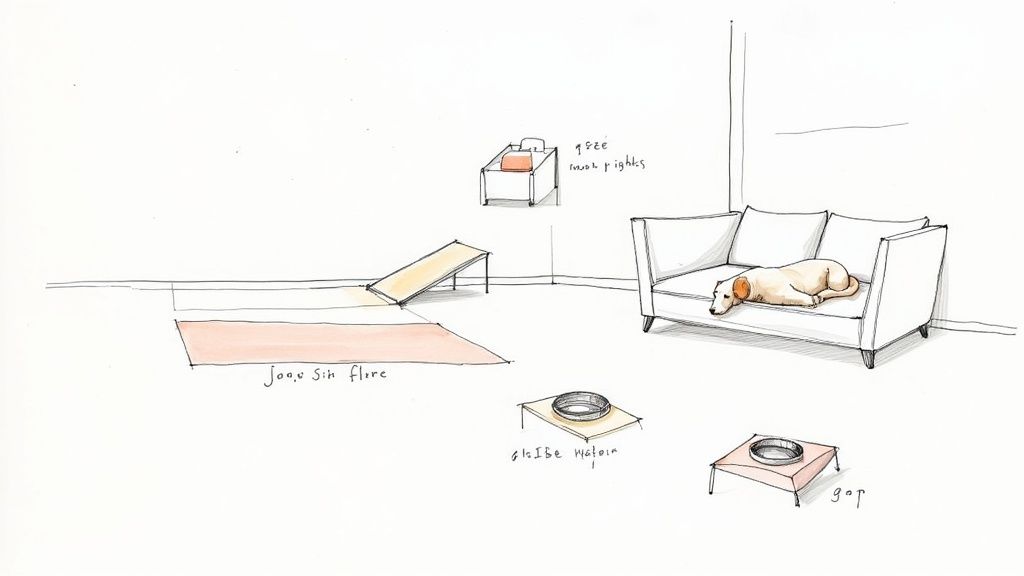
First, let's talk about floors. We might love our shiny hardwood, laminate, or tile floors, but for a dog, they can be like walking on an ice rink. Their muscles are constantly tensing just to keep their footing, and a single slip can send a jarring impact straight to their hips and shoulders. An easy fix is to lay down non-slip rugs or runners in the areas they use most—think hallways, in front of the sofa, and around their food bowls. It provides that much-needed grip.
Rest, Ramps, and Raised Bowls
A good night's sleep is restorative for joints, too. An orthopaedic bed, especially one with memory foam, is a brilliant investment. It moulds to your dog’s shape, cushioning pressure points and giving their joints and muscles a proper chance to recover after a long walk.
Think about how often your dog jumps. On the sofa, off the bed, into the car... each leap puts a burst of force through their elbows and spine. Over a lifetime, that adds up. Pet stairs or a ramp are fantastic tools to eliminate this high-impact stress. If you can train them to use these from puppyhood, you’re banking years of protection for their joints.
One of the easiest and most effective changes? Raise their food and water bowls. This simple adjustment improves their posture while eating, taking a surprising amount of strain off their neck, shoulders, and back.
Making these small, low-cost tweaks creates a much safer and more comfortable space for your dog. You're not just making them comfortable today; you're actively preventing the tiny, cumulative injuries that can eventually build up into arthritis.
Got Questions About Preventing Arthritis in Your Dog?
When you're trying to do the best for your dog, it's natural to have a few questions. Let's tackle some of the most common ones that pop up when owners are creating a plan to protect their dog's joints for the long haul.
When Is the Right Time to Start Arthritis Prevention?
Honestly? The day they come home. Prevention isn't something you start when they're older; it's about building a foundation of healthy habits from the very beginning.
For any puppy or adult dog, this means focusing on the big two: keeping them at a lean, healthy weight and providing regular, joint-friendly exercise that's right for their age and build.
If you have a breed known for joint issues—think German Shepherds, Labradors, or Golden Retrievers—it's wise to be even more proactive. Chatting with your vet about early screenings can start when your pup is just 4-6 months old. This allows you to spot any subtle developmental problems long before they have a chance to cause real trouble.
Do Joint Supplements Actually Help Prevent Arthritis?
They can be a fantastic piece of the puzzle, especially for breeds at higher risk or as your dog starts to hit their middle-aged years. Good quality supplements containing ingredients like glucosamine, chondroitin, and Omega-3 fatty acids give the body what it needs to maintain healthy cartilage and can help dial down low-level inflammation.
But, and this is a big but, they aren’t a silver bullet. Supplements are there to support the real cornerstones of prevention: maintaining an ideal weight and sticking to a smart exercise routine. Always get your vet's recommendation on a trusted brand to make sure it's the right fit for your individual dog.
Could Neutering My Dog Increase Their Arthritis Risk?
This is a hot topic, and there's some evidence to consider. A few studies have pointed to a possible connection between neutering a dog before their bones are fully mature and a slightly higher risk of joint problems down the line, particularly in larger breeds. This is thought to be because the hormones involved in sexual development also signal when the bone growth plates should close.
The decision on when to neuter is a big one, with pros and cons on both sides. The best thing you can do is have a frank conversation with your vet. They can help you weigh up all the factors—breed, size, lifestyle, and current health advice—to decide on the best timing for your dog.
At Tipaw, our goal is to help you give your dog the healthiest, happiest life possible. We offer a range of vet-approved, natural supplements crafted to support joint health and keep your dog moving comfortably at every age. You can see our full range at https://www.store-tipaw.com.


