


When your dog's tummy is upset, finding the right remedy starts with playing detective. While obvious signs like vomiting or diarrhoea are hard to miss, your dog often tells you something is wrong long before that. The key is to pick up on the quieter clues—subtle shifts in their behaviour, from a sudden lack of energy to an unusual posture.
Catching these early warnings is your first and most important step in providing effective care right at home.
How to Spot an Upset Stomach in Your Dog
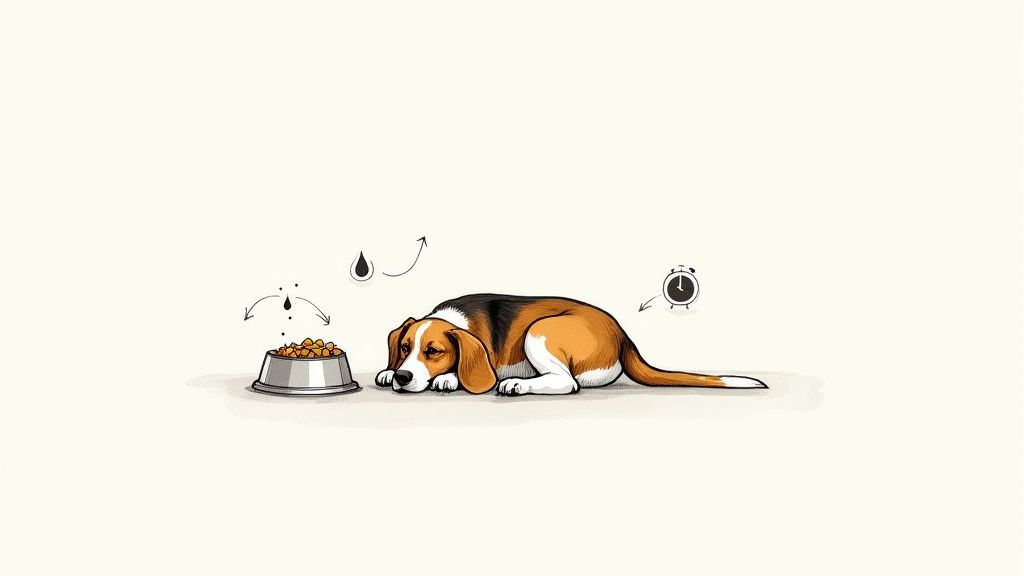
Before you can help, you have to know what you’re looking for. Since our dogs can't just tell us their stomach hurts, they show us through their actions. Think about it: your normally food-obsessed Labrador suddenly turns his nose up at dinner. That's a huge red flag.
Understanding these less obvious signs means you can step in much sooner, often preventing a minor issue from becoming a bigger problem.
Reading Your Dog's Body Language
Changes in how your dog acts and holds themselves are often the very first indicators that something isn’t right. Paying close attention to these signals is crucial.
Keep an eye out for these tell-tale signs:
- Lethargy and Weakness: Is your usually bouncy dog suddenly glued to their bed, showing no interest in their favourite game of fetch? A sudden drop in energy is a classic symptom.
- Loss of Appetite: A dog who skips a meal is almost always feeling off-colour.
- Excessive Drooling or Lip Licking: These are clear signs of nausea. You'll often see this just before your dog is sick.
- Unusual Postures: Some dogs adopt what's known as the "prayer position" – front legs stretched out, bum in the air. It's their way of trying to relieve abdominal pain.
These aren't just minor quirks; they're your dog’s way of communicating discomfort. A study looking at UK vet practices revealed that while diarrhoea was a primary symptom, vomiting occurred in 44% of cases, reduced appetite in 28%, and lethargy in 24%. This really drives home that digestive issues are more than just a bit of an upset tummy. You can explore further insights into these findings and see just how common these problems are for UK dogs.
Distinguishing Mild from Serious Symptoms
It's vital to know the difference between a simple stomach ache and a true emergency. A single bout of vomiting after your dog wolfed down their dinner is one thing; repeated, forceful vomiting is another thing entirely. One can be managed at home, while the other needs a vet—fast.
Key Takeaway: Your dog’s normal behaviour is your best guide. Any change, no matter how small—in their energy, appetite, or posture—can signal an upset stomach. You know your dog better than anyone, so trust your gut instinct.
To help you quickly assess the situation, we've put together a simple reference guide.
Quick Guide to Dog Stomach Upset Symptoms
This table breaks down common symptoms, what they might mean, and what you should do next. It's here to help you decide whether to reach for a home remedy or your vet's phone number.
| Symptom | Common Indication | Severity Level (Mild/Moderate/Severe) | Action to Consider |
|---|---|---|---|
| Single episode of vomiting | Ate too fast, mild indigestion | Mild | Withhold food for a few hours, monitor closely |
| Lethargy, refusing one meal | Generalised discomfort, nausea | Mild to Moderate | Provide fresh water, offer a bland diet later |
| Multiple episodes of vomiting | Severe irritation, possible infection | Severe | Call your vet immediately |
| Blood in stool or vomit | Internal bleeding, serious inflammation | Severe | Urgent vet visit required |
| Bloated, hard abdomen | Gastric Dilatation-Volvulus (Bloat) | Severe | Emergency vet visit immediately |
Learning to read both the loud and the quiet signals your dog gives you is the best skill a pet owner can have. It empowers you to give them the right care, right when they need it most.
First Steps: What To Do When Your Dog's Tummy is Upset
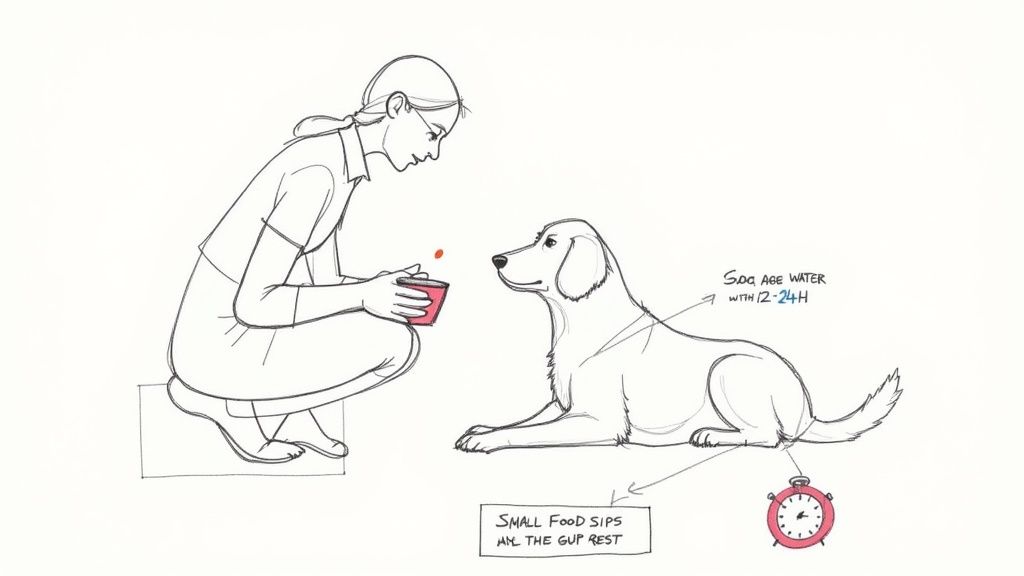
When you first realise your dog is feeling off, the first few hours are key. The goal is simple: stabilise them and give their digestive system a break. Getting these initial steps right can often stop a minor problem from turning into a major one.
The most effective thing you can do right away is something vets call "gut rest." It's a short, supervised fast that gives an overworked, inflamed gut a chance to settle down.
Give Their System a Break with a Short Fast
Imagine your dog’s digestive system is working overtime. If it’s already irritated, asking it to process more food just adds fuel to the fire. A temporary break allows the entire system to rest, recover, and reset itself.
For most healthy adult dogs, withholding food for 12 to 24 hours is perfectly safe. This brief fast can help calm inflammation and often stops the cycle of vomiting or diarrhoea. Of course, they must have constant access to fresh water during this time.
But this isn't a one-size-fits-all solution. You should never fast these dogs:
- Puppies under six months: Their tiny bodies don't have the reserves to go without food, and they can become dangerously hypoglycaemic.
- Senior dogs: Older dogs often have other health issues that can make fasting risky.
- Dogs with medical conditions: This is especially true for dogs with diabetes, where skipping a meal can cause a serious blood sugar imbalance.
If your dog is in one of these groups, call your vet for advice before withholding any food.
A Vet's Tip: The whole point of a short fast is to let the stomach lining heal. When it isn't constantly working to digest food, the body can redirect its energy to recovery. This is often the best first-aid remedy you can offer at home.
Focus on Smart Hydration
While food is temporarily on hold, water is absolutely essential. Dehydration can happen frighteningly fast with vomiting and diarrhoea, so keeping your dog hydrated is priority number one. The trick is to give them water in a way that doesn't trigger more sickness.
Leaving a full bowl out might encourage them to gulp down too much at once, which can easily come right back up. A more controlled approach is much better for a sensitive tummy.
Gentle Ways to Rehydrate
- Small, Frequent Sips: Instead of a full bowl, offer a small amount of water every hour. This encourages slow, gentle drinking.
- Ice Cubes: Many dogs love licking ice cubes. It’s a great way to get fluids in slowly and can be very soothing for them.
- Bone Broth Ice Cubes: To make it a bit more enticing, try freezing some plain, unsalted bone broth into cubes. Just be absolutely sure it doesn’t contain any onions or garlic.
The goal is to see if they can keep small amounts of liquid down. If they can, you're heading in the right direction. This measured approach provides the fluids they desperately need without overwhelming their gut. For a deeper dive, you can explore other home remedies for dog diarrhoea which often cover more hydration tricks.
By carefully managing this initial 12-24 hour window with a strategic fast and smart hydration, you're setting your dog up for a much smoother recovery. You’re not just masking symptoms; you’re giving their body the space it needs to start healing. Once they seem stable, you can introduce the next phase: the bland diet.
Gently Reintroducing Food with a Bland Diet
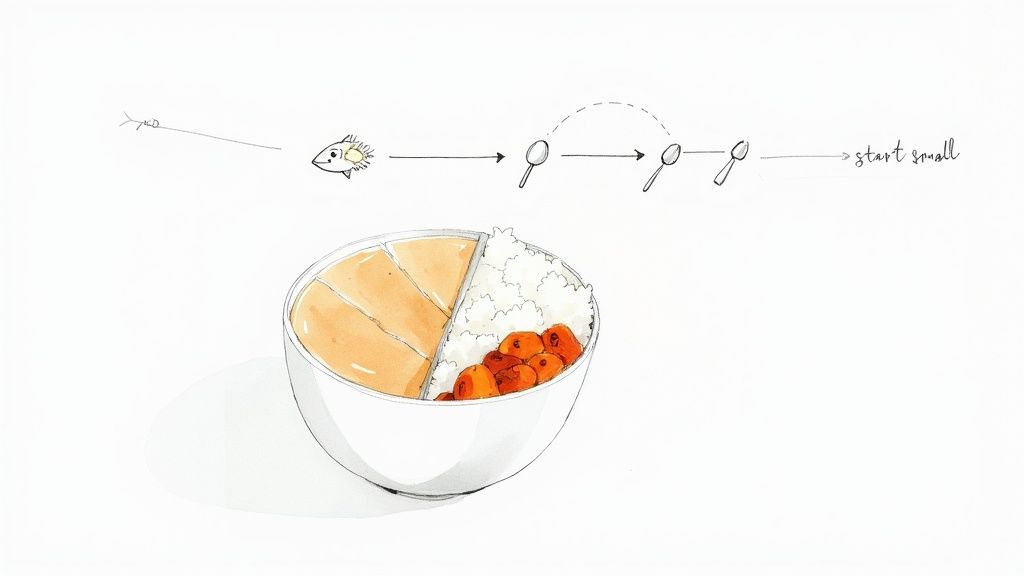
After you've given your dog's gut a chance to rest, bringing food back into the picture needs to be done carefully. You can’t just go back to their usual kibble. The goal here is to offer something incredibly simple and easy to digest that won't shock their sensitive system.
This is where the bland diet comes in. It’s the cornerstone of at-home care for a poorly tum and, honestly, it’s your best friend during this recovery phase. Think of it as the doggy equivalent of us having a bit of dry toast or a simple soup – it provides gentle nourishment without making the digestive tract work overtime.
What Goes Into a Bland Meal?
The classic vet-recommended bland diet is refreshingly simple. It’s just a combination of one lean protein source and one plain, starchy carbohydrate. The absolute key is to keep it basic: no fats, no oils, and definitely no seasonings.
Safe Protein Choices:
- Boiled Chicken Breast: Make sure it's boneless and skinless. Boil it until it's cooked through and then shred it into small bits.
- Lean Minced Beef or Turkey: You'll want to boil this as well and—this is crucial—drain off every last bit of fat before mixing it with the carb.
- White Fish: Cooked cod or pollock are fantastic low-fat options, especially if your dog has issues with poultry.
Simple Carbohydrate Options:
- Plain White Rice: Cook it until it’s very soft and mushy. Avoid brown rice for now; it’s too high in fibre for a recovering gut to handle.
- Cooked Sweet Potato: Boiled and mashed is the way to go, making it easy for your dog to digest.
A good starting ratio is roughly one part protein to two parts carbohydrate. This mix is gentle, provides easy energy, and supports the healing process.
A Quick Word of Caution: The bland diet is strictly a short-term fix. It’s not nutritionally balanced for the long haul and should only be used for a few days to get your dog through this rough patch.
The "Slow and Steady" Feeding Plan
How you feed is just as important as what you feed. A recovering stomach can't handle a full-sized meal right away. One of the most common mistakes I see owners make is reintroducing food too quickly, which often leads to a frustrating setback.
The mantra to remember is "start small, go slow."
Begin with a tiny amount – maybe just a single tablespoon for a medium-sized dog – and see how they handle it. If they keep that down for a couple of hours without any issues, you can offer another small spoonful.
Sample Reintroduction Schedule
- Day 1 (After the Fast): Offer 3-4 tiny meals spread several hours apart. You're aiming for about a quarter of their total daily food intake, just split into these mini-servings.
- Day 2: If everything is going smoothly, you can make the portions slightly larger and reduce the frequency to 3 meals for the day.
- Day 3: Continue to gradually increase the portion size. By now, you might be feeding about half to three-quarters of their normal daily amount, still divided into smaller meals.
This gradual approach gives their gut time to wake up and start functioning properly again without being overwhelmed.
Transitioning Back to Their Normal Diet
Once your dog has been symptom-free for 48 hours—no vomiting, no diarrhoea, and producing firm stools—it's time to start thinking about their regular food. Don't just switch back cold turkey! This transition needs to be just as gradual to avoid another upset.
Let's say your Beagle, Bella, is finally feeling better after her bland diet of chicken and rice. She's been her happy self for two days. Here’s how you’d get her back onto her usual kibble:
- Days 4-5: Serve a meal that’s 75% bland diet and 25% her regular food.
- Days 6-7: Move to a 50/50 mix of bland diet and regular food.
- Days 8-9: Shift the ratio to 25% bland diet and 75% regular food.
- Day 10: If her digestion is still solid, you can go back to 100% of her normal diet.
This slow, seven-day transition is a surefire way to reacquaint their system with their normal food, massively reducing the risk of a relapse. By taking your time, you're not just helping them recover now—you're setting them up for better digestive health down the road.
Soothing Home Remedies to Support Digestion
Once your dog is happily keeping down their bland meals, you can start thinking about adding a few gentle, tried-and-tested remedies to help things along. These aren’t overnight cures, but they are brilliant at soothing an irritated tummy and getting your dog’s digestion back on track.
Think of them as a support crew for their gut. They work with the bland diet and the initial fast to help rebalance your dog's digestive system from the inside out.
The Power of Plain Pumpkin
One of the first things many experienced dog owners reach for is a tin of plain pumpkin. And for good reason. It’s absolutely crucial, though, that you use 100% pure pumpkin purée—not the spiced-up pie filling you’d use for a crumble, which is packed with sugar and spices that will only upset their stomach more.
Pumpkin is a wonderful source of soluble fibre. This means it works like a sponge, soaking up excess water in the gut to help firm up loose stools. On the flip side, it also adds gentle bulk to help get things moving if your dog is a bit constipated. It’s a fantastic all-around digestive regulator.
A good rule of thumb for a starting dose is:
- Small dogs: 1 teaspoon per meal
- Medium dogs: 1 tablespoon per meal
- Large dogs: 2 tablespoons per meal
Just stir it straight into their bland food. Thankfully, most dogs seem to love the taste, so it’s usually an easy win.
Restoring Gut Balance with Probiotics
A bout of vomiting or diarrhoea can really throw the delicate ecosystem of good bacteria in your dog's gut into chaos. Helping to replenish these friendly microbes is a vital step in their recovery, and that’s where probiotics come in.
It’s easy to think a dollop of your own probiotic yogurt will do the trick, but it's best to steer clear. Human probiotics are formulated for our gut environment, and dogs have their own unique needs. Worse still, many yogurts contain xylitol, an artificial sweetener that is incredibly toxic to dogs.
Always reach for a canine-specific probiotic supplement. These are properly formulated with the right bacterial strains and strength to benefit a dog’s gut. They help to nudge out the bad bacteria and foster a healthy intestinal environment, which can often shorten how long the diarrhoea lasts. If you're looking to dive deeper into gut health, understanding the benefits of digestive enzymes for dogs is a great next step in supporting a truly resilient digestive system.
A Quick Tip from Experience: A healthy gut microbiome is the cornerstone of your dog's overall wellbeing. When it gets knocked off balance, probiotics are like sending in reinforcements to restore order and bolster their natural digestive defences.
Comparing Safe Home Remedies for Dog Stomach Upset
Choosing the right remedy can feel overwhelming when your dog is unwell. To help you decide what might be most helpful, here’s a quick comparison of the safest and most effective options.
| Remedy | Primary Purpose | How It Works | Important Note for UK Owners |
|---|---|---|---|
| Plain Pumpkin Purée | To regulate stools | Soluble fibre absorbs excess water (for diarrhoea) or adds gentle bulk (for constipation). | Check the tinned goods aisle for 100% pure pumpkin. Avoid anything labelled "pie filling." |
| Canine Probiotics | To restore gut bacteria | Introduces beneficial microorganisms to rebalance the gut flora after an upset. | Always use a vet-approved, dog-specific formula to avoid harmful additives like xylitol. |
| Plain Bone Broth | For hydration & gentle nutrients | Provides easily digestible minerals and encourages drinking in dehydrated or reluctant dogs. | Make it yourself or buy a commercial version with no added salt, onions, or garlic. |
Bringing these simple remedies into your dog's care plan can make a noticeable difference in how quickly they bounce back. By supporting their digestive system with the right tools, you’re not just managing the symptoms—you’re actively helping their body heal. Just remember to introduce anything new slowly, one at a time, and if you’re ever in doubt, a quick call to your vet is always the best move.
Red Flags That Mean You Must Call the Vet
https://www.youtube.com/embed/GDC1j-qZEOo
While home care is brilliant for a straightforward, mild tummy upset, you absolutely have to know when you're dealing with a real emergency. Some symptoms are non-negotiable red flags. They mean pick up the phone and call your vet right now.
Spotting these signs early and acting fast can be the difference between a minor blip and a life-threatening situation.
When Symptoms Become Severe
A single instance of vomiting after eating grass is one thing. But when symptoms are persistent or escalate quickly, your dog is sending a clear signal that something is seriously wrong. Don't try to wait these out.
You need to contact your vet immediately if you see any of the following:
- Continuous Vomiting or Diarrhoea: We're talking about multiple episodes in just a few hours. If your dog can't even keep down small sips of water, they're on a fast track to dangerous dehydration.
- Blood in Their Stool or Vomit: This is always an emergency. The blood might be bright red streaks, or it could look dark and tarry like coffee grounds. Both point to a serious internal issue that needs immediate attention.
- Signs of Abdominal Pain: Is their tummy tense, hard, or bloated? A dog in pain might also adopt a "prayer position"—bum in the air, front legs stretched out—or yelp when you gently touch their abdomen.
These are classic signs of serious conditions like pancreatitis, a foreign object causing a blockage, or even bloat (Gastric Dilatation-Volvulus), which is a surgical emergency, especially for deep-chested breeds.
High-Risk Dogs Need Faster Intervention
Your dog’s age, size, and general health are massive factors here. Some dogs simply don't have the reserves to handle a tummy bug, making even a mild upset a much bigger deal.
For these at-risk pups, it’s always better to be safe than sorry. The "wait and see" approach just isn't worth the risk.
A Vet’s Warning: Puppies and senior dogs can become critically dehydrated much, much faster than a healthy adult dog. An upset that a three-year-old Labrador could shake off in a day might become a serious problem for a four-month-old puppy within just a few hours.
Deciding what to do can be stressful, but this can help clarify things:
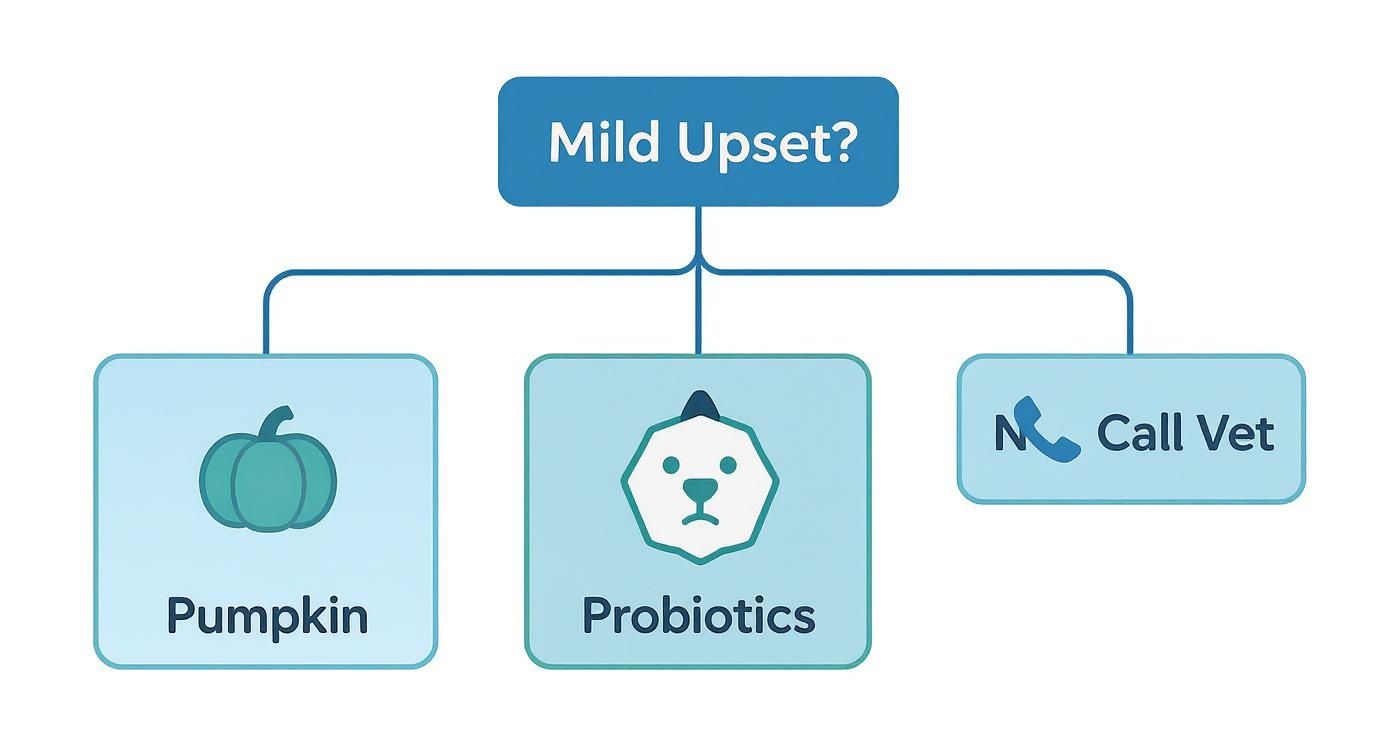
As you can see, while things like pumpkin can help a mild case, any escalation means a vet visit is the only safe and responsible choice.
You should always seek immediate veterinary advice if the unwell dog is:
- A puppy under six months old.
- A senior dog.
- A dog with a pre-existing medical condition like diabetes, kidney disease, or a heart condition.
- A dog that is already taking medication for something else.
At the end of the day, you know your dog better than anyone. If your gut is screaming that something is seriously wrong, listen to it. A quick phone call to your vet can provide instant peace of mind or get your dog the expert help they need, right when it counts. Never hesitate to make that call.
Preventing Future Digestive Issues
Knowing how to handle a dog's upset stomach is one thing, but preventing it from happening in the first place is the real goal. A bit of proactive care and a stable routine can make a world of difference, saving your dog from discomfort and you from worry.
The cornerstone of good gut health is a consistent, high-quality diet. A dog’s digestive system really does thrive on predictability, and you’d be surprised how often sudden food changes are the culprit behind tummy troubles. It’s not always about a dramatic brand switch either; even changing between different flavours within the same product line can be enough to throw their system out of whack.
If you absolutely must change their food, do it gradually. A slow, methodical transition over at least 7-10 days gives their gut bacteria time to adjust.
Creating a Gut-Friendly Lifestyle
It’s not just about what goes into their bowl, but also how they eat and what they can get their paws on around the house. A few simple tweaks to their environment and feeding routine can have a massive impact.
- Tackle the Fast Eaters: Does your dog inhale their food in seconds? They’re also swallowing a lot of air, which can lead to bloating, discomfort, and even vomiting. A slow-feeder bowl is a fantastic, simple tool that forces them to take their time.
- Dog-Proof Your Home and Garden: A curious nose can lead to a world of trouble. Make sure your rubbish bins have secure lids, and always keep human foods out of reach—especially toxic ones like chocolate, onions, and grapes. It’s also wise to do a quick sweep for things they might chew and swallow, like stray socks or small toys.
These habits help you avoid "dietary indiscretion"—vet-speak for a dog eating something they shouldn't—which is hands down the most common reason for an upset stomach.
It's a surprisingly common problem. Here in the UK, research from the Royal Veterinary College's VetCompass Programme found that acute diarrhoea is a top reason for vet visits. In fact, roughly 1 in every 12 dogs is diagnosed with it each year. You can read more about the findings on canine diarrhoea in the UK.
Bolstering Their Defences with Supplements
For an extra layer of gut protection, think about adding a daily digestive supplement to their routine. These aren't just for when your dog is already feeling poorly; they work proactively to build a more resilient and balanced gut environment day in and day out.
Probiotics are probably the most well-known and beneficial. They work by introducing good bacteria into the digestive tract, helping to create a healthy gut microbiome. A well-balanced gut is far better at handling the occasional dietary slip-up or fending off nasty pathogens, which means fewer and less severe stomach upsets. If you want to dive deeper into how they work, our guide on prebiotics and probiotics for dogs is a great place to start.
By putting it all together—a consistent diet, a safe home, and the support of a daily supplement—you create a powerful, multi-layered strategy for keeping digestive problems at bay. This holistic approach not only keeps your best friend feeling great but also gives you the peace of mind that you're supporting their health from the inside out.
Your Top Questions About Dog Tummy Troubles, Answered
When your dog's not feeling their best, it's natural to have a million questions running through your mind. Getting clear answers can help you feel more in control and less worried. Let's tackle some of the most common queries we hear from dog owners dealing with an upset stomach.
How Long Should a Bland Diet Last?
Think of a bland diet as a short-term reset button, not a long-term meal plan. You'll want to stick with it for about two to three days after the last bout of vomiting or diarrhoea. The goal is to see consistently firm stools and your dog acting more like their usual self before making any changes.
When you're ready to switch back, take it slow to avoid another upset stomach. A gradual transition over three or four days usually does the trick:
- Day 1: Mix 75% bland food with 25% of their regular kibble.
- Day 2: Move to a 50/50 split.
- Day 3: Try a mix of 25% bland food and 75% regular kibble.
- Day 4: If all is well, go back to 100% of their normal food.
If you see any symptoms return at any point, just hit pause and give your vet a call for advice.
Can I Give My Dog Human Medicines Like Imodium?
This is a hard no. You should never give your dog any over-the-counter human medications—Imodium and Pepto-Bismol included—unless your vet has explicitly told you to. These medicines are designed for human bodies, and the ingredients and dosages can be dangerous, or even toxic, for your dog.
A Vet's Perspective: Giving human medicines can do more than just cause a bad reaction. It can hide serious symptoms, making it harder for your vet to figure out what's really going on, and can lead to dangerous side effects. The safest bet is always to consult a professional first.
Why Is My Dog Eating Grass? Is It Normal?
It’s surprisingly common to see dogs chewing on grass, and it's a bit of an instinctual mystery. Some experts think they do it for extra fibre, while others believe it's a natural way to make themselves vomit if something is irritating their stomach.
A little nibble here and there is usually nothing to worry about. However, if your dog is eating grass obsessively, or if it's accompanied by other signs of tummy trouble like being off their food or having diarrhoea, it’s a good sign that their digestive system could use some help.
At Tipaw, we're all about proactive care for keeping your dog's gut happy. Our vet-approved supplements use natural ingredients to build a strong, resilient digestive system and help head off future problems. To keep your best friend feeling their best, explore our range of digestive solutions at Tipaw.


