


Calming supplements for dogs are specially formulated chews, oils, or powders that use natural ingredients to help ease a dog’s stress and anxiety. Think of them as a non-prescription helping hand for your pet’s emotional wellbeing, perfect for navigating stressful events like fireworks, car journeys, or being left on their own.
Why So Many Dogs Seem Anxious These Days
If you've ever felt that familiar ache of guilt when leaving your anxious dog at home, or watched them shake during a thunderstorm, you're certainly not alone. Our modern lives can be full of challenges for our dogs. From the sudden crack of a firework to the strange smells of a vet's waiting room, plenty of everyday situations can send their stress levels soaring.
This has become a particularly widespread problem in recent years. The massive shift in our daily routines has really affected our pets, causing a noticeable spike in separation-related issues. It’s no wonder so many of us are now looking for effective calming supplements to help our dogs feel more comfortable and bring a sense of peace back into our homes.
The Post-Lockdown Anxiety Spike
This rise in pet anxiety isn't just something we're imagining; it’s a real, measured phenomenon. One major survey revealed that a massive 73% of UK dog owners said their pets struggled with separation anxiety as lockdown rules began to lift. This had a knock-on effect on us, too, with 60% of owners admitting they felt guilty leaving the house. To cope, 11% turned to supplements or medication to help their anxious dogs. You can read more about these insights from the survey on separation anxiety by Lovimals and YouGov.
This data shows that millions of us are going through the same thing. It can be heartbreaking to realise your dog is struggling, but getting to grips with why it's happening is the first step towards finding a real solution. Anxious behaviours don't mean you have a "bad dog"—they're a signal that your dog needs support.
Anxious behaviour is your dog's way of communicating that they feel overwhelmed and unsafe. By addressing the underlying fear, you can help them build confidence and feel more secure in their environment.
What We Really Mean by "Calming Aids" for Dogs
When we talk about "calming aids," we’re not just talking about one single product. It’s a whole toolbox of support systems designed to encourage relaxation and dial down stress. This guide will focus mainly on calming supplements, but the best plans always involve a multi-pronged approach:
- Nutritional Supplements: These are products packed with natural ingredients like L-tryptophan, chamomile, or specific probiotics that work with your dog's body to promote its own calming processes.
- Behavioural Training: Using positive techniques like desensitisation and counter-conditioning can, over time, change your dog's emotional reaction to the things that scare them.
- Environmental Management: Simply creating a safe, predictable, and comforting space for your dog can make a huge difference in lowering their day-to-day stress.
Being able to spot the early, subtle warnings is key. Learning the different signs of anxiety in dogs means you can step in before their fear spirals. When you combine the right supplements with supportive training and a calm home environment, you create a powerful strategy for helping your best friend feel safe and sound.
How Do Calming Supplements Actually Work?
Ever wondered what’s really going on inside your dog’s head when they have a calming chew? It’s not a magic trick, but a clever bit of science. These supplements use natural compounds that work with your dog's own biology to gently encourage a sense of peace. Think of it less like flipping a switch and more like carefully guiding their nervous system back to a calmer, more balanced state.
The active ingredients in these products interact with your dog’s brain and body in some pretty specific ways. Getting to grips with how these key players function will help you make a much better choice about which calms for dogs might be the right fit for your furry friend, whether they’re terrified of fireworks or fret when you leave the house.
This mind map gives a great overview of dog anxiety, breaking down the common causes, the signs to look out for, and the different types of solutions available.
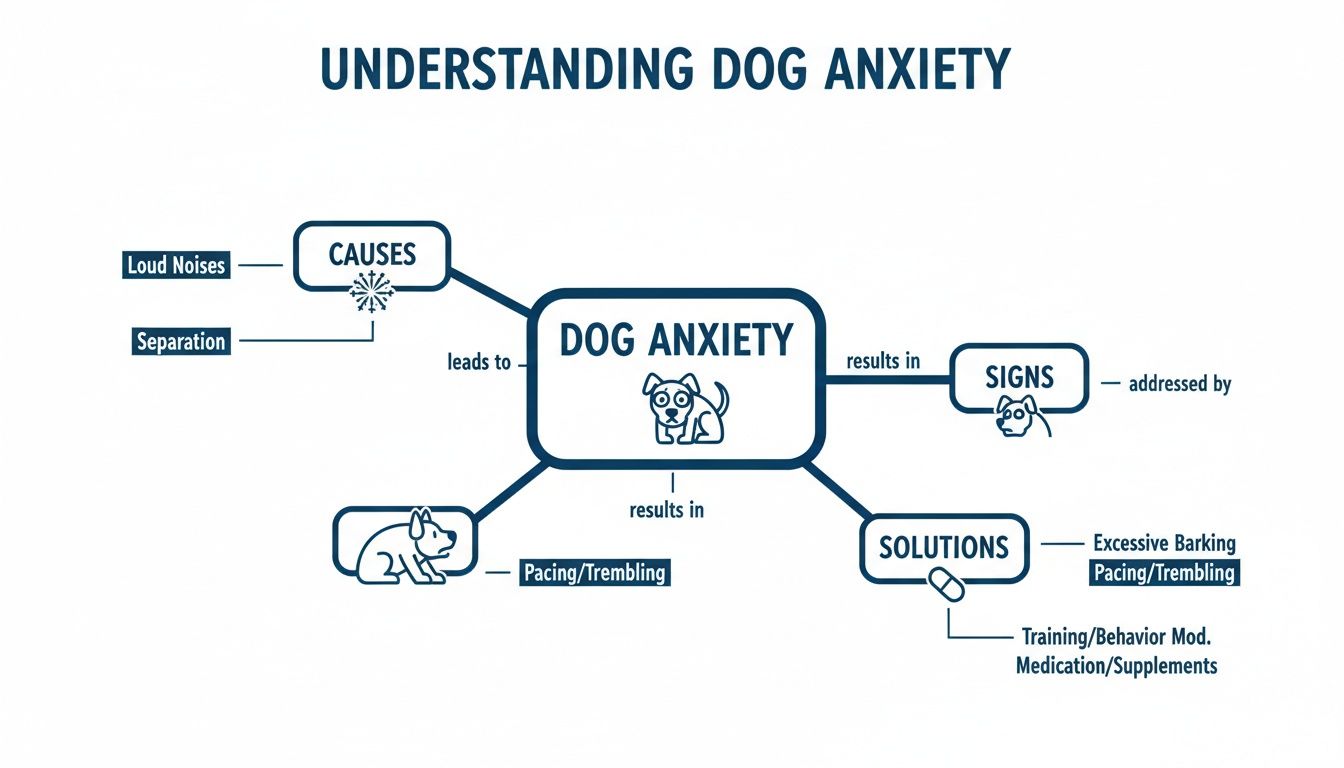
As you can see, using a supplement is often a direct response to the specific triggers and signs of a dog’s stress. Let’s dive into what makes them tick.
The Science Behind the Calm: A Closer Look at Ingredients
The world of calming supplements can feel a bit overwhelming, with so many different ingredients listed on the label. To make sense of it all, it helps to understand what these key compounds do and which situations they’re best suited for.
This table breaks down some of the most common active ingredients you'll come across, explaining their job in simple terms.
Common Calming Ingredients and Their Functions
| Ingredient | How It Works (Simplified) | Best For |
|---|---|---|
| L-Tryptophan | An amino acid that helps the brain produce more serotonin (the "feel-good" chemical). | General anxiety, mood regulation, stress from environmental changes. |
| L-Theanine | An amino acid from green tea that boosts calming brain chemicals like GABA, promoting relaxation without drowsiness. | Situational stress (vet visits, car travel), hyper-excitability. |
| Chamomile | A herb with mild sedative properties that helps to soothe the nervous system. | Mild, general anxiety and helping dogs settle down for sleep. |
| Valerian Root | A potent herb that increases the brain's "calm down" messenger, GABA. | Significant anxiety, sleep issues, stress related to loud noises (fireworks). |
| Passionflower | A botanical that also works by increasing GABA levels to help quieten overactive brain signals. | Nervousness, separation anxiety, and general restlessness. |
| Probiotics | Beneficial gut bacteria that support the "gut-brain axis," improving mood by promoting a healthy digestive system. | Chronic stress, dogs whose anxiety seems linked to digestive upset. |
By familiarising yourself with these ingredients, you can start to see how different products are formulated to tackle different types of anxiety.
Amino Acids: The Brain's Building Blocks
Some of the most effective calming ingredients are amino acids. These aren't sedatives; they're the essential building blocks the body uses to create proteins and, crucially, neurotransmitters—the chemical messengers in the brain.
Think of it like this: you’re not drugging your dog, but rather giving their brain the raw materials it needs to manufacture its own "feel-good" chemicals.
- L-Tryptophan: This is the precursor to serotonin, a superstar neurotransmitter that helps regulate mood, sleep, and even appetite. By topping up your dog's L-Tryptophan, you're essentially helping their brain produce more serotonin naturally, which can lead to a much more stable and positive outlook.
- L-Theanine: Commonly found in green tea, this clever amino acid works by increasing levels of a neurotransmitter called GABA (gamma-aminobutyric acid). GABA's job is to put the brakes on and quieten down brain activity. L-Theanine also gives dopamine and serotonin a little boost, promoting a feeling of calm alertness, not drowsiness.
These amino acids are like supportive best friends for your dog’s brain, making sure it has everything it needs to handle stress.
Herbal Helpers: Nature’s Soothing Touch
For centuries, people have turned to certain herbs to help soothe and relax. In calming supplements for dogs, these botanicals work by gently influencing the central nervous system, helping to dial down excitability and encourage restfulness.
It’s the botanical equivalent of turning down the volume on your dog’s anxiety.
Some of the most well-regarded herbal helpers include:
- Chamomile: Famous for its mild sedative effects, chamomile contains compounds that bind to the same receptors in the brain as some anti-anxiety medications, promoting relaxation and easing stress.
- Valerian Root: This herb is a real powerhouse for increasing the amount of GABA in the brain, much like L-Theanine. It’s especially helpful for dogs who just can’t seem to settle down or sleep due to their anxiety.
- Passionflower: Another brilliant GABA-booster, this botanical helps to stop the brain's nerve cells from getting over-excited, which leads to a calmer, more measured demeanour.
The Gut-Brain Connection: A Calm Tummy for a Calm Mind
One of the most exciting areas in pet wellness right now is the link between gut health and mental wellbeing. You might have heard the gut called the "second brain," and for good reason—it’s lined with millions of nerve cells and produces a huge amount of the body's serotonin.
This means that an unhappy, imbalanced gut can directly contribute to an anxious mind.
This is precisely why many modern calming supplements now include probiotics. Probiotics are the good guys—the beneficial bacteria that help bring balance back to the gut microbiome. Certain strains have been shown to have a positive impact on mood and behaviour by strengthening that communication pathway between the gut and the brain.
By nurturing a healthy gut, you are directly supporting your dog’s ability to cope with stress. For those wanting to dig deeper, you can learn more about how specially formulated calm tabs for dogs often combine these different approaches for a powerful, multi-faceted effect. Understanding these mechanisms is the first step to choosing a product that truly gets to the root of your dog's anxiety.
What the Research Says About Calming Supplements
It’s one thing to hear how an ingredient is supposed to work, but seeing the actual proof is what really builds confidence. When you're looking for calms for dogs, it pays to look past the marketing slogans and dig into what the science says. The world of pet supplement research is growing, and while not every ingredient has been put through its paces, many of the key players are backed by some pretty promising evidence.
This kind of research helps us separate what truly works from old wives' tales. It gives us an objective way to judge whether a product is likely to make a real difference for our anxious dogs. But it's also important to read these studies with a critical eye, as the quality and size of the research can vary a great deal.
From the Lab to Your Living Room
Scientific validation is the bridge that takes a product from a hopeful guess to a reliable tool in your kit. When researchers run clinical trials, they're looking for tangible, measurable changes in a dog's behaviour and even its body chemistry. They typically do this by comparing a group of dogs getting the real supplement to a control group getting a placebo—a harmless "dummy" pill.
This method is crucial because it helps confirm that any improvements are genuinely down to the supplement itself, not other factors. For instance, a dog might appear calmer just because its owner is giving it more attention while administering the supplement. This is known as the placebo effect. By using a control group, scientists can account for this and pinpoint the true impact of the ingredients.
An owner’s perception is a massive factor in these studies. While a loving owner’s report is invaluable, researchers often back it up with objective data—like measuring cortisol (stress hormone) levels in saliva or using activity trackers—to get the full, unbiased picture of a supplement’s effects.
Evidence in Action: Probiotic Research
The gut-brain axis is a perfect example of an area where the research is getting really exciting. Scientists are finding that specific probiotic strains can have a direct, measurable impact on a dog’s anxiety levels. And this isn't just a theory; it's being proven in controlled studies.
One recent clinical trial on the probiotic Lactiplantibacillus plantarum delivered some remarkable results for anxious dogs. After 35 days, the dogs receiving the supplement had significantly lower general anxiety scores and even showed less aggression compared to the placebo group. Even more impressively, activity trackers confirmed these dogs settled more quickly after their owners left the house and enjoyed better sleep patterns. You can read the full research about these probiotic findings and see the data for yourself.
It's this kind of specific, data-driven evidence that really helps build trust in calming supplements.
What This All Means for You
So, how does all this research help you make a good choice for your dog? It means looking for brands that are open about their ingredients and, ideally, can point to the science that backs up their formulas. You don't need a PhD in biochemistry to pick a supplement, but understanding that products grounded in solid research are more likely to be effective is a brilliant place to start.
When you're weighing up different calms for dogs, keep these points in mind:
- Clinically Studied Ingredients: Does the product use active ingredients that have been studied for their calming effects, like L-tryptophan, L-theanine, or specific probiotic strains?
- Clear Dosages: Is the brand transparent about how much of each active ingredient is in the product? This lets you properly compare products and know exactly what you’re giving your pet.
- Reputable Manufacturing: Is the supplement made to high quality standards? This helps guarantee the purity and potency of the ingredients are consistent from batch to batch.
By focusing on products backed by evidence, you’re investing in a solution that has been properly scrutinised and shown to make a genuine difference. For a deeper dive into making your selection, check out our guide on finding the best supplements for dogs with anxiety and what to look for on the label. This approach helps ensure you’re giving your dog the best possible support for a calmer, happier life.
A Holistic Approach to a Calmer Dog
While calming supplements can be a fantastic help, it's best to think of them as one important tool in your kit, not the entire solution. To help your dog find lasting calm, you need to look at the bigger picture. This means weaving the supplements into a broader strategy that includes positive tweaks to their environment and daily routine.
When you tackle anxiety from multiple angles, you’re not just masking the symptoms – you're getting to the root of the problem.
Think of it this way: when you combine calms for dogs with supportive training, you create a powerful partnership. The supplement helps dial down your dog's stress, making them more open to learning. The training then builds their confidence for the long haul. It's this combination that creates real, sustainable change.

Creating a Foundation of Safety
The very first step is making sure your dog feels genuinely secure in their own home. This comes down to two key things: a predictable environment and a designated safe haven they can retreat to when things get a bit much.
A reliable daily routine can be incredibly comforting for a dog who’s prone to worry. When they know when to expect meals, walks, and playtime, it removes a lot of uncertainty from their world, which is often a major source of stress. Consistency is your best friend here.
Next, set up a "safe space." This could be a crate with the door always open, a comfy bed tucked into a quiet corner, or even a particular room. Fill this spot with soft blankets and their favourite toys to make it extra inviting.
This safe space should be their sanctuary. It’s a place where only good things happen, and they are never, ever bothered. By respecting this boundary, you're giving them a reliable escape from whatever frightens them.
Building Confidence Through Enrichment
A bored dog is very often an anxious dog. Keeping their brain busy with mental stimulation is crucial for building confidence and giving them a positive way to channel their energy. Things like puzzle toys, snuffle mats, and fun training games are brilliant for this.
These activities do more than just fend off boredom. They give your dog a sense of purpose and accomplishment. Every time they figure out a puzzle to get a treat, they get a little confidence boost. It teaches them that they can handle challenges all on their own.
Proactive Training for Lasting Calm
Once you've built a calm foundation at home, you can start to gently work on your dog’s specific fears. The two most effective training methods for this are desensitisation and counter-conditioning. They might sound a bit technical, but the ideas behind them are actually very simple.
- Desensitisation: This is all about gradually exposing your dog to their trigger at a super low level – so low that it doesn't cause a fearful reaction.
- Counter-Conditioning: This involves changing your dog's feelings about a trigger by pairing it with something they absolutely love, like a really tasty treat or a favourite toy.
Let's see how this works for a common fear, like car journeys. You wouldn't just bundle your dog into the car and hope for the best. Instead, you'd break it down into tiny, positive steps:
- Step 1: Start by simply giving your dog a treat for being calm near the closed car.
- Step 2: Once they’re happy with that, open the car door and reward them for just looking at or sniffing the car from the outside.
- Step 3: Next, toss a high-value treat just inside the car for them to grab, letting them leave straight away.
- Step 4: Slowly build up to them sitting in the car with the engine off for a few seconds, always pairing the experience with amazing treats.
This slow, positive process helps transform the car from a scary metal box into a place where brilliant things happen. By pairing this kind of training with the support of calms for dogs, you give your pet the best possible chance of success, paving the way for a happier, more resilient companion.
How to Choose the Right Calming Product
Walking down the pet aisle or browsing online, the sheer number of calms for dogs can feel pretty overwhelming. But finding a safe, effective option for your best mate doesn't have to be complicated. The key is to follow a few simple steps, and your journey should always start in one place: your vet's office.
Think of it this way: what looks like anxiety—pacing, whining, or being destructive—could actually be a sign of something else. Sometimes, underlying medical issues like chronic pain or a thyroid imbalance can cause these exact behaviours. A quick trip to the vet helps rule out any physical causes first, ensuring you’re treating the real problem right from the get-go.
Partnering with Your Vet
Your vet is your single most valuable resource in this process. They know your dog's health inside and out and can offer guidance that’s tailored specifically for them. A recent Dogs Trust survey found that vets are the number one source of help for UK owners struggling with separation anxiety, which really underscores their vital role. Interestingly, the same survey noted very few owners turn to specialist behaviourists for serious issues, making your vet's input even more crucial. You can discover more insights in the Dogs Trust research summary.
To get the most out of your visit, come prepared to chat about:
- Specific Behaviours: What exactly does your dog do? Is it frantic barking, hiding, or chewing up the furniture?
- The Triggers: When does it happen? Only when you leave the house? During thunderstorms? Or around new people?
- Timings: How long has this been going on, and how often does it occur?
The more detail you can provide, the clearer the picture becomes for your vet. This allows them to recommend the best course of action, whether that's a behaviour plan, a specific supplement, or a combination of both.
Decoding the Product Label
Once you've got the green light from your vet, it's time to become a label detective. A good, high-quality product will be completely transparent about its contents. Vague language is a massive red flag.
Look for a clear list of active ingredients—these are the power players doing the calming work, like L-tryptophan or chamomile. The label should tell you exactly how much of each ingredient is in a single serving. Don't forget to scan the inactive ingredients too, just to make sure there are no dodgy fillers or artificial additives that might not agree with your dog.
Key Takeaway: A brand you can trust is proud of its formula and lays it all out for you to see. If you spot fuzzy terms like "proprietary blend" without specific amounts, or if the ingredient list is hard to find, just move on. There are better options out there.
Quality Seals and What They Mean
Here in the UK and across Europe, the pet supplement industry is held to pretty high manufacturing standards. While there isn't one universal "calming kitemark," you can look for certain credentials to feel more confident in your choice.
Keep an eye out for products made in facilities that follow Good Manufacturing Practices (GMP). This certification is a big deal; it means the product is consistently produced and controlled according to strict quality standards. It's your assurance that what's on the label is exactly what's in the bottle.
Choosing the Best Format for Your Dog
Calming aids come in a few different forms, and the right one really just comes down to what works best for your dog and your daily routine.
- Soft Chews: These are usually the easiest option. Most dogs gobble them up like a tasty treat, which makes giving them a daily dose a breeze, especially for picky eaters.
- Oils: Calming oils are super versatile. You can mix them into your dog's food or pop them directly onto their tongue. They also make it easy to adjust the dose with precision, which is handy for dogs of different sizes.
- Tablets or Capsules: While perfectly effective, tablets can be a bit tricky if your dog is a master at spitting out pills. They’re a solid choice, though, if your dog will happily take them hidden in a bit of cheese or a treat.
Have a think about what fits seamlessly into your life. The whole point is to make this a positive and stress-free experience for both of you. By combining your vet's professional advice with a bit of savvy label-reading, you can confidently find the right calming support to help your dog feel their best.
Your Questions About Calming Aids for Dogs, Answered
It's completely normal to have a few questions lingering before you introduce something new into your dog's routine. We get it. You want to be sure you're doing the best thing for your companion.
So, let's walk through some of the most common queries we hear from dog parents, covering everything from timing and safety to how these products fit into daily life. Think of this as our final chat to make sure you feel confident and clear about supporting your dog's wellbeing.
How Long Do Calming Supplements Take to Work?
This is a great question, and the honest answer is: it depends entirely on the active ingredients. Some get to work quickly, while others are more of a slow burn, building up their benefits over time.
For ingredients like L-theanine or chamomile, you might notice a subtle shift in your dog’s demeanour within 30 to 90 minutes. This makes them brilliant for those predictable, one-off events you know are coming – think car journeys, vet visits, or the night of the local fireworks display.
On the flip side, you have ingredients that work by supporting the body's natural systems. Things like L-tryptophan (which helps produce serotonin) or specific probiotics that influence the gut-brain connection need a bit more runway. For these, you’ll need to give them daily for about four to six weeks before you see the full, consistent calming effect. Patience is key here; you're playing the long game.
Are There Any Side Effects I Should Watch For?
The good news is that high-quality, natural calming supplements are generally very safe with a low risk of side effects. When they do pop up, they’re usually quite mild.
The most common thing you might see is a bit of drowsiness, almost like your dog is feeling extra sleepy, especially when first starting out. Some dogs can also get a slightly upset tummy, maybe leading to looser stools.
A good rule of thumb is to 'start low and go slow'. Begin with a smaller dose than the packaging suggests just to see how your dog gets on. If you spot anything that seems severe or doesn’t go away, it's best to stop and have a chat with your vet.
Can I Give My Dog Calming Supplements Every Day?
Absolutely. In fact, many calming supplements are designed specifically for daily, long-term use. This approach is perfect for dogs who live with a more constant, generalised anxiety, rather than just getting stressed by specific triggers.
Ingredients like L-tryptophan or certain probiotic blends deliver their best results when they become a consistent part of your dog's daily routine. The crucial thing is to choose a product that explicitly states it's safe for daily use and, as always, to get the green light from your vet. They can make sure it's the right choice for your dog's individual health needs and won't clash with any other medications they might be on.
What Is the Difference Between a Supplement and a Prescription?
This is a key distinction. Think of calming supplements and prescription medications as two completely different tools for two different jobs. Supplements use natural ingredients like herbs, amino acids, and vitamins to gently support the body's own calming mechanisms. They’re available without a prescription and are best suited for mild to moderate cases of anxiety.
Prescription medications, on the other hand, are powerful pharmaceuticals like fluoxetine or trazodone that a vet prescribes. These work by directly altering the brain's chemistry to manage more severe anxiety or diagnosed behavioural disorders. Because they are much stronger and have a higher potential for side effects, they require close veterinary supervision.
In short, supplements are there to support a state of calm, while medications are a clinical tool to manage a diagnosed medical condition.
Ready to help your dog find their calm and confidence with a solution you can trust? The team at Tipaw has developed a vet-approved calming chew designed to help your dog feel more secure and relaxed. Explore our calming supplements and give your dog the peace they deserve.


