


When you're looking for natural ways to help your allergic dog, the goal is often to build their resilience from the ground up through diet, specific supplements, and soothing topical treatments. It's about getting to the root of the immune system's overreaction to calm that constant itch from the inside out.
Getting to the Bottom of Your Dog's Itching
It’s heartbreaking to watch your dog in a non-stop cycle of scratching, chewing, and licking. For any dog owner, it can feel like a helpless situation. But what's actually going on?
Think of your dog's allergic reaction like an overly sensitive car alarm. It’s an immune system that goes off at the slightest touch, mistaking harmless, everyday things for genuine threats. So, instead of simply ignoring a bit of pollen, dust, or a particular protein in their food, your dog’s body sounds the alarm.
This false alarm triggers a full-blown defensive response, releasing a flood of histamine and other inflammatory chemicals. That's what causes all the familiar signs we see: the maddening itch, angry red skin, and even those stubborn ear infections. It’s not just a skin-deep issue; it’s a sign of a system that’s out of balance.
This concept map breaks down the three main avenues that can trigger this itchy response in our dogs.
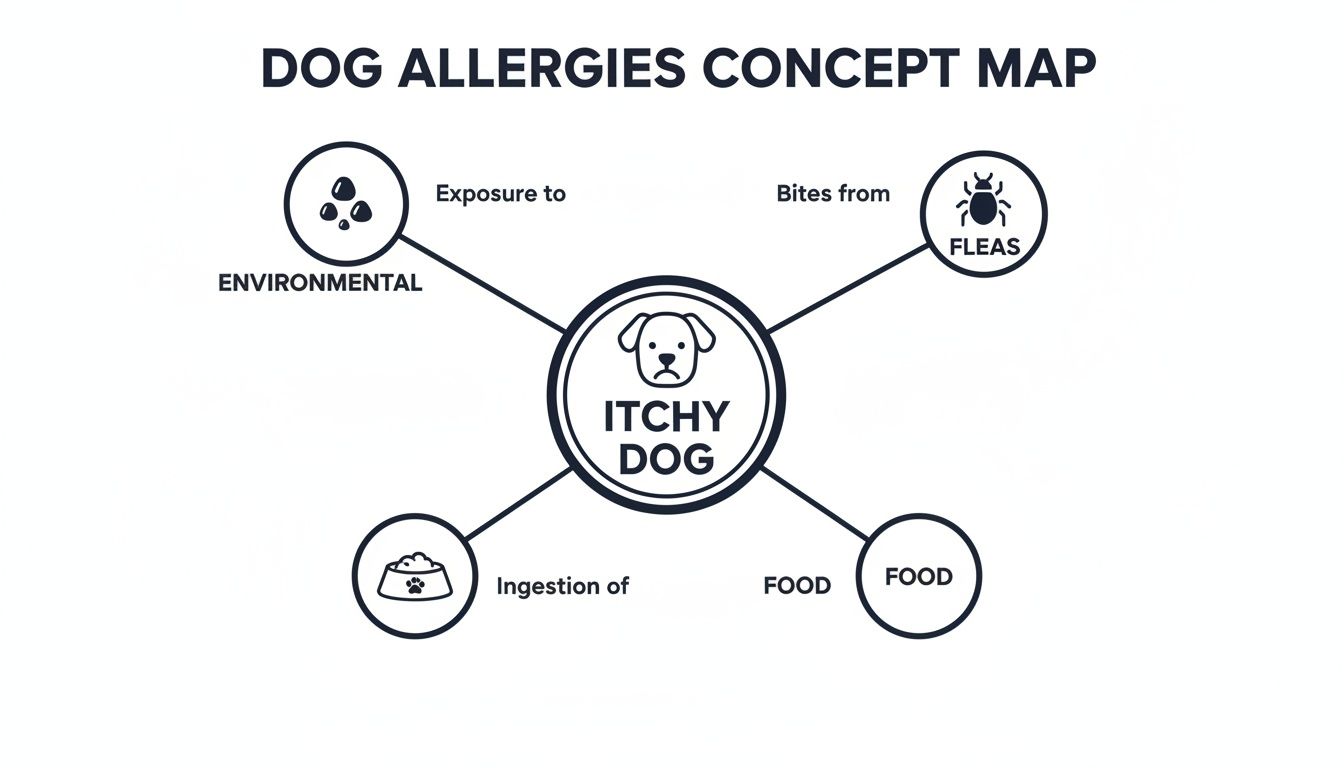
As you can see, the problem can start with what your dog breathes in, what they eat, or what simply lands on their skin. Pinpointing the source is the first major step toward finding relief.
The Three Usual Suspects: Allergy Types
To find a solution that works, you first need a good idea of what's causing the problem. Most dog allergies fit into one of three main buckets, though it’s not uncommon for a dog to be affected by more than one at a time.
Use this quick reference table to connect your dog's symptoms with potential allergy types and common triggers found throughout the UK.
Identifying Common Dog Allergy Triggers and Symptoms
| Allergy Type | Common UK Triggers | Typical Symptoms |
|---|---|---|
| Environmental (Atopy) | Tree pollen (spring), grass pollen (summer), dust mites, and mould spores | Itchy paws, ears, belly, and face. Often seasonal, flaring up after walks. |
| Flea Allergy Dermatitis | Saliva from flea bites (just one bite can be enough) | Intense scratching, hair loss, and scabs, especially around the tail, back, and thighs. |
| Food Allergies & Intolerance | Common proteins (beef, chicken), dairy, wheat, and other grains | Year-round itching, skin inflammation, chronic ear infections, and digestive upset (gas, loose stools). |
This table can help you start connecting the dots between what you're seeing at home and the likely culprit.
Why Are So Many People Turning to Natural Approaches?
Understanding these triggers helps explain why so many UK dog owners are now searching for natural remedies for allergies in dogs. It's a topic that's gaining huge traction. Recent data shows that articles focused on dog allergies saw a staggering 51.1% jump in readership between 2023 and 2024. This isn't a coincidence; it reflects a growing awareness that environmental shifts might be making symptoms worse for our pets.
Instead of just masking the itch with medication, a natural approach aims to get the body back in balance. The focus is on strengthening the skin's natural barrier, calming inflammation from within, and supporting a healthier immune response. It’s a proactive strategy for long-term health, helping your dog finally feel comfortable in their own skin again. You can learn more by checking out our guide on the common signs of dog allergies.
Building a Soothing Diet for Your Allergic Dog

Before you even think about supplements or special shampoos, the single most powerful tool you have is sitting right in your dog’s food bowl. Nutrition isn't just fuel; it's the foundation for a calm, balanced immune system. By being strategic about what your dog eats, you can directly tackle the internal inflammation that drives their allergic reactions.
Think of your dog's immune system as a smouldering fire. The wrong foods can act like kindling, causing it to flare up into an itchy, miserable blaze. Common proteins like chicken and beef are often the culprits, mainly because they've been used in dog foods for so long that some dogs simply develop a sensitivity to them over time.
So, the first job is to figure out what those triggers are. This is where an elimination diet comes in—it’s a methodical process for pinpointing exactly what's causing the problem.
Identifying Food Triggers with an Elimination Diet
An elimination diet is the gold standard for uncovering food sensitivities. It’s a bit of a process, but it’s incredibly effective. The idea is to temporarily feed your dog a very simple diet made from ingredients they've likely never encountered before, giving their over-reactive immune system a much-needed holiday.
The steps are straightforward, but your patience is key:
- Choose a Novel Protein and Carbohydrate: A "novel" protein is just one your dog hasn't eaten before. If they've spent their life on chicken-based kibble, things like duck, venison, or even kangaroo can be great choices. You'll pair this with a single, easy-to-digest carb source, like sweet potato or pumpkin.
- Stick to It Strictly: This is the most important part. For 8-12 weeks, your dog must eat only this new food. That means no treats, no table scraps, no dental chews, and no flavoured toys. Consistency is everything.
- Observe and Reintroduce: If your dog's allergy symptoms (like constant scratching or gunky ears) dramatically improve, you’ve confirmed a food sensitivity. After this calm-down period, you can start reintroducing old ingredients one at a time, watching closely for any reaction. This is how you nail down the specific trigger.
An elimination diet is less about restriction and more about discovery. It’s a quiet conversation with your dog's body, allowing it to tell you which foods help it thrive and which ones cause distress.
Once you know what to avoid, you can build a long-term diet that actively works to keep their system calm.
Transforming Meals into an Anti-Inflammatory Powerhouse
Avoiding triggers is just one half of the puzzle. The other is actively adding whole foods to your dog's meals that naturally fight inflammation. These ingredients work from the inside out, providing crucial nutrients that support healthy skin and help regulate that haywire immune response. They are one of the most effective allergies in dogs natural remedies.
Here are a few powerful, safe, and vet-approved additions to consider:
- Omega-3 Rich Foods: Oily fish like sardines (packed in water, never oil, with no added salt) are an amazing source of omega-3 fatty acids. These healthy fats are proven to reduce the inflammatory compounds in the body that lead to red, angry skin.
- Antioxidant-Packed Berries: A small handful of fresh or frozen blueberries provides a potent hit of antioxidants. These little powerhouses help neutralise the cellular damage caused by inflammation and support overall immune health.
- Cooling Leafy Greens: Lightly steamed spinach or kale can be a wonderful, vitamin-rich addition. In traditional food therapy, they're also seen as having a "cooling" effect, helping to balance the "heat" of an allergic reaction.
- Gut-Supporting Probiotics: A healthy gut is the centre of a balanced immune system. Introducing beneficial bacteria can strengthen your dog’s digestive tract, which acts as a key barrier against allergens. To dive deeper, you can learn more about the benefits of adding prebiotics and probiotics for dogs to their daily routine.
By combining the right base diet with these functional foods, you turn every meal into an opportunity to soothe, heal, and build lasting resilience against allergies.
Using Supplements for Targeted Allergy Relief
While a great diet is the cornerstone of a healthy immune system, targeted supplements are like calling in the specialists. They deliver concentrated, natural compounds that work to calm allergic reactions right at the source. Think of it as bringing in reinforcements to bridge the gap between good nutrition and active symptom control.

These vet-approved remedies work by interrupting the ‘allergic cascade’—that chain reaction leading to relentless itching, redness, and inflammation. When formulated properly, they offer a safe and effective way to strengthen your dog’s natural defences from the inside out. A high-quality chew can combine several of these powerful ingredients into one simple, tasty daily habit.
This approach is becoming more important than ever. Vets across the UK are seeing a huge rise in canine skin conditions, with environmental triggers being a major culprit. Flea allergies affect roughly 1.8% of dogs, while environmental allergies hit 3.6%, and these figures are climbing. This trend is mirrored in the global pet allergy treatment market, which was valued at USD 2.2 billion in 2024 and is projected to keep growing. You can dive deeper into the data on the growing pet allergy treatment market and see the trends for yourself.
The Power Players in Natural Allergy Support
Certain natural ingredients have really earned their stripes when it comes to soothing allergic responses. They don't just put a plaster on the symptoms; they work with your dog's body to restore balance. When you're searching for an allergy supplement, these are the key players you want on your team.
By understanding how these natural ingredients work, you can choose a supplement that does more than just offer temporary relief. You’re selecting a formula that actively supports a calmer, more resilient immune system for the long term.
Here’s a look at the most effective natural compounds and how they help your allergic dog finally get some comfort.
- Quercetin: The Natural Antihistamine: Often called "nature's antihistamine," quercetin is a plant flavonoid found in foods like apples and berries. It helps stabilise the mast cells that release histamine during an allergic reaction, effectively dialling down the body's over-the-top response.
- Nettle Leaf: The Histamine Regulator: Stinging nettle leaf has a long history in allergy relief. It contains compounds that help manage the body's production of histamine, reducing the intensity of an allergic reaction before it becomes a full-blown itch fest.
- Turmeric: The Anti-Inflammatory Champion: The active compound in turmeric, curcumin, is a seriously potent natural anti-inflammatory. It calms the underlying inflammation that makes your dog’s skin red, sore, and itchy, providing relief at the very source of the discomfort.
- Probiotics: The Gut Health Guardians: A healthy gut is the command centre for a healthy immune system. Probiotics introduce beneficial bacteria that strengthen the gut lining, which acts as a critical barrier to stop allergens from entering the bloodstream and kicking off a systemic reaction.
When you're comparing supplements, it helps to see how each powerhouse ingredient contributes. This table breaks down what the most effective natural compounds do and why they're so important in a high-quality allergy supplement for your dog.
Comparing Key Natural Supplements for Dog Allergies
| Natural Ingredient | Primary Function | How It Helps Your Dog |
|---|---|---|
| Quercetin | Natural Antihistamine | Reduces the release of histamine, calming the primary trigger for itching and hives. |
| Nettle Leaf | Histamine Control | Helps regulate the body's inflammatory response to allergens for less severe reactions. |
| Turmeric | Potent Anti-Inflammatory | Soothes red, inflamed skin from the inside out, providing direct relief from discomfort. |
| Probiotics | Gut & Immune Support | Strengthens the gut barrier to reduce the absorption of allergens into the body. |
Each ingredient plays a unique and vital role. When combined in a single formula, they create a comprehensive support system that tackles allergy symptoms from multiple angles.
Making Supplements a Simple Daily Habit
The key to getting real results with allergies in dogs natural remedies is consistency. A vet-formulated supplement chew makes this incredibly easy. It turns what could be a daily chore into a treat your dog actually looks forward to, ensuring they get a consistent dose of these beneficial ingredients every single day.
Over time, this proactive approach helps to strengthen your dog's skin barrier and support a more balanced immune response. The goal isn't just to reduce the severity of flare-ups, but also their frequency, leading to more comfortable days and much happier, healthier skin.
Providing Immediate Relief with Topical Home Remedies
While building up your dog’s resilience from the inside out with diet and supplements is a great long-term strategy, sometimes the itching is just too much. When your dog is miserable, you need something that works now. Topical home remedies are your first-aid kit for calming angry skin, bringing down inflammation, and giving your dog a much-needed break from the endless scratch-chew cycle.
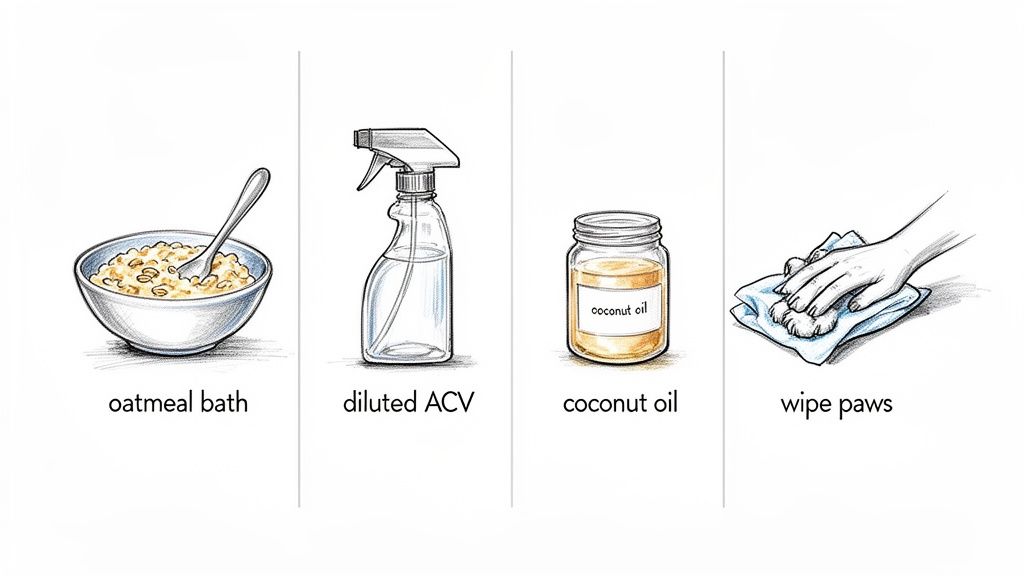
These solutions get to work directly on the skin's surface. Think of them as washing away allergens, soothing the fire of irritation, and helping restore the skin's natural balance. When done right, they're safe, surprisingly effective, and can often be made with things you already have in your kitchen cupboards.
Creating a Soothing Oatmeal Bath
One of the kindest and most effective allergies in dogs natural remedies you can try is a simple oatmeal bath. It’s not just an old wives' tale; colloidal oatmeal has compounds that genuinely reduce inflammation and moisturise the skin, making it perfect for soothing that angry, red itch.
Here’s how to whip up a calming soak for your furry friend:
- Prepare the Oats: Whizz up some plain, uncooked porridge oats in a blender until you have a very fine powder. A good test is to see if a spoonful dissolves easily in a glass of warm water, turning it milky.
- Run the Bath: Fill a tub with lukewarm water. It’s crucial that it’s not hot, as heat will only make inflamed skin feel worse.
- Mix it In: Stir the fine oatmeal powder into the bathwater until it’s all mixed in.
- Soak and Soothe: Let your dog stand in the tub for about 10-15 minutes. As they soak, gently ladle the milky water over their back and any particularly itchy spots.
- Rinse Gently: Afterwards, give them a quick rinse with clean, lukewarm water to get rid of any residue, and then gently pat them dry with a soft towel.
This simple treatment can provide a huge amount of relief, even if it's just for a while.
Using an Apple Cider Vinegar Rinse
Yeast overgrowth is a very common sidekick to allergies in dogs. It often leads to a greasy-feeling coat, a funky, musty smell, and, you guessed it, even more itching. A diluted apple cider vinegar (ACV) rinse can be a game-changer here, as it helps restore the skin’s natural pH, making it a much less friendly place for yeast to party.
Important Safety Note: Never, ever apply apple cider vinegar to raw or broken skin, like hot spots. It will sting badly and cause your dog a lot of pain. Always dilute it properly first.
To make a safe rinse, simply mix one part raw, unfiltered ACV with one part cool water in a spray bottle. After you’ve bathed your dog, you can lightly mist this solution over their coat and paws. Just be sure to avoid their face and any obviously raw areas. No need to rinse it off.
The Benefits of Coconut Oil
Virgin coconut oil is well-loved for its natural moisturising and antimicrobial powers. It’s rich in lauric acid, which has proven antibacterial and anti-fungal effects that can really support overall skin health.
For little dry patches or irritated spots, you can apply a thin layer of coconut oil directly onto the skin. It’s perfectly safe if your dog licks a bit off, but it’s best to use it sparingly to avoid turning their coat into a greasy mess. Many owners keep a jar on hand as part of their dog itching home remedies toolkit.
Creating an Allergy-Safe Home Environment
Beyond these direct skin treatments, managing your dog's surroundings is a massive piece of the puzzle. It's all about reducing the amount of allergens they come into contact with every single day. This comes down to a few simple but consistent habits.
- Filter the Air: Using a HEPA (High-Efficiency Particulate Air) filter in your home can make a real difference by trapping tiny airborne culprits like pollen, mould spores, and dust mites.
- Wash Bedding Regularly: Your dog's bed is a hotspot for allergens. Make it a rule to wash their bedding, blankets, and soft toys at least once a week in hot water to kill off dust mites.
- Wipe Down After Walks: This might be the single most impactful habit you can adopt. After every single walk, use a damp cloth or pet-safe wipes to clean your dog’s paws, belly, and face. This one small step removes pollens before they get tracked all through your house and have a chance to cause a reaction.
Creating Your Daily Anti-Allergy Action Plan
Knowing about all the different ways to manage your dog’s allergies is one thing. But the real magic happens when you weave those tactics into a simple, consistent daily routine. Success isn't about grand, one-off gestures; it's about the small, powerful habits you stick with day in and day out.
Putting together a daily and weekly plan turns vague advice into a clear playbook for your dog. It takes the guesswork out of the equation and helps you stay ahead of flare-ups, rather than just reacting to them. This way, allergy care becomes a sustainable rhythm that fits right into your life, not another chore on your to-do list.
Think of it as building a fortress for your dog’s immune system. Every small action—a supplement with breakfast, a quick paw wipe after a walk—adds another brick to the wall, strengthening their defences against allergens and keeping them comfortable for the long haul.
Structuring Your Morning Routine
How you start the day really sets the tone. By folding allergy care into your morning from the get-go, it quickly becomes an essential part of your dog's wellness routine.
A simple yet effective morning could look like this:
- Breakfast with Benefits: This is the easiest time to give a high-quality, vet-approved allergy supplement. A tasty chew just feels like a morning treat, but it’s actually delivering powerful anti-inflammatory ingredients like quercetin and turmeric to start the day on the right foot.
- Add a Nutritional Boost: Pop a spoonful of omega-3-rich food, like sardines in spring water, on top of their breakfast. This is a brilliant way to support their skin barrier from the inside out.
This two-step process takes less than a minute, but it primes their system to better handle whatever allergens they might run into during the day. It’s the consistency that makes it so effective.
Managing Midday and Afternoon Triggers
The middle of the day, particularly after walks or time spent in the garden, is peak time for allergen exposure. What you do right after they come inside can make a huge difference to the allergen load they bring into your home.
This is where your defensive habits really shine:
- The Post-Walk Wipe-Down: This is easily one of the most impactful allergies in dogs natural remedies you can adopt. Keep a damp cloth or some pet-safe wipes by the door and give their paws, belly, and face a thorough wipe after every trip outside. You're physically removing pollen and other environmental irritants before they have a chance to cause a reaction.
- Check and Soothe: While you're wiping them down, do a quick skin check. If you spot any small red or irritated patches, a light dab of virgin coconut oil can offer some immediate, soothing relief.
By making the post-walk wipe-down an automatic habit, you interrupt the allergy cycle at a key moment. You're not just cleaning paws; you're preventing an afternoon of intense itching before it even begins.
Your Weekly Reset Routine
While daily habits are the foundation, a weekly routine helps to fully reset the system and give their skin some deeper TLC. Setting aside a specific time each week for a more focused treatment can really keep inflammation under control.
A powerful weekly reset could include:
- A Soothing Bath: Once a week, treat your dog to a bath with lukewarm water and a calming, colloidal oatmeal shampoo. This not only washes away any built-up allergens from their coat but also directly soothes inflamed skin.
- Bedding Blitz: While your dog is air-drying, gather up all their bedding, blankets, and soft toys and stick them in the washing machine on a hot wash. This simple step kills off dust mites and gets rid of any pollen that's settled in their favourite snoozing spots.
This combined approach ensures you’re tackling the problem from every angle—internally, topically, and environmentally. It creates a complete and manageable plan for genuine, long-lasting relief.
Right, let's get this section sounding like it was written by someone who's actually been through the dog allergy trenches. Here’s a more natural, human-written version.
Knowing When to Call the Vet
Trying natural remedies for your dog's allergies is a brilliant move, but it’s vital to know where home care ends and professional help begins. Think of it this way: your vet is the head coach of your dog's wellness team. Natural approaches are fantastic for managing day-to-day symptoms and building resilience, but they can't replace a vet's expertise, especially when things take a turn for the worse.
Your daily routine of supplements, special shampoos, and a clean home is your first line of defence. It’s what keeps your dog comfortable. But when a flare-up gets out of hand, your vet is the one you need to call. Waiting too long can turn a manageable issue into a painful secondary infection, which means a lot more suffering for your best mate.
Red Flags That Mean It's Vet Time
Some signs go way beyond a simple scratch. They’re basically your dog’s way of screaming for help, and it’s our job to listen. If you spot any of the following, drop what you’re doing and book an appointment with your vet.
These are absolute deal-breakers and need a professional eye, fast:
- Open Sores or "Hot Spots": You'll know one when you see it. These are angry, raw, weeping patches of skin that seem to pop up overnight and can spread alarmingly quickly. They're incredibly painful and are a prime target for nasty bacterial infections.
- Signs of a Secondary Infection: Trust your nose. A funky, yeasty, or musty smell from their skin or ears is a dead giveaway that an infection (usually yeast or bacteria) has taken hold. Also, look for any yellow or green gunk oozing from sores or inside their ears.
- Major Hair Loss: A bit of shedding from scratching is one thing, but if you're seeing large bald patches or their coat is thinning all over, it could signal something more serious. This might be a sign of a hormonal issue or a deeper skin condition.
- A Change in Their Mood: If the non-stop itching comes with a side of sluggishness, a lack of interest in food, or your usually happy dog is suddenly snappy and irritable, it's a clear sign their discomfort is taking a serious toll.
A vet isn't just there for the bad stuff. They're crucial for getting a proper diagnosis in the first place. What you think is a simple food allergy could easily be something else entirely, and only a vet can run the right tests to be sure.
Your vet has the tools to figure out exactly what's going on. They can prescribe targeted medications, like antibiotics or anti-fungals for those secondary infections, and offer stronger treatments to calm a severe flare-up. Getting that professional help means your dog gets relief quickly, which then gives your natural, long-term support plan a much better chance of success.
Your Dog Allergy Questions Answered
When you're trying to figure out the best way to help your itchy dog, it's natural to have a lot of questions. Diving into natural remedies can feel overwhelming, and you want to be sure you're doing the right thing for your best mate. We get it.
That's why we've put together some clear, straightforward answers to the questions we hear most often from UK dog owners. Think of this as your quick-start guide to making smart choices and feeling confident as you help your dog find some real, lasting relief.
How Long Until Natural Remedies Start Working?
This is probably the biggest question on everyone's mind, and the honest answer is: it takes time. When you're using natural approaches for allergies in dogs, patience and consistency are your best friends.
A soothing oatmeal bath can calm an angry itch right away, but that’s a temporary fix. The real, deep-down healing happens over weeks and months.
- Dietary Changes: If you're trying an elimination diet, you have to commit. Give it a solid 8-12 weeks to allow your dog's system to clear out old triggers and for the inflammation to truly settle.
- Daily Supplements: With supplements, most people start to see a real difference in their dog's coat and a drop in scratching within 4-6 weeks. The beneficial ingredients need that time to accumulate in their system and get to work supporting a healthier immune response.
Natural solutions aim to fix the root cause of the problem—the inflammation—not just stick a plaster over the symptoms. That healing process takes a bit of time, but the payoff is a happier, more comfortable dog in the long run.
Are There "Natural" Ingredients I Should Avoid?
Yes, absolutely! It’s a common and dangerous myth that if something is ‘natural,’ it must be safe for dogs. Plenty of plants and foods that are great for us are actually toxic to our canine pals.
For starters, never give your dog garlic or onions—they can cause serious health issues. Some essential oils, like tea tree oil, can also be highly toxic if your dog licks them or if they're applied incorrectly. This is exactly why it's so important to use products that have been specifically formulated for dogs by experts. That way, you know the ingredients are safe, effective, and in the right dose for your dog’s size.
Can I Use Natural Remedies Alongside Vet Medication?
For many dogs, a combined approach works brilliantly. Vets often call this 'integrative' or 'multimodal' care. Think of it as a team effort: natural supplements and a good anti-inflammatory diet can work hand-in-hand with conventional treatments like Apoquel or steroids.
What we often see is that as the natural remedies strengthen the skin barrier and balance the immune system, your vet may find they can start to reduce the dose of prescription drugs. But—and this is a big but—you must always talk to your vet first. They need to know everything you're giving your dog to avoid any bad reactions and create a plan that is both safe and effective.
How Can I Tell if It's Food or Environmental Allergies?
This is a tricky one because the main symptoms—like itchy skin and chewing at paws—can look exactly the same. But there are a few clues that can point you in the right direction.
Environmental allergies often have a seasonal pattern. Does your dog go crazy itching every spring when the pollen count soars, only to get better in the winter? That’s a big clue. Food allergies, on the other hand, tend to cause relentless, year-round problems that never seem to let up. They're also more likely to come with a side of tummy troubles, like loose stools or a lot of wind.
Ultimately, the gold standard for diagnosing a food allergy is a strict elimination diet over 8-12 weeks, always with your vet's guidance. For environmental triggers, your vet might suggest allergy testing to pinpoint the specific pollens or mites causing the flare-ups.
At Tipaw, we believe in empowering you with vet-approved, natural solutions that make a real difference. Our allergy chews are formulated with powerful ingredients like quercetin and turmeric to soothe your dog's itch from the inside out. Discover how our supplements can become a key part of your dog's daily anti-allergy plan by visiting us at https://www.store-tipaw.com.


