


Yeast dermatitis is a very common skin problem in dogs, but it's often misunderstood. It’s essentially an infection caused by an overgrowth of Malassezia yeast, a type of fungus that is a normal inhabitant of your dog’s skin. This isn't something your dog "catches" from another animal; it's an internal imbalance. This flare-up is usually triggered by an underlying issue like allergies or a compromised immune system, which then leads to that frustrating trio of symptoms: intense itchiness, red skin, and a distinct musty smell.
The Truth About Yeast on Your Dog's Skin

It might come as a surprise, but the yeast causing all this trouble isn't some foreign invader. The culprit, a fungus called Malassezia pachydermatis, is a completely normal resident of your dog’s skin. It’s part of a bustling microscopic community, living in harmony with billions of other tiny organisms that make up the skin's microbiome.
A great way to think about it is to picture your dog's skin as a lush, well-tended garden. In a healthy garden, yeast is just one of many plants. It's there, minding its own business and not causing any issues. It coexists with beneficial bacteria (the beautiful flowers) and countless other microorganisms, all kept in perfect balance by the immune system—the garden's expert keeper.
When the Garden Gets Overgrown
Yeast dermatitis kicks off when this delicate balance is thrown into chaos. The problem isn't the yeast itself, but the skin environment that suddenly allows it to go wild. When the conditions are just right, this harmless resident transforms into an invasive weed, spreading rapidly and overwhelming the rest of the garden.
This is what we call an opportunistic infection. The yeast simply takes advantage of a situation where the skin’s natural defences have been lowered, and that's when the uncomfortable symptoms begin to appear.
The key takeaway: Yeast dermatitis is almost always a secondary problem. It's a massive, flashing sign pointing to a deeper issue, not the root cause itself. To fix it for good, you and your vet need to play detective and figure out what knocked the skin's ecosystem off-kilter.
This is a really important distinction to make. It changes the goal from simply killing the yeast to restoring the long-term health and balance of your dog's skin.
What Triggers a Yeast Overgrowth?
So, what can upset this internal garden? A few common factors can weaken the skin's defences, creating the perfect storm for a yeast bloom. Think of it as the "gardener" (the immune system) getting distracted or overwhelmed, letting the "weeds" take over.
The most frequent culprits include:
- Allergies: This is a big one. Both environmental triggers (like pollen) and food sensitivities can cause chronic inflammation that weakens the skin's protective barrier.
- A Weakened Immune System: Underlying health problems, certain medications like steroids, or even chronic stress can stop the immune system from keeping the yeast population in check.
- The Skin's Environment: Yeast absolutely loves warm, damp places. Excess moisture trapped in deep skin folds, between the toes, or inside those lovely floppy ears creates the ideal breeding ground.
Realising that yeast dermatitis in dogs is a symptom of an internal imbalance is the first and most crucial step. The condition isn't contagious to you or your other pets. The goal is to partner with your vet to bring that internal garden back into harmony, making your dog's skin a resilient and healthy place once more.
Signs Your Dog Has a Yeast Infection

Spotting a yeast infection is about more than just noticing your dog is scratching. It’s about picking up on a specific collection of clues that, once you know them, are pretty hard to ignore. These symptoms are tell-tale signs that Malassezia yeast is out of control and your dog's skin environment is seriously out of whack.
The first thing many owners notice is the unmistakable musty smell. It's often described as smelling a bit like cheesy popcorn, old socks, or even corn chips. This strange odour is produced by the yeast itself and tends to hang around, even right after a bath.
Along with the smell, you'll probably feel a change in your dog's skin and coat. The affected areas often become greasy or oily, and the skin underneath looks red, angry, and inflamed. That irritation is what drives the most obvious symptom of all: the relentless itching.
The Itch-Scratch-Lick Cycle
A dog with a yeast infection is truly uncomfortable. They show it by constantly scratching, chewing, and licking at their skin. You might catch them rubbing up against the sofa for relief or frantically gnawing at their paws.
This isn't just a minor annoyance; it’s a destructive cycle. The more a dog licks and chews, the more they break down the skin's natural barrier. This self-inflicted damage introduces moisture and worsens the inflammation, which only creates a better home for the yeast to multiply.
You may also notice the fur, especially on their paws, turning a rusty, reddish-brown colour from all the licking. This staining comes from compounds called porphyrins in their saliva and is a dead giveaway of chronic irritation. If you're curious about this behaviour, you can learn more about why dogs lick their paws.
Where Yeast Loves to Hide
Yeast thrives in places that are warm, dark, and damp. It’s no surprise, then, that infections pop up in the parts of your dog’s body that trap moisture and don’t get much air.
Common hotspots include:
- The Ears: Dogs with floppy ears are classic candidates. The ear canal is the perfect warm, enclosed incubator for yeast, leading to frantic head shaking, scratching, and a foul-smelling, dark discharge.
- The Paws: The little spaces between the pads and around the nails are notorious for trapping moisture, resulting in red, swollen, and very itchy feet.
- Skin Folds: Wrinkly breeds like Pugs, Bulldogs, and Shar-Peis often get yeast infections in their facial folds, armpits, and tail pockets.
- The Groin and Underbelly: These areas are naturally warm and prone to moisture, making them prime real estate for red, irritated skin.
When a yeast infection becomes chronic, the skin can start to change dramatically. It often thickens and develops a tough, leathery texture called lichenification. In severe cases, the skin also darkens to a grey or black colour (hyperpigmentation), giving it an 'elephant skin' appearance.
Is It Yeast or Something Else?
Because itchy, red skin is a symptom of so many different problems in dogs, it helps to know what makes a yeast infection stand out. While you'll always need your vet to make the final call, being able to spot the patterns will help you have a much more informed conversation.
It's an incredibly common problem. A recent five-year surveillance study in the UK found Malassezia yeast in over 60% of dogs with ear infections and in 4.11% of dogs with skin infections elsewhere on the body. These numbers tell us that if your dog has itchy ears, there’s a very good chance yeast is part of the problem.
To help you tell the difference at a glance, we've put together a simple comparison table.
Common Dog Skin Issues Symptom Comparison
It can be tough to distinguish one skin issue from another, as many share similar signs like redness and itching. The table below breaks down the key differences between three common culprits to help you identify what might be affecting your dog.
| Symptom | Yeast Dermatitis (Fungal) | Bacterial Pyoderma | Sarcoptic Mange (Mites) |
|---|---|---|---|
| Primary Sign | Greasy skin, musty odour, intense itch | Pimples, pustules, crusty sores | Extreme, frantic itching, especially at night |
| Key Locations | Ears, paws, skin folds, underbelly | Belly, groin, areas with thin fur | Elbows, ear edges, chest, hocks |
| Odour | Distinctive sweet or "cheesy" smell | Often smells like infection or pus | No specific odour, just general skin smell |
| Skin Texture | Oily, can become thick and dark over time | Flaky skin, circular crusts, hair loss | Red bumps, severe crusting, self-inflicted wounds |
Remember, this chart is just a guide. Overlapping symptoms are common, and a proper diagnosis from your vet is the only way to be sure you're treating the right problem.
What Causes Yeast Infections in Dogs?
A yeast infection doesn't just appear out of thin air. The fungus responsible, Malassezia, is a normal resident on your dog's skin. So when it suddenly starts to multiply out of control, it’s a big red flag that something else is going on—something has weakened the skin's natural defences.
Getting to the bottom of that "something" is the real key. If you don't, you're just treating the symptoms, and you'll find yourself stuck in a frustrating cycle of flare-ups. Think of your dog's skin as having its own little ecosystem with a built-in security system to keep yeast levels in check. A yeast infection means there's been a security breach, and we need to figure out what caused it.
The Underlying Triggers for Yeast Overgrowth
More often than not, a few common culprits are responsible for throwing the skin's environment off balance, creating the perfect conditions for yeast to thrive. Your vet's first job is to play detective and pinpoint these primary triggers.
- Allergies: This is, by far, the most frequent cause. Whether your dog is reacting to something in the air like pollen, dust mites, or a specific ingredient in their food, the resulting inflammation is a major problem. Chronically itchy, inflamed skin is a welcome mat for yeast.
- Hormonal Issues: Conditions that throw your dog's hormones out of whack, like an underactive thyroid (hypothyroidism) or Cushing's disease, can wreak havoc on their skin and immune system. This hormonal chaos makes it much harder for the skin to defend itself.
- Certain Medications: Sometimes the treatment for one problem can inadvertently cause another. A course of antibiotics, for example, can wipe out the friendly bacteria that help keep yeast under control. Steroids, often used to fight inflammation, can also suppress the immune system, giving yeast a free pass to multiply.
The most important thing to realise is that yeast dermatitis is almost always a secondary problem. It's a symptom, not the actual disease. To truly fix it for good, you and your vet have to uncover and manage the primary issue that's letting the yeast take over.
How a Dog's Build Can Increase the Risk
Sometimes, the very features we love about certain breeds are what put them at higher risk. Those adorable wrinkles, floppy ears, and skin folds create warm, moist, dark pockets—the ideal breeding ground for yeast.
The connection between a dog's physical traits and skin problems is something we see all the time in vet practices across the UK. In fact, a huge study of over 900,000 dogs confirmed this link. While skin fold dermatitis was rare overall (0.37%), some flat-faced breeds were hit particularly hard. English Bulldogs had a prevalence of 6.05%, followed by French Bulldogs at 2.69% and Pugs at 2.11%. It's clear that their anatomy plays a major role. You can read more about the research on skin fold dermatitis in UK dog breeds.
Breeds Most Often at Risk
While any dog can get yeast dermatitis in dogs, some are simply more genetically prone to it, whether due to their skin, coat, or body shape. If your dog is on this list, you'll want to be extra vigilant.
Breeds prone due to skin folds:
- English Bulldog
- French Bulldog
- Pug
- Shar-Pei
- Basset Hound
Breeds prone due to floppy ears:
- Cocker Spaniel
- Basset Hound
- Golden Retriever
- Labrador Retriever
Breeds with a genetic tendency for allergies:
- West Highland White Terrier
- Shih Tzu
- German Shepherd
- Boxer
- Staffordshire Bull Terrier
Knowing your dog's breed-specific risks isn't about worrying; it's about being prepared. By understanding what might be driving the problem, you can work with your vet to build a proactive plan that keeps their skin healthy, comfortable, and balanced for the long term.
How Vets Diagnose and Treat Yeast Dermatitis
When you bring your itchy, uncomfortable dog into the clinic, our first job is to confirm if yeast is really the culprit. The tell-tale "cheesy" smell and greasy skin are big clues, but we can't just go on a hunch. A proper diagnosis is crucial to make sure we're targeting the right problem and not missing another skin condition that looks surprisingly similar.
The good news is that the process is usually quick and painless for your dog. We'll start with a good look over, paying close attention to the hotspots—ears, paws, belly, and any skin folds. I'll also want to hear the full story from you: when the itching started, if they've had skin issues before, and what their diet is like.
To get a definitive answer, we need to see the yeast under a microscope. We have a few simple ways to do this.
- Tape Cytology: This is our go-to. We just press a piece of clear sticky tape onto the irritated skin. It lifts off a perfect sample of skin cells, debris, and any little critters living there. We then stain it and pop it under the microscope.
- Skin Scrape: Sometimes, we might gently scrape the very top layer of the skin with a sterile blade. This helps us check for things like mites that might be hiding a little deeper.
- Impression Smear: For moist or greasy patches, we can press a clean microscope slide directly onto the area to get a sample for immediate analysis.
Under the microscope, Malassezia yeast has a really distinct shape, like little peanuts or footprints. Once a trained eye spots a crowd of them, we can confidently diagnose a yeast overgrowth.
Creating an Effective Treatment Plan
Once we’ve confirmed it's yeast dermatitis, our treatment plan has two clear goals. First, we need to get the current flare-up under control. Second—and this is the most important part—we have to figure out why it happened in the first place.
Simply treating the yeast without tackling the root cause is like constantly mopping up a leaky pipe without actually fixing it. The problem is just guaranteed to come back.
Successful treatment for yeast dermatitis in dogs isn't just about killing the fungus. It's about restoring the skin's natural balance so it can defend itself in the future. This requires both immediate action and long-term management.
This two-pronged strategy is the only way to break the cycle of recurring infections and give your dog lasting relief.
Topical Therapies to Fight Yeast on the Skin
For most mild to moderate cases, we start with topical treatments. These are medications applied directly to the skin, which means they get to work right where the problem is. It's a highly effective approach that minimises the risk of any side effects.
Your vet will likely recommend a combination of these:
- Medicated Shampoos: These usually contain antifungal ingredients like miconazole or chlorhexidine. It's vital you follow the bathing instructions. Letting the shampoo sit for 5-10 minutes before rinsing gives the active ingredients time to do their job properly.
- Antifungal Wipes or Sprays: These are brilliant for daily maintenance. You can use them to clean tricky areas like between the toes, in skin folds, or around the armpits to keep the yeast population down between full baths.
- Creams and Ointments: If there are just a few small, angry patches, a targeted cream can deliver a concentrated dose of medication right where it's needed.
This direct approach helps to knock back the yeast numbers and soothe the inflamed skin. Sometimes, the inflammation can be so severe it looks like other skin issues, so it helps to know the difference between a yeast infection and things like hot spots on your dog.
This decision tree shows how various roads—allergies, other health conditions, or even breed traits—can all lead to yeast dermatitis.
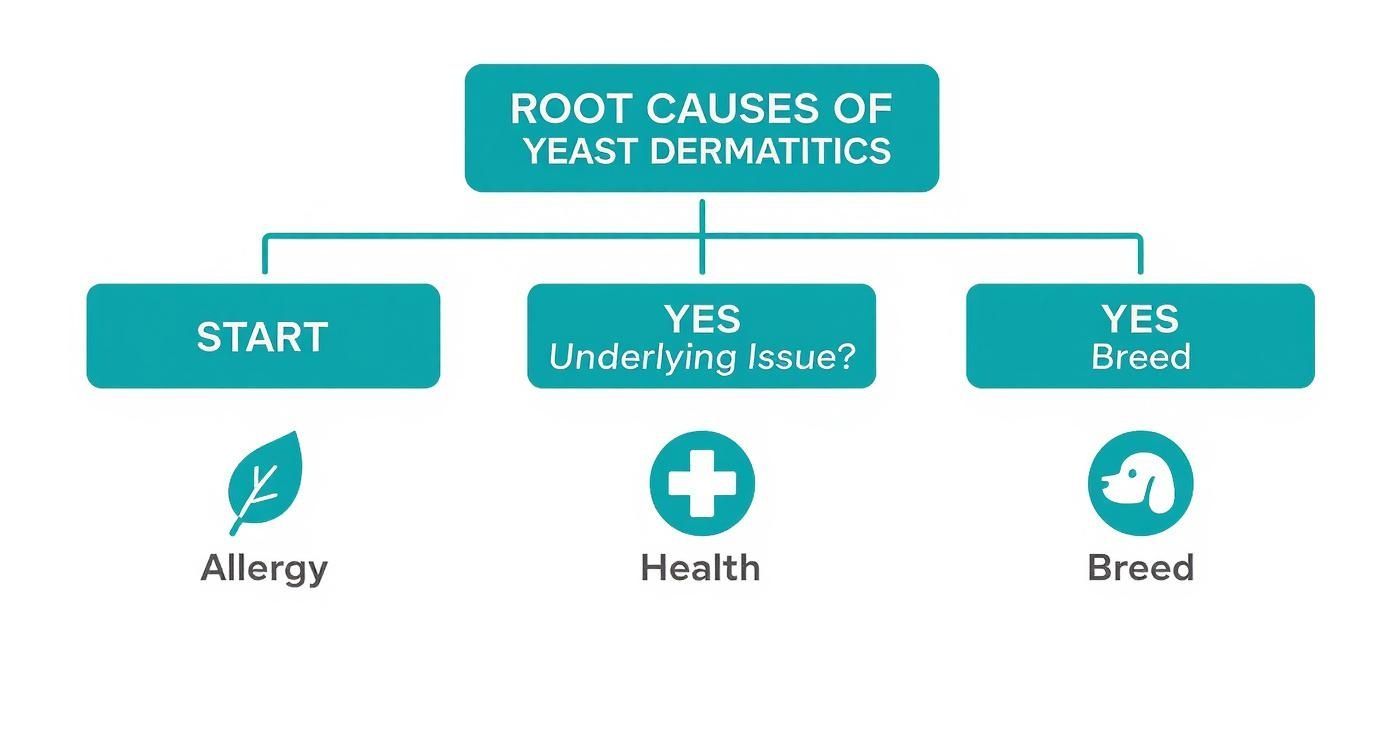
As you can see from the flowchart, yeast overgrowth is almost always a secondary problem. This is why we have to dig deeper to find out what's really compromising your dog's skin health.
Systemic Medications for Severe Cases
If the infection is really widespread, very severe, or just isn't clearing up with topical treatments, we'll reach for oral antifungal medications. These work from the inside out, travelling through the bloodstream to tackle the infection everywhere.
While these drugs work well, they do need careful monitoring. We'll need to keep a close eye on your dog, as they can sometimes impact liver function. This might mean regular check-ups and blood tests during the course of treatment, which could last for several weeks.
It's important to remember just how common these issues are. In the UK, skin problems account for 12.58% of all diagnoses in dogs at the vet. Malassezia pachydermatitis is a frequent finding, often popping up alongside bacterial infections, which just shows how often the skin's defences are breached.
Effective Home Care and Prevention Tips
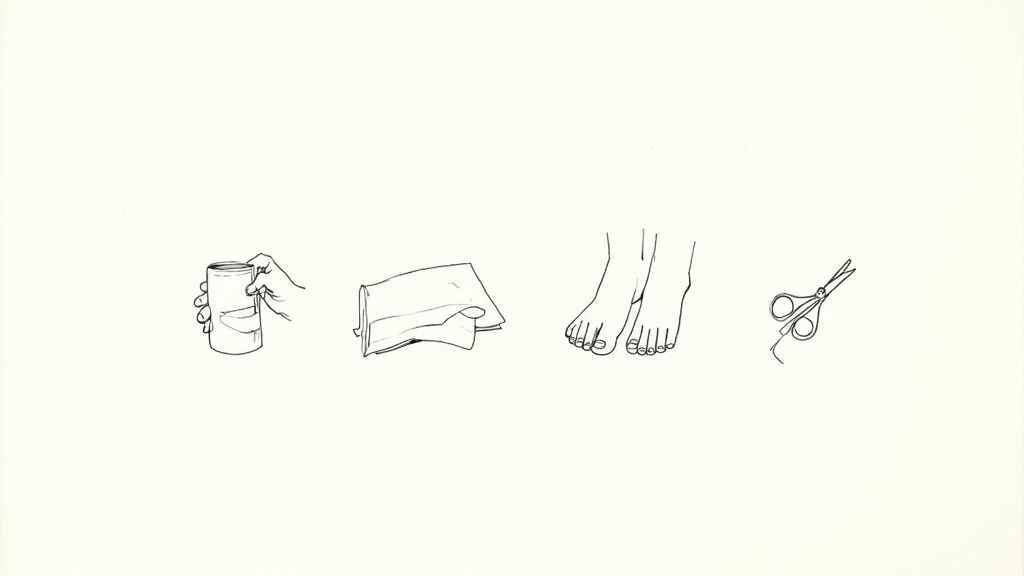
Managing yeast dermatitis in dogs is a team effort between you and your vet. Once your vet provides a treatment plan, your role at home becomes crucial for not only helping your dog recover but, more importantly, stopping those frustrating flare-ups from coming back. Think of it as building a protective shield for your dog's skin through a few simple, consistent habits.
This isn't about performing complex medical procedures. It's about creating a proactive grooming and wellness routine that makes your dog's skin an inhospitable place for yeast. By keeping the skin clean, dry, and balanced, you can help it become the resilient barrier it's meant to be.
Master the Medicated Bath
Your vet will likely prescribe a medicated shampoo, which is a fantastic weapon against yeast. But there’s a trick to it – you have to use it correctly. A quick wash-and-go just won't cut it; the active ingredients need time to get to work.
To make every bath count, follow these simple steps:
- Get Them Soaking Wet: Start with lukewarm water and make sure their coat is completely saturated before you even reach for the shampoo bottle.
- Lather Up: Work the shampoo into a gentle lather, focusing on getting it right down to the skin. Pay extra attention to common trouble spots like the paws, armpits, and groin.
- Wait for 10 Minutes: This is the non-negotiable part. Set a timer and let that shampoo sit for a full 10 minutes. This contact time is what allows the antifungal agents to do their job and kill off the yeast.
- Rinse, Rinse, Rinse: When the time is up, rinse thoroughly until the water runs completely clear. Any leftover shampoo residue can cause irritation, which is the last thing you want.
The Importance of Staying Dry
Yeast absolutely loves warm, moist environments. A damp dog is practically a walking invitation for a yeast party. This means your most important job after a bath, a swim, or even just a walk in the rain is to get your dog completely dry.
Grab a towel or a hairdryer on a low, cool setting and be meticulous. Focus on those hidden areas where moisture gets trapped:
- The deep nooks and crannies between their paw pads.
- Inside and around their ear flaps, especially if they’re floppy.
- Within any skin wrinkles or folds.
- The armpits and groin area.
This one step can make a world of difference. By removing the dampness, you’re shutting down the perfect breeding ground for yeast before an overgrowth can even begin.
Proactive Grooming for Healthy Skin
A little strategic grooming goes a long way in keeping yeast under control. Keeping the fur trimmed short in problem-prone areas is a game-changer because it allows air to circulate, which helps keep the skin dry.
A consistent grooming routine isn't just about looking good; it's a fundamental part of managing skin health. By keeping key areas clean, dry, and well-ventilated, you actively make the skin's environment far less welcoming to yeast.
Ask your vet or groomer about a "sanitary trim" around the groin and paws. Keeping the hair between the paw pads clipped short is particularly effective. You should also get into the habit of regularly cleaning your dog's ears with a vet-approved solution to remove the waxy debris that yeast loves to feed on.
To help you stay on top of things, here is a simple checklist for weekly skin health monitoring, especially for those dogs who are more susceptible to yeast issues.
Weekly Skin Health Checklist for At-Risk Dogs
| Task | Frequency | What to Look For | Recommended Action |
|---|---|---|---|
| Skin Fold Check | 2-3x Weekly | Redness, moisture, greasy texture, or a musty odour. | Gently clean with a vet-approved wipe and dry thoroughly. |
| Paw Inspection | Daily | Red, swollen paw pads; excessive licking; brown staining. | Wipe paws after walks, keep fur trimmed short, and ensure they are always dry. |
| Ear Cleaning | Weekly | Dark, waxy discharge; head shaking; scratching at ears. | Use a vet-recommended ear cleaner. Do not use cotton buds. |
| Overall Skin Scan | Weekly | Greasy coat, hair loss, thickened skin ("elephant skin"). | Note any changes and schedule a vet visit if symptoms worsen or appear. |
This routine check can help you catch the very first signs of trouble, allowing you to act quickly before a small issue becomes a full-blown infection.
Supporting the Skin from Within
While keeping the outside clean and dry is vital, true, long-lasting skin health starts from the inside. The absolute cornerstone of prevention is managing any underlying conditions, especially allergies. Work closely with your vet to pinpoint and control any food or environmental triggers that are causing inflammation.
A balanced diet can also significantly bolster your dog's natural defences. For example, adding omega-3 fatty acids can help strengthen the skin barrier and reduce inflammation. For owners looking for gentle ways to ease their dog's discomfort, it's worth exploring the various vet-approved home remedies for an itching dog that can complement your vet's treatment plan.
Ultimately, your best defence is a comprehensive routine that combines diligent external care with strong internal support. That's the key to keeping yeast dermatitis from coming back.
Your Top Questions About Dog Yeast Infections, Answered
Even after getting a handle on the basics of yeast dermatitis, it's completely normal to have more questions. This can be a really persistent and frustrating problem to deal with, so getting straight answers is key for your peace of mind and your dog's comfort. Let's dig into some of the most common queries we hear from dog owners who are in your shoes.
Can I Just Use a Human Antifungal Cream on My Dog?
It's a question that comes up a lot, and the answer is a very firm no—you should not use human antifungal creams on your dog unless your vet has specifically told you to. A dog's skin has a completely different pH balance to ours. Products made for people can be useless at best, and at worst, they can seriously irritate your dog's already inflamed skin.
On top of that, many human creams contain ingredients that can be toxic if licked, and let's be honest, dogs are definitely going to lick it. Your vet will prescribe a product made just for dogs, which means it's both safe and formulated to be effective against yeast dermatitis in dogs. Sticking with what your vet recommends is always the safest and quickest way to get your dog feeling better.
Is Yeast Dermatitis Contagious to My Other Pets or My Family?
You can breathe a sigh of relief on this one—yeast dermatitis isn't contagious at all. The culprit, a fungus called Malassezia pachydermatis, is a normal resident on the skin of nearly all dogs, cats, and even us. It's not some nasty bug they've picked up from outside that can be passed around.
A yeast infection is simply an overgrowth of this naturally occurring fungus on an individual dog. It's almost always kicked off by an underlying problem, like allergies or a hormone issue. You can't catch it from your dog, and they can't give it to your other pets. The real focus should be on getting your dog's skin back in balance, not on keeping them isolated.
How Long Will It Take for My Dog to Get Better?
The recovery timeline for a yeast infection really varies. It all depends on how severe the infection is and, crucially, how quickly the underlying cause can be found and managed. Think of it as a journey, not a quick fix.
For a minor, localised flare-up, you might see some real improvement within a week or two of starting treatment. But for more stubborn, chronic cases tied to bigger issues like deep-seated allergies, it's a longer road. It could take several weeks, or even a couple of months, of consistent care to clear the infection and get their skin healthy again.
Key Insight: A successful recovery happens in two stages. First, you have the initial, intensive treatment to get the yeast overgrowth under control. That's followed by a long-term management plan to tackle the root cause and stop the infection from coming straight back.
Patience is everything. You have to be consistent with the plan your vet sets out. Sticking to the routine, even when your dog starts looking and feeling better, is what will prevent a frustrating relapse down the line.
Will Changing My Dog’s Diet Help?
Absolutely. Diet can be a game-changer in the fight against yeast dermatitis, particularly if a food allergy or sensitivity is the real problem. If your vet suspects that's the case, they’ll likely suggest an elimination diet to figure out which ingredient is causing the trouble so you can remove it for good.
Even if food allergies aren't the main trigger, what your dog eats still plays a massive supporting role. A high-quality, balanced diet packed with nutrients that strengthen the skin's natural defences can make a world of difference. For instance, ingredients like omega-3 fatty acids are fantastic for their anti-inflammatory properties and their ability to build healthier skin from the inside out.
While you might hear talk about high-carb diets "feeding" the yeast, the most reliable, science-backed approach focuses on two things:
- Working with your vet to rule out specific food allergies.
- Making sure your dog is on a nutrient-rich diet that supports their overall immune system and skin health.
At Tipaw, we know that a healthy dog starts from within. Our vet-approved, natural supplements are designed to support your dog’s skin and coat, helping to build resilience against common problems like yeast dermatitis. Give your dog the nutritional foundation they need for a comfortable, itch-free life. You can explore our targeted formulas at https://www.store-tipaw.com.


