


That sound. That constant slurp, slurp, slurp of your dog licking their paws can be more than just a little annoying—it can be a real worry. To figure out how to prevent a dog from licking a paw, you first need to get to the bottom of what’s causing it. More often than not, the culprit is allergies, pain, or even anxiety. Simply trying to stop the licking without tackling the real problem is a bit like putting a plaster on a wound that needs stitches; it won’t provide any lasting relief.
Why Your Dog Constantly Licks Their Paws
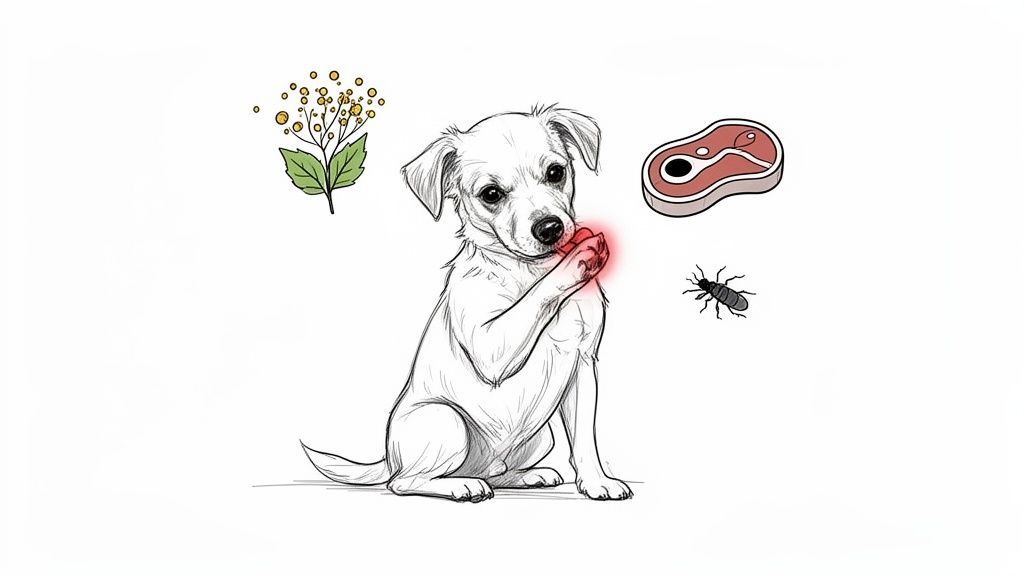
It’s one of the top reasons people take their dogs to the vet. While a bit of self-grooming is completely normal, obsessive paw licking is a definite red flag that something isn’t right. This is almost never "just a habit." It’s your dog’s instinctual way of trying to soothe an itch, ease pain, or cope with stress.
If you let it go, a small irritation can quickly snowball into a much bigger problem. The constant moisture from saliva creates a warm, damp environment between the paw pads and toes—the perfect breeding ground for nasty secondary yeast or bacterial infections. This just kicks off a vicious cycle of more licking, more inflammation, and more misery for your dog.
Identifying the Underlying Triggers
The reasons for paw licking are surprisingly diverse, and finding the exact cause is your first mission. Many owners jump to the conclusion that it must be an injury, like a thorn or a small cut, but chronic, persistent licking often points to something deeper.
Here are the most common culprits I see in my practice:
- Environmental Allergies: This is a big one. Reactions to things like pollen, grass, mould, and even dust mites can cause intense itchiness (a condition known as atopy). You might notice it gets worse during certain seasons.
- Food Sensitivities: Sometimes, the problem is an immune reaction to an ingredient in their food. Common triggers are proteins like beef or chicken, which can lead to inflamed skin and very itchy paws.
- Localised Pain or Injury: Don't rule out the simple stuff. A tiny cut, a splinter, an insect sting, or even underlying joint pain from arthritis can make your dog focus all their licking on one specific spot.
- Behavioural Issues: Licking can become a compulsive, self-soothing habit, especially for dogs dealing with boredom or emotional distress. If your dog gets a clean bill of health otherwise, it's worth looking into the common signs of anxiety in dogs to see if stress is the trigger.
Understanding the 'why' is absolutely crucial. The licking is just the symptom; the real problem is whatever is causing the discomfort. Treating that root cause—not just covering up the paw—is the only path to long-term relief.
The Importance of Taking Action
Start playing detective. Pay close attention to when and where the licking happens. Does it flare up after every walk on the grass? Is it a year-round problem, or does it only happen in spring? Is your dog focused on just one paw, or are all four getting the same treatment?
The answers to these questions are valuable clues that will help you and your vet narrow down the possibilities. This guide will walk you through exactly what to look for and how you can start providing some much-needed relief at home.
So, Why Are They Licking Their Paws?
That constant slurp, slurp, slurp isn't just a quirky habit your dog has picked up. It's a clear signal, a form of communication telling you something is wrong. To truly figure out how to prevent your dog from licking a paw, you have to put on your detective hat and get to the bottom of it.
Of course, a quick clean-up lick after a muddy walk is perfectly normal. But when it becomes relentless, it's a sign of a deeper issue that needs your attention. The reasons can be surprisingly varied, from something in the air to something going on inside their body. Think of the paw licking as the tip of the iceberg—what you're seeing is just a fraction of the real problem.
Let's dig into the usual suspects.
Common Paw Licking Triggers at a Glance
Sometimes you just need a quick overview to point you in the right direction. This table breaks down the most common culprits, what to look for, and when you're most likely to see the behaviour pop up.
| Potential Cause | Key Symptoms to Look For | When It's Most Likely to Occur |
|---|---|---|
| Allergies | Red, swollen paws; chewing at feet; may also have ear infections or skin rashes elsewhere. | Environmental: Seasonal (spring/summer). Food: Year-round. |
| Injury/Foreign Object | Sudden onset of licking one paw; limping; visible cut, thorn, or swelling. | After a walk, especially on rough terrain or through long grass. |
| Parasites/Infection | Intense itchiness; musty "Fritos" smell (yeast); sores or discharge; red, inflamed skin. | Can occur anytime, but often secondary to allergies or injury. |
| Anxiety/Boredom | Licking when left alone, during storms, or when under-stimulated; no physical signs of irritation. | During stressful events or long periods of inactivity. |
Use this as a starting point, but remember that a proper diagnosis often requires a closer look and sometimes a trip to the vet.
Environmental and Food Allergies
More often than not, allergies are the number one reason for those itchy, irritated paws that lead to non-stop licking. Medically, this is known as atopic dermatitis, which is really just a fancy way of saying your dog's immune system is overreacting to things that should be harmless.
Here in the UK, allergies are the top cause of excessive paw licking, affecting up to 15% of all dogs. We see a huge spike in environmental allergies from April to September, when pollen counts from things like long grasses can soar by over 200% in some parts of the country.
Allergies generally fall into two camps:
-
Environmental Allergies: Your dog could be reacting to things they breathe in or touch outside, like pollen from grass, weeds, and trees. But the culprits can be indoors, too—think dust mites, mould, and even the floor cleaner you use. These allergies often have a distinct seasonal pattern, flaring up in the spring and summer.
-
Food Allergies: Sometimes the problem is an ingredient in their dinner bowl. The most common triggers are proteins like beef, chicken, dairy, and even wheat. Unlike pollen allergies, food-related itching is a year-round battle and often comes with sidekicks like chronic ear infections or an upset tummy.
Picture This
Your Labrador, Max, is happy as can be all winter. Then, like clockwork, spring arrives and he starts chewing his paws raw after every romp in the park. That clear seasonal pattern is a massive clue pointing towards an environmental allergy, most likely to pollen or freshly cut grass.
Physical Injuries or Foreign Objects
Sometimes the answer is much simpler and more direct. A sudden injury or something stuck in their paw will make a dog zero in on that one spot. The licking is their instinct kicking in—an attempt to clean the area and soothe the pain.
You should always consider a physical cause, especially if the licking starts out of nowhere and is focused entirely on a single paw.
Get a good look and check for:
- Cuts, scrapes, or puncture wounds from sharp rocks or sticks.
- Nasty little burrs, thorns, or bits of glass wedged between their pads.
- Insect stings or bites, which will cause localised swelling and pain.
- Torn nails or blisters, often from running on hot pavement or very rough ground.
- Even hidden issues like arthritis can cause a dog to lick at a sore joint.
A gentle but thorough paw inspection is your first port of call to rule out these more obvious problems.
Parasites and Infections
Tiny critters can cause a world of misery. Fleas are a classic example. For a sensitive dog, a single flea bite can set off a major allergic reaction called Flea Allergy Dermatitis (FAD), leading to intense itchiness that often includes the paws.
But it gets more complicated. The very act of licking creates a new problem. All that saliva makes the skin warm and damp, disrupting the paw's natural microbiome and creating the perfect breeding ground for secondary infections.
- Yeast Infections: A classic side effect of paw licking is a yeast overgrowth. You'll probably notice a distinct, musty or "Fritos" smell, paired with redness and a greasy feel between the toes.
- Bacterial Infections: Nasty bacteria can also move in, causing painful sores, little pus-filled bumps (pustules), and swelling. These almost always require a trip to the vet for antibiotics.
These infections are incredibly itchy, which, of course, just makes your dog lick more. It’s a vicious cycle of irritation and skin damage. Keeping the area dry is key, and our guide on addressing yeast dermatitis in dogs dives deeper into how to tackle this specific issue.
Behavioural and Psychological Triggers
What if you've been to the vet and they've ruled out every physical cause imaginable? At that point, it’s time to consider that the licking might be behavioural. Just like a nervous person might bite their nails, some dogs use licking as a way to self-soothe.
This is when licking moves from a symptom to a compulsive habit, performed over and over again for no clear medical reason.
The most common behavioural drivers are:
- Boredom: A dog without enough to do—physically or mentally—will often invent their own jobs, and paw licking can be one of them.
- Anxiety: Stress is a huge trigger. This could be separation anxiety, fear of loud noises like fireworks, or upheaval from a new baby or a house move.
- Obsessive-Compulsive Disorder (OCD): For some dogs, the behaviour becomes a true compulsion they can’t control, which may require professional behavioural training and, in some cases, medication.
Working out which of these categories your dog’s licking falls into is the single most important step towards finding a solution that actually works.
Your Guide to an At-Home Paw Inspection
Learning to be a bit of a paw detective is one of the most useful skills you can have as a dog owner. Honestly, a quick, regular inspection can stop a tiny issue from blowing up into a much bigger, more painful problem. Getting comfortable with a gentle but thorough paw check gives you the clues you need to decide what to do next.
The best time to start is when your dog is already chilled out, maybe snoozing on the sofa next to you. Keep your voice calm and have some really tasty treats ready – you want them to think this whole paw-touching thing is a brilliant idea. Most dogs are a bit funny about their feet, so patience is everything.
Getting Started The Right Way
Begin by gently lifting one paw. Make sure to support their leg so they feel secure and balanced. There's no need to grab or pull; just a light, confident hold will do. Keep up the soft, encouraging chat as you have a look.
If your dog snatches their paw back, don't make it a battle. Just let go, give them a treat and a bit of praise, and maybe try again for just a few seconds later on. The whole point is to build this into a stress-free routine, not a wrestling match.
What to Look for Between the Toes and Pads
With their paw resting in your hand, gently spread their toes apart and get a good look at the skin in between. This is a classic trouble spot because it’s a perfect trap for moisture and all sorts of debris.
Keep an eye out for these specific signs:
- Redness and Inflammation: Skin that looks pinker or angrier than usual is a dead giveaway for irritation.
- Foreign Objects: You'll need to look closely for tiny thorns, splinters, grass seeds, or even little bits of grit.
- Cuts or Scrapes: Check the pads themselves and that delicate skin between them for any nicks or breaks.
- Lumps and Bumps: Note any unusual growths, cysts, or insect stings. Ticks absolutely love hiding in these spots.
- Swelling: Does one paw look puffier or bigger than the others? A side-by-side comparison can be very revealing.
This diagram helps visualise how different triggers can kickstart the licking cycle.
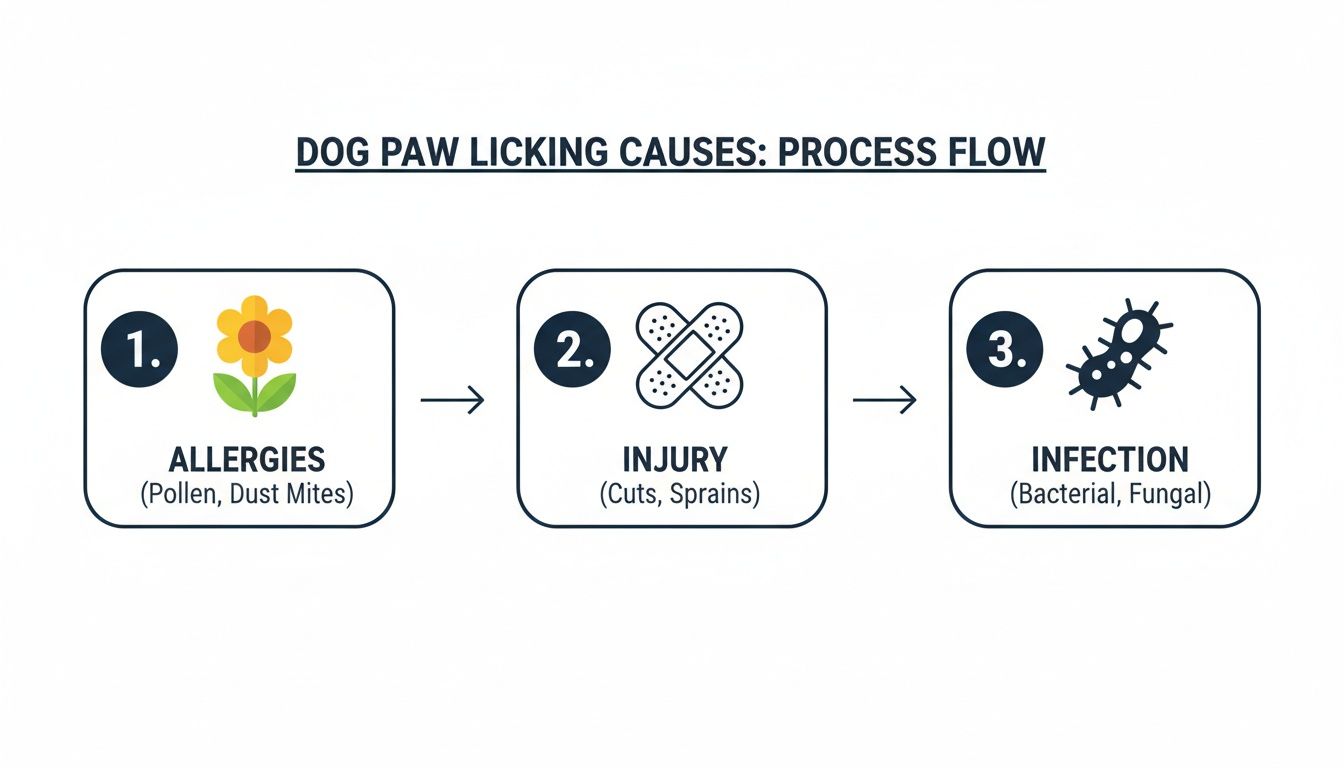
As you can see, things like allergies and injuries often lead down the same path – a sore paw that your dog just can't leave alone.
A Pro Tip
The location of the licking is a massive clue. If your dog is obsessing over just one paw, it's very likely an injury or something stuck in there. If all four paws are getting attention, you should be thinking more along the lines of allergies or a broader skin issue.
Distinguishing Injury from Infection
After you've had a good look, trust your other senses. A healthy paw shouldn't smell like much of anything. But if you get a whiff of something musty, cheesy, or a bit like corn chips, that’s a classic calling card of a yeast infection. It's thriving in that warm, damp space between their toes.
A bacterial infection often looks a bit different. You might see small, pimple-like sores (pustules), crusty scabs, or any sort of discharge. The skin might also feel unusually warm to the touch, signalling an active infection that needs a vet's help. A simple cut from a sharp stone on a walk looks completely different from the widespread, weepy redness of a chronic infection.
Knowing the difference is vital. A minor cut might just need a good clean and some careful monitoring at home. But those tell-tale signs of infection are your cue to ring the vet. This hands-on knowledge is empowering; it helps you gather the right info so you can act fast to prevent your dog from licking their paw and get them the right help.
Effective Home Remedies and Management Strategies
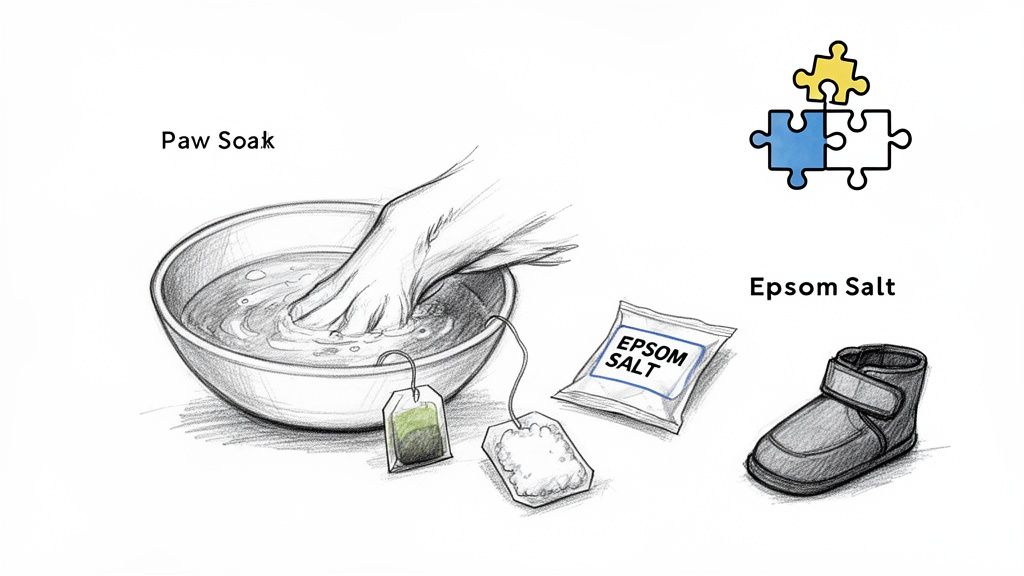
When your dog just won't leave their paws alone, you want to bring them relief, and fast. The good news is, there are plenty of simple, effective things you can do at home to soothe their discomfort and break that cycle of obsessive licking.
Think of it as a two-pronged attack: we need to calm the sore paw itself while also managing the licking behaviour. By combining these approaches, you can make a real difference while you figure out what’s causing the problem in the first place.
Creating a Soothing Paw Soak
One of the quickest ways to calm down inflamed, itchy skin is with a simple paw soak. It's a low-cost, easy way to provide instant relief, especially after a walk where their paws have picked up pollen, grass, or other irritants.
You've got a few fantastic options here:
- Epsom Salt Soak: Pop about half a cup of Epsom salts into a shallow tub of lukewarm water and let your dog stand in it for five to ten minutes. The magnesium in the salt is brilliant for reducing swelling and soothing soreness.
- Chamomile Tea Soak: Just brew a few bags of chamomile tea, let it cool right down to a safe, lukewarm temperature, and use it as a paw soak. Chamomile has natural properties that are known to calm irritated skin.
- Oatmeal Bath: For a more intensive treatment, you can use colloidal oatmeal (which is just very finely ground oats). It's a classic remedy for itchiness because it creates a gentle, protective barrier on the skin.
This is critical: after any soak, you must thoroughly dry their paws, especially deep between the toes. Trapped moisture is a perfect breeding ground for yeast infections, which will only make things worse. A soft towel or even a hairdryer on its coolest, lowest setting will do the trick.
Physical Barriers and Environmental Protection
Sometimes, the simplest solution is the most effective. Physically blocking your dog's access to their paw or protecting it from the environment is a surefire way to prevent a dog from licking a paw. This is an essential step for breaking a compulsive habit or avoiding known allergens on walks.
Here are a few practical tools to consider:
- Dog Booties: These are absolute game-changers for walks. They shield sensitive paws from hot pavements, icy ground, road salt, and—most importantly for itchy dogs—allergens like grass and pollen. It might take a bit of patience and a few treats to get your dog comfortable wearing them, but it’s well worth the effort.
- Protective Cones or Inflatable Collars: The classic “cone of shame” (an Elizabethan collar) works wonders, even if your dog isn't a fan. For a more comfortable alternative, a soft, inflatable collar can still prevent them from reaching their feet without being so cumbersome.
- Paw Wipes: Keep a pack of hypoallergenic, pet-safe wipes right by the door. Giving all four paws a quick wipe after every single walk removes a surprising amount of irritants before they even have a chance to cause a reaction.
Creating a physical barrier does more than just stop the licking; it gives the inflamed skin a chance to heal without the constant irritation of your dog's tongue and saliva.
Behavioural Redirection and Mental Stimulation
If you suspect boredom or anxiety is behind the licking, redirecting that nervous energy is key. A busy, stimulated mind often forgets all about an itchy paw. The goal is to replace the self-soothing licking behaviour with something more positive and engaging.
As soon as you notice the licking start, calmly interrupt and shift their focus.
- Introduce a Puzzle Toy: A food-dispensing toy or a snuffle mat is a fantastic way to get their brain working for a tasty reward.
- Start a Quick Training Session: Even five minutes of running through basic commands like "sit," "stay," or "paw" provides brilliant mental stimulation.
- Offer a Long-Lasting Chew: A safe, durable chew can satisfy that oral fixation, giving them something to work on that isn't their own foot.
This approach helps to rewire their response. Before long, they may start to look for a fun activity instead of resorting to licking. For a more detailed look at home-based solutions, have a look at our guide on home remedies for an itching dog.
Supporting Skin Health From Within
While topical treatments and physical barriers provide relief on the outside, long-term success often involves supporting your dog’s skin health from the inside out. This is where high-quality supplements can play a crucial role, helping to manage the underlying inflammation that drives the itch-scratch cycle.
Natural ingredients like omega-3 fatty acids are well-known for their ability to strengthen the skin barrier and reduce inflammatory responses. For ongoing management, Tipaw's allergy-focused chews use natural antihistamines like nettle extract and quercetin. These ingredients mirror results from a 2023 EU vet trial where 72% of 300 dogs experienced reduced paw licking after 30 days.
This aligns perfectly with UK standards and advice from experts. The Kennel Club, for example, advises using booties and paw wipes after exercise—a practice shown in field tests to reduce irritant buildup by 55%.
By bringing all these strategies together, you can create a comprehensive plan to soothe, protect, and manage your dog’s paw licking for good.
When You Should Call Your Veterinarian
While sorting things out at home is always a great first step, you need to know when to throw in the towel and call in the professionals. Some signs are more than just a minor irritation; they're clear signals that your dog needs a vet's expertise to get to the bottom of the problem.
Acting quickly can save your dog a lot of discomfort and often leads to a much faster, simpler recovery. Don't fall into the trap of "waiting to see" if it gets better on its own — some symptoms really do need immediate attention.
Clear Signs a Vet Visit Is Necessary
If you spot any of the following red flags, it's time to stop the home remedies and get an appointment booked. These symptoms often point to something more serious, like a deep infection, a nasty injury, or a severe allergic reaction that just won't clear up without medical help.
Here’s what to watch for:
- Intense, Non-Stop Licking: If the licking is so relentless that it’s waking your dog up at night or getting in the way of eating and playing, they're clearly in significant distress.
- Limping or Not Putting Weight on the Paw: This is a direct sign of pain. It could be anything from a thorn embedded deep in the pad to a sprain, a broken toe, or even a flare-up of arthritis.
- Open Sores or Bleeding: Any break in the skin needs a vet's attention, especially if it’s weeping, bleeding, or looks like a raw "hot spot." These are wide-open invitations for a nasty infection.
- A Foul or Musty Odour: A strong, unpleasant smell is a classic tell-tale sign of a secondary bacterial or yeast infection, which loves the warm, moist environment your dog has created.
- Sudden Changes in Behaviour: Is the paw licking happening alongside other changes, like lethargy, a loss of appetite, or your dog being unusually grumpy? This suggests a more systemic issue is making them feel unwell.
It’s important to realise how common this is. In fact, statistics from the British Small Animal Veterinary Association show that 25% of UK vet appointments for skin issues are linked to excessive paw licking.
What to Expect at the Veterinary Practice
Think of the vet visit as a fact-finding mission. All those little details you’ve been noticing are gold, so be ready to share when the licking started, how often it happens, and any patterns you've seen.
Your vet will start with a good look at the paws, checking for all the things you did, but with a trained eye and better equipment. From there, they might need to do some detective work.
It’s very common for them to suggest a skin scrape or a cytology test. This sounds complex, but it usually just involves pressing a bit of special sticky tape onto the paw to collect a sample. By looking at it under a microscope, they can spot yeast or bacteria in minutes, which tells them exactly what medication is needed.
If they suspect allergies are the culprit, the process can be a bit more involved. That same BSAVA report highlights that a whopping 60% of these paw-licking cases are ultimately traced back to atopic dermatitis, a condition that has seen diagnoses jump by 12% in recent years. To get to the bottom of it, your vet might discuss blood tests or even an elimination diet to figure out if a food trigger is to blame. The Kennel Club also offers some great insights on their page about why dogs lick their feet.
Once they have a diagnosis, your vet will put together a treatment plan just for your dog. This could be anything from a simple course of antibiotics for a bacterial infection, anti-fungal treatments for yeast, or powerful anti-inflammatory drugs to break that relentless itch-scratch cycle. For long-term issues like allergies, they’ll discuss ongoing management. Getting this professional help is, without a doubt, the most reliable way to prevent a dog from licking a paw raw and get them comfortable again.
Of course, here is the rewritten section with a more natural, human-written tone.
Your Questions About Dog Paw Licking, Answered
Even when you're doing everything you can, watching your dog incessantly lick their paws can be worrying. It's only natural to second-guess yourself, wondering if you're on the right track or missing a crucial piece of the puzzle. We get these kinds of questions all the time, so let's clear up some of the most common ones.
My goal here is to give you the practical, real-world advice you need to handle this frustrating issue, from choosing the right treatments to understanding what's going on with their diet. Let's tackle some of that confusion head-on.
Can I Put Human Creams Like Sudocrem on My Dog’s Paws?
I see this question a lot, and it’s an important one. The short answer is no—it's really best to steer clear of human creams unless your vet has given you the explicit go-ahead. Many products we keep in our medicine cabinets, like Sudocrem, contain ingredients that are perfectly safe for us but can be toxic for dogs if licked, such as zinc oxide.
Beyond toxicity, a dog's skin is fundamentally different from ours; it has a completely different pH balance. Creams formulated for people just aren't suitable and can end up causing even more irritation, making a bad situation worse.
A much safer bet is to reach for a vet-approved antiseptic spray or a natural paw balm specifically made with dog-safe ingredients. For anything more than a minor graze, your vet is the best person to prescribe a targeted, medicated treatment that's actually designed for canine skin.
How Long Does It Take for Allergy Supplements to Work?
When you start your dog on a new supplement for their allergies, patience is your best friend. It’s not a quick fix, and you won’t see a dramatic change overnight. The active ingredients, like omega-3s, need time to build up in their system to start making a real difference.
Typically, you should start seeing genuine improvements within four to eight weeks of consistent daily use. These ingredients work from the inside out, gradually helping to calm inflammation and strengthen the skin's natural defences.
And remember, supplements are just one part of a bigger picture. They're most effective when you pair them with other smart strategies, like wiping paws after every walk, fine-tuning your dog's diet, and keeping your home as allergen-free as possible. This combined approach is the most reliable way to prevent a dog from licking a paw for good.
Is It Normal for My Dog to Lick Their Paws After a Walk?
A quick, tidy-up lick after coming inside is perfectly normal grooming behaviour. What you need to watch out for is when the licking becomes intense, goes on for more than a couple of minutes, or turns into chewing at their pads or fur. That’s a clear signal that something is bothering them.
Most of the time, it's a reaction to something they’ve picked up on their travels. Common culprits include:
- Lawn chemicals and pesticides
- Grit or road salt during the winter months
- Pollen from grass and weeds
- Hot pavements or rough, gritty surfaces
Getting into the habit of gently wiping their paws with a damp cloth or a pet-safe wipe after every walk is a game-changer. It literally takes seconds but removes potential irritants before they have a chance to trigger that frustrating itch-lick cycle.
Could My Dog's Food Be Causing Their Itchy Paws?
Yes, absolutely. Food allergies and sensitivities are one of the most common reasons I see for persistent itchy skin and paws. It happens when their immune system overreacts to a particular ingredient, causing widespread inflammation that often shows up as itchy feet, chronic ear infections, and skin rashes.
The most frequent offenders are usually proteins, with beef, chicken, and dairy being at the top of the list. If your dog's paw licking is a year-round issue and you’re also dealing with other problems like smelly ears or an upset tummy, then food is a very likely suspect.
To get to the bottom of it, the gold standard is working with your vet on an elimination diet. It’s a carefully controlled process where you feed a simplified or "novel" protein diet to pinpoint exactly what's causing the reaction. Once you know the trigger, you can avoid it for good.
At Tipaw, we know how hard it is to see your dog feeling uncomfortable. Our vet-approved, natural supplements are formulated to support your dog’s health from within, helping to manage the root causes of itching and inflammation. To take a proactive step towards better skin health and overall wellness, explore our range of functional chews.


