


The first step towards helping a dog with anxiety is learning to speak their language. We often miss the quiet whispers of stress until they turn into loud shouts, but if you know what to look for, you can intervene long before your dog feels overwhelmed.
Decoding Your Dog's Silent Stress Signals
Have you ever noticed your dog yawn when they clearly aren't sleepy? Or lick their lips when there’s no food around? These aren't random quirks; they're subtle but crucial signals. Learning to spot these early signs of anxiety is the single most important thing you can do. It allows you to step in and help your dog feel safe before their stress spirals.
Many of these actions are what experts call "displacement behaviours." They're things dogs do when they're feeling conflicted or unsure, almost like a nervous habit. A dog suddenly scratching an itch that isn't there or shaking their whole body as if they're wet can be their way of physically trying to shake off rising tension.
Beyond the Obvious Shakes
While most of us recognise trembling or whining as signs of distress, a dog's anxiety often shows itself in much quieter ways first. Paying close attention to this body language can make a massive difference in their well-being.
Think about these real-world situations:
- A new person comes to the door: Does your dog tuck their tail, lower their body, and avoid looking at the visitor? This isn't just shyness; they're showing appeasement signals, trying to say, "I'm not a threat, so please don't hurt me."
- You hear a distant rumble of thunder: Your dog might start pacing restlessly or panting long before you can hear anything clearly. Their senses are far more acute than ours, and they can pick up on changes in barometric pressure and sound that we miss entirely.
- Out on a walk: If your dog suddenly freezes mid-stride and refuses to budge, they aren’t being stubborn. More likely, they've seen, smelled, or heard something that has put them on high alert, and they need a moment to figure out if it's a threat.
By learning to spot these early warnings, you can change the situation—by creating more space, offering a treat to change their association, or simply leading them away—before their fear takes over. It’s the foundation of managing anxiety naturally.
Understanding the Scale of Canine Anxiety
This isn't a rare problem. In fact, a landmark study from the University of Helsinki looked at over 13,000 dogs and found that a staggering 72.5% showed signs of anxiety. Within that group, 29% struggled with general fearfulness. These numbers really highlight how important it is for us as owners to understand and address what our dogs are feeling.
The key is learning to separate normal behaviour from signs of distress. A big yawn after a long nap is perfectly fine. But five yawns in under a minute as a toddler approaches? That's a clear signal of discomfort. You can explore these behaviours in more detail in our guide on the signs of anxiety in dogs.
Becoming fluent in your dog's silent communication is the most powerful tool you have. It builds a deeper bond based on trust and lets your dog know that you see them, you understand them, and you'll keep them safe.
Immediate Relief for Overwhelming Moments
When your dog is in the middle of a full-blown panic attack—thanks to fireworks, an unexpected visitor, or some unseen trigger—your first job is to help them feel safe again. In these high-stress situations, you need practical, in-the-moment techniques to break that cycle of fear and guide them back to a calmer state. This isn’t about discipline; it's about providing comfort and reassurance, right here, right now.
Your calm demeanour is probably the most powerful tool you have. Dogs are masters at reading our emotional state, so if you're tense, they'll pick up on it immediately. Take a deep breath, lower your voice, and move slowly. Your quiet confidence sends a clear signal: "I've got this, you're safe."
Recognising the early, subtle signs is half the battle. Behaviours like excessive yawning or constant lip licking are often the very first indicators that your dog is starting to feel uneasy.
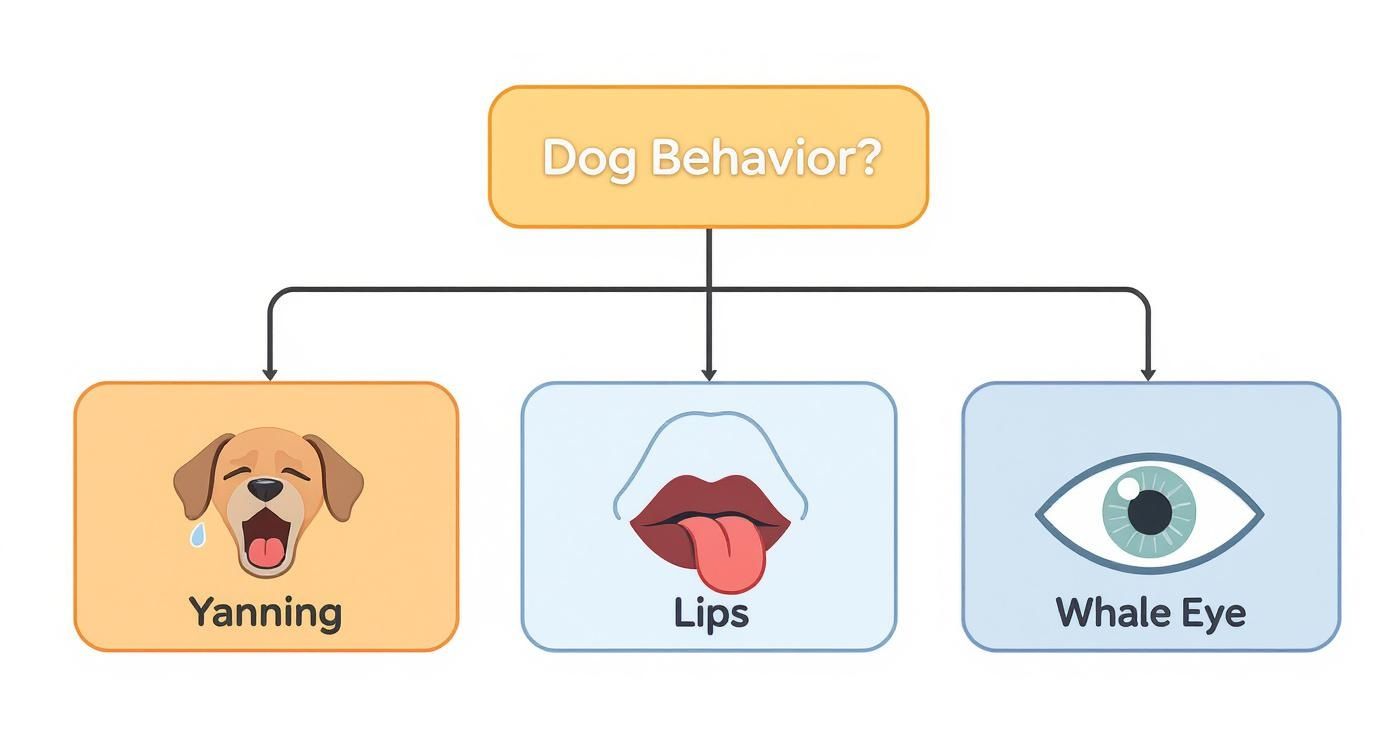
Catching these cues allows you to step in and offer support before their anxiety escalates into genuine panic.
Gentle Physical Contact
The right kind of touch can be incredibly soothing for a stressed dog. A well-known technique is the Tellington TTouch, which uses specific, gentle movements to reduce stress and promote a sense of calm. The method involves making slow, circular motions over your dog’s body with your fingertips.
The key is to apply just enough pressure to move the skin, nothing more. Focus on areas like their ears, back, and chest. These deliberate, rhythmic strokes can help interrupt the flow of stress hormones and encourage their body’s natural relaxation response.
Avoid frantic, fast petting, which can actually increase anxiety. Instead, try making a slow, clockwise circle-and-a-quarter with your fingertips on their shoulder. Pause, breathe, and then move to a new spot. This intentional, calm touch communicates safety much more effectively.
Create a Safe Haven
Every dog deserves a den—a secure space they can retreat to when things get overwhelming. This should never be used for punishment; think of it as their personal sanctuary. A crate with a blanket draped over it or a cosy bed tucked into a quiet corner can work perfectly.
Make this spot extra special with their favourite soft bedding and a high-value toy that they only get when they're in their haven. Most importantly, establish a firm "do not disturb" rule for everyone in the house when your dog is in their safe space. This reinforces the idea that it’s a place where they can truly relax and let their guard down.
Redirect Their Focus
Sometimes, the best thing you can do is give their brain a different job. Distraction is a simple but powerful way to provide natural anxiety relief for dogs by redirecting their attention away from the scary thing and onto something positive and engaging.
Here are a few quick redirection ideas that work well:
- High-Value Treats: Pull out the good stuff—small pieces of chicken, cheese, or whatever they go crazy for. Ask for a simple, familiar cue like "sit" or "touch" and reward them enthusiastically when they do it.
- Puzzle Toys: A frozen KONG stuffed with peanut butter or a snuffle mat with treats sprinkled inside can keep their mind busy for a good while. It shifts their focus from fear to problem-solving.
- Auditory Masking: Drown out unsettling noises from a storm or nearby construction by playing some calming classical music or turning on a white noise machine.
These immediate actions do more than just manage a single stressful event. By responding with gentle, effective support, you’re strengthening your bond and building a foundation of trust that helps your dog feel more secure in the world.
Building Lasting Confidence and Resilience
While knowing how to calm your dog in a moment of panic is essential, the real game-changer is building their confidence from the ground up. This isn't about quick fixes; it's about fundamentally reshaping how your dog sees the world and reacts to it. By focusing on long-term behavioural strategies, we can help them develop genuine resilience instead of just managing fear.
The aim is to help your dog’s brain switch from thinking, "That noise is terrifying!" to "Oh, that noise means something good is about to happen." We do this using two incredibly powerful training concepts: desensitisation and counter-conditioning. They might sound a bit technical, but the ideas behind them are straightforward and can provide profound, natural anxiety relief for dogs.
Rewiring Your Dog's Emotional Responses
So, what do these terms actually mean? Desensitisation is simply about exposing your dog to their trigger, but at such a low level that it doesn’t even cause a flicker of fear. Counter-conditioning is where the magic happens: you pair that barely-there trigger with something your dog absolutely adores, like a high-value treat or a favourite game.
Let's say your dog bolts whenever the vacuum cleaner appears. Here’s how you could put this into practice:
- Start with sight, not sound. Bring the vacuum into the room but leave it switched off and parked in a corner. Every time your dog calmly looks at it, give them a tiny piece of chicken. No big deal.
- Introduce a whisper of sound. Ask a family member to turn the vacuum on in another room, maybe even upstairs, so the sound is muffled and distant. The moment your dog hears it, start a fun game or scatter some tasty treats on the floor.
- Slowly bridge the gap. Over many sessions, you can gradually move the running vacuum closer or make the sound a tiny bit louder. The golden rule is to always stay below their anxiety threshold—that point where you see them start to get tense or show stress signals.
This patient, step-by-step process rewires their association. The vacuum’s whir slowly stops being a predictor of doom and instead becomes a signal that good things are coming.
The biggest mistake I see owners make is rushing the process. If your dog shows any signs of anxiety—lip licking, yawning, a stiff body—you’ve gone too far, too fast. Just take a step back to a point where they were comfortable and work from there. Progress is measured in calm moments, not speed.
The Power of a Predictable Routine
Anxious dogs often feel like their world is chaotic and out of their control, which only feeds their insecurity. One of the most effective ways to build their confidence is by creating a predictable daily routine. Simply knowing what to expect from one moment to the next provides an incredible sense of safety.
A consistent schedule for meals, walks, toilet breaks, and playtime helps regulate their internal body clock and takes the guesswork out of their day. They learn that their needs will always be met, which builds immense trust and lowers their baseline stress levels. This doesn't mean you need a military-style schedule, but a general, predictable flow to the day can be deeply comforting.
And it’s not just your dog who benefits. Research in the UK has revealed a strong connection between a dog's behaviour and its owner's mental health. One study highlighted that owners of dogs with strong fearful responses often reported lower well-being themselves. It makes sense—when our dogs are struggling, we struggle too. You can learn more about how supporting your dog’s mental health can also support your own.
Building Confidence Through Positive Training
Confidence isn't just about managing fear; it's also about empowering your dog to make good choices and feel capable. Short, fun training sessions using positive reinforcement are a brilliant way to build their self-assurance. Teaching simple cues like "touch" (where they bop your hand with their nose) or other fun tricks gives them a job and a real sense of accomplishment.
These little interactions do more than just teach a skill; they strengthen your bond and show your dog that engaging with you is always a safe and rewarding experience. Every time they succeed and get a bit of praise or a treat, it's a little deposit in their confidence bank.
Ultimately, these long-term strategies are about creating a resilient, confident companion who feels secure in their world because they know you’re there to guide them.
Shaping a Calm Home Environment
While training techniques are a huge piece of the puzzle, your dog’s day-to-day life is the real foundation for their mental health. The sights, sounds, and routines they live with have a massive impact on their baseline anxiety levels. Honestly, creating a calm, predictable, and engaging home life is one of the most effective forms of natural anxiety relief for dogs. It helps head off stress before it even begins.
Think of it like building a house. If your dog's daily life is chaotic or unfulfilling, any behavioural work you do is built on shaky ground. By focusing on the right kind of exercise, mental stimulation, and good nutrition, you’re creating a supportive structure that helps your dog feel genuinely secure and content.
The Right Kind of Exercise
We've all heard the saying, "a tired dog is a happy dog," but it's a bit more nuanced than that. Not all exercise is created equal. For an already anxious pup, a frantic, hour-long session at a busy dog park could actually send their stress hormones through the roof. The goal is to provide physical activity that soothes their nervous system, not overstimulates it.
You have to think about your dog's breed and individual energy level. A driven Border Collie might need something structured like scent work or a long hike to feel truly satisfied. On the other hand, a quiet walk around the neighbourhood focused on sniffing might be perfect for a smaller companion.
These "sniffaris," as they're sometimes called, are incredibly calming. They let your dog use their most powerful sense to process the world at their own pace.
I've seen it time and again: a 20-minute walk where a dog is allowed to stop and sniff to their heart's content can be more mentally tiring and calming than a 40-minute forced march. It gives them a sense of control over their environment, which is a massive confidence booster.
Keeping Their Mind Busy
Boredom is a huge, often underestimated, trigger for anxiety. A dog with nothing to do will find their own job, and you probably won't like the one they choose—like barking at every passing leaf or chewing the skirting boards. This is where mental enrichment comes in. It’s the perfect antidote, giving them an outlet for their intelligence and natural problem-solving skills.
Engaging their brain helps build self-assurance and channels that nervous energy into something positive. Here are a few simple ways to work enrichment into their day:
- Puzzle Toys: Ditch the standard food bowl. Instead, feed them using a puzzle feeder or a snuffle mat to turn mealtime into a fun and rewarding game.
- Scent Games: It's so easy to do. Just hide a few tasty treats around a room and encourage your dog to "find it." This taps right into their natural instincts and is incredibly satisfying for them.
- Fun Training Sessions: Keep training light and positive. Working on a new trick for just five minutes a day can do wonders for their confidence and strengthen your bond.
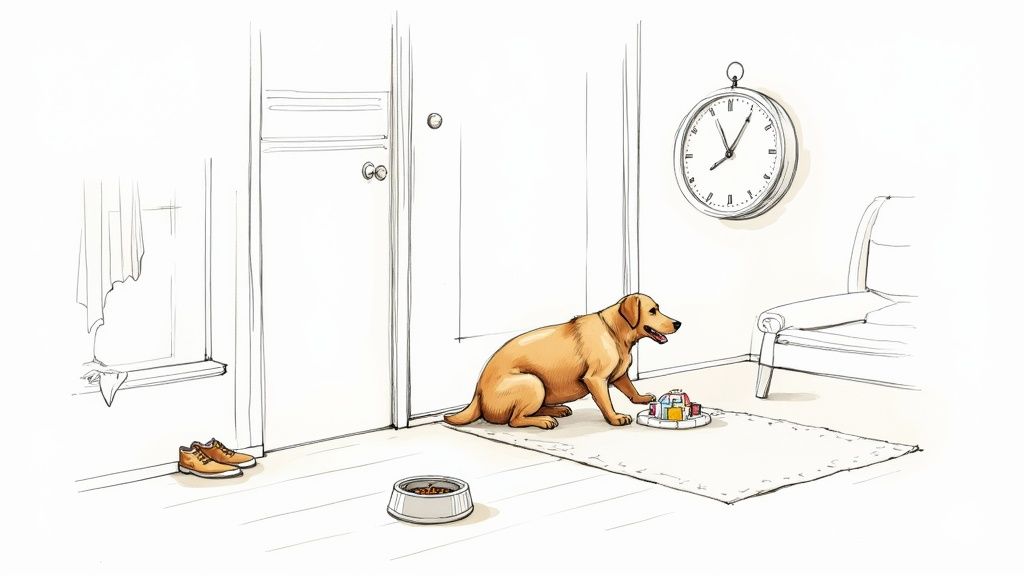
A secure and comfortable resting place is also a non-negotiable part of a calm environment. Having a dedicated safe space allows your dog to fully decompress. Investing in a high-quality calming dog bed can make a real difference, enhancing their sense of security when they need to retreat and relax.
The Gut-Brain Connection
Here’s something many dog owners overlook: their dog's diet. The link between the gut and the brain is incredibly strong, and an unhealthy gut can directly contribute to anxiety and mood swings. A diet full of low-quality ingredients and fillers can cause inflammation and disrupt the delicate balance of gut bacteria responsible for producing mood-regulating neurotransmitters like serotonin.
Making sure your dog is on a high-quality, easily digestible diet supports not just their physical health but their mental wellbeing, too. Look for foods with whole ingredients, and maybe even consider a probiotic supplement designed for dogs to support a healthy gut microbiome.
A stable gut really does help foster a stable mind. By taking this holistic view—addressing their physical needs, mental engagement, and nutritional health—you create a truly supportive environment where your dog can feel safe, confident, and ready to thrive.
Choosing Natural Supplements Wisely
Working on training and creating a calm home environment are your foundational tools for managing your dog's anxiety. But let's be realistic—sometimes, they just need a little extra support to get them over the hump. This is where natural supplements can be a real game-changer, offering a gentle nudge to help rebalance their nervous system.
The market is absolutely flooded with options, though, and it’s tough to sift through the noise to find what’s genuinely safe and effective. Think of a good supplement not as a magic bullet, but as a supporting actor in your dog’s care plan. It can help take the edge off their anxiety, making them more open to training and better able to handle the things that usually trigger them. The goal is to choose a high-quality product with proven ingredients.

Understanding Key Calming Ingredients
When you start scanning labels, you’ll notice a few names pop up again and again. Getting to know what these ingredients are and how they work is the first step to making a smart choice. These are natural compounds that encourage a calmer state of mind, often without the heavy side effects that can come with some prescription medications.
Let's break down some of the most trusted natural aids for anxiety:
- L-Tryptophan: This is an essential amino acid your dog’s body uses to produce serotonin, the "feel-good" neurotransmitter. By supporting healthy serotonin levels, L-Tryptophan can help foster a natural sense of well-being and calm.
- L-Theanine: An amino acid found in green tea, this little wonder helps increase calming brain chemicals like GABA and dopamine. It’s fantastic because it promotes relaxation without making your dog drowsy.
- Chamomile: We all know it from our own bedtime teas, and it offers a similar mild sedative effect for our dogs. It’s especially helpful for settling an upset stomach, which often goes hand-in-hand with anxiety.
- Passionflower: This is another gentle herb that works by boosting GABA levels in the brain. This essentially helps to quieten down excessive brain activity, leading to a more relaxed, less fretful dog.
With anxiety being so common in the UK's dog population, these natural solutions are more important than ever. The National Dog Survey from Dogs Trust revealed that around 30% of dogs rarely relax when left alone—a classic sign of separation anxiety. This, along with reactivity and pulling on the lead, was flagged as a top behavioural issue. You can read more in the full Dogs Trust report.
How To Spot a Quality Supplement
I can't stress this enough: not all supplements are created equal. The quality can vary wildly, and a cheap, poorly made product isn't just a waste of money—it could be unsafe. It’s absolutely vital to do a bit of homework before you start.
Here are a few things I always look for in a trustworthy brand:
- Transparent Ingredient Lists: The label should tell you exactly what's inside and in what amounts. Vague phrases like "proprietary blend" can be a red flag, hiding low levels of the active ingredients.
- High Manufacturing Standards: Check that the products are made in facilities that follow strict quality control. This ensures you’re getting a pure and consistent product every time.
- Solid Reviews and Vet Backing: A good reputation matters. Look for positive feedback from other dog owners and, even better, products that have been formulated or are recommended by vets.
Your vet should always be your first port of call. Before starting any new supplement, have a chat with them. They'll help you find the right dose and make sure it doesn’t clash with any other health conditions or medications your dog has.
Making an Informed Choice for Your Dog
The right supplement is simply one that matches your dog's specific needs with a high-quality formula. For example, a dog struggling with separation anxiety could really benefit from a supplement rich in L-Tryptophan to support their mood. On the other hand, a dog terrified of fireworks might do better with the faster-acting calming effects of L-Theanine and passionflower.
Our in-depth guide to choosing a calming supplement for dogs can walk you through more of these options.
In the end, helping your dog feel less anxious is a multi-layered approach. Supplements are a fantastic tool to have in your kit, but they shine brightest when used alongside consistent training, a predictable routine, and a loving, supportive home. By choosing a quality natural supplement with your vet's blessing, you can give your anxious friend the gentle support they need to feel more secure and confident.
Your Questions on Natural Anxiety Relief Answered
When you first start looking into natural ways to help your anxious dog, a lot of questions pop up. It’s completely normal to wonder about how long it all takes, what’s safe, and what will actually work for your particular pup. I’ve put together some of the most common questions I hear from owners to give you the clear, straightforward answers you need to get started with confidence.
Knowing what to expect can make the whole process feel much less daunting. The road to a calmer dog is all about patience and understanding, and having the right information is half the battle.
How Long Until I See Results?
This is the big one, isn't it? And the honest answer is, it really depends. If you’re using behavioural techniques like desensitisation, the pace is set entirely by your dog and their specific fears. You might see a tiny positive shift after one session, but real, lasting change often takes weeks, or even months, of consistent, patient effort.
With natural supplements, the timeline can be a little more predictable. Some ingredients provide quick relief for specific situations in under an hour, but for broader support, you need to play the long game. Supplements containing ingredients like L-Tryptophan, which support the nervous system, need time to build up in their system to have an effect.
You can typically expect to see a real improvement in your dog's day-to-day anxiety levels after 4 to 6 weeks of consistent daily use. This isn't a quick fix; it's about gently helping their body produce the calming neurotransmitters it needs.
Is It Safe to Combine Different Natural Remedies?
Not only is it safe, but it’s often the best way to go. When you combine different natural approaches, you’re tackling the anxiety from multiple angles, creating a much stronger support system for your dog.
I like to think of it as building a house for their well-being:
- Behavioural Training: This is your foundation. It’s all about teaching your dog new, calmer ways to react to whatever triggers them.
- Environmental Enrichment: These are the walls, creating a secure, engaging home life that naturally lowers their baseline stress.
- Natural Supplements: This is the roof, offering that extra layer of protection to help their nervous system stay in balance.
A great example is how a calming supplement can make a dog more relaxed and therefore more open to a training session. Or how a good puzzle toy can redirect the nervous energy that might otherwise lead to destructive behaviour. The trick is to introduce new things one at a time so you can see what’s working. And, of course, always have a quick chat with your vet before you start mixing multiple supplements, just to be on the safe side.
Are Certain Supplements Better for Specific Anxieties?
Yes, definitely. While a lot of calming ingredients have general benefits, some are much better suited to certain types of anxiety. Nailing this match-up can make a huge difference, giving you targeted natural anxiety relief for dogs right when they need it.
Here’s a simple way to think about it:
- For Situational Anxiety (like fireworks or a vet visit): Look for ingredients like L-Theanine and passionflower. These tend to work faster to take the edge off a stressful event you know is coming.
- For Generalised Anxiety (constant worry or separation anxiety): A formula with a good dose of L-Tryptophan is usually a better bet. It works over time to support healthy serotonin levels, which helps lift their overall mood and resilience.
Getting these details right helps you fine-tune your approach. You're not just giving a generic "calming aid"; you're providing the specific support your dog needs to feel happier and more confident in their own paws.
At Tipaw, we believe in providing targeted, effective support for your dog's well-being. Our vet-approved calming supplements are formulated with high-quality, natural ingredients to help your dog feel more secure and balanced. Explore our solutions at https://www.store-tipaw.com.


