


At their core, joint and hip supplements are designed to do a few key things: support cartilage health, help manage inflammation, and ultimately, improve your dog’s mobility. They’re not a cure-all, but they provide the essential building blocks that maintain joint structure and function, which can ease the discomfort that comes with conditions like arthritis.
Understanding Your Dog's Joint Health
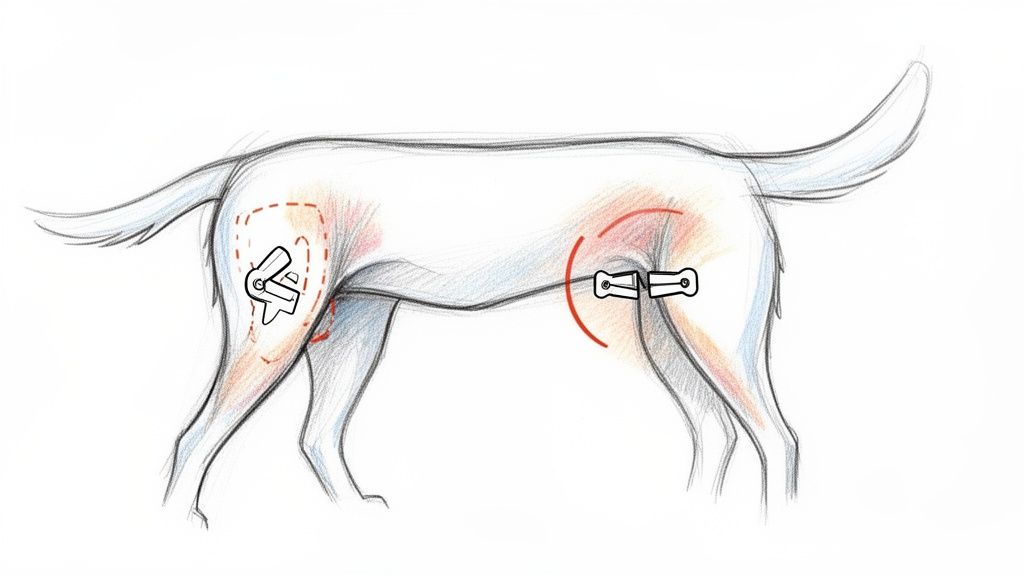
Think of your dog's joints like the hinges on a well-used gate. After years of swinging open for countless games of fetch, energetic runs, and happy jumps, those hinges can start to wear down. They might get a bit creaky, stiff, and not move as smoothly as they once did. This natural wear and tear is precisely why being proactive about joint care is so important.
For a lot of dogs, particularly certain breeds prone to joint issues or those heading into their golden years, this gradual decline can lead to real problems. Conditions like osteoarthritis and hip dysplasia can seriously affect their quality of life, making simple movements that were once effortless a painful daily struggle.
Why Proactive Support Matters
It’s far better to be proactive than reactive. If you wait until your dog is showing obvious signs of pain, managing their condition becomes much more challenging. Starting support early helps to maintain the cartilage they still have and keeps the joints lubricated, which can potentially delay the onset or slow the progression of degenerative joint diseases.
This guide will walk you through the world of joint and hip supplements for dogs, helping you understand how these products can:
- Support Mobility: Keep your dog moving more freely and with greater ease.
- Reduce Discomfort: Help soothe the aches and stiffness that come with joint problems.
- Improve Quality of Life: Make sure your dog can continue to enjoy their favourite walks and playtime for as long as possible.
It's not so different from humans taking supplements to look after their own bone and joint health. For dogs, it’s all about maintaining the machinery that powers every happy hop and playful pounce.
The growing popularity of these supplements shows just how much owners are prioritising their pets' long-term comfort. In the UK, joint health products make up a huge 28% share of the entire pet dietary supplement market. This isn't just a fleeting trend; the sector is expected to grow from an estimated USD 224.8 million in 2025 to USD 531.8 million by 2035, thanks to high pet ownership and an aging dog population. You can explore more on the UK pet supplement market growth and what's driving it.
By getting to grips with how your dog’s joints work and the role supplements can play, you’re in a much better position to make smart choices for their long-term health and happiness.
Learning to Spot the Subtle Signs of Joint Pain
Dogs are stoic creatures. It’s an old survival instinct from their wild ancestors—showing pain meant you were vulnerable. Because of this, they often won't whimper or cry out until their discomfort is quite advanced. Instead, they speak to us through small, easily missed changes in their behaviour and body language. Learning to read these quiet signals is the most important first step you can take to protect their joint health.
Your dog can't tell you their hip is aching after a long walk, but they can definitely show you. It’s best to think of these signs as pieces of a puzzle. A single stiff morning might not mean much, but a consistent pattern of subtle shifts is often a clear sign of an underlying issue that needs your attention.
Changes in Movement and Activity
The most obvious clues are usually tied to how your dog gets around. Actions that were once effortless might now take visible effort. Paying close attention to these shifts is key, as they are often the first red flags that your dog could benefit from a joint supplement.
Here are a few classic examples to watch for:
- Reluctance to Jump: Does your dog now wait by the sofa to be lifted up, when they used to clear it in a single bound? That hesitation is a textbook sign of discomfort.
- Stiffness After Rest: Do they seem particularly stiff and slow after a nap or first thing in the morning? Vets often call this "post-rest stiffness," and it’s a hallmark of dogs developing arthritis.
- Difficulty with Stairs: A dog that once flew up and down the stairs might now take them one at a time, very deliberately, or avoid them entirely. You might even notice them using a "bunny hop" with their back legs to go up.
- Lagging Behind on Walks: Is your once-eager walking partner now trailing behind, needing to stop for breaks, or wanting to head home much sooner? A drop in stamina is often directly linked to joint pain.
These aren't just vague signs of "getting old"—they are specific signals of physical discomfort. Catching them early allows you to step in much sooner. To get more specific, you can learn about the early signs of hip dysplasia in dogs and what they look like.
Behavioural and Postural Clues
Pain doesn't just change how a dog moves; it can also alter how they act and even how they hold their body. These clues can be even more subtle, but they paint a much fuller picture of your dog's wellbeing.
A change in behaviour is often a dog's loudest cry for help. Paying attention to their mood, posture, and daily habits can tell you more than any obvious physical symptom.
Keep an eye out for these less obvious indicators:
- Licking or Chewing a Specific Joint: If your dog is obsessively grooming one particular spot, like a hip or a knee, they may be trying to soothe an ache.
- Irritability or Grumpiness: Has your normally sweet-natured dog become a bit withdrawn or snappy, especially when you touch them in a certain area? Pain can make anyone short-tempered.
- Changes in Posture: You might notice your dog shifting their weight to one side, holding a leg up, or sitting in a strange new way. They’re simply trying to take the pressure off a painful joint.
By becoming a keen observer of your dog’s daily life, you can catch these small but meaningful changes. Spotting them early gives you the best chance to help with supportive measures like diet, managed exercise, and high-quality joint supplements, preserving their comfort and happiness for years to come.
The Building Blocks of an Effective Joint Supplement
Think of your dog's joints like a well-oiled machine. For everything to run smoothly, you need all the right parts working together in perfect harmony. A top-notch joint and hip supplement for dogs is built on the same idea. It’s not just about one magic ingredient; it’s about a team of specialised compounds, each with a crucial job to do.
When you first glance at an ingredients list, it can look a bit like a science textbook. But once you get to know the key players and their roles, you can read that label with confidence, knowing exactly how it’s helping your best friend. These aren't just random additives; they're thoughtfully chosen to repair cartilage, boost lubrication, and calm inflammation.
This flowchart shows some of the most common signs that your dog might be feeling a bit of joint discomfort.
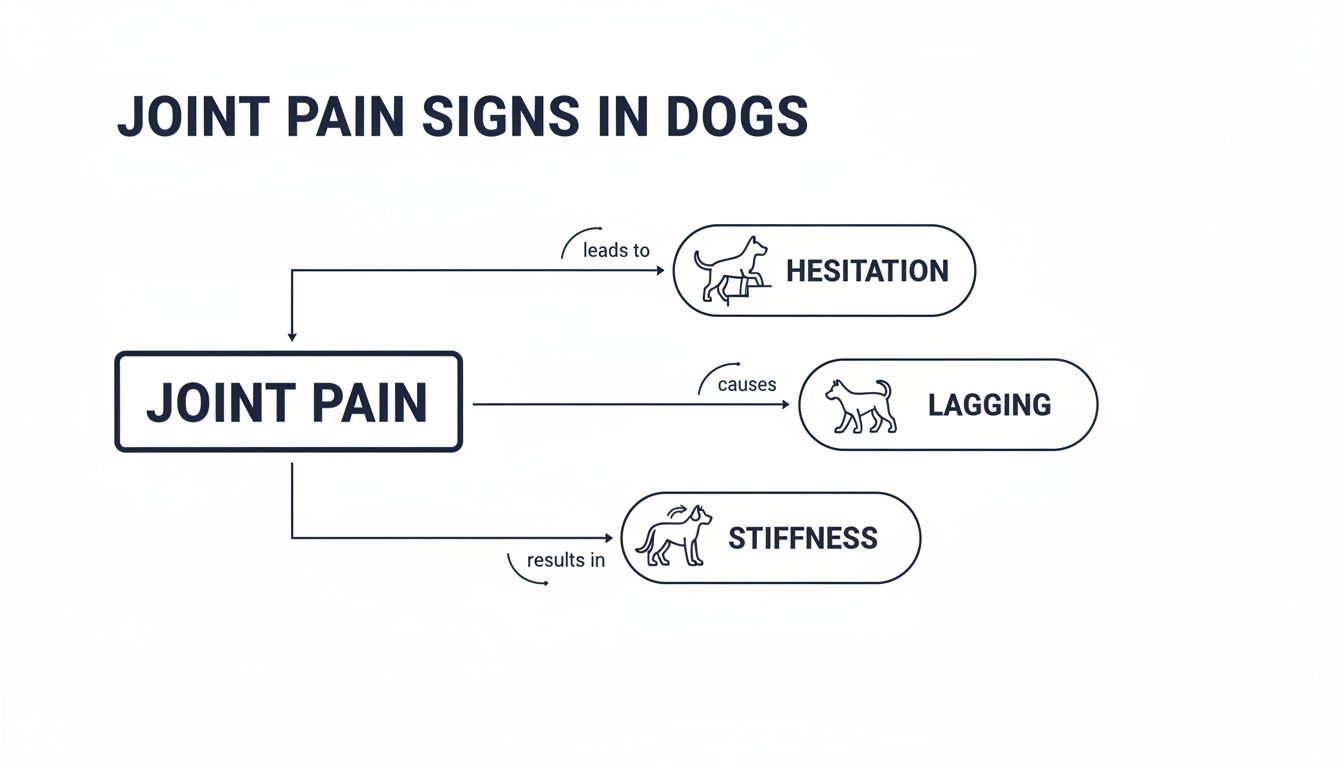
Spotting these subtle changes is the first step. It means you can get ahead of the problem and give them the support they need to stay active and happy.
Key Ingredients in Dog Joint Supplements and Their Functions
To make things a bit clearer, let's break down the most important ingredients you'll find in a quality joint supplement. Think of this as meeting the "all-star team" for joint health. Each one has a specific, vital role in keeping your dog moving freely.
| Ingredient | Primary Function (The 'Job') | Key Benefit for Your Dog |
|---|---|---|
| Glucosamine | Cartilage Builder | Helps to form and repair the cartilage that cushions the joints. |
| Chondroitin Sulfate | Cartilage Protector | Acts like a sponge, drawing fluid into the cartilage for shock absorption. |
| MSM | Inflammation Soother | A natural anti-inflammatory that helps ease soreness and discomfort. |
| Omega‑3 Fatty Acids | Joint Lubricator | Reduces inflammation throughout the body, helping joints move smoothly. |
| Collagen | Structural Support | Provides the 'scaffolding' for strong tendons, ligaments, and cartilage. |
| Hyaluronic Acid | Synovial Fluid Booster | A key component of joint fluid, ensuring everything stays well-lubricated. |
| Turmeric (Curcumin) | Natural Pain Reliever | A powerful, plant-based anti-inflammatory to manage swelling. |
These ingredients work best when they work together. A well-rounded formula provides comprehensive support by tackling the problem from multiple angles—repair, lubrication, and inflammation—all at once.
Glucosamine and Chondroitin: The Cartilage Caretakers
If there are superstars in the world of joint care, it’s Glucosamine and Chondroitin. You’ll almost always find them paired together, and for good reason. They’re the dedicated repair crew for your dog’s cartilage—that smooth, rubbery tissue that stops bones from grinding against each other.
Glucosamine provides the raw materials, the very building blocks needed to maintain and repair that essential cushion.
Chondroitin, on the other hand, acts like a magnet for water. It draws moisture into the cartilage, keeping it spongy and shock-absorbent while also helping to block the enzymes that try to break it down.
This dynamic duo dominates the market for a reason. In the UK, glucosamine and chondroitin combinations account for an impressive 52% of the dog joint supplement niche. With arthritis affecting an estimated one in five senior dogs, their proven ability to support joint health, especially in cases of hip dysplasia, keeps them in high demand.
MSM: The Natural Anti-Inflammatory
Next up is MSM (Methylsulfonylmethane). This natural sulphur compound is brilliant at reducing the swelling and discomfort that so often go hand-in-hand with joint issues.
Think about how your own muscles might ache after a particularly long walk. MSM works in a similar way inside your dog’s joints, soothing that soreness and promoting comfort. As a bonus, it also contributes to forming collagen, a vital protein for healthy tendons and cartilage.
Omega-3 Fatty Acids: The Lubrication and Soothing Agent
Known for their powerful anti-inflammatory effects, Omega-3s (usually from fish oil or green-lipped mussels) are another cornerstone of joint support. They get to work on a cellular level, helping to dial down the body's inflammatory response right where it’s needed most.
Think of Omega-3s as the oil that quiets a squeaky hinge. By easing inflammation, they help the joint glide more smoothly with less friction, which translates directly into better mobility and less pain for your dog.
Beyond joint health, Omega-3s are fantastic for their skin, coat, and heart, making them a brilliant all-rounder in any dog’s diet.
Hyaluronic Acid, Collagen, and More: The Support Team
While the ingredients above get most of the spotlight, a few other key players provide critical backup.
-
Hyaluronic Acid (HA): This is a main ingredient of synovial fluid—the thick, viscous liquid that lubricates joints. Adding HA helps keep this natural 'engine oil' topped up, protecting the joint from friction.
-
Collagen: As the primary structural protein in all connective tissues, collagen is like the glue holding everything together. Supplementing with it helps fortify the cartilage, tendons, and ligaments that support the entire joint structure. You can read our comprehensive guide on collagen supplements for dogs for a deeper look.
-
Turmeric (Curcumin): The active compound in turmeric, curcumin, is a potent natural anti-inflammatory that works alongside MSM and Omega-3s to help manage joint swelling and discomfort.
-
Green-Lipped Mussel: This New Zealand shellfish is a bit of a powerhouse, naturally containing glucosamine, chondroitin, and Omega-3s all in one. It’s a fantastic, multi-pronged approach to joint care.
Together, these ingredients create a holistic toolkit for joint health. By targeting cartilage repair, lubrication, and inflammation all at once, a well-formulated joint and hip supplement gives your dog the best chance of staying happy, active, and comfortable for years to come.
How to Choose a High-Quality Supplement for Your Dog
Navigating the crowded supplement aisle can feel overwhelming. With so many brands making bold claims, how can you be sure you're choosing a product that's both safe and genuinely effective for your dog? The trick is to look past the flashy packaging and focus on the details that really matter.
Becoming a savvy pet parent means learning to read labels with a critical eye. It isn’t just about the active ingredients we've talked about; it’s about where those ingredients come from, the standards under which the product was made, and the overall thought that went into the formulation. A top-tier product is more than just a list of ingredients—it’s a promise to look after your dog's wellbeing.
Look for Vet-Approved Formulations
Your first and most important checkpoint should be veterinary approval. When a formula has been developed or is actively recommended by vets, it adds a crucial layer of trust. It tells you that the ingredients, dosages, and combinations have been properly scrutinised by professionals who live and breathe canine physiology.
A vet-approved product isn’t just marketing fluff; it's a seal of quality. It means the formula is grounded in scientific evidence and designed to be both safe and effective for what it claims to do. Vets are increasingly turning to supplements as a first line of defence, especially for dogs with mild to moderate joint stiffness.
In the UK, this shift is clear. 61.9% of vets now recommend supplements over medication for certain mild cases. This kind of professional backing is a powerful signal that you’re on the right track.
Check for Manufacturing Certifications
Where and how a supplement is made is just as important as what’s inside it. You should always look for products made in facilities that follow strict manufacturing standards. One of the most important stamps of quality to look for is GMP (Good Manufacturing Practice).
GMP certification is your assurance that the product is consistently produced and controlled according to the highest quality standards. This process covers everything from the sourcing of raw materials to the final packaging, minimising risks like contamination and ensuring the product's potency and purity are exactly what the label says they are. Think of it as an independent guarantee of safety and quality control.
Decode the Ingredients Label
A transparent ingredients list is non-negotiable. The best brands are proud of their formulas and will clearly list every single component, including both the active and inactive ingredients.
Here’s what to zero in on when you scan the label:
- Active Ingredient Dosages: The label must clearly state the amount of each key ingredient (like glucosamine or MSM) per chew or serving. This is the only way to know if your dog is getting a meaningful, therapeutic dose.
- No Harmful Fillers: Steer clear of products padded out with unnecessary or artificial additives. Things like corn, soy, artificial colours, or chemical preservatives (BHA, BHT) offer no health benefits and can sometimes trigger sensitivities in dogs.
- Natural and High-Quality Sources: Look for ingredients from reputable sources. For example, chondroitin from bovine cartilage or omega-3s sourced from wild-caught fish or green-lipped mussels are generally signs of a better product.
Getting to grips with the formulation is a crucial step. To see how different products compare, you can read more in these dog joint supplement reviews, which offer a helpful breakdown of various options on the market.
Prioritise Bioavailability
Finally, it's worth understanding the concept of bioavailability. It sounds technical, but it’s a simple idea: it’s the amount of an ingredient that your dog's body can actually absorb and put to good use. A supplement is useless if its key nutrients just pass right through your dog's system.
Certain forms of ingredients are simply more "bioavailable" than others. For example, some brands use specific forms of glucosamine (like HCl) or chelated minerals that are much easier for a dog’s digestive system to absorb. The best formulas are designed with bioavailability front of mind, ensuring your dog gets the maximum benefit from every single dose.
This focus on quality is building serious trust among pet owners. The European market, which includes the UK, now makes up 26.9% of the global dog supplement industry. A huge 39.4% of dog owners here use joint supplements for preventative care, and the market sees repeat purchase rates of 49.6%. This loyalty is largely down to the stringent EU quality standards that give owners confidence. By following these guidelines, you too can confidently pick a product that is safe, effective, and a genuine investment in your dog's comfort and mobility.
Creating a Complete Joint Care Plan for Your Dog
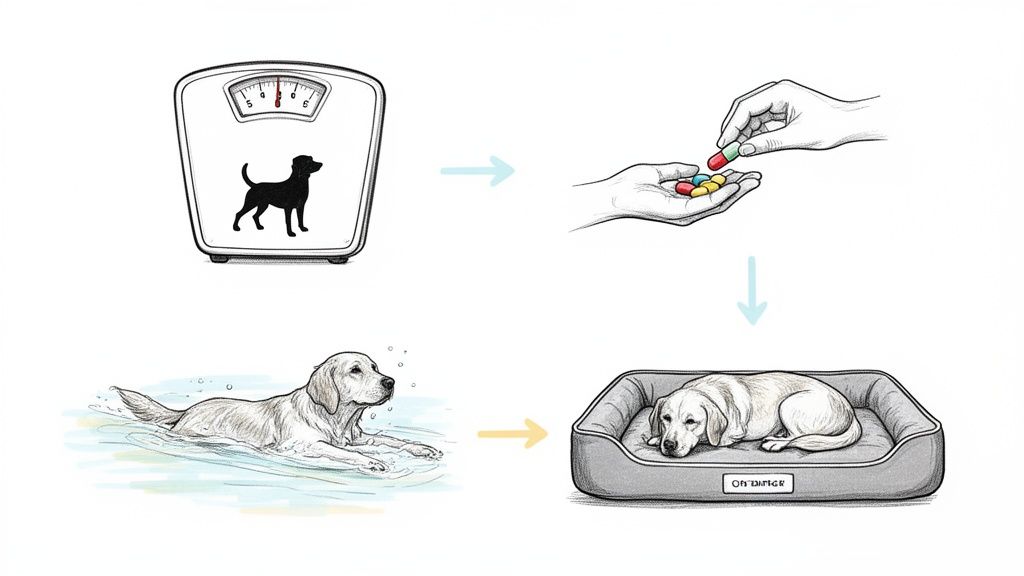
Starting your dog on a high-quality joint and hip supplement is a brilliant move, but it's most effective when it’s one piece of a bigger puzzle. Think of the supplement as a star player on a football team—they need a strong supporting cast to win the game. A complete joint care plan means looking at your dog’s entire lifestyle and making small, supportive changes that all work together for their comfort and mobility.
This doesn't have to be complicated. It’s all about building a routine that supports their joints from every angle, pairing the targeted boost of a supplement with the foundations of good health. From their food bowl and daily walks to where they sleep, every little detail plays a part in keeping them moving freely.
Weaving Supplements into Daily Life
When it comes to joint supplements, consistency is everything. The active ingredients, like glucosamine and chondroitin, need to build up in your dog’s system over time to start repairing cartilage and easing inflammation. That means a daily dose is non-negotiable if you want to see real, lasting results.
But what if you have a fussy eater on your hands? Don’t panic. There are plenty of ways to make supplement time a treat, not a chore.
- Mix with a High-Value Food: Hide the tablet or powder in something they find irresistible. A bit of wet food, plain yoghurt, or a dollop of peanut butter (just make sure it’s xylitol-free!) usually does the trick.
- Try Pill Pockets: These are soft, mouldable treats designed with a hollow centre, perfect for tucking away a capsule or chew.
- Choose a Tasty Chew: Many modern supplements, like Tipaw's functional chews, are designed to taste like a treat, making it as simple as rewarding your dog.
The goal is to make it a positive part of their routine, not a daily battle. Once you find what works, stick to it every day. This gives the supplement the best possible chance to work its magic.
The Massive Impact of Weight Management
Beyond supplements, keeping your dog at a healthy weight is probably the single most important thing you can do for their joints. Every extra pound puts a huge amount of additional stress on their joints, especially the hips and knees. This constant pressure wears down cartilage faster and makes the pain of conditions like arthritis much worse.
Think of it like this: for every extra pound your dog carries, their joints endure four to six pounds of extra force with every single step. Keeping them lean is like taking a heavy rucksack off their already-sore joints—it provides immediate and significant relief.
Chat with your vet to figure out your dog’s ideal body condition score and come up with a sensible feeding plan. Simple portion control and a balanced diet won’t just help their joints; it will boost their overall health and energy, too.
Smart Exercise for Stronger Joints
It might seem strange to exercise a dog with sore joints, but the right kind of movement is incredibly helpful. The key is to swap high-impact activities for gentle, low-impact exercises that build muscle without jarring the joints. Strong muscles act like a natural brace, helping to stabilise the joints and take some of the load off the cartilage.
Try working these joint-friendly activities into your routine:
- Swimming or Hydrotherapy: Water provides natural resistance to build muscle, while its buoyancy takes all the pressure off their joints. It’s the perfect workout.
- Controlled Leash Walks: Gentle, steady walks on soft surfaces like grass or woodland trails are far better than frantic, stop-start running on hard pavement.
- Gentle Strength Exercises: A vet or canine physiotherapist can show you some simple exercises to strengthen your dog’s core and leg muscles at home.
Steer clear of activities that involve a lot of sudden stops, sharp turns, or jumping, like high-intensity games of fetch.
Finally, make sure your dog has a comfortable place to rest. An orthopaedic bed made with high-density memory foam offers brilliant support by distributing their weight evenly and cushioning sore spots. This one simple change can make a huge difference to their daily comfort, helping them get the deep, restorative sleep they need. By combining these lifestyle tweaks with a quality joint and hip supplement, you’ll create a powerful support system that protects your dog’s mobility and enriches their life for years to come.
A Lifetime of Happy Hops and Wagging Tails
Looking after your dog’s joints is about more than just managing aches and pains; it’s about safeguarding their happiness and freedom to be a dog. It’s about making sure they can still bound to the door to greet you, chase that squirrel across the garden, and curl up for a comfy nap for many years to come.
This whole journey really starts with you. By learning to spot those subtle first signs—a little hesitation on the stairs, a bit of stiffness after a nap—you can step in long before they become serious problems.
Your Vet: Your Partner in Joint Health
Once you know what to look for, the next step is understanding what actually works. Getting to grips with ingredients like glucosamine, chondroitin, and Omega-3s means you can look past the marketing hype on the label and choose a supplement that offers real, science-backed support. These are the very things that help rebuild cartilage and keep your dog moving smoothly.
Choosing a high-quality product is crucial, and that’s where your vet becomes your most trusted ally. They can help you sift through the options and build a complete plan that brings together the right supplement with proper diet, weight management, and sensible exercise.
In the end, being proactive about your dog’s joint health is one of the best investments you can make in their overall quality of life. You’re not just treating a condition; you're preserving the joy, comfort, and character that makes your dog part of the family.
By using powerful tools like joint and hip supplements for dogs, you’re taking a massive step toward helping your best friend live a more active and vibrant life. Every pain-free walk, every game of fetch, and every happy little hop is a direct result of the care and thought you put in.
Your Questions About Dog Joint Supplements Answered
It's completely normal to have questions when you start looking into joint and hip supplements for your dog. Getting the right information is the first step in making a great decision for their health, so let’s tackle some of the things pet parents most often ask.
Knowing the when and what of joint care empowers you to work alongside your vet, creating a plan that offers the best support at just the right time.
When Should I Start Giving My Dog a Joint Supplement?
There’s no single "magic age" to start. The best time really hinges on whether you're aiming for prevention or trying to manage existing discomfort. Every dog is different, and factors like breed, size, and even how active they are all play a part.
For certain breeds known for joint problems—think Labradors, German Shepherds, and Great Danes—many vets suggest a proactive approach. Starting a supplement in their middle years can help protect healthy cartilage and joint fluid before signs of trouble even appear.
On the other hand, if you're already noticing stiffness—maybe your dog hesitates to jump on the sofa or seems a bit slower on walks—it's time to start a supportive supplement right away. A chat with your vet is always the best first step; they can give you tailored advice based on your dog's individual needs.
Are There Any Side Effects to Worry About?
This is a great question, and one every responsible owner should ask. The good news is that high-quality joint supplements, especially those made from natural ingredients, are incredibly safe for most dogs and are designed to be used daily over the long term.
The most common issue, which is still quite rare, is a bit of mild digestive upset. You might notice some loose stools or a little gas when you first start. This is usually just your dog's system getting used to the new ingredients.
To help avoid any tummy troubles, it's always a good idea to introduce the supplement slowly over a few days. And, of course, sticking to the recommended dosage on the label is key for both safety and getting the best results.
How Long Does It Take to See Results?
This is where a little patience comes in. Unlike a painkiller that offers quick, short-term relief, joint supplements work from the inside out to support the actual structure of the joint. They need time to build up in your dog's body to start repairing cartilage and calming inflammation.
Most people start to see a real improvement in their dog's comfort, mobility, and overall happiness within about four to eight weeks of consistent, daily use.
The first signs are often subtle. You might just notice they get up from a nap with a bit less effort or seem more eager for their walk. These small wins are the first indication that the supplement is doing its job, paving the way for bigger changes down the line.
Ready to give your dog the joint support they deserve? Tipaw offers vet-approved, all-natural functional chews designed to improve mobility and reduce discomfort. Give your best friend the gift of happy movement by exploring our joint and hip supplements at https://www.store-tipaw.com.


