


Think of your dog’s digestive system as a highly efficient factory. Food goes in one end, but it needs to be broken down into tiny, usable parts before the body can put it to good use. The key workers on this disassembly line are digestive enzymes.
These specialised proteins are the unsung heroes of your dog’s gut, turning every meal into the fuel needed for a happy, energetic life.
What Are Digestive Enzymes and Why Do They Matter?
Let's stick with that factory analogy. Imagine a kibble, a piece of chicken, or a carrot arriving on the conveyor belt. It's too big and complex for the body to absorb as is. That's where digestive dog enzymes step in. They are the precision tools that dismantle proteins, fats, and carbohydrates into microscopic nutrients.
Without these enzymes, even the most nutritious, expensive dog food would just pass straight through, its goodness locked away. They are produced mainly in your dog's pancreas and are released into the small intestine, ready to get to work the moment food arrives from the stomach. Their job isn't just a "nice-to-have"—it's absolutely essential for converting food into the building blocks for energy, growth, and repair.
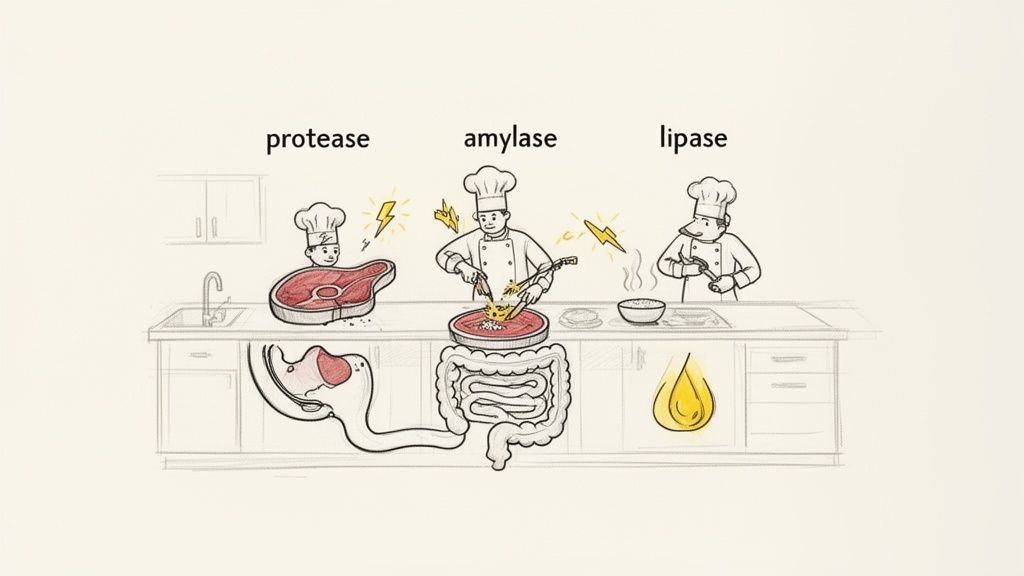
The Three Key Players in Digestion
While there are many different enzymes, three main types do most of the heavy lifting. Each has a very specific role, and knowing what they do makes it easier to understand why a shortage of even one can cause problems for your dog.
To make this clearer, here’s a quick rundown of the main "team" and their jobs.
| Enzyme Type | What It Breaks Down | Why It's Important |
|---|---|---|
| Protease | Proteins | Breaks down meat and plant proteins into amino acids, which are crucial for building muscle, repairing tissue, and supporting the immune system. |
| Amylase | Carbohydrates | Converts starches and sugars (from grains, potatoes, etc.) into simple glucose, the body's primary source of quick energy. |
| Lipase | Fats | Breaks down fats and oils into fatty acids. This is vital for a healthy coat, brain function, and absorbing key vitamins like A, D, E, and K. |
This trio works together to ensure your dog gets the maximum goodness out of every single bite.
When this team is in sync, your dog thrives. But things like age, certain health conditions, or a diet full of heavily processed ingredients can put a strain on the pancreas, sometimes leading to it not producing enough enzymes. This is precisely why so many dog owners are now exploring supplements to lend a helping hand.
A dog's ability to digest food efficiently is the cornerstone of their overall vitality. When enzymes are lacking, the body can't access the full nutritional potential of their diet, which can lead to a cascade of digestive and systemic health problems over time.
This isn't just a niche concern; it's a growing movement. In the United Kingdom, the pet dietary supplement market was valued at around USD 224.8 million in 2025, with products for digestive health making up a huge slice of that pie.
With the market expected to grow by 9–9.8% each year, it's obvious that more and more owners are realising just how important digestive support is. You can dig deeper into these trends with industry analyses conducted by Future Market Insights. This growing awareness helps explain why a simple enzyme shortfall can cause real health issues, and how the right support can get your dog’s system back in balance.
Recognising the Signs of Enzyme Deficiency in Your Dog
Is your dog trying to tell you something's not quite right with their tummy? Sometimes the signals are subtle, but other times, they're impossible to miss. Spotting these clues is the first step in getting your companion the digestive support they need. When a dog doesn't produce enough digestive enzymes, their body simply can't unlock the goodness in their food, which can lead to a whole cascade of problems.
Think of it like trying to build a house without the right tools. You could have the best timber and bricks in the world, but without saws and hammers, you can't build a thing. In the same way, without enough digestive dog enzymes, even the most premium dog food offers very little nutritional value. The undigested leftovers just end up causing trouble.
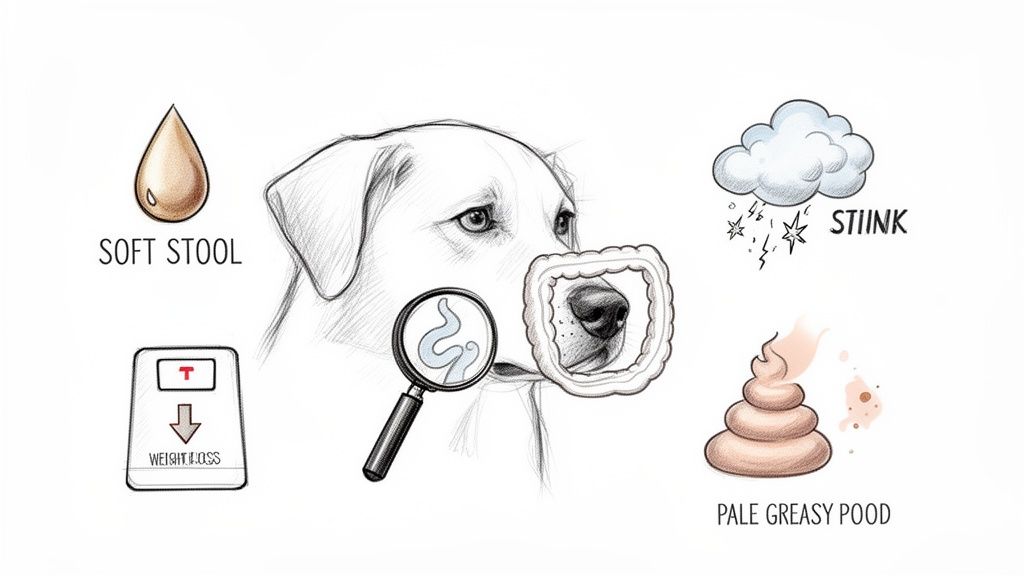
Common Digestive Red Flags
The most obvious signs of an enzyme shortfall show up in your dog's digestion and toilet habits. Because food isn't being properly broken down, it can ferment in the gut or pass straight through, largely untouched.
Keep an eye out for these persistent issues:
- Persistent Diarrhoea or Soft Stools: This is often the first and most common giveaway. The poo might be really bulky, watery, or have a "cow pat" consistency as the body tries to rush the undigested food out.
- Foul-Smelling Gas: When food particles sit and ferment in the colon, they produce a lot of nasty-smelling gas and can leave your dog feeling uncomfortably bloated.
- Steatorrhoea (Greasy Stools): This is a huge clue that fats aren't being digested properly. The poo may look greasy, pale, or yellowish and be a real pain to clean up. This happens when the lipase enzyme is in short supply.
These aren't just minor inconveniences; they're direct messages from your dog's gut that something is off. To get a better handle on what might be going on, you can learn more about the common digestive problems in dogs and how to manage them.
Signs Beyond the Digestive Tract
An enzyme deficiency doesn't just stay in the gut—its effects can ripple out across your dog's entire body. When nutrients aren't being absorbed, the body is essentially starving, no matter how much food your dog is eating.
This widespread malnutrition can trigger several other worrying symptoms:
- Unexplained Weight Loss: Your dog might have a ferocious appetite but still be losing weight or looking thin. This is a classic sign that all those vital nutrients are just passing right through them.
- Dull Coat and Poor Skin: Without enough absorbed fats and proteins, skin and coat health really suffers. You might notice dryness, flaky skin, and a brittle, lacklustre coat.
- Coprophagia (Eating Poop): While this can be a behavioural issue, dogs with enzyme deficiencies sometimes eat their own or other animals' faeces. It's an instinctive, if unpleasant, attempt to get the nutrients their body is craving.
- Low Energy and Lethargy: If you can't turn food into fuel, you're not going to have much energy. Your dog might seem tired, weak, or just not interested in their usual games and walks.
When these signs appear together, they paint a pretty clear picture of malabsorption. This isn't just a case of a "sensitive stomach"—it's a signal that the fundamental process of digestion is failing.
Connecting the Dots to Underlying Conditions
While these symptoms can point to a general lack of enzymes due to age or diet, they can also be an early warning for more serious health problems. The big one to be aware of is Exocrine Pancreatic Insufficiency (EPI).
EPI is a condition where the pancreas just stops producing the digestive enzymes it's supposed to. It's particularly common in certain breeds, like German Shepherds and Rough Collies. The symptoms of EPI are almost identical to the ones listed above—a ravenous appetite paired with severe weight loss and large, greasy stools. Spotting these signs and having a chat with your vet is vital for getting a prompt diagnosis and starting a treatment plan, which almost always includes lifelong supplementation with digestive enzymes.
Comparing Natural Food Sources and Targeted Supplements
When you realise your dog’s digestion could use a bit of a boost, you’re faced with two main options: tweaking their diet to include more enzyme-rich foods or reaching for a targeted supplement. The "all-natural" food route sounds great on paper, but it's important to dig into what that really means for your dog's health before making a decision.
Many of us first look to whole foods. Things like raw green tripe (which has enzymes from the animal it came from) or even fruits like papaya and pineapple (containing papain and bromelain, respectively) are popular choices. And for a generally healthy dog, adding these can offer a gentle bit of digestive support. No harm in that.
The problem arises when you're trying to manage a real issue. If your dog has a genuine enzyme deficiency, relying on food alone just doesn't cut it. The amount of active enzymes in these foods is often quite low and varies wildly from one piece of fruit to the next. You'd have to feed an enormous, and likely unbalanced, amount to see any real therapeutic effect.
The Challenge of Dosage and Consistency
The biggest hurdle with a food-only approach is the sheer lack of predictability. You can't guarantee a consistent dose. How ripe a pineapple is affects its enzyme content, and the enzymes in raw tripe start to break down the moment they're exposed to air. This inconsistency is the last thing you want when your dog needs reliable support with every single meal.
On top of that, these foods bring other things to the table that might not be ideal. The high sugar content in pineapple and papaya, for example, isn't great for many dogs, especially in the quantities needed. This is where a well-formulated supplement really shows its worth.
A targeted digestive dog enzymes supplement isn't just a scattergun approach. It's about delivering a potent, stable, and predictable dose of the right enzymes, right where they need to be: your dog's small intestine.
Why a Formulated Supplement is Often the Better Choice
Unlike a chunk of pineapple, a quality supplement is specifically engineered for the job. It delivers a concentrated mix of the key enzymes—protease, amylase, and lipase—in a carefully balanced ratio designed to break down a dog's typical diet of proteins, carbs, and fats. It's a level of precision that food alone simply can't offer.
Here’s a quick look at why supplements usually win out for reliable support:
- Concentrated Potency: Supplements pack a much bigger punch. They contain a far higher concentration of active enzymes than you could ever get from food, which is absolutely vital for managing conditions like EPI or chronic pancreatitis.
- Guaranteed Stability: Good supplement brands use stabilised enzymes and smart delivery methods (like powders or chews) to protect them from the stomach's harsh acid. This ensures they arrive in the intestines intact and ready to work.
- Complete Formulation: The best products often do more than one job. Many combine digestive enzymes with prebiotics, which are special fibres that nourish the good bacteria already living in your dog's gut. This holistic approach supports a healthier digestive system from top to bottom. If you want to dive deeper into this, our guide on prebiotics and probiotics for dogs is a great place to start.
- Palatability and Ease of Use: Let's be honest, trying to convince a fussy dog to eat something new can be a nightmare. Modern supplements, particularly functional chews, are made to be tasty. This turns dosing from a daily chore into a welcome treat, ensuring your dog gets what they need without any mealtime drama. That simple convenience can make all the difference.
How to Choose the Best Digestive Dog Enzymes
Walking down the pet supplement aisle can feel overwhelming. With so many products making big promises, how do you know what actually works? Choosing the right digestive dog enzymes isn’t about flashy packaging; it's about understanding what’s inside the tin and picking a formula that will genuinely help your dog.
To make a real difference, a supplement needs to offer a complete team of enzymes ready to tackle every part of your dog's meal. Think of it this way: you wouldn't send a single plumber to build an entire house. A top-quality product will always feature the essential trio: protease for proteins, amylase for carbs, and lipase for fats. This ensures the entire meal gets broken down properly for maximum nutrient absorption.
Look for a Multi-Enzyme Blend
A supplement with only one type of enzyme is like having only one tool in your toolbox—it’s just not enough for the job. A dog's diet is varied, so their digestive support should be too. A complete formula acts like a team of specialists, each one an expert at breaking down a specific nutrient.
When you're scanning the label, the presence of protease, amylase, and lipase is a must. Some of the best formulas also include cellulase, an enzyme that helps break down tough plant fibre. Since dogs don’t produce cellulase naturally, this addition is fantastic for dogs whose diets include vegetables, helping unlock even more nutrients from those ingredients.
A well-rounded, multi-enzyme formula is the cornerstone of effective digestive support. It’s the gold standard for ensuring no nutrient gets left behind during digestion.
Consider the Enzyme Source and Formulation
Where the enzymes come from really matters. They can be derived from animals (pancreatin), plants (like bromelain from pineapples), or microbial sources like fungi and bacteria. Plant-based and microbial enzymes are often the preferred choice because they're more robust and can work effectively across a wider pH range. This means they can get started in the acidic stomach and keep working in the more alkaline environment of the small intestine.
The chart below gives you a quick visual comparison between getting enzymes from food versus a targeted supplement.
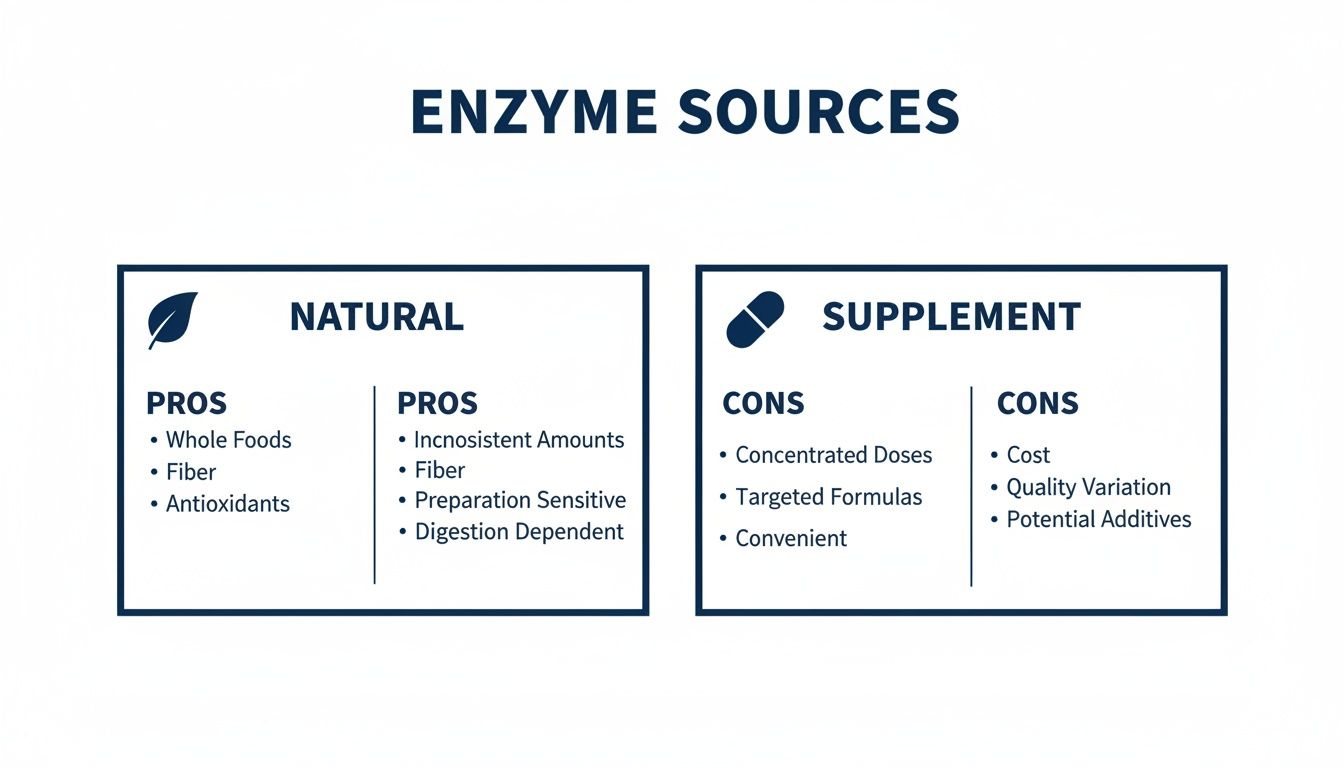
As you can see, while whole foods are great, supplements deliver the consistent, potent dose needed to support dogs with noticeable digestive issues.
The product's formulation is just as crucial. Enzymes are delicate and can easily be destroyed by stomach acid before they have a chance to work. That’s why high-quality supplements come in protected forms, like powders designed to be mixed with food or, even better, palatable chews. These formats help the enzymes survive the journey to the small intestine, where they're needed most.
Check for Beneficial Additions
The very best digestive supplements don't just stop at enzymes. They take a holistic approach to gut health by including other powerful ingredients that work together.
Here’s a quick guide on what to look for when choosing a supplement to make sure you're getting a top-tier product.
Supplement Checklist: What to Look For
| Essential Feature | Why It Matters | Look For This On The Label |
|---|---|---|
| Multi-Enzyme Blend | Ensures complete breakdown of proteins, fats, and carbs. A single enzyme offers limited support. | Protease, Amylase, Lipase (as a minimum). |
| Protected Formulation | Shields delicate enzymes from stomach acid so they can reach the small intestine to do their job. | Powder, granules, or functional chews designed to be mixed with food. |
| Prebiotics | Feeds the good bacteria in the gut, helping to create a healthy, balanced microbiome. | Inulin, Fructo-oligosaccharides (FOS), or other fermentable fibres. |
| Probiotics | Adds live, beneficial bacteria to the gut to support microbial balance and overall digestive wellness. | Specific strains listed, e.g., Lactobacillus acidophilus, Bifidobacterium animalis. |
| Clear Dosing | Provides easy-to-follow instructions based on your dog's weight, ensuring safety and effectiveness. | "Per 10kg of body weight" or similar clear guidance. |
| Reputable Brand | A brand with a history of quality control, transparency, and positive reviews offers peace of mind. | NASC Quality Seal, veterinary formulation, or transparent sourcing information. |
By prioritising these essential features, you can confidently choose a supplement that delivers comprehensive, effective support for your dog's digestive system.
The move towards these multi-functional, vet-approved products is a clear trend in the UK. Recent market analysis reveals that formulas combining enzymes with prebiotics and probiotics appeared in around 26% of new gut health product launches. This shows a definite shift towards more complete digestive solutions. If you're interested, you can discover more insights about the UK pet supplement market and see how these trends are evolving.
By arming yourself with this knowledge, you can see past the marketing hype and choose a supplement that truly makes a difference—one with a multi-enzyme blend, a stable formulation, and those valuable extras that support total gut health.
Administering Enzymes and Tracking Your Dog's Progress
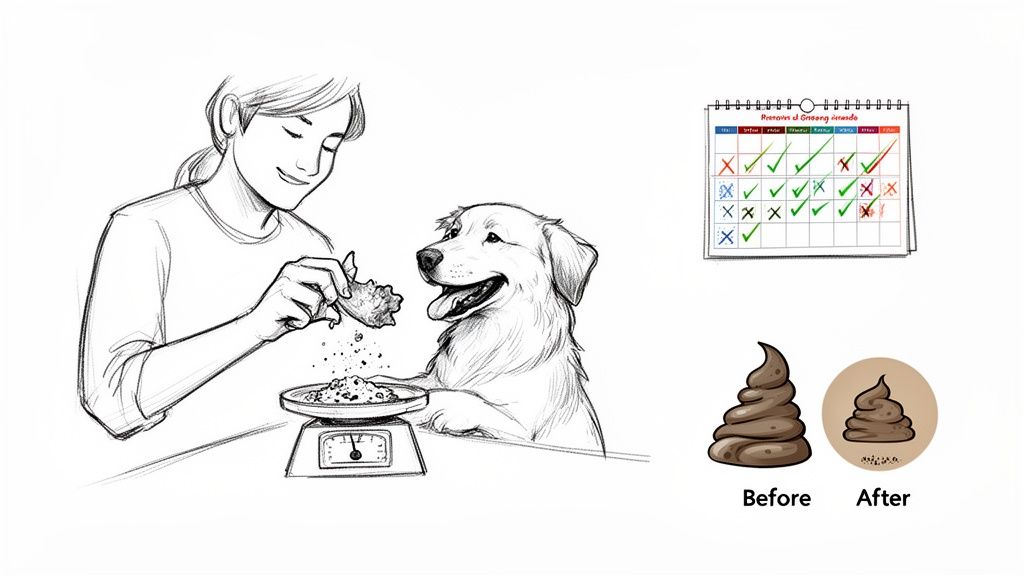
So, you've done your homework and picked out a great enzyme supplement for your dog. That's a brilliant first step. Now for the most important part: putting it into practice consistently and keeping a close eye on the results to see the difference it's making.
Proper administration is about more than just tossing a scoop into their bowl. It’s about building a routine that ensures the enzymes can get to work effectively. Success really is in the details, from getting the dose right to knowing what signs of improvement to look for.
Getting the Dose Just Right
Nailing the dosage is the foundation for success. Most digestive dog enzymes come with clear instructions on the label, usually based on your dog's weight. It’s vital to follow these guidelines carefully to give them the support they need without overdoing it.
A good rule of thumb is to start low and go slow. I usually advise clients to begin with half the recommended dose for the first few days. This gives your dog's system a chance to adjust. You can then slowly build up to the full amount. This simple approach helps sidestep any temporary tummy troubles, like gas or loose stools, as their body gets used to the new supplement.
The Golden Rule: Consistency Is Everything
For digestive enzymes to do their job, they have to be in the stomach when the food is. Think of them as a team of tiny chefs; they need to be there right when the ingredients (the food) arrive to start breaking everything down. This means you must give the supplement with every single meal, every single day.
Inconsistency is the number one reason enzyme supplementation fails. If you skip a dose, that entire meal goes through without proper digestion, which undermines all your progress and leaves your dog feeling just as uncomfortable as before.
Making it a non-negotiable part of their feeding routine is key. Here are a few tips to make it easy and effective:
- Mix Thoroughly with Food: Whether it’s a powder or granules, make sure it’s mixed well into your dog's food. For dogs on dry kibble, adding a little water or bone broth helps the powder stick so they don't leave it at the bottom of the bowl.
- Allow Time to Activate: For certain enzyme powders, particularly those for dogs with EPI, vets often suggest letting the supplement sit on the food for 15-20 minutes before serving. This 'incubation' time allows the enzymes to start pre-digesting the food, giving them a head start.
- Use Palatable Chews: If you've got a fussy eater on your hands, functional chews can be a game-changer. They turn supplement time into treat time, ensuring your dog gets their enzymes without any mealtime drama.
How to Spot Positive Changes
How do you actually know if the enzymes are working? The signs of success are often very clear and incredibly rewarding to see. Your dog's body will give you plenty of feedback—you just need to learn how to read it.
You'll need to become a bit of a "poo detective" at first, as this is where you'll see the most immediate changes. Look for stools becoming firmer, more formed, and less bulky. A noticeable reduction in foul-smelling gas is another fantastic early sign that digestion is improving. If you want to understand more about what causes smelly wind, our guide on why a dog has bad gas suddenly has some great insights.
Beyond their toilet habits, keep an eye out for these other positive developments over the next few weeks:
- Weight Maintenance: Your dog might start to put on a bit of healthy weight or find it easier to maintain their ideal condition.
- Improved Coat Condition: When fats are absorbed properly, you'll often see a shinier, healthier-looking coat and less flaky skin.
- Increased Energy: As your dog finally starts to unlock all the nutrients in their food, their energy levels can improve dramatically. They might be more playful and engaged.
- Reduced Food Scavenging: Some dogs who eat poop (a behaviour called coprophagia) may do it less often, as their body is no longer desperately craving missing nutrients.
Keeping a simple journal of these changes can be a massive help, especially when you're discussing your dog's progress with your vet. With a bit of consistency and careful observation, you can confidently guide your dog on their journey to better digestive health.
When to Loop in Your Vet About Enzymes
While supplements can be a brilliant tool in your dog-care kit, your vet should always be your first port of call. Think of them as the captain of your dog's health ship; adding something as significant as digestive dog enzymes is a big move, and you'll want their expert navigation.
Getting your vet's opinion before starting any new supplement is absolutely crucial. This is especially true if your dog already has a health condition or is taking other medications. Only a proper diagnosis can tell you if an enzyme deficiency is genuinely the problem, or if something else is going on under the surface.
Red Flags That Mean "Call the Vet Now"
A good supplement can certainly help with many tummy troubles, but some symptoms are clear signals that you need professional help right away. Trying to guess what's wrong can be a risky game, and certain signs might point to an urgent medical issue that enzymes simply can't solve.
It's time to book an appointment if you spot any of these signs:
- Severe Symptoms: Sudden, intense diarrhoea or vomiting, extreme tiredness, or any signs of pain warrant an immediate call to your vet.
- No Improvement: If you've been using enzymes for a few weeks and see zero change in your dog's poo or weight, it’s time for a professional to take another look.
- Things Get Worse: If your dog's symptoms actually deteriorate after starting a supplement, stop giving it to them and get in touch with your vet.
- Sudden Behavioural Shifts: A sudden loss of appetite, refusing to eat, or other dramatic changes in their usual behaviour could signal a deeper problem.
Your vet's job is to give you a definitive diagnosis and map out a safe, effective treatment plan. Supplements are a tool within that plan, not a substitute for proper veterinary care.
A Partnership for Your Dog's Health
Taking this careful approach ensures you’re making safe, well-informed decisions for your companion. Your vet can accurately diagnose conditions like Exocrine Pancreatic Insufficiency (EPI), recommend the right type and dose of enzymes, and help you keep a close eye on your dog's progress.
Ultimately, using digestive dog enzymes is a team effort between you and your vet. They have the complete picture of your dog's health and can make sure any supplement you add fits seamlessly into their overall care plan, giving you the best chance of a happy, healthy outcome.
Common Questions About Digestive Enzymes for Dogs
Even when you've done your research, it’s normal to have a few questions before adding a new supplement to your dog's routine. To make sure you feel completely confident, we’ve put together some of the most common queries we hear from dog parents, along with clear, practical answers.
Think of this as a final checklist to help you make the best decision for your dog's gut health.
Can I Give My Healthy Dog Digestive Enzymes?
It’s a great question. For the most part, a healthy dog with a well-functioning digestive system produces all the enzymes it needs on its own. Supplementing is most helpful for dogs who are clearly struggling with things like gas, bloating, or unpredictable stools.
They're also fantastic for senior dogs, whose natural enzyme production can start to dip, and of course, they are essential for dogs diagnosed with conditions like Exocrine Pancreatic Insufficiency (EPI). If you feel your healthy dog could still use a digestive boost, it's always smart to have a quick chat with your vet first. They can help you decide if it’s the right move for your particular pup.
How Long Does It Take for Digestive Enzymes to Work?
How quickly you’ll see results really depends on your dog and what you're trying to address. Some owners tell us they notice better-formed stools and less gassiness within just a few days. That’s a pretty quick win!
For more long-standing issues, like those associated with EPI, it might take several weeks to see bigger changes like weight gain or a healthier-looking coat. Consistency is the most important factor here – the enzymes need to be given with every single meal to do their job properly. If you haven't seen any improvements after a month or so, it’s a good idea to check back in with your vet.
Are Plant-Based or Animal-Based Enzymes Better?
There's no single "best" type – both plant and animal-derived enzymes can work wonders for dogs. Animal-based enzymes, like pancreatin, are what’s known as "bio-identical," meaning they are a near-perfect match for what a dog’s own pancreas produces. This makes them a very direct and effective form of support.
On the other hand, plant-based enzymes like bromelain (from pineapple) and papain (from papaya) have a unique advantage: they are tough. They can survive and stay active in a wider range of pH levels, allowing them to start breaking down food in the stomach’s acidic environment and keep working in the small intestine. For this reason, many top-tier supplements use a clever blend of both types to cover all the bases.
Do Digestive Enzymes for Dogs Have Side Effects?
Thankfully, side effects are rare and usually very mild when they do pop up. Most of the time, any issues are caused by giving too much, too soon. This can sometimes lead to a bit of temporary gas or looser stools as your dog's system gets used to the new support.
The best way to avoid this is to start slowly. Give half the recommended dose for the first few days and then gradually work your way up to the full amount. This simple trick gives their digestive tract time to adapt.
While a true allergic reaction is highly unlikely, every dog is an individual. Working with your vet is the best way to ensure you're using the supplement safely and effectively for your dog’s specific needs.
At Tipaw, we believe a happy dog starts with a healthy gut. Our vet-approved, natural supplements are formulated to provide the targeted digestive support your companion needs to thrive. Explore our range of functional chews today and give your dog the gift of better health. Learn more at https://www.store-tipaw.com.


