


Finding a puddle of diarrhoea is never a welcome sight for any dog owner, but don't panic. For many mild cases, the best first step is simply to give their gut a rest. A short 12- to 24-hour fast can work wonders, giving an inflamed digestive system a chance to calm down before you reintroduce gentle foods.
This initial pause is often the most effective tool in your home-care kit for uncomplicated tummy troubles.
First Steps When Your Dog Has an Upset Stomach
Seeing your dog under the weather is worrying, but it’s an incredibly common problem. A study from the UK’s Royal Veterinary College revealed that acute diarrhoea affects roughly 1 in every 12 dogs each year. The usual culprits? Scavenging something they shouldn't have, a sudden diet change, or an underlying digestive issue. You can read the full details in the RVC's comprehensive study on canine diarrhoea.
The most important thing you can do is stay calm and assess the situation. How your dog is acting will tell you almost everything you need to know.
Check Your Dog’s Demeanour
First, take a good look at your dog. Are they still wagging their tail and showing interest in a gentle walk, or are they moping in their bed? If they’re still bright, alert, and generally themselves, it's a good sign you're likely dealing with a mild upset that you can manage at home.
On the other hand, if your dog is lethargic, weak, or has no interest in their favourite toy, that's a red flag. A sudden change in energy levels means something more serious could be going on, and it’s time to call the vet.
Examine the Stool Closely
I know it's not a pleasant job, but a quick inspection of the diarrhoea itself provides crucial clues. Take note of the colour and consistency. Most importantly, are you seeing any blood? Bright red streaks or stools that look dark and tarry are never normal. This warrants an immediate call to your vet, no exceptions.
This simple flowchart can help you decide whether to proceed with home care or get professional advice straight away.
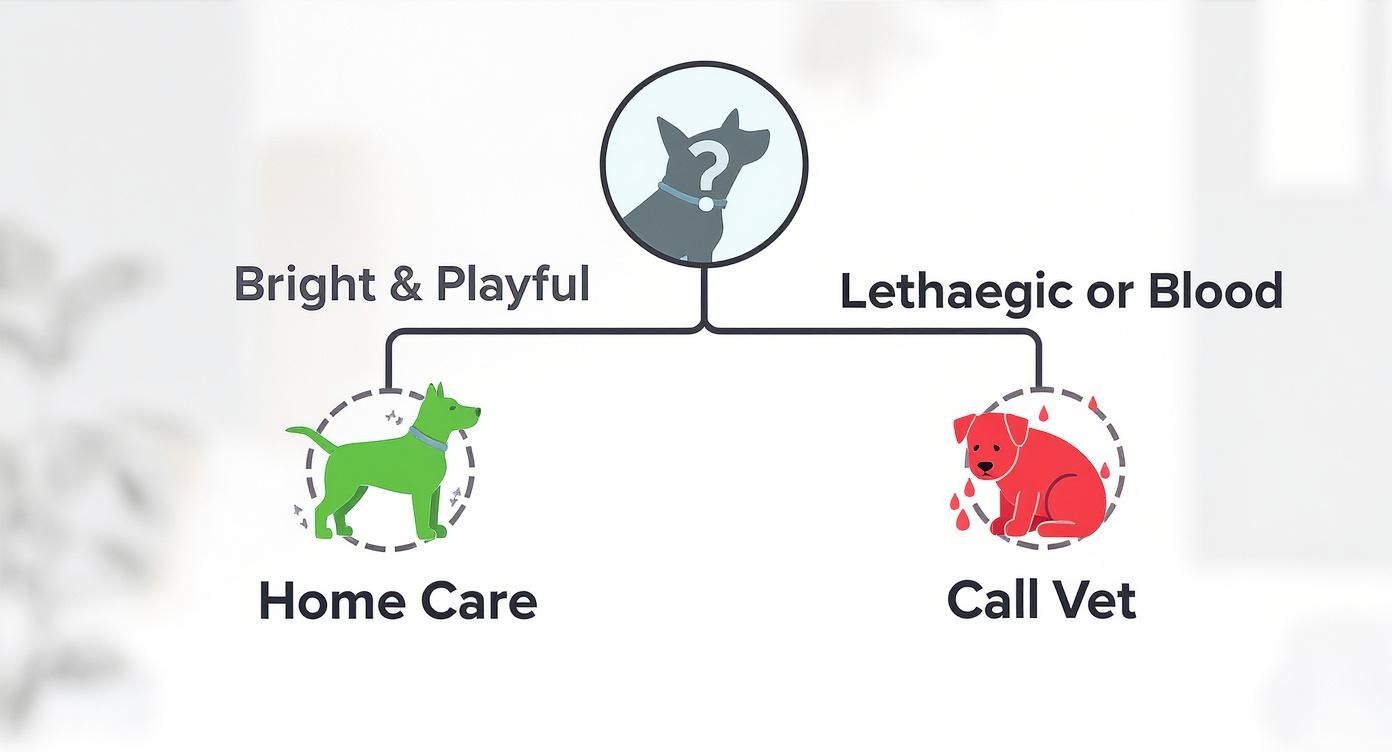
As you can see, it really boils down to your dog's overall state. A happy-go-lucky dog with an upset tummy is a good candidate for home treatment, while a dog who is clearly unwell needs a vet.
Implement a Brief Digestive Rest
If your dog is an otherwise healthy adult and isn't showing any of the serious symptoms we mentioned, it's time to press the 'pause' button on their food. Withholding food for 12 to 24 hours gives their gastrointestinal tract a much-needed break from the hard work of digestion. It’s the best way to let the inflammation subside and kickstart the healing process.
A Crucial Word of Caution: This fasting advice is strictly for healthy adult dogs. Never withhold food from puppies, senior dogs, or dogs with health conditions like diabetes, as it can be dangerous. During this time, make sure fresh, clean water is always available. Dehydration is the biggest risk with diarrhoea, so encouraging them to drink is absolutely essential.
Mastering the Bland Diet for Dogs
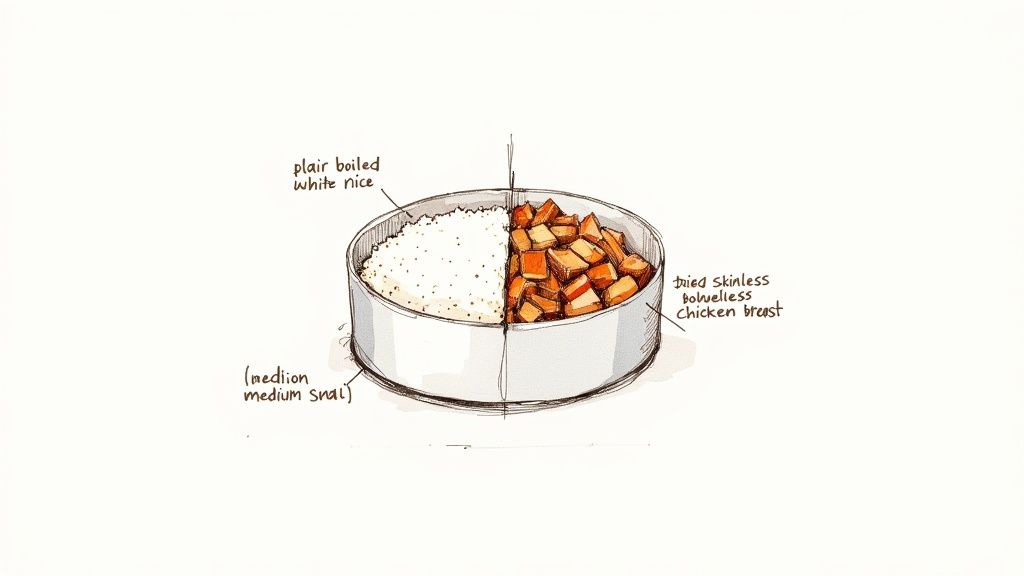
After you've given your dog’s gut a short break with a fast, the next step is to gently reintroduce food. This is where the bland diet comes in, and it's the absolute cornerstone of managing simple diarrhoea at home. It’s all about giving their system something incredibly easy to digest while still providing energy for recovery.
We’re not just talking about tossing some leftovers in a bowl. This is a purposeful, vet-approved approach. The classic combination of boiled, boneless, skinless chicken breast and plain white rice works so well because it's low in fat and fibre, which is exactly what a sensitive tummy needs.
Preparing the Perfect Bland Meal
Making a bland meal is straightforward, but the details really matter. The golden rule? Keep it completely plain. That means no oils, no butter, no salt, and definitely no seasonings. Anything extra can irritate the gut and set your dog's recovery back.
-
The Protein: Take a plain, boneless, skinless chicken breast and simply boil it in water until it's cooked all the way through. Once it's cool enough to handle, shred it or dice it into tiny pieces.
-
The Carbohydrate: Boil some plain white rice until it's very soft, maybe even a little mushy. This makes it incredibly easy to digest. It's important to avoid brown rice here; its higher fibre content is too harsh for an inflamed gut.
-
The Ratio: The best starting ratio is about one part protein to two parts carbohydrate. So, if you have one-third of a cup of chicken, you'll want to mix it with two-thirds of a cup of rice. This carb-heavy mix is gentle and less demanding on their digestive system.
This simple formula provides the calories your dog needs to start feeling better without asking their gut to do too much work.
Portion Control and Feeding Schedule
How you feed the bland diet is just as crucial as what's in it. A dog's stomach is incredibly sensitive after a bout of diarrhoea, and a single large meal can easily trigger a relapse. The only way to do this right is with small, frequent meals.
Instead of their usual one or two big dinners, you'll be splitting their daily food amount into four to six tiny portions spread throughout the day. For a little dog like a Yorkshire Terrier, a starting meal might be just a teaspoon. For a big Labrador, you might begin with a couple of tablespoons.
The "little and often" approach is non-negotiable for success. It keeps the digestive tract working gently without overloading it, which is crucial for preventing a relapse and promoting consistent healing.
Watch your dog carefully after each mini-meal. If they keep it down and seem comfortable for a couple of hours, you can go ahead and offer the next small portion.
We've put together a sample schedule to give you a clearer idea of how this reintroduction process works. This is just a guide, of course—always adjust based on your dog's individual response.
Bland Diet Feeding Schedule by Dog Size
| Dog Size (Weight) | Day 1 (4-6 Meals) | Day 2 (3-4 Meals) | Day 3 (Transition) |
|---|---|---|---|
| Toy (<5 kg) | 1-2 tsp per meal | 1-2 tbsp per meal | Mix 75% bland diet with 25% regular food |
| Small (5-10 kg) | 1-2 tbsp per meal | 3-4 tbsp per meal | Mix 75% bland diet with 25% regular food |
| Medium (11-25 kg) | 1/4 - 1/2 cup per meal | 1/2 - 3/4 cup per meal | Mix 50% bland diet with 50% regular food |
| Large (>25 kg) | 1/2 - 3/4 cup per meal | 3/4 - 1 cup per meal | Mix 50% bland diet with 50% regular food |
This gradual increase helps their digestive system adapt and regain strength. Remember to start mixing in their regular food slowly once their stools are consistently firm.
What If My Dog Is Allergic to Chicken?
It's a great question, as chicken is a surprisingly common allergen for dogs. If you know your dog has a poultry sensitivity, don't worry—there are plenty of safe, vet-approved alternatives you can use for the protein.
Some excellent substitutes for chicken include:
- Boiled White Fish: Lean fish like cod or coley are fantastic low-fat options. Just boil them in plain water, exactly as you would with chicken.
- Lean Beef Mince: Be sure to buy the leanest mince you can find (look for 5% fat). Boil it and then drain away every last bit of fat before mixing it with the rice.
- Scrambled Eggs: You can scramble an egg or two, but do it without any milk, butter, or oil. They are a great source of easily digestible protein.
Choosing a protein that you know agrees with your dog is key. For more detailed advice, our guide on finding the right upset stomach remedy for dogs has even more information.
Once your dog's stools have firmed up and look normal, you can begin the slow transition back to their regular food over a few days. Don't rush this part! A slow and steady reintroduction is the final step to ensuring their gut has fully recovered.
Natural Remedies to Support Gut Recovery
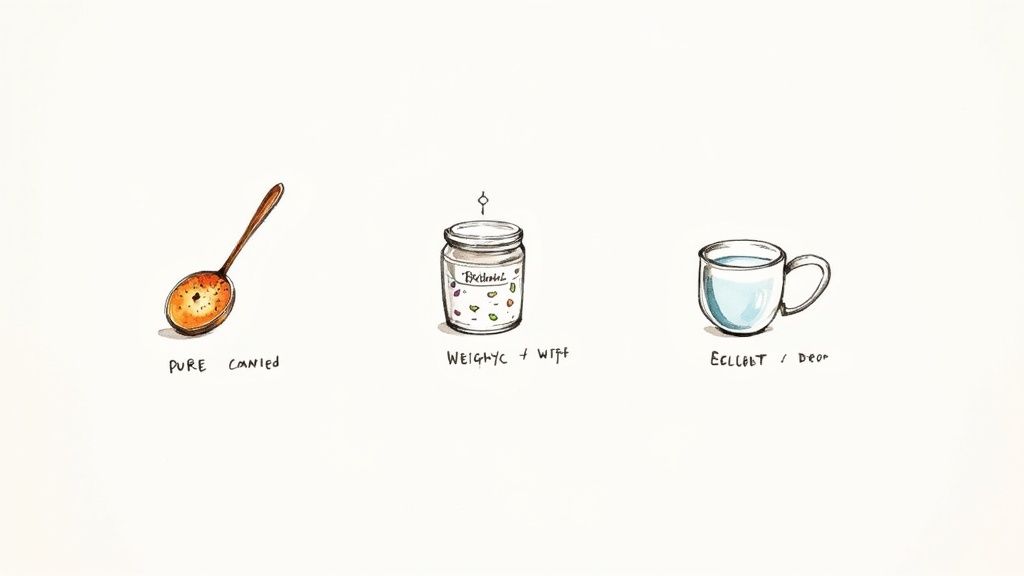
Once your dog is back to eating small, bland meals without any further upset, you can start thinking about a few extra helpers. I’ve found that a handful of gentle, vet-approved natural remedies can really speed things along, helping to firm up stools and get their gut back in balance.
Think of these as supportive therapies. They don't replace the bland diet, but work alongside it to help your dog feel like their old self again that much faster.
The Power of Pure Pumpkin
One of the first things I reach for with a case of the runs is pure canned pumpkin. It’s a brilliant source of soluble fibre, which acts like a sponge in the digestive tract, soaking up excess water. This helps add much-needed bulk to loose stools.
Now, this is important: you must use 100% pure canned pumpkin. Grab the spiced pumpkin pie filling by mistake, and you’ll make things a lot worse. That stuff is full of sugar and spices like nutmeg which will only aggravate an already sensitive tummy. Always check the label.
A little bit goes a long way. Stick to these general guidelines:
- Small Dogs (under 10 kg): 1-2 teaspoons mixed into each meal.
- Medium Dogs (11-25 kg): 1 tablespoon per meal.
- Large Dogs (over 25 kg): 2 tablespoons per meal.
Most dogs enjoy the taste, so you can just stir it right into their food. It’s an easy win.
Rebalancing the Gut with Probiotics
A bout of diarrhoea flushes everything out – not just the bad stuff, but also the good bacteria that are vital for a healthy gut. Getting that delicate ecosystem back on track is crucial to prevent a relapse, and that's where probiotics come in.
Probiotics are live microorganisms that help repopulate the gut with beneficial bacteria, creating a healthy environment and giving their immune system a boost.
Expert Insight: In UK vet practices, we're increasingly recommending probiotics not just for treatment, but as a way to rebuild gut resilience after an upset. It’s a key part of supporting long-term digestive health.
Many people ask about giving their dog plain, live yoghurt. While a small spoonful might not hurt, it's not ideal. For one, many dogs don't handle dairy well. Plus, the bacterial strains in human yoghurt aren't designed for a canine gut.
A much better choice is a high-quality probiotic supplement made specifically for dogs. These are formulated with the right strains and the right dosage to be truly effective. If your dog seems to have a sensitive stomach in general, learning more about prebiotics and probiotics for dogs could be a real game-changer.
Ensuring Proper Hydration
Dehydration is the biggest danger when it comes to diarrhoea. Even if you have fresh water available, a dog who feels poorly might not want to drink. If you notice their water bowl is staying full, you need to step in.
Sometimes, a vet-approved electrolyte solution can help replace lost fluids and minerals. In the UK, unflavoured products like Dioralyte are often suggested for mild cases.
A word of caution, though: always speak to your vet before giving your dog any electrolyte solution. They need to give you the nod on the right product and dosage for your dog's specific needs. Getting the balance wrong can do more harm than good.
Often, a simpler trick works just as well. Try adding a few tablespoons of warm water to their bland food. This boosts their fluid intake while they eat and can make the meal more tempting. It’s a simple but effective way to keep them hydrated while they recover.
When your dog has an upset stomach, the instinct to soothe and comfort them is powerful. But in our rush to help, it's surprisingly easy to reach for something that could make matters much worse. Knowing what not to do is just as important as knowing which home remedies are safe and effective.
Think of this as your essential safety briefing. We'll walk through the common foods and medications you must keep away from a dog with a sensitive gut, making sure your good intentions pave the way for a speedy recovery, not an emergency vet visit.
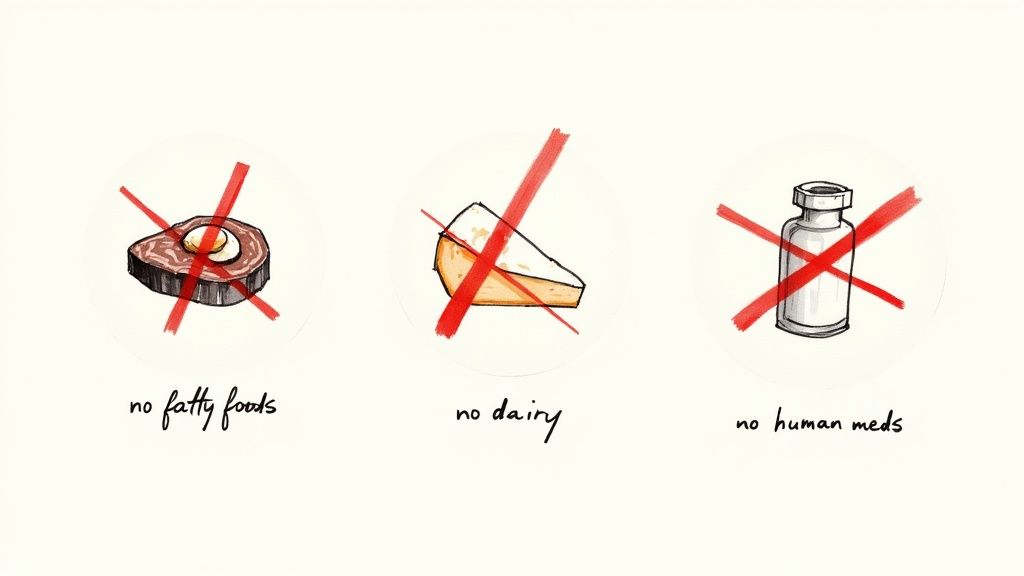
Why Rich And Fatty Foods Are Off-Limits
It’s tempting, I know. Your dog is looking miserable, and offering a sliver of their favourite cheesy treat or a bit of sausage feels like a kind gesture. Unfortunately, this is one of the biggest mistakes you can make.
A gut dealing with diarrhoea is inflamed and working overtime. Asking it to process rich, fatty, or heavily seasoned foods is like asking a sprained ankle to run a marathon. It simply can't handle the load and will likely make the diarrhoea much worse.
During this recovery period, you need to be strict. That means avoiding:
- Table Scraps: Anything from your own plate is a no-go. Greasy meats, rich sauces, or even vegetables cooked in butter or oil will only aggravate the problem.
- Commercial Dog Treats: Most are formulated for flavour and are far too complex for a sensitive stomach to break down. Put the treat jar away for now.
- Cheese and Dairy Products: Many dogs are lactose intolerant to begin with. Giving them dairy during a bout of diarrhoea is a recipe for more gas, cramping, and liquid stools.
The Dangers of Using Human Medications
If you feel unwell, you might reach for an over-the-counter remedy from the medicine cabinet. It’s a common thought process to wonder if a tiny dose could help your dog, but this is an incredibly dangerous path to go down. Never give your dog human medication unless specifically instructed to do so by your vet.
Common human anti-diarrhoea drugs like Imodium (loperamide) or Pepto-Bismol can be toxic to dogs. Certain breeds, particularly herding dogs with the MDR1 gene mutation, are especially vulnerable.
But there's an even more fundamental reason to avoid them.
Crucial Safety Warning: Diarrhoea is often the body's natural defence mechanism for flushing out something nasty—be it toxins, a virus, or harmful bacteria. Using medication to stop this process can trap those pathogens inside your dog's system, turning a simple tummy bug into a much more serious illness.
Only your vet can determine if medication is necessary and, if so, prescribe a treatment that is safe and formulated for canines.
Common Household Items to Avoid During Diarrhoea
To help you navigate these tricky moments, I've put together a quick-reference table. It covers common items people might think of using, explains the hidden risks, and points you towards a safer alternative. Consider this your "do not use" list while you're nursing your pup back to health.
| Item | Potential Risk | Safe Alternative (If Applicable) |
|---|---|---|
| Human Anti-Diarrhoea Meds | Can be toxic and may trap harmful bacteria in the gut, worsening the infection. | A vet-prescribed, canine-specific medication is the only safe choice. |
| Fatty Meats (e.g., bacon, sausage) | The high-fat content is incredibly difficult to digest and can even trigger pancreatitis. | Boiled, skinless, boneless chicken breast or lean white fish. |
| Milk, Cheese, or Yoghurt | Many dogs are lactose intolerant, which will only worsen gas, bloating, and diarrhoea. | A canine-specific probiotic supplement to help restore healthy gut flora. |
| Onions and Garlic | These are toxic to dogs in all forms (raw, cooked, powdered) and can damage red blood cells. | No safe alternative. These should never be given to dogs. |
| Brown Rice | The high fibre content is too harsh for an inflamed, irritated gut to process effectively. | Plain, boiled white rice, cooked until it's soft and almost mushy. |
By steering clear of these common pitfalls, you create a safe and supportive environment for your dog's digestive system to heal. The golden rule is simple: when in doubt, leave it out. Sticking to the vet-approved basics is always the safest and most effective path to getting your dog back on all four paws.
When to Stop Home Treatment and Call the Vet
Knowing how to manage a bout of diarrhoea at home is a fantastic skill for any dog owner. But, just as important—arguably, even more so—is knowing when to stop.
Home care is perfect for those simple, uncomplicated tummy upsets, but it's crucial to recognise its limits. You know your dog better than anyone. If your gut tells you something is seriously wrong, listen to it. It’s always better to be safe than sorry and get your vet on the phone. This section is all about removing the guesswork and giving you a clear list of red flags that mean it's time to seek professional help.
Duration Is a Deciding Factor
Sometimes, the clearest signal is the clock. A mild case of the runs, usually from raiding the bin or a new treat that didn't agree with them, should start getting better within a day or two of you starting a bland diet and supportive care.
If the diarrhoea drags on for more than 48 hours without any improvement—or worse, it’s getting more severe—your dog needs a vet. Persistent diarrhoea isn't just a mess; it can quickly lead to dehydration and might point to a bigger problem that home remedies just can't fix.
Concerning Symptoms That Need Immediate Attention
Beyond the two-day rule, some symptoms are immediate deal-breakers. These are your non-negotiable signs to get professional help right away, as they can hint at serious issues like pancreatitis, an intestinal blockage, or a nasty infection.
Keep a very close eye out for any of these:
- Repeated Vomiting: A single vomit before the diarrhoea starts isn't unusual. But if your dog is vomiting multiple times, can't even keep water down, or is dealing with both ends at once, that's an emergency.
- Extreme Lethargy or Weakness: A dog with an upset tummy will naturally be a bit quiet. What's not normal is profound lethargy, wobbliness, disorientation, or a complete unwillingness to move. This signals something much more serious is going on.
- Signs of Pain: Watch their body language. A hunched-over stance, a bloated or hard belly, yelping when you touch their tummy, or constant restlessness are all signs of significant pain.
- Blood in Stool or Vomit: Any blood is a reason to call the vet, period. This could be bright red, fresh blood (hematochezia) or dark, tarry stools (melena). Both need a proper diagnosis.
- Refusal to Eat or Drink: While you might fast your dog for a short period, a complete refusal to drink water is incredibly dangerous. Dehydration can spiral out of control very quickly.
Key Takeaway: While home remedies are great for simple cases, serious symptoms like repeated vomiting, extreme weakness, or any blood immediately override any home treatment plan. These are clear signs your dog needs a vet, no exceptions.
Recognising the Signs of Dehydration
Dehydration is one of the biggest dangers with diarrhoea. It can sneak up fast and become a serious health threat, so learning to spot the early signs is vital.
Here are a couple of quick checks you can do at home:
- Check Their Gums: Gently lift your dog's lip. The gums should be slick and pink. If they feel sticky or tacky, dehydration has likely already set in.
- The Skin Turgor Test: Lightly pinch a loose fold of skin between their shoulder blades. In a hydrated dog, it’ll snap right back. If it goes back slowly or stays in a 'tent,' that's another clear sign of dehydration.
If you suspect your dog is dehydrated, they need professional help. They’ll likely need fluids given under the skin or via an IV drip to rehydrate them safely. For a deeper dive, our guide covers the essentials of digestive problems in dogs.
Vulnerable Dogs Who Need Quicker Vet Care
The "wait and see" approach is really only for healthy, adult dogs. For some dogs, you need to act much faster because they are far more vulnerable to the effects of diarrhoea.
- Puppies: Young pups have almost no reserves. They can become dangerously dehydrated and develop low blood sugar (hypoglycaemia) in a flash. Any diarrhoea in a puppy justifies an immediate call to the vet.
- Senior Dogs: Older dogs often have weaker immune systems and may be juggling other health issues that a bout of diarrhoea can seriously complicate.
- Dogs with Pre-Existing Conditions: If your dog already has a medical condition like kidney disease, diabetes, or Addison's disease, don't wait. Contact your vet at the first sign of trouble.
Interestingly, many cases of simple diarrhoea resolve on their own. A UK study found that around 90% of dogs with acute diarrhoea recover fully after their first vet visit, whether they received antibiotics or not. This really supports the idea that for mild cases in healthy dogs, a conservative approach at home is often the best first move. You can read more about the UK study on treating canine diarrhoea and its findings.
Got Questions About Your Dog’s Tummy Trouble?
Even when you're doing everything right, it’s completely normal to have a few questions pop up while nursing your dog back to health. Dealing with diarrhoea at home often brings up specific worries as you go. Let’s tackle some of the most common ones we hear from dog owners across the UK.
Think of this as your quick-fire FAQ for getting through the recovery phase with confidence.
How Long Should the Bland Diet Go On For?
This is the big one, and getting the timing right is key to preventing a frustrating relapse. The bland diet should continue for at least two to three days after the diarrhoea has completely resolved and their poos are looking firm and normal again.
I know it's tempting to switch them back to their favourite food as soon as they seem better, but this is where a lot of people go wrong. Their gut needs time to heal. Once you've seen a few days of consistently good stools, you can start the slow transition back. Aim for a gradual reintroduction over another three to five days.
- First couple of days: Start with 75% of the bland food mixed with just 25% of their regular kibble.
- Next two days: If all is well, move to a 50/50 split.
- Final day or so: Go to 25% bland and 75% regular, then phase out the bland food entirely.
This gentle approach gives their digestive system a chance to get used to the higher fat and fibre content in their normal diet again.
Can I Give My Dog Rice Water?
Yes, absolutely. This is a classic, old-school remedy that really can help. The cloudy, starchy water left behind after you've boiled plain white rice is packed with electrolytes, making it great for rehydration. It’s also thought to be quite soothing for an inflamed gut.
Just offer a few spoonfuls here and there throughout the day. The important thing to remember is that it’s a supportive measure, not a magic cure.
Rice water is a fantastic little helper for providing extra hydration and comfort, but it’s no substitute for fresh drinking water and a proper bland diet. It doesn't have the calories they need to truly recover.
Is It Normal for My Dog to Be Extra Gassy?
Oh, yes. Very normal, and very common. An episode of diarrhoea essentially throws the whole gut environment into chaos. The delicate balance of good and bad bacteria gets completely knocked off-kilter, leading to more fermentation in the intestines. And the result of that? A lot more wind.
The gassiness should gradually improve as their digestion settles down and the stools start to firm up. That said, if the flatulence seems really severe, if their belly feels hard and bloated, or if they seem to be in a lot of pain, that's your cue to ring the vet.
What Colour Should Their Poop Be on a Bland Diet?
Don't panic if your dog's poos look a little odd while they're on a bland diet. It's completely normal for their stools to be a much paler colour than usual – often a light tan or even a yellowish shade.
This is simply because of what they're eating. A simple diet of boiled chicken and white rice doesn't contain the pigments found in most commercial dog foods, which are what give their stools that typical dark brown colour.
As soon as you start transitioning them back to their normal food, you'll see the colour slowly return to what you’re used to. It's actually a pretty good visual cue that their gut is getting back on track.
At Tipaw, we know that a happy dog starts with a healthy gut. For day-to-day digestive support or to help your dog bounce back faster after a tummy upset, check out our range of vet-approved, natural supplements. You can find the perfect chew to promote a balanced gut microbiome for your companion at https://www.store-tipaw.com.


