


It’s heartbreaking to see your dog in a state of panic – whether it's the whimper during a firework display, the frantic energy of a car trip, or the dread of being left alone. Many of us start searching for answers, and that often leads to the idea of "calming foods". This isn't about a quick fix, but a thoughtful way to build a foundation of calm from the inside out.
How Diet Can Help with Your Dog's Nerves
When a dog is anxious, their whole body goes into high alert. You might see this as trembling, excessive panting, or even destructive chewing. While training and a safe, predictable home environment are absolutely essential, what you put in their food bowl plays a surprisingly powerful role in managing their state of mind.
The link between the gut and the brain isn't just a wellness trend for humans; it’s a very real thing for our dogs, too. A healthy diet does more than just keep their body in good shape—it directly influences their mental wellbeing. By choosing foods rich in certain nutrients, you can help support the very brain chemicals that control mood and stress.
A Big Shift in How We Care for Our Pets
It seems UK dog owners are really catching on to this. The market for calming products for pets is on track to hit a staggering £1.09 billion by 2030. Dogs make up the biggest slice of that pie, at 54.41% of the revenue, mostly for common struggles like separation anxiety and fear of loud noises. This boom isn't just a fad; it shows we're moving towards a more proactive, supportive way of looking after our pets' emotional health.
This approach isn't about finding one "magic" ingredient that will instantly solve everything. Think of it more as a long-term strategy to help your dog feel more resilient and better prepared to cope when things get stressful.
A truly holistic view of your dog’s health means looking at everything that contributes to their sense of security. Nutrition is one of the most direct and powerful tools you have to influence their well-being from within.
The first step, of course, is learning to recognise when your dog is feeling stressed. Every dog is different, and knowing their personal tell-tale signs is crucial. Once you can spot the early cues, you're in a much better position to adjust their diet and routine to give them the support they need. To get a better handle on this, have a look at our guide on how to spot the signs of anxiety in dogs.
The Science Behind Calming Nutrients
To really get why certain foods can soothe your dog, we need to look at the fascinating link between their gut and their brain. Think of it as a two-way street; what happens in the gut doesn't stay in the gut. The nutrients your dog digests send signals straight to their brain, influencing their mood, stress levels, and overall sense of well-being.
It’s not magic, it’s just good biochemistry. Some compounds act like natural peacemakers for a dog's nervous system. By feeding a diet rich in specific amino acids, healthy fats, and even certain herbs, you’re giving their body the building blocks it needs to produce more calming brain chemicals. This makes it much easier for them to handle things that might otherwise cause them to worry.
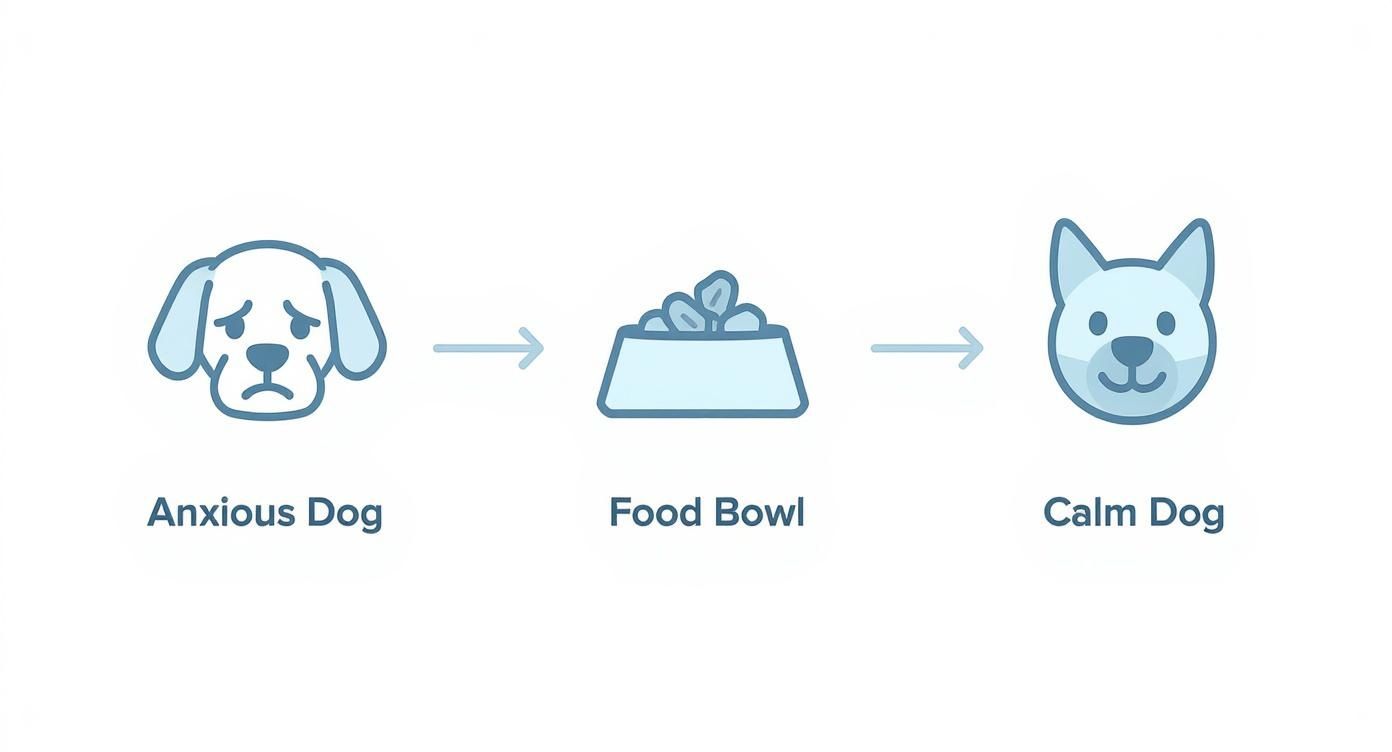
As you can see, the journey from an anxious pup to a calm companion can genuinely start in the food bowl. It’s a foundational piece of the puzzle.
The Mood-Boosting Power of Tryptophan
One of the star players in the world of calming food for dogs is an amino acid called L-tryptophan. You've probably heard it mentioned in connection with the sleepy feeling people get after a big turkey dinner. For dogs, though, its role is much more about creating a sense of calm contentment than just making them drowsy.
L-tryptophan is the direct precursor to serotonin—the brain's 'feel-good' chemical. Think of serotonin as a key that unlocks feelings of happiness and security. If your dog's diet is low in tryptophan, their body simply can't produce enough serotonin, which can leave them feeling more on edge, anxious, or even a bit low.
By including foods rich in tryptophan, like lean poultry or oats, you ensure their brain has everything it needs to keep serotonin levels topped up. This directly helps them feel more relaxed and secure in their day-to-day life.
L-Theanine and Omega-3s for Brain Health
But tryptophan isn't the only nutrient on the team. L-theanine, an amino acid often found in green tea, is another fantastic ally. Its special talent is promoting a state of alert relaxation—it calms the mind without causing sleepiness, which is perfect for training or focusing during stressful events.
Then there are the Omega-3 fatty acids, which are absolutely crucial for brain health. Picture them as the maintenance crew for the brain's intricate wiring. These healthy fats support healthy nerve cell function and help dial down inflammation, a known contributor to anxiety.
Here’s a quick rundown of what they do:
- L-theanine can increase levels of calming neurotransmitters, like GABA, in the brain.
- Omega-3s are vital for cognitive function and help dogs regulate their emotions.
- Together, they help build a more resilient and less reactive nervous system.
When a dog's brain gets a steady supply of nutrients like Omega-3s, it's just better equipped to handle life's stressors. This isn't about a quick fix; it's a long-term strategy for building emotional resilience from the inside out.
Soothing Botanicals Like Chamomile
Finally, we can't forget the gentle but effective power of botanicals. For centuries, herbs like chamomile have been used for their mild, relaxing properties. It’s not just an old wives' tale; chamomile contains compounds that bind to specific receptors in the brain, helping to ease anxiety and encourage rest.
When included in a dog's diet, these natural ingredients work alongside the other nutrients to soothe the nervous system from multiple angles. It’s about creating a well-rounded calming effect.
Let's break down these key nutrients in a simple table.
Key Calming Nutrients and Their Functions
This table summarises the main nutrients that can help promote a sense of calm in dogs, explaining what they do in a straightforward way.
| Nutrient | How It Works (Simplified) | Common Food Sources |
|---|---|---|
| L-Tryptophan | A building block for serotonin, the 'feel-good' brain chemical. | Turkey, chicken, oats, eggs, pumpkin seeds. |
| L-Theanine | Promotes relaxation without drowsiness; often found in supplements. | Green tea (supplements are safer for dogs). |
| Omega-3 Fatty Acids | Support brain health, reduce inflammation, and help regulate mood. | Oily fish (salmon, sardines), flaxseed, fish oil. |
| Chamomile | A natural herb that has mild sedative-like effects on the brain. | Chamomile flowers (often in calming treats/foods). |
By understanding these components, you can see how a specially formulated diet provides a multi-faceted approach to managing your dog's anxiety, offering gentle yet effective support every single day.
Building a Calming Diet for Your Dog
Putting all that science into your dog’s food bowl is actually easier than it sounds. It’s not about slaving away over complicated recipes. Instead, it’s about making thoughtful, simple additions to what they already eat.
The idea is to choose whole foods that are naturally packed with the goodies we’ve been talking about, like tryptophan, omega-3s, and key vitamins. These ingredients work together to support your dog’s brain health, helping it produce more of those feel-good chemicals like serotonin. It’s a gentle way to build a little more emotional resilience from the inside out.

Foods That Promote Calmness
So, what are some of these brilliant additions? Here are a few safe and effective foods known for their mind-soothing nutrients. Just remember the golden rule: introduce anything new slowly and don't go overboard.
-
Lean Poultry (Turkey and Chicken): These are absolute champions of L-tryptophan, the building block for serotonin. A little bit of plain, cooked, unseasoned turkey or chicken can be a brilliant calming treat.
-
Oily Fish (Salmon and Sardines): Loaded with Omega-3 fatty acids, these fish are true brain-food heroes. Omega-3s help reduce inflammation and support cognitive function, which can lead to a more balanced mood. Always make sure the fish is cooked and all bones are removed.
-
Pumpkin and Sweet Potato: These aren’t just for fibre. They support a healthy gut, which we now know is directly linked to brain health (the famous gut-brain axis). They’re also a source of B vitamins, which are crucial for regulating mood. Serve them cooked and completely plain.
-
Blueberries: These tiny powerhouses are bursting with antioxidants that help protect the brain from stress. They’re a fantastic, low-calorie treat that boosts overall wellbeing.
Think of these foods as more than just fuel. They're functional ingredients, delivering specific benefits that actively support your dog’s nervous system and help them find a more relaxed state of mind.
Preparation and Serving Guidelines
How you prepare these foods matters just as much as what they are. You want to deliver all the benefits without accidentally causing a tummy upset.
Cooking Tips for Safety and Health
- Always Cook Meats and Fish Thoroughly: Raw proteins can contain nasty bacteria that could make your dog ill. A good cook-through makes them perfectly safe.
- Keep it Plain and Simple: This is crucial. Never add salt, onions, garlic, oils, or any other seasonings. Many human seasonings are toxic to dogs.
- Serve in Moderation: Remember, these are extras, not a replacement for their main, balanced diet. For most dogs, a spoonful mixed into their regular food is plenty.
While a thoughtfully chosen diet provides an amazing foundation, some dogs just need a bit more targeted help. If you're looking to build on these dietary changes, you can find more information in our detailed guide on supplements for dogs with anxiety, which work brilliantly alongside a calming nutritional plan.
Homemade Calming Dog Treat Recipes
Fancy turning your kitchen into a calm-down corner for your four-legged friend? Making your own treats is a brilliant way to know exactly what's going into your dog's food, skipping all the weird fillers and preservatives. Plus, it’s a lovely way to spend some time together.
It's no surprise that calming snacks are becoming so popular. They're actually the most sought-after product in the UK’s pet calming market, accounting for 36.7% of all sales. It makes sense – they’re a simple, convenient way to give your dog a bit of extra nutritional support when they need it. And with the UK dog treat market hitting a massive £693 million in 2022, it's clear we're all looking for top-quality, effective options for our pets. You can find more details in this report on the booming pet calming products market.
Ready to get baking? Here are three easy-peasy recipes, each packed with ingredients known to help soothe an anxious pup.

Soothing Salmon Bites
These tasty little bites are an absolute powerhouse of Omega-3 fatty acids, which do wonders for brain health and keeping moods level. The healthy fats in salmon help cool down inflammation in the body and brain, which can contribute to a much more stable and happy temperament.
- Ingredients: 1 cooked salmon fillet (skin and bones removed), 1 mashed sweet potato, 1 egg, and 100g oat flour.
-
Instructions:
- First, preheat your oven to 180°C (160°C fan).
- In a bowl, flake the cooked salmon into small pieces.
- Mix in the mashed sweet potato and the egg until everything is nicely combined.
- Bit by bit, stir in the oat flour until you have a workable dough.
- Roll the dough into small, bite-sized balls and pop them on a baking tray lined with parchment paper.
- Bake for 20-25 minutes until they're firm and golden. Make sure they cool down completely before you offer one to your dog.
Turkey and Pumpkin Pupsicles
A brilliant treat for a warm day, these frozen pupsicles are also great for dogs who gulp their food down too quickly. They bring together tryptophan-rich turkey to help boost serotonin (the ‘happy hormone’) and gut-friendly pumpkin. A happy gut is surprisingly linked to a calm mind!
- Ingredients: 100g cooked, plain turkey (finely chopped), 75g plain pumpkin purée, and 150ml water or low-salt chicken broth.
-
Instructions:
- Pop the turkey, pumpkin purée, and your chosen liquid into a blender.
- Blitz it all up until the mixture is smooth.
- Pour it into an ice cube tray or some small silicone moulds.
- Freeze for at least four hours, or until they're solid.
Top Tip: Double-check you're using 100% pure pumpkin purée, not pumpkin pie filling. The pie filling is loaded with spices and sugars that are a no-go for dogs.
Calm Chamomile Cookies
These simple, crunchy biscuits harness the gentle, soothing power of chamomile – a herb long used as a natural relaxant. It works by binding to certain receptors in the brain, which can help ease anxiety and bring on a sense of peace.
- Ingredients: 1 tablespoon of dried chamomile flowers (or the contents of 2 chamomile tea bags), 200g wholewheat flour, 1 egg, and 60ml water.
-
Instructions:
- Get your oven preheating to 180°C (160°C fan).
- In a bowl, mix the flour and chamomile together.
- Add the egg and water, and mix until a stiff dough forms.
- Roll the dough out and use a cookie cutter to cut out some small shapes.
- Bake on a lined baking sheet for 15-20 minutes until they're nice and hard. As always, let them cool completely before sharing them with your dog.
Getting Started with Calming Foods: A Gentle Approach
When you’re bringing calming foods into your dog’s life, how you do it is just as important as what you’re offering. The real goal is to support their well-being and build a foundation of calm, not to cause an upset tummy along the way. A thoughtful, gentle introduction is key.
Remember, a dog’s digestive system loves routine. Any sudden dietary shift can throw it for a loop. That’s why we always start small, watch how they react, and only then make the new food a regular feature on the menu.
The Slow and Steady Rule
The best way to introduce any new food is to take it slow. This gives their gut time to get used to the new ingredients and avoids any digestive drama. The golden rule is to mix a little of the new food in with their current food, then gradually shift the balance over about a week and a half.
Here’s a simple schedule that works wonders:
- Days 1-3: Start with a mix of 75% old food and 25% new food.
- Days 4-6: Move to a 50/50 split of old and new.
- Days 7-9: Time to switch it up to 25% old food and 75% new food.
- Day 10 and beyond: If everything’s going smoothly (no diarrhoea or vomiting), you can confidently serve 100% of the new food.
This patient approach is the safest way to make a change, ensuring your dog gets all the good stuff without any of the discomfort.
Timing is Everything: When to Offer Calming Treats
When you give your dog a calming food or treat can make a huge difference, and the right strategy really depends on your goal. Are you dealing with a one-off stressful event or more of a day-to-day anxiety?
1. For Predictable Stressors
If you can see a stressful situation on the horizon—a trip to the vet, a long car ride, or the rumble of a thunderstorm—a bit of planning goes a long way. The active calming ingredients, like L-tryptophan or chamomile, aren't instant. They need time to be digested and get to work.
Pro Tip: Give your dog a calming treat or a small meal with calming ingredients about 60 to 90 minutes before the event. This gives their body the window it needs to absorb the nutrients, helping them go into the situation feeling much more relaxed.
2. For General Anxiety
For dogs with more of a constant, low-level hum of anxiety, consistency beats timing. Nutrients like Omega-3s work their magic over the long haul. Their benefits are cumulative, building up in the system over time to support brain health and help regulate mood. By making calming foods a part of their daily meals, you’re providing a steady stream of support for a more stable, balanced state of mind.
Of course, it’s always a good idea to have a chat with your vet before making any big changes to your dog's diet. This is especially true if they have any health conditions or are on other medications. Your vet can help you make sure your plan is perfectly suited to your dog's unique needs.
A Holistic Approach to Canine Calmness
While calming foods are a fantastic tool in your kit, they work best as part of a bigger picture. Think of diet as the foundation of the house, but you still need strong walls and a solid roof to create a truly secure home for your dog. A holistic strategy looks at anxiety from all angles, giving you much more consistent and lasting results.
This means pairing a supportive diet with positive, confidence-building activities. Your dog's environment and daily life have a massive impact on their sense of security. Just as a balanced diet gives them the right physical building blocks, a balanced lifestyle provides the emotional ones.
Creating a Supportive Environment
A well-rounded approach is all about creating a world where your dog feels safe and understood. This isn't complicated; it just requires a bit of consistency.
Here’s what that looks like in practice:
- Positive Reinforcement Training: This is about so much more than "sit" and "stay". It's a way of building trust and opening a two-way line of communication, teaching your dog that calm focus leads to good things.
- Predictable Routines: Dogs really do thrive on knowing what's coming next. A consistent schedule for meals, walks, and downtime reduces the "what if?" anxiety that can bubble up when their day is unpredictable.
- A Safe Space: Every dog needs their own little den—a crate, a cosy bed in a quiet corner—where they know they can go to switch off and won't be bothered.
- The Right Kind of Tired: A tired dog is often a more relaxed dog, but it's not just about physical exhaustion. A good walk paired with a puzzle toy or a quick training game gives their brain a workout too, preventing boredom and channelling their energy in a healthy way.
When you combine diet with these daily practices, something powerful happens. The right nutrients help balance your dog's brain chemistry, making them more receptive to training and better equipped to handle the little stresses of life.
Getting this kind of well-rounded support is becoming easier for UK pet owners. While high street shops still account for 61.5% of the calming product market, online retailers are closing the gap, now making up 48% of sales in 2024. Subscription models are making it simpler than ever to provide consistent support. You can read more on how UK owners are accessing calming pet products.
Finally, never underestimate the power of gut health in all of this. A calm gut really does contribute to a calm mind through what scientists call the gut-brain axis. Supporting your dog's digestion is another crucial piece of the puzzle. To get a handle on this, explore our guide to understand the benefits of prebiotics and probiotics for dogs.
Your Questions Answered: Getting Started with Calming Foods
When you start looking into calming foods for your dog, a few common questions naturally pop up. Let's tackle some of the most frequent ones so you can feel confident making the best choices for your furry friend.
How Quickly Will I See a Difference?
This is the big question, and the answer really depends on what you're trying to achieve.
If you’re preparing for a specific, stressful event like a car ride or a vet visit, giving a calming snack about 60-90 minutes beforehand can often take the edge off. Think of it as a short-term, situational fix.
For more persistent, day-to-day anxiety, the key is consistency. Nutrients like omega-3s need time to build up in your dog’s system to have a real impact. You'll likely need to stick with the new diet for several weeks before you start noticing a genuine, lasting shift in their overall mood.
Do Some Breeds Get More Anxious Than Others?
It’s true that you often hear about certain breeds, like German Shepherds or Border Collies, being more prone to anxiety. And while there might be some genetic predispositions at play, it's not the whole story. Not by a long shot.
A dog’s individual personality, their training, past experiences, and their current living situation play a much bigger role than their breed. Any dog, regardless of its background, can feel anxious.
Here at Tipaw, we're big believers in looking at the whole picture when it comes to your dog's happiness. A balanced diet is a fantastic foundation, but sometimes they need a little extra support.
Take a look at our range of vet-approved supplements designed to work alongside a calming diet. You can find the perfect natural solution for your dog and give them the comprehensive care they deserve.


