


Curcumin is the powerhouse compound found within turmeric, famous for its natural anti-inflammatory and antioxidant properties. Instead of just sprinkling the kitchen spice on your dog's food, specialised supplements deliver a concentrated, easy-to-absorb form that can help manage common problems like sore joints, allergies, and digestive troubles, giving your dog’s overall health a real boost.
The Golden Secret to Your Dog’s Wellbeing
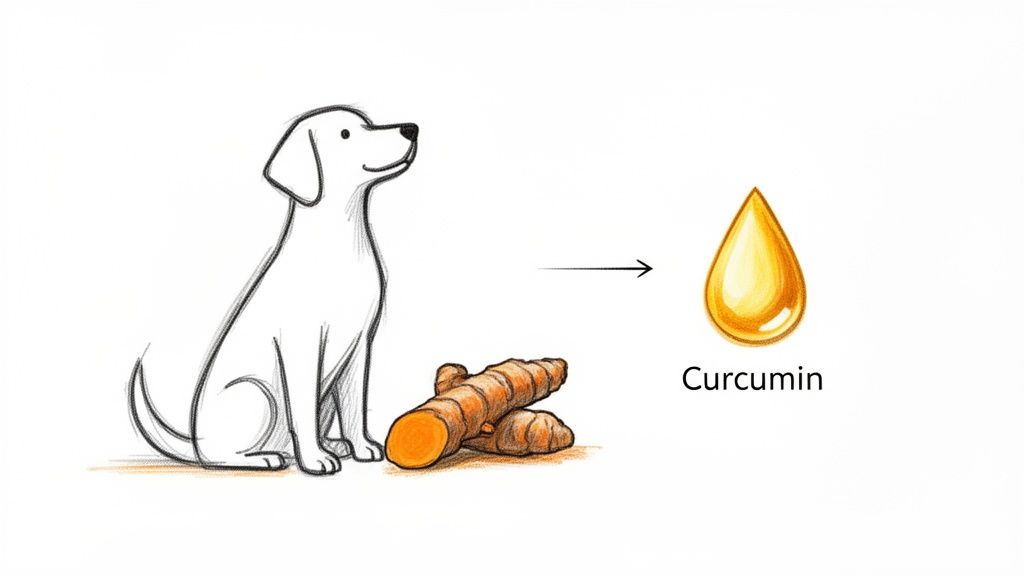
As a loving dog owner, you're always on the lookout for ways to keep your best friend feeling happy, active, and comfortable. Recently, many UK pet parents have started looking towards a vibrant golden spice for support. But the real hero isn't the spice itself—it's the potent compound hiding inside.
This is where it's crucial to understand the difference between turmeric and curcumin. Think of it like this: turmeric is a whole orange, but curcumin is the concentrated Vitamin C packed within it. The turmeric you have in your kitchen cupboard contains a surprisingly small amount of active curcumin, typically just 2-5%. That’s simply not enough to make a real difference to your dog's health.
Unlocking Natural Comfort and Health
This is why specialised curcumin for dogs supplements are so important. They isolate this active ingredient, providing a powerful, concentrated dose that gets to the root cause of many common canine health issues. At its core, curcumin is a natural anti-inflammatory, making it fantastic for soothing the discomfort that comes with so many conditions affecting dogs across the UK.
Its benefits come from its ability to work at a cellular level, helping with issues such as:
- Achy Joints: It can help calm the inflammation in joints that causes the pain and stiffness linked to conditions like arthritis.
- Allergy Flare-Ups: Curcumin helps to dial down the inflammatory response that leads to itchy skin, scratching, and other allergy symptoms.
- Digestive Upset: It can support a healthy gut lining and reduce the inflammation that contributes to tummy troubles.
This guide will break down what curcumin is, how it works, and how you can use it safely to improve your dog's quality of life. Exploring the world of natural supplements for dogs can also give you a wider perspective on holistic pet care.
Curcumin's real strength is its versatile approach. By targeting inflammation—a key culprit behind many chronic diseases—it provides a foundational layer of support for your dog's long-term health and vitality.
To give you a clear starting point, the table below summarises what you need to know about using this natural powerhouse for your pet.
Curcumin for Dogs at a Glance
Here’s a quick summary of curcumin's potential benefits and the most important things to consider before giving it to your dog.
| Area of Benefit | How Curcumin May Help | Important Note |
|---|---|---|
| Joint Health | Acts as a natural anti-inflammatory to reduce pain and stiffness from arthritis. | Look for supplements with enhanced bioavailability for effective absorption. |
| Skin & Allergies | Helps calm the inflammatory response that causes itchy, irritated skin. | Always start with a low dose to monitor your dog's reaction. |
| Digestive Support | Soothes gut inflammation and supports a healthy intestinal lining. | Consult your vet, especially if your dog has gallbladder issues or is on blood-thinning medication. |
| Antioxidant Action | Neutralises harmful free radicals, protecting cells from damage and supporting aging. | Regular kitchen turmeric is not effective; a dedicated canine supplement is necessary for therapeutic benefits. |
Understanding these key points will help you make an informed decision and find a high-quality product that truly supports your dog's health needs.
How Curcumin Fights Inflammation in Your Dog
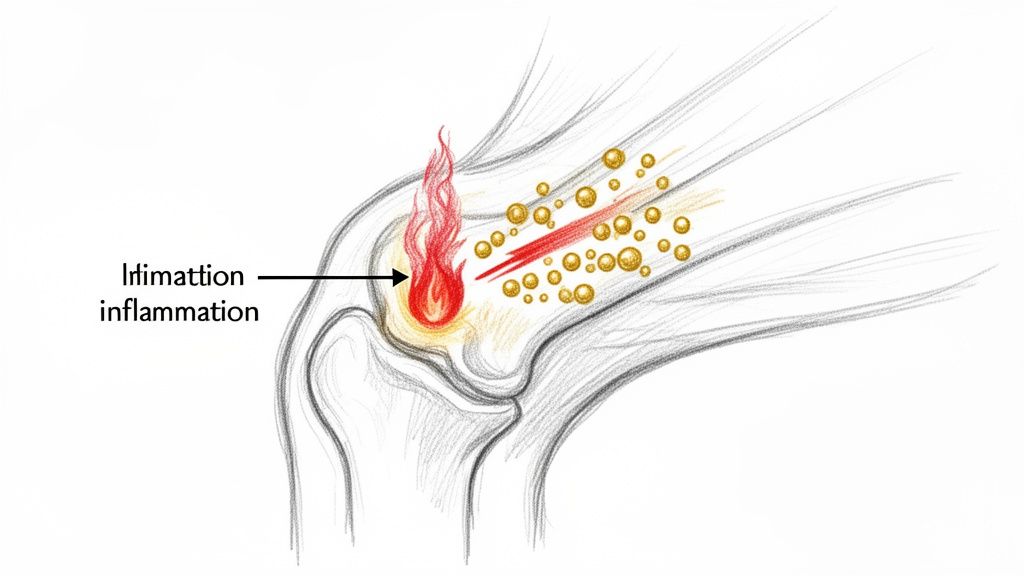
To really get your head around how curcumin helps your dog, it helps to think of inflammation as a tiny, hidden fire smouldering away inside their body. You can't see it, of course, but it’s this persistent, low-grade heat that gradually damages tissues, especially in places like their joints. This is what's behind the pain and stiffness that can really impact their quality of life.
Now, think of curcumin as a specialist firefighter. It doesn't just douse the obvious flames; it goes right to the source. Curcumin gets to work on a cellular level, cleverly interrupting the chemical signals that tell the body to keep that inflammatory fire burning. It’s a precise, powerful way to help restore balance.
Targeting the Root Cause of Joint Pain
One of the biggest reasons dog owners in the UK turn to curcumin is for joint support, particularly for dogs struggling with osteoarthritis. In an arthritic joint, that inflammatory fire is always active, slowly breaking down the cartilage that acts as a cushion between the bones. This eventually leads to bone-on-bone friction, which is as painful as it sounds.
Curcumin steps into this process by putting the brakes on the specific enzymes and proteins that fuel joint inflammation. By calming things down, it can:
- Protect Cartilage: It helps slow down the wear and tear on the joint's natural shock absorbers, preserving comfort and mobility.
- Reduce Swelling: By soothing the inflammatory response, you might notice less swelling and tenderness around the affected joints.
- Alleviate Pain: Simply put, less inflammation means less pain, helping your dog get back to moving more freely.
For those interested in a more holistic approach, it's well worth exploring the different natural anti-inflammatories for dogs to see how they can work together to support joint health.
The difference this can make is huge. Osteoarthritis is incredibly common in the UK, with studies suggesting an incidence rate of 6.6% in dogs visiting primary care vets. One study looking at a specific curcumin complex found a remarkable 53.3% drop in subjective pain scores in dogs with the condition. The science backs this up, too: key inflammatory markers like serum MMP-3 fell by 24.5% and TNF-α levels dropped by 20.8%, giving us a clear picture of curcumin's anti-inflammatory power.
Think of curcumin as a peacekeeper for your dog's immune system. Instead of letting inflammatory messengers run rampant and cause chaos in the joints, it steps in to calm the situation, restoring order and comfort.
The Science of Soothing Inflammation
Curcumin's ability to manage inflammation isn't a one-trick pony; it's more like a multi-pronged attack on the biological processes causing the discomfort. Many conventional drugs work by blocking a single inflammatory pathway, but curcumin is different—it interacts with multiple targets at the same time.
This broader approach is what makes it so effective. It’s not just sticking a plaster on the problem; it’s working to systematically dismantle the inflammatory process from several angles.
For instance, curcumin helps to dial down the activity of NF-kappaB, a master protein complex that basically acts as the body's "on switch" for inflammation. By helping keep this switch flicked to "off," curcumin prevents the whole cascade of inflammatory chemicals from being released in the first place. This makes it a fantastic proactive tool for managing long-term inflammatory conditions.
This clever science translates into real, tangible benefits for your dog. A calmer internal environment means less pain, more energy, and a better chance to enjoy all the things they love—walks, playtime, and just being part of the family. When you understand how it works, you start to see curcumin not just as a supplement, but as a genuine, science-backed way to boost your dog's wellbeing.
Beyond Joints: Exploring Curcumin's Wider Benefits
While curcumin is rightly famous for soothing sore joints, its talents reach much further. Think of it less as a one-trick pony and more as a full-body MOT for your dog. Its powerful anti-inflammatory and antioxidant effects ripple through the entire system, supporting overall wellbeing in some quite remarkable ways.
Many of us in the UK are all too familiar with the sight of a dog constantly scratching, battling with irritated skin. This is often a sign of an overactive inflammatory response, kicked off by anything from pollen in the air to an ingredient in their food. Curcumin can get to the root of the problem by dialling down that internal inflammation, offering relief from the inside out and helping to calm that relentless itch.
Soothing Itchy Skin and Supporting a Happy Gut
You can think of your dog’s gut and their skin as being intrinsically linked. When the digestive system is inflamed or out of balance, skin problems are often one of the first things you'll see. Curcumin helps by strengthening the gut lining and reducing inflammation there, too.
This double act is a game-changer for dogs with sensitive stomachs or food intolerances. By helping to create a calmer, healthier gut environment, curcumin ensures your dog is actually absorbing all the goodness from their food—the absolute cornerstone of good health.
A healthy gut is the foundation of a healthy dog. By soothing internal inflammation, curcumin helps strengthen this foundation, leading to better digestion, more resilient skin, and a happier companion.
But curcumin’s protective work doesn’t stop at the gut. It goes much deeper, right down to the cellular level, defending your dog's body from the daily grind.
Antioxidants: Your Dog's Cellular Bodyguard
Every single day, your dog’s body creates unstable molecules called free radicals. It's a natural part of metabolism, but things like pollution and stress can ramp up production. These free radicals are like tiny, out-of-control sparks that can damage cells, DNA, and proteins through a process known as oxidative stress.
A good analogy for oxidative stress is "cellular rust." Left unchecked, this rust builds up over time, speeding up the ageing process and paving the way for chronic health issues. This is where curcumin steps in as a powerful antioxidant.
Essentially, curcumin acts as a very effective rust-proofer. It actively hunts down and neutralises these rogue free radicals, shielding your dog’s cells from damage. This is particularly beneficial for:
- Senior Dogs: Protecting ageing cells can help them stay sharp and maintain their zest for life.
- Active Dogs: Strenuous exercise naturally creates more oxidative stress, and curcumin aids in their recovery.
- Dogs with Chronic Conditions: Many long-term illnesses are associated with higher levels of oxidative stress, making antioxidant support vital.
This isn't just theory. Scientific studies have demonstrated curcumin's ability to tackle oxidative stress head-on. In one trial, dogs given snacks containing 30 mg of curcumin per day showed a significant boost in their own antioxidant systems. Interestingly, the study also found that by day 15, the dogs had higher red blood cell counts, pointing to better blood health. You can explore the full findings to see how curcumin supports dogs with degenerative diseases.
By fighting this daily battle against oxidative stress, curcumin supports your dog's long-term health and resilience. It's a fantastic, proactive way to help their body stay strong from the inside out, keeping them happier and healthier for longer.
How to Choose the Right Curcumin Supplement
Walking down the supplement aisle, whether in a shop or browsing online, can feel pretty overwhelming. When you see all those bottles promising the world, how do you actually pick the best curcumin for dogs? It’s not just about finding a product with curcumin listed on the label; the real secret lies in finding one your dog's body can actually use.
The biggest hurdle with curcumin is something called bioavailability. On its own, curcumin is notoriously difficult for the body to absorb and put to work. This means simply sprinkling a bit of turmeric powder from your kitchen cupboard onto your dog's dinner is, unfortunately, a bit of a waste. The vast majority of that wonderful active compound will pass straight through their system without ever making it into the bloodstream.
This is where a well-made, scientifically formulated supplement really earns its keep. They’re specifically designed to crack this absorption puzzle, making sure that golden goodness gets delivered right where it’s needed most.
Boosting Absorption The Smart Way
To unlock curcumin’s potential, supplement makers use some clever strategies to give its bioavailability a serious boost. Think of these as special delivery systems that help curcumin get past the body's natural defences and into the bloodstream to start its work.
You’ll commonly come across two of the most effective methods:
- Piperine (Black Pepper Extract): Piperine, the active compound in black pepper, acts as curcumin's trusty sidekick. It cleverly slows down the liver's natural process of breaking down and flushing out curcumin. This gives the body a much wider window of opportunity to absorb it, and the results are dramatic.
- Phytosomes (Liposomal Forms): This is a more sophisticated approach. Imagine wrapping the curcumin molecule in a tiny, protective bubble made of fat (a phospholipid). This little vehicle can easily pass through the wall of the intestine and ferry the curcumin directly into your dog's cells, ensuring it has maximum impact.
This is where you see curcumin’s broad benefits really come to life, helping to soothe itchy skin, support gut health, and promote wellbeing at a cellular level.
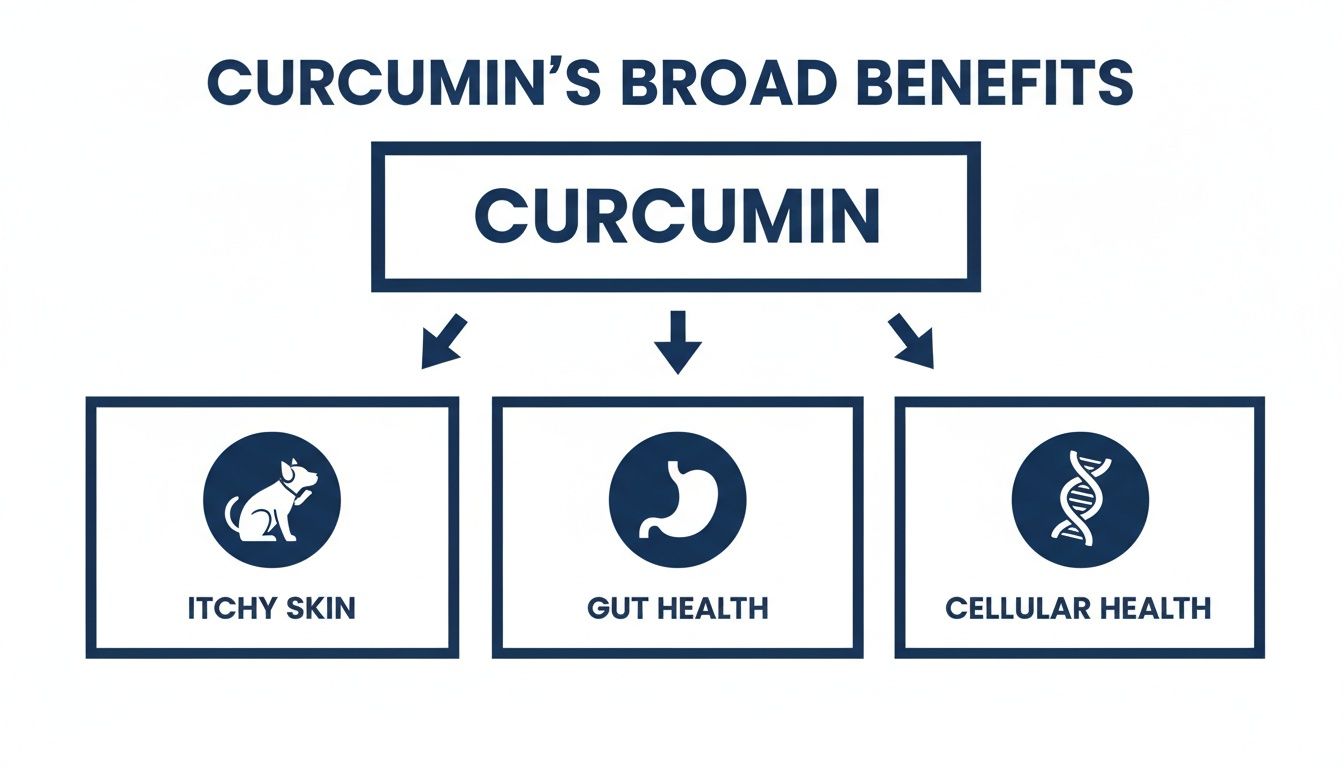
As the diagram shows, once curcumin is absorbed effectively, it can work throughout the body to address the inflammation that so often lies at the root of common canine health problems.
Comparing Curcumin Formulations for Dogs
The science backing these advanced forms is genuinely impressive. Take, for example, a study on CurcuVet®, a curcumin phytosome complex designed for animals. It was shown to have significant anti-inflammatory benefits for dogs with arthrosis. Tests found that curcumin levels in the blood were five times higher than with standard curcumin, which clearly shows how a smart formulation leads to better results. For dog owners in the UK, this makes these advanced complexes a seriously valuable tool. You can read more about these clinical findings and curcumin's efficacy in the full study.
To make things a bit clearer, let's break down the common options you'll find when searching for a curcumin supplement. This comparison of common forms of curcumin supplements should help you choose the most effective option for your dog.
Comparing Curcumin Formulations for Dogs
| Formulation Type | How It Works | Pros | Cons |
|---|---|---|---|
| Standard Curcumin Extract | This is a concentrated powder of curcuminoids, but with nothing added to help absorption. | It's more potent than plain kitchen turmeric. | Bioavailability is very poor; most of it won't be absorbed by your dog. |
| Curcumin with Piperine | Standard curcumin extract is combined with black pepper extract (piperine) to slow its breakdown by the liver. | Massively improves absorption compared to standard curcumin; a well-proven method. | Piperine can occasionally cause mild stomach upset in very sensitive dogs. |
| Curcumin Phytosome | The curcumin is bound to a fat molecule (phospholipid), which protects it and helps it pass into the cells. | Excellent absorption and bioavailability; it delivers curcumin directly into the cells for maximum effect. | This advanced form tends to be a more premium, and therefore more expensive, option. |
Ultimately, choosing the right supplement isn't just about reading the ingredients list; it's about understanding how those ingredients work together.
The single most important thing to remember is this: the true value of a curcumin supplement isn't determined by how much curcumin is in it, but by how much your dog can actually absorb and use.
By opting for a supplement with a proven absorption-enhancing method, like one containing piperine or a phytosome form, you're not just buying a product. You're investing in a genuine solution that can make a real, tangible difference to your dog's comfort and long-term health.
Administering Curcumin Safely and Effectively
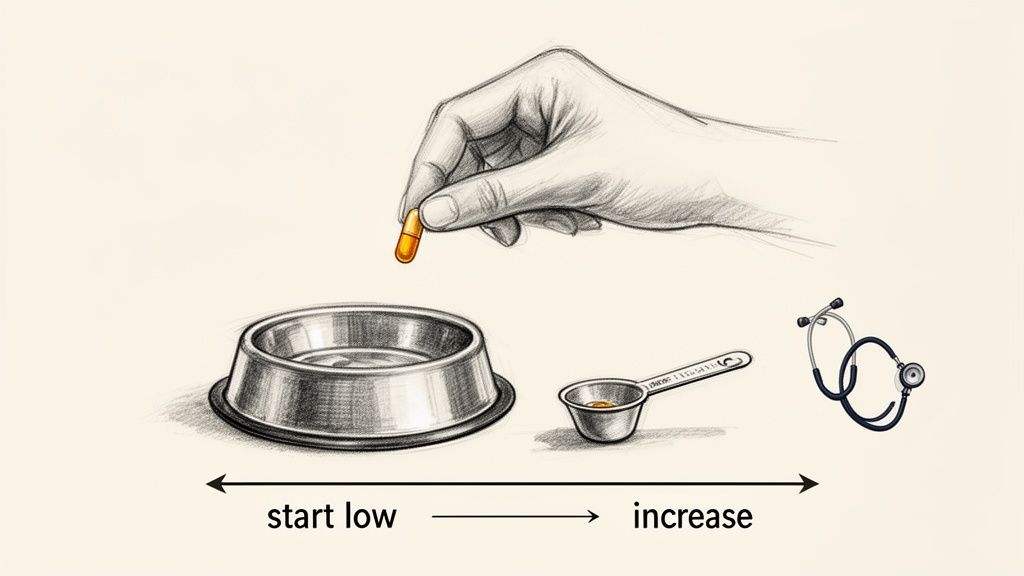
As with anything new you introduce to your dog's diet, the key is to be thoughtful and observant. Your dog's safety and well-being come first, and when it comes to supplements like curcumin for dogs, there’s a golden rule every experienced owner follows: 'start low and go slow'.
Think of it as letting your dog's body get acquainted with something new. Rather than jumping in at the full recommended dose, begin with a tiny amount—maybe a quarter of what the label suggests for their weight. Stick with this for a few days, keeping a close eye on your companion for any changes in their behaviour or digestion.
If everything looks good and your dog is tolerating it well, you can begin to increase the amount bit by bit every few days. This gradual approach is the best way to minimise any chance of an upset tummy and helps you pinpoint the exact dose that works best for your individual dog.
Finding the Right Dose for Your Dog
So, how much should you actually give? While every supplement is different, a common veterinary guideline is to aim for 15 to 20 mg of curcumin per pound of your dog’s body weight each day.
Treat this as a rough starting point, not a strict rule. The right dose really depends on the concentration and, crucially, the bioavailability of the specific product you're using. Always check the manufacturer's instructions on the packaging first, as they’ve formulated those directions for their product. For a deeper dive into this, our guide on how much turmeric to give your dog has more practical advice.
Your vet is your most trusted partner in your dog's health. Before starting curcumin or any supplement, it's always best to have a chat with them. They know your dog's full health history and can give you a personalised recommendation based on their specific needs.
Monitoring for Potential Side Effects
The good news is that curcumin is considered very safe for most dogs, and serious side effects are incredibly rare. When issues do pop up, they’re usually mild and often just a sign that the dose was increased too quickly.
The most common thing you might see is a bit of digestive upset. Keep an eye out for:
- Looser stools or diarrhoea
- A rumbly, gurgly tummy or a bit of gas
- Vomiting (this is very uncommon)
If you spot any of these signs, simply stop giving the supplement for a day or two. When you start again, go back to a much smaller dose and increase it even more gradually than before. This almost always sorts out any temporary sensitivity.
Important Safety Considerations and Contraindications
While curcumin is a fantastic support for many dogs, it’s not the right choice for everyone. It’s vital to know when to be cautious or avoid it altogether to keep your dog safe.
Pay close attention if your dog:
- Has Gallbladder Issues: Curcumin can encourage bile production, which might complicate things if there's an issue like a bile duct obstruction.
- Is on Blood-Thinning Medication: It has a natural, mild anti-platelet effect, which could amplify the action of anticoagulant drugs like clopidogrel.
- Is Scheduled for Surgery: Because of that same blood-thinning property, it’s wise to stop giving curcumin at least two weeks before any planned surgical procedure.
- Is Pregnant: Not enough research has been done on its effects during pregnancy or nursing, so the safest approach is to avoid it.
By following these straightforward steps and keeping your vet in the loop, you can confidently use curcumin to support your dog’s health, helping them lead a more comfortable and vibrant life.
Frequently Asked Questions About Curcumin for Dogs
Diving into the world of dog supplements can feel a bit overwhelming, and it's only natural to have questions. As a caring dog owner in the UK, you want to be certain you're making the best choices for your furry friend. I’ve put together this section to give you clear, straightforward answers to the most common queries I hear about curcumin for dogs, so you can feel confident and well-informed.
Can I Just Give My Dog Turmeric From My Spice Rack?
It's a common question and a tempting thought, but tipping the turmeric from your kitchen spice rack into your dog's bowl is a bad idea. While it might seem like an easy shortcut, that yellow powder contains a surprisingly low amount of the active compound, curcumin—typically just 2-5%.
This means your dog would have to eat a huge, and likely tummy-upsetting, amount of spice just to get a tiny bit of benefit. More importantly, standard turmeric is notoriously difficult for a dog's body to absorb. Most of it will simply pass straight through their system without ever getting to work.
Think of it this way: giving your dog kitchen turmeric for its curcumin content is like trying to water your garden with a misting bottle. You're using the right stuff, but the delivery is so inefficient you'll never see the results you're hoping for.
This is where high-quality canine supplements come in. They use concentrated curcumin extracts and are cleverly formulated with ingredients like piperine (from black pepper) or are made into phytosomes to massively boost absorption. This ensures your dog actually gets the powerful anti-inflammatory and antioxidant benefits you’re after.
How Long Does It Take for Curcumin to Work?
When it comes to natural supplements, patience really is a virtue. The time it takes to see a real difference from curcumin depends on a few things, like your dog's age, the specific health issue we're tackling, how severe it is, and of course, the quality of the supplement itself.
Generally, many owners tell me they notice positive changes in their dog's comfort, mobility, and overall zest for life within about two to four weeks of consistent, daily use. For more stubborn, long-term conditions like advanced arthritis, you might need to wait a little longer, perhaps six to eight weeks, to really see the full effects unfold.
Curcumin works by gradually dialling down inflammation at a cellular level, so its benefits build up over time. It’s not a quick fix like a painkiller; it's working with your dog’s body to create a healthier, less inflamed state from the inside out. Sticking with it every day is the real key to success.
Are There Any Dogs That Should Not Take Curcumin?
Yes, absolutely. While curcumin is very safe for most dogs, it isn't the right choice for everyone. It's vital to have a chat with your vet before starting it, especially if your dog has any pre-existing health conditions.
You should be extra careful or avoid curcumin altogether in these situations:
- Dogs with Gallbladder Issues: Curcumin helps stimulate bile flow. That's great for a healthy dog, but it could spell trouble for a dog with something like a bile duct obstruction.
- Dogs with Bleeding Disorders: Because it has mild blood-thinning properties, curcumin should be used with caution in dogs that have clotting issues or are already on anticoagulant medications.
- Dogs Scheduled for Surgery: For the same reason, it's standard practice to stop giving curcumin at least two weeks before any planned surgery to avoid any risk of increased bleeding.
- Pregnant or Nursing Dogs: There simply isn't enough research on how curcumin affects pregnant or lactating dogs, so the safest path is to avoid it during this time.
Always, always consult your vet. They know your dog's health history inside and out and can give you the safe, personalised advice you need.
Can Curcumin Be Given With My Dog's Current Medications?
This is probably one of the most critical questions to run by your veterinarian. Curcumin can interact with several types of medication, making professional guidance an absolute must.
Its natural blood-thinning effect means it could amplify the action of drugs like clopidogrel or warfarin, increasing the risk of bleeding. It could also interact with other anti-inflammatory drugs (NSAIDs) like Rimadyl or Metacam; taking them together might raise the risk of stomach irritation.
On top of that, curcumin can change how the liver processes certain drugs, which could make them more or less effective. Please, never start your dog on curcumin without getting the all-clear from your vet first. They have the full picture and are the only ones who can safely guide you on how to weave curcumin into your dog's health plan without causing unintended harm.
At Tipaw, we're committed to helping you support your dog's health with effective, natural solutions you can trust. Explore our range of vet-approved supplements, all made with 100% natural ingredients and designed to help your dog live a happier, healthier life. Discover the difference at https://www.store-tipaw.com.


