


When it comes to giving your dog turmeric, the golden rule is to start small and go slow. A good rule of thumb, backed by years of holistic veterinary practice, is to begin with 1/8 to 1/4 teaspoon of turmeric powder for every 4.5kg (10 pounds) your dog weighs per day.
For this to work its magic, you must combine it with a healthy fat and a pinch of black pepper to help your dog’s body actually use it.
Finding the Right Turmeric Dose for Your Dog
Working out the correct amount of turmeric can seem a bit tricky at first, but it’s really quite straightforward. The aim is simply to give enough of the active compound, curcumin, to deliver those anti-inflammatory benefits without upsetting your dog's stomach. It's less about a rigid prescription and more about finding a starting point you can tweak based on how your dog responds.
The secret to turmeric's success is something called bioavailability—basically, how well your dog’s body can absorb and put the curcumin to good use. On its own, curcumin just doesn't absorb well. This is why you’ll almost always hear about making a "golden paste" or a similar mix.
This simple, effective combination usually includes:
- Turmeric Powder: The source of the anti-inflammatory curcumin.
- A Healthy Fat: Coconut oil or olive oil are fantastic choices. Curcumin is fat-soluble, which means it needs fat to be carried into the bloodstream.
- Black Pepper: It contains a compound called piperine, which can boost curcumin absorption by a staggering 2,000%. You only need a tiny pinch!
Without these two key partners, most of the turmeric will just pass right through your dog's system without doing much good.
Dosage Guidelines by Dog Weight
To take the guesswork out of it, holistic vets have established some pretty clear starting points. The most widely accepted dose for UK dogs is between 15-20mg of turmeric per pound of body weight daily.
This works out to roughly 1/8 to ¼ teaspoon per 10 pounds. For a common UK breed like a 15kg Cocker Spaniel, that’s about ½ a teaspoon per day. It's a good idea to split this between two meals, as this helps prevent the constipation some dogs experience if they get too much too quickly.
To make things even easier, here’s a quick reference table showing the recommended starting daily dose of turmeric powder for dogs, based on their weight in kilograms.
Daily Turmeric Dosage Guide for UK Dogs by Weight
This table provides a simple starting point. Remember to begin with half the recommended amount for the first week to let your dog's system adjust.
| Dog Size Category | Weight Range (kg) | Recommended Daily Turmeric Powder Dose |
|---|---|---|
| Toy / Small | Up to 10 kg | Start with ¼ teaspoon per day |
| Medium | 11 kg - 25 kg | Start with ½ teaspoon per day |
| Large | 26 kg - 45 kg | Start with ¾ teaspoon per day |
| Giant | Over 45 kg | Start with 1 teaspoon per day |
Once your dog is comfortable, you can gradually increase to the full recommended dose. Always keep an eye on them and adjust as needed.
Vet’s Tip: I always tell my clients to start with half the recommended dose for their dog's weight for the first week. This "low and slow" approach gives their digestive system time to adapt and seriously minimises the risk of any tummy troubles.
Here’s a great visual guide that breaks down the daily dosage for different dog sizes.
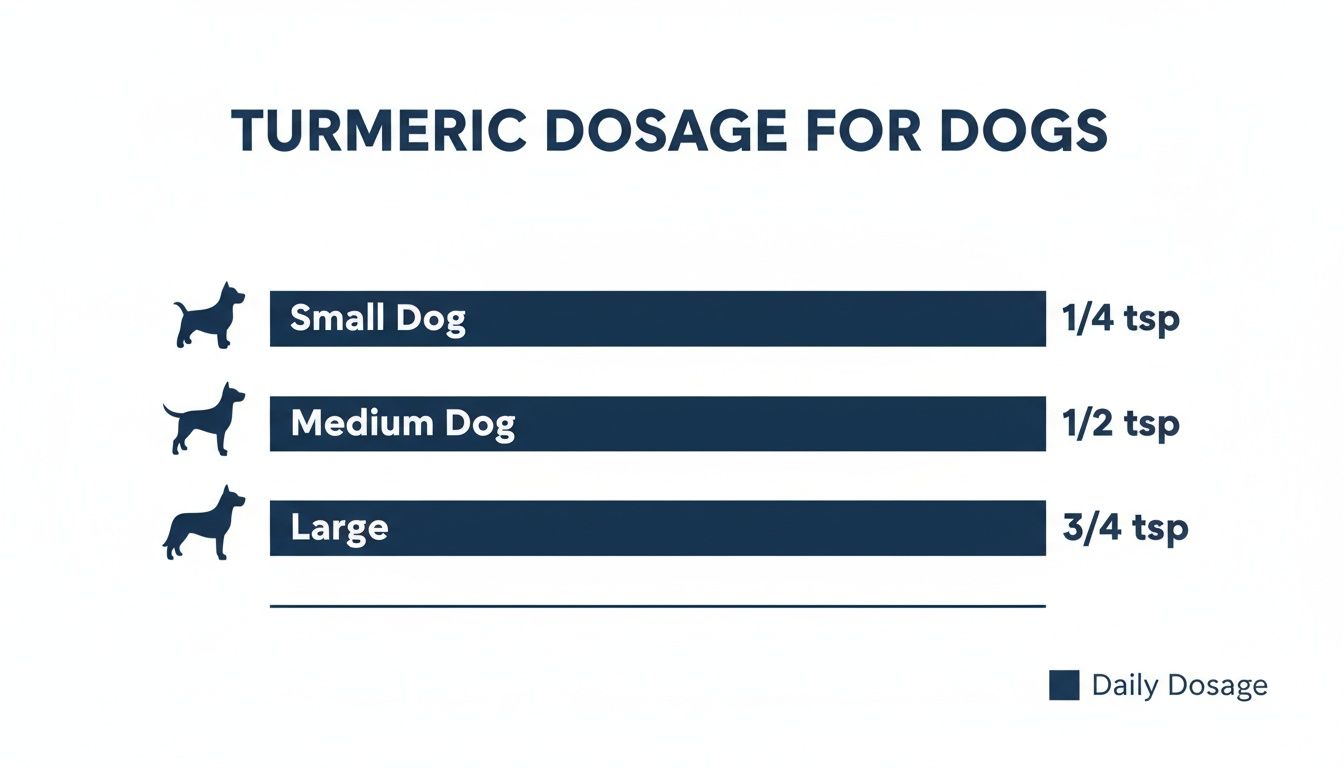
As you can see, the dose scales with your dog’s size, which reinforces that important principle of starting small for little dogs and gradually increasing for the bigger ones.
Beyond the Powder
While making your own golden paste from turmeric powder is a popular and effective method, many owners find commercial supplements more convenient. They offer precise dosing without the mess and are often formulated in tasty chews designed for maximum absorption.
Turmeric is a fantastic natural choice, especially for supporting joint health. If you’re looking into ways to keep your dog active and comfortable, you might also find our guide on choosing the best joint supplement for dogs useful. These products often combine turmeric with other powerful ingredients like glucosamine and chondroitin for even greater benefit.
Why Vets Are Recommending Turmeric for Canine Health
It’s a conversation happening more and more in vet practices and at dog parks across the UK. Turmeric, once just a staple in the spice rack, is now being seen as a cornerstone of supportive care for dogs, and for good reason. This isn't just a fleeting trend; it’s backed by a growing body of evidence and countless positive stories from both owners and vets.
The main reason vets are pointing dog owners towards this golden spice is its potent active compound, curcumin. Curcumin is well-regarded for its powerful anti-inflammatory properties. This is a big deal, because while inflammation is a normal response to injury, chronic inflammation is the sneaky culprit behind many painful conditions, especially osteoarthritis.
A Natural Ally Against Joint Discomfort
For many of us, the first sign of trouble is subtle. Maybe your once-bouncy companion hesitates before jumping on the sofa, or seems stiff and slow on those cold mornings. These are often the tell-tale signs of canine osteoarthritis (OA), a degenerative joint disease that is unfortunately all too common.
Here in the UK, it's estimated that canine osteoarthritis affects between 2.5% and 6.6% of dogs seen in primary care practices. That's a significant number of our four-legged friends living with chronic pain. Vets typically recommend a multi-pronged approach to managing OA, and this is where turmeric can really shine as a natural support.
By helping to manage the inflammatory response within the joints, curcumin can lead to real, noticeable improvements in a dog’s comfort and mobility. It’s about giving them back a bit of their spark and making their daily movements less of a chore.
The goal isn't to replace conventional veterinary medicine but to work alongside it. Many vets now see turmeric as a valuable part of an integrated pain management plan. It offers a way to support the body's own healing processes and potentially reduce the reliance on long-term pharmaceutical drugs, which can sometimes bring unwanted side effects.
More Than Just an Anti-Inflammatory
While joint health is the number one reason for its recommendation, curcumin’s benefits don’t stop there. It's also a powerful antioxidant, which means it helps protect your dog’s body right down to the cellular level.
Think of it this way: every day, your dog’s body creates unstable molecules called free radicals as a by-product of just living. These free radicals can damage cells, proteins, and even DNA through a process known as oxidative stress.
Here’s what that means for your dog:
- Cellular Protection: Antioxidants like curcumin step in and neutralise these damaging free radicals.
- Immune Support: By reducing this oxidative stress, curcumin helps the immune system function more effectively.
- Healthy Ageing: This cellular-level protection is crucial for promoting healthy ageing, keeping your dog's body more resilient over time.
This one-two punch of fighting inflammation while also providing antioxidant support is what makes turmeric such a compelling option. It addresses both the symptoms of conditions like arthritis and the underlying cellular stress that contributes to a whole range of health issues.
A Practical and Gentle Approach
Another reason for its growing acceptance in the veterinary community is its safety profile when used correctly. Vets appreciate that it offers a gentle, natural way to support a dog's wellbeing. The key, as with any supplement, is using the correct dose and administration method to ensure it's both safe and effective.
At the end of the day, it's all about the tangible, real-world benefits. It’s about seeing an older Labrador greet you with a wagging tail instead of a pained groan, or watching a terrier chase its favourite ball with renewed energy. These are the outcomes that truly matter.
For owners looking to explore similar supportive options, understanding other natural anti-inflammatories for dogs can provide a broader picture of how to best support their pet's health journey. The conversation is shifting towards a more balanced approach to canine wellness, and turmeric is right at the heart of it.
How to Get Your Dog Started on Turmeric
Whenever you're adding something new to your dog's routine, even a natural spice like turmeric, the key is to take it easy. My motto is always "start low and go slow." Diving in with the full dose from day one can sometimes upset a dog's stomach, so a gentle, gradual approach is your best bet for a smooth start.
Think of it just like you would when changing their food. You wouldn't switch their kibble overnight, and the same logic applies here. This slow introduction gives their body time to adjust, making the whole experience a positive one right from the start.
The "Low and Slow" Introduction
The best way to begin is with just a tiny fraction of the final dose you're aiming for. I usually recommend starting with about one-quarter of the calculated daily amount based on your dog's weight. Hold at this small dose for at least three or four days, just to see how they get on.
If everything seems normal—no dodgy tummies or changes in their toilet habits—you can confidently bump it up to half the recommended dose. Stick with that for another few days. This step-by-step method is genuinely the safest and most effective way to get turmeric into their system without any drama.
Once you’ve been at it for about a week and your dog is happy, you can move up to the full daily dose. A little patience in the beginning really does pay off, as it drastically lowers the chance of any mild digestive issues.
Making Sure They'll Actually Eat It
So, you've got the dose sorted, but how do you get your dog to take it? Turmeric has a unique, earthy taste that can make some dogs turn their noses up. The trick is to be a bit clever and mix it right into their food so they barely notice it's there.
Here are a few tricks I've picked up over the years:
- Wet Food is Your Friend: If your dog is on wet, raw, or fresh food, you're in luck. The moisture and stronger aromas are perfect for hiding the turmeric powder. Just stir it in well.
- Find a Tasty "Carrier": For kibble-fed dogs, you'll need something to mix the powder or paste into. A dollop of plain, xylitol-free yoghurt, a splash of bone broth, or even a bit of mashed sweet potato can work wonders.
- Divide and Conquer: Rather than giving the entire daily amount in one go, try splitting it between their morning and evening meals. This can make the taste less noticeable and also helps their body absorb it more effectively.
The aim is to make it a normal, unnoticed part of their dinner, not a battle of wills.
A Little Tip From My Kitchen: My fussy Springer Spaniel wasn't convinced at first. The game-changer for us was mixing his golden paste with a forkful of tinned sardines in spring water. The powerful fishy smell completely hid the turmeric, and he licked the bowl clean every time.
Keeping an Eye Out for Any Issues
While turmeric is very safe for the vast majority of dogs, every dog is an individual. As you're introducing it, you need to be their chief observer. Problems are rare and almost always mild, but it’s good to know what you’re looking for.
The most common issue from giving too much, too quickly, is a bit of a stomach grumble. Keep an eye out for:
- Changes in Poo: The clearest signal is often loose stools or diarrhoea. This is a classic sign you've increased the dose a bit too fast for their system.
- Sickness or Nausea: Some dogs might seem a bit off their food or even be sick if the initial amount is too much for them to handle.
- Constipation: This is less common, but it can happen. Making sure they're drinking plenty of water and splitting the dose often helps sort this out.
If you spot any of these signs, don't worry. Just stop the turmeric for a couple of days to let their tummy settle. When you're ready to try again, go back to a much smaller amount—even less than you started with—and build it up much more slowly, perhaps over a couple of weeks. Your dog's reaction is always the best guide.
Understanding the Risks and When to Avoid Turmeric
While turmeric can be a fantastic natural supplement, being a savvy dog owner means knowing when not to use it. Just as we carefully figure out the right dose, it’s equally important to recognise situations where it could do more harm than good. This isn't about scaring you off, but about making smart, safe choices for your dog's unique health needs.

Before you even think about adding this golden spice to your dog’s dinner, a chat with your vet is non-negotiable, especially if your dog has any underlying health conditions. Certain issues can be made worse by curcumin (the active compound in turmeric), turning a well-intentioned boost into a real problem.
Health Conditions That Don't Mix with Turmeric
For most healthy dogs, turmeric is perfectly safe when you start low and go slow. But for dogs with specific health vulnerabilities, it's often a definite no-go. You'll want to steer clear of turmeric if your dog has been diagnosed with any of these conditions.
- Gallbladder Issues: Turmeric is known to stimulate bile production, which can be great for digestion. However, if a dog has gallstones or a blockage in their bile duct, this extra flow can cause serious pain and complications.
- Kidney Stones: Being high in oxalates, turmeric can sometimes contribute to the formation of kidney stones in susceptible dogs. If your pooch has a history of stones, this is a risk simply not worth taking.
- Bleeding Disorders: Curcumin has a natural blood-thinning effect. For a dog with a condition like Von Willebrand disease, this is a dangerous property that can lead to excessive bleeding from even a minor scrape.
- Iron Deficiency: In some cases, turmeric can interfere with how the body absorbs iron. If your dog is anaemic or has borderline-low iron levels, adding turmeric could unfortunately make things worse.
This list isn't exhaustive, which is exactly why getting a professional opinion from your vet is the most important first step you can take.
Critical Drug Interactions to Know
Perhaps the biggest risk comes from how turmeric can interact with common medications. Curcumin's effects on the body can amplify or interfere with certain drugs, leading to unexpected and potentially harmful side effects.
Crucial Safety Note: Never add a new supplement to your dog's routine without talking to your vet first, especially if they are taking any other medication. The risk of a negative interaction is real and can be serious.
You need to be particularly cautious if your dog is taking:
- Anti-inflammatory Drugs (NSAIDs): Common prescriptions like Metacam or Rimadyl already work to reduce inflammation. Since turmeric does too, and also thins the blood, combining them can significantly increase the risk of stomach ulcers and internal bleeding.
- Blood Thinners: If your dog is on a medication like Clopidogrel (Plavix) or Warfarin, adding turmeric is a bad idea. It can enhance the blood-thinning effect to a dangerous degree.
- Diabetes Medications: Turmeric can naturally lower blood sugar. When given alongside insulin or other diabetes drugs, it could cause blood sugar to drop to dangerously low levels, a condition known as hypoglycaemia.
- Stomach Acid Reducers: There's some evidence to suggest turmeric can actually increase stomach acid, which would work directly against what medications like Omeprazole are trying to achieve.
If your dog does experience any tummy troubles during this process, it helps to have some gentle solutions ready. For some helpful ideas, you can check out our guide on remedies for a dog's upset stomach.
Stopping Turmeric Before Surgery
This is a critical one. If your dog has any kind of surgery scheduled, you absolutely must stop giving them turmeric beforehand. Because of its blood-thinning properties, you must stop all turmeric at least two weeks before the procedure.
This includes routine things like dental cleanings that require anaesthesia. This two-week buffer gives the body enough time for its blood-clotting ability to return to normal, reducing the risk of excessive bleeding during and after the operation. And always, always let your vet know your dog has been taking it.
The potential for side effects is real, though often linked to giving too much, too soon. For instance, cancer tragically affects almost 50% of UK dogs over 10 years old—a sobering statistic for the nation's 12 million pet dogs. While some owners explore turmeric for its anti-inflammatory support in these tough situations, it's not without risk. Studies and vet reports show 10-15% of dogs experience tummy upset if the dose is increased too quickly, while its blood-thinning effects make it a poor choice for about 5% of dogs who are already on other medications. Understanding these numbers helps you make a truly informed choice.
Keeping a Close Eye: Spotting the Good and the Not-So-Good
Right, so you've done your homework. You’ve figured out the starting dose and you're introducing the turmeric slowly. Now, your job switches from administrator to observer. Nobody knows your dog better than you do, so paying close attention during this initial phase is absolutely vital. This is how you’ll know for sure if it’s helping, and just as importantly, spot any little issues before they escalate.
This doesn't mean you need to stare at them 24/7. It's more about tuning into the subtle shifts in their day-to-day behaviour – the small clues that tell you exactly how they’re feeling.
Looking for the Positive Shifts
The benefits of turmeric, especially for things like stiff joints, aren’t a magic bullet. You won't see a change overnight. It can often take a few weeks to see a noticeable improvement, so a bit of patience is required. One of the best things you can do is keep a simple journal – even just a note on your phone.
Jotting down quick observations helps you connect the dots and see progress you might otherwise miss.
- Mobility Wins: Did they manage the stairs with a bit more spring in their step today? Perhaps they hopped onto the sofa without that usual moment of hesitation. These are the little victories you're looking for.
- A Return to Play: Maybe they nudged their favourite toy towards you for a game or got a case of the "zoomies" in the garden. A renewed interest in play is a fantastic sign that they're feeling more comfortable.
- A Brighter Attitude: Sometimes the biggest change is just a general brightness. A happier greeting at the door, a more waggy tail on walks. A dog in less discomfort is almost always a happier, more engaged companion.
Keeping a log turns vague feelings into solid proof. Seeing "Walked to the end of the park without lagging for the first time in a month" written down is incredibly rewarding.
What to Do If Things Go Wrong
While turmeric is generally well-tolerated, it’s crucial to know what to look out for if it doesn't quite agree with your dog. Most side effects are mild and usually happen when the dose is too high or was increased too quickly. This is where your watchful eye becomes your best tool.
The most common issues you'll see are tummy-related.
- Persistent Diarrhoea: A single loose poo isn’t a cause for panic, but if it lasts more than a day, their digestive system is telling you something isn't right.
- Vomiting or Nausea: This is a clear stop sign. Signs of nausea can also include excessive drooling or a sudden lack of interest in their food.
- Lethargy or Withdrawal: If your dog seems unusually tired, flat, or just not themselves after starting turmeric, it could be a sign of discomfort.
Key Takeaway: Trust your gut. You know your dog. If something feels "off" or you see any of these negative signs, the best first step is to stop the turmeric completely. Give their system a few days to rest and reset.
If you decide to try again once their tummy has settled, go right back to the beginning with a much smaller amount – we're talking a tiny pinch – and build it up far more gradually over several weeks. Of course, if the symptoms were severe or they don't resolve after you stop, it's time for a chat with your vet.
Being a proactive partner in your dog's health means celebrating the wins and acting confidently when you see a problem. This careful monitoring is what ensures you're helping, not hindering, their quality of life.
Your Questions Answered: Getting Turmeric Right for Your Dog
It’s completely normal to have a few lingering questions when introducing something new to your dog’s routine. I get asked about these things all the time. Let's run through some of the most common queries I hear from fellow UK dog owners to make sure you feel totally confident.
We'll cover everything from raiding the spice rack to knowing what to expect and when. Think of this as our final chat before you get started.
Can I Just Use Turmeric from My Spice Rack?
Ah, the big one! It’s a great question, but the short answer is it’s not a good idea. While it might seem like the same thing, the yellow powder in your kitchen cupboard is a poor choice for your dog for a couple of important reasons.
First off, culinary turmeric is often much lower in curcumin, which is the active compound that delivers all the anti-inflammatory benefits. More importantly, these spices can be bulked out with anti-caking agents, other spices, or contaminants that could easily upset your dog’s stomach.
For both safety and effectiveness, you should always stick to a high-quality, organic turmeric powder meant for consumption or, even better, a supplement made specifically for dogs.
Using a product formulated for pets is the only way to guarantee purity and proper concentration. You know precisely what you're giving them, with no hidden nasties to worry about.
This simple step ensures you’re providing real therapeutic value without taking any unnecessary risks.
How Long Before I See a Difference?
This is where a little patience really pays off. Unlike a prescription painkiller that can work within hours, turmeric works more subtly by supporting the body’s own healing and anti-inflammatory systems. You won’t see a miraculous change overnight.
In my experience, most owners start to notice small but meaningful improvements within three to six weeks of consistent, daily use.
So, what should you be looking for?
- Maybe they’re a bit keener for their morning walk.
- They might get up from their bed with less stiffness.
- Perhaps they don't hesitate as much before hopping on the sofa.
These are the small wins we’re aiming for. It’s a great idea to jot down a few notes each week – it’ll help you spot the gradual but positive shifts in their comfort and mobility.
What If My Dog Is a Fussy Eater?
We've all been there. Turmeric has a strong, earthy taste that many dogs find a bit odd at first. If your dog gives the bowl a sniff and walks away, don’t worry! It just means we need to get a little more creative.
The trick is to combine the turmeric paste with something your dog already finds absolutely delicious. A smelly, high-value food is your best friend here.
Here are a few tactics that work a treat for picky eaters:
- Go Fishy: Mix the paste with a small amount of tinned sardines or tuna in spring water (never brine). The strong smell is usually irresistible.
- Add Yoghurt: A spoonful of plain, natural yoghurt can be a game-changer. Just be 100% sure it contains no xylitol, which is toxic to dogs.
- Try Bone Broth: Gently warming the paste with a splash of bone broth not only masks the flavour but also adds extra nutrients for their joints.
- Opt for Chews: If you've tried everything and are still getting a firm 'no', a high-quality, flavoured turmeric chew for dogs is a brilliant, fuss-free alternative. They're designed from the ground up to be palatable.
At Tipaw, we're all about making your dog's health journey straightforward and effective. Our vet-approved, natural supplements are crafted into tasty chews that provide targeted support without the fuss. Explore our full range of health solutions at https://www.store-tipaw.com.


