


Watching your dog pace frantically during a thunderstorm or shiver at the crack of a firework is a truly helpless feeling. It’s natural to want to ease their distress, and that's where calming dog food comes in as a nutritional strategy.
This isn't about sedating your dog. Instead, it’s about using functional ingredients in their daily meals to help build mental resilience from the inside out. Think of it as supporting a balanced mind, not just dulling the senses.
Understanding Calming Dog Food and Why It Matters
Picture your dog's nervous system as a busy motorway. Everyday triggers—the postman at the door, a car backfiring, even just the jingle of your keys—are like extra cars suddenly merging, causing chaos and traffic jams. Calming dog food acts like a team of skilled traffic controllers, providing the nutritional tools needed to keep everything flowing smoothly and prevent that gridlock from happening.
This is a proactive approach to your dog's wellbeing. The goal is to feed these specialised formulas daily to help establish a more stable, relaxed baseline mood over time. By doing this, you're helping your dog become better equipped to cope when a genuinely stressful event does occur.
A Growing Need for Canine Calm in the UK
Here in the UK, we've seen a real shift towards using nutrition to support canine anxiety. With an estimated 12 million pet dogs, nearly a third of all households now own a dog—a huge jump over the past decade. This boom in ownership has brought a much greater awareness of our dogs' emotional health, especially with common stressors like separation anxiety or the constant noise of urban living.
As a result, more owners are looking for practical, everyday solutions like calming dog food. It's about more than just managing fear; it's about giving our dogs a better quality of life. An anxious dog often finds it harder to learn, socialise, and can even suffer physically. Tackling their stress through diet helps build a solid foundation for a happier, more confident companion.
By nourishing a calm mind, you create a dog that is not only less reactive to stressors but also more receptive to training and positive reinforcement. It’s a foundational piece of a holistic wellness puzzle.
Of course, before making any dietary changes, it's crucial to understand exactly what your dog is feeling. To get a clearer picture, have a look at our guide on the signs of anxiety in dogs. It will give you valuable insight into what to watch for, helping you choose the right support and build a complete plan that combines good nutrition with positive training.
How Do Natural Calming Ingredients Actually Work?
Ever wondered what’s really going on inside a bag of calming dog food? It’s not some sort of magic trick; it’s all down to smart nutritional science. These special diets tap into natural compounds that work with your dog’s own body chemistry to gently foster a sense of well-being. Think of it like us having a cup of chamomile tea to unwind – the principle is much the same.
Instead of acting like a sedative that just knocks them out, these ingredients help rebalance the nervous system. Imagine your dog’s anxious brain is like a radio tuned to a station full of static, making it impossible to hear the music. The active ingredients in calming food help to turn down that static, allowing your dog's mind to become clearer and more focused.
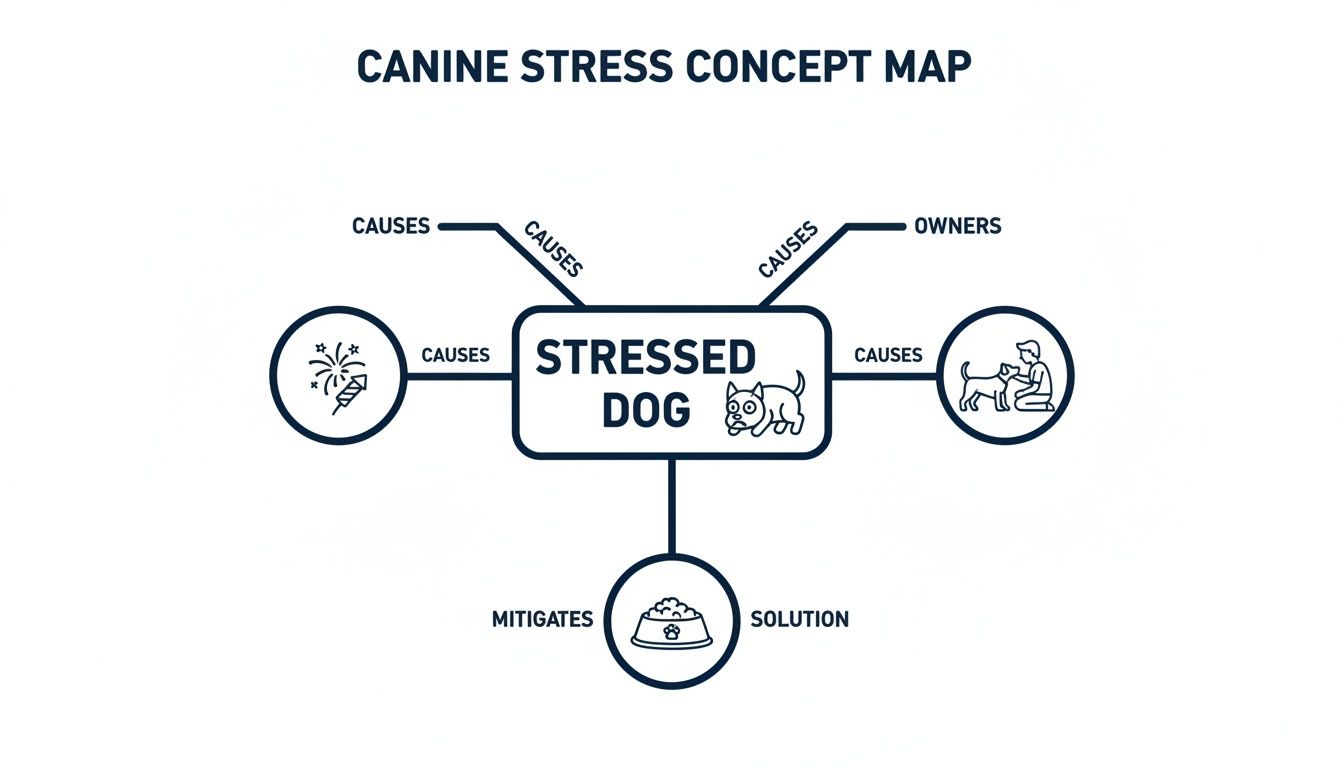
As you can see, things in their environment or even our own actions can cause stress. The good news is that a carefully chosen diet can be a cornerstone of the solution, offering support from the inside out.
So, let's break down the key players you'll often find in these formulas.
The Serotonin Superstar: L-Tryptophan
One of the most common and well-researched ingredients is L-Tryptophan. This is an essential amino acid, which simply means your dog can't make it themselves – they have to get it from their food. In a calming formula, its main job is to act as a precursor to serotonin.
You’ve probably heard of serotonin as the "happy hormone." It’s a neurotransmitter that has a massive influence on mood, sleep, and even appetite. When serotonin levels are where they should be, your dog is far more likely to feel content and emotionally stable.
It’s a bit like building a brick wall. You can't build a strong wall without bricks, right? Well, your dog's body can't produce enough serotonin without its essential building block, L-Tryptophan. A good calming diet makes sure there’s a steady supply of these "bricks" available every day.
Turning Down the Brain’s Volume with L-Theanine
Another key player is L-Theanine, an amino acid naturally found in green tea leaves. What's fascinating about it is that it helps calm the brain without causing drowsiness. It works by increasing the levels of other calming neurotransmitters, like GABA and dopamine.
If L-Tryptophan helps build the foundation for a good mood, you can think of L-Theanine as the dimmer switch for an overactive brain. It helps to quieten the frantic neurons that fire up during stressful events, like a thunderstorm or fireworks. This allows your dog to feel relaxed without feeling sleepy, which is a crucial difference.
L-Theanine promotes a state of calm alertness. It doesn’t switch your dog ‘off’; it simply helps them process stressful situations without becoming overwhelmed, making it easier for them to learn and cope.
Gentle Support from Calming Herbs
On top of these amino acids, many formulas also include a blend of well-known botanicals. These herbs have been used for centuries to help with relaxation, and now we're seeing them included in pet nutrition, backed by a better scientific understanding of how they work.
Below is a quick look at some of the most common natural ingredients you'll find and what they do.
Common Calming Ingredients and How They Work
| Ingredient | Primary Function | How It Helps Your Dog |
|---|---|---|
| Chamomile | Gentle Soothing | Contains compounds that bind to brain receptors, promoting relaxation in a very mild, non-sedating way. |
| Valerian Root | Easing Tension | A more potent relaxant, it helps reduce nervous tension and can be particularly useful for dogs who struggle to settle. |
| Passion Flower | Boosting GABA | Believed to increase levels of the neurotransmitter GABA in the brain, which helps to quieten brain activity. |
| L-Tryptophan | Serotonin Production | An essential amino acid that is a direct building block for serotonin, the neurotransmitter responsible for mood. |
| L-Theanine | Promoting Calm Alertness | An amino acid that helps increase calming brain chemicals without causing drowsiness, reducing over-excitement. |
These botanicals provide a gentle yet effective way to support a nervous dog. You can learn more about the specifics by exploring guides on herbal dog calmers.
By understanding what these ingredients do, you can see that a high-quality calming dog food isn't just a marketing gimmick. It's rooted in real nutritional science designed to give your best friend the support they need.
How to Choose the Right Calming Food for Your Dog
Walking down the pet food aisle can feel a bit overwhelming, can't it? With so many calming diets on the shelves, picking the right one for your dog might seem like guesswork. But it doesn't have to be. The secret is to start with your dog first, not the bag.
By taking a step-by-step approach, you can sift through the options with confidence and find a food that genuinely helps your four-legged friend feel more at ease.
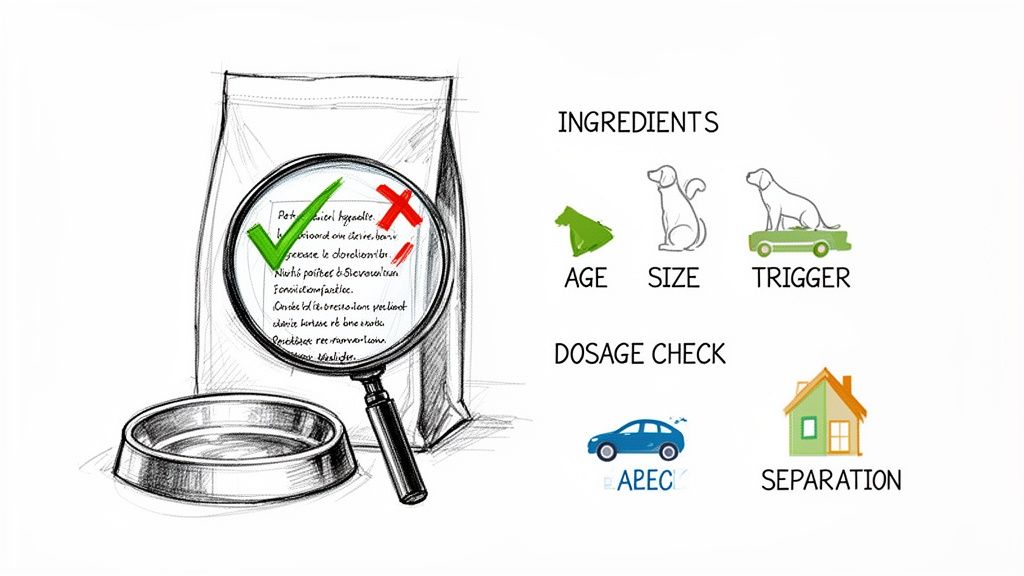
Think of it like being a detective. You need to gather the clues about your dog’s specific anxieties before you can find the right solution. A food designed for general, low-level stress might not be potent enough for a dog terrified by fireworks.
Start by Assessing Your Dog's Needs
Before you even start browsing, take a moment to really think about your dog's unique situation. Different triggers, ages, and temperaments call for different approaches.
Ask yourself a few key questions:
- What actually triggers their anxiety? Is it situational, like car rides or the postman? Or is it more of a constant, generalised anxiety, like when you leave for work?
- How old are they, and what breed? A senior dog’s needs are very different from a boisterous puppy's. Some breeds are also known to be a bit more naturally nervy than others.
- Do they have any other health issues? Always keep their overall health in mind. If your dog has a sensitive stomach or known allergies, that will narrow down your options right away.
Jotting down the answers will give you a clear profile of what you're looking for, making the rest of the process much easier.
Learn to Decode the Product Label
The ingredients list on the back of the bag is your most powerful tool. Forget the fancy marketing slogans on the front for a moment; the label tells you the real story of what’s inside.
You’re looking for a formula that clearly lists active calming ingredients like L-tryptophan or L-theanine. Even better, a quality brand will often state the specific amount. This transparency is a great sign. Just as important is what’s not in there – steer clear of foods padded out with cheap fillers, artificial colours, or vague terms like "meat derivatives."
A premium calming formula prioritises effective, science-backed ingredients at meaningful dosages. Your goal is to find a food that nourishes both body and mind, without any low-quality additives that could undermine its benefits.
This focus on nutrition that does more is a huge part of why the UK pet food market is growing so fast. Valued at USD 3.01 billion in 2024, dog food makes up a massive 58.8% of that. Functional foods, like calming diets, are becoming incredibly popular.
Consider Complete Diets vs Targeted Supplements
When it comes to feeding for calmness, you have two main options: complete daily diets or targeted supplements, like chews and oils. Each has its pros and cons, and the right choice really depends on your dog’s lifestyle.
- Complete Calming Diets: These are designed to be your dog’s main meal, day in and day out. They provide a steady, low level of calming ingredients to help manage general anxiety over the long term.
- Targeted Calming Supplements (e.g., Chews): These give you a more concentrated, fast-acting dose. They’re ideal for predictable, high-stress events like vet visits or Bonfire Night, as you can give them 30-60 minutes before the event.
For many dog owners, a combination of the two works brilliantly. A daily calming food helps keep a lid on baseline anxiety, while a tasty chew can be brought in for extra support when you know a stressful situation is on the horizon. To help you decide, you can explore a detailed comparison in our guide on supplements for dogs with anxiety. This way, you’re prepared for anything.
Making the Switch: How to Introduce Calming Food Smoothly
Changing your dog's food isn't as simple as swapping the contents of their bowl. It’s a process, one that requires a bit of patience to get right. A gradual transition helps their digestive system adapt and gives them time to get used to new flavours and textures. After all, the last thing an already anxious dog needs is an upset tummy.
Think of it like easing into a new routine. You wouldn't jump into a marathon without training first. We’ll apply that same steady, gentle approach to their meals, making the switch a positive experience right from the start.
A Simple 7-Day Transition Plan
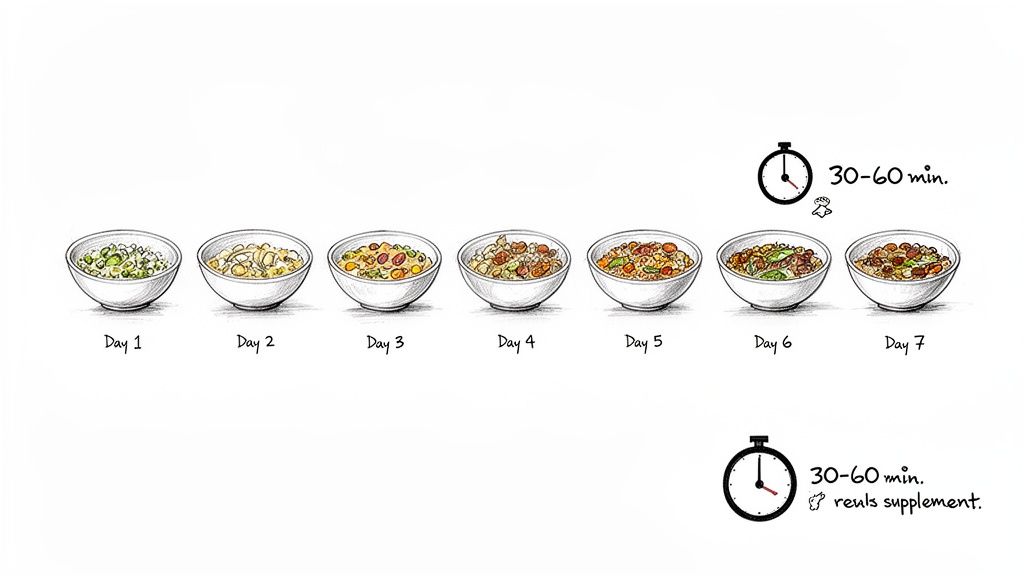
The secret to a successful switch is mixing the new calming food with their old food, gradually changing the proportions over about a week. This method is the best way to prevent digestive issues and helps even the pickiest eaters accept the change.
Here’s a straightforward plan that works wonders:
- Days 1-2: Begin with 75% old food mixed with 25% new food. This is just a little taste test to get them started.
- Days 3-4: Adjust the mix to a 50/50 split. By this point, your dog should be getting comfortable with the new addition.
- Days 5-6: Time to tip the scales. Move to 25% old food and 75% new food. You’re nearly there.
- Day 7 Onwards: If everything looks good, you can confidently serve 100% of the new calming food.
Pay close attention to your dog's digestion during this week. If you spot any loose stools, don't worry—just drop back to the previous ratio for another day or two before trying to move forward again.
Timing, Routine, and Realistic Expectations
Once your dog has fully transitioned, consistency is your best friend. Sticking to regular feeding times creates a predictable daily rhythm, which can be incredibly comforting for an anxious dog. Their body and mind learn when to expect food, helping to stabilise their mood and energy.
If you’re using other calming aids for specific situations, like calming chews before a car trip, timing is key. For predictable stressors, giving a chew 30 to 60 minutes beforehand gives the active ingredients time to get to work when your dog needs the support most.
Remember, calming nutrition is a long game. It’s not a quick fix. The beneficial ingredients need time to accumulate and support your dog's brain chemistry consistently.
Patience is everything. You'll likely need to wait two to four weeks of daily feeding before you start to see a noticeable shift in your dog's baseline anxiety. Stick with it. By giving the food a proper chance to work its magic, you're making a real investment in your dog’s long-term sense of security and well-being.
2. Pairing Nutrition with Positive Behavioural Support
While calming dog food provides a fantastic nutritional foundation for a more settled mind, it’s not a magic wand. Think of it as one crucial piece of the puzzle. To really see a lasting change, this nutritional support works best when it's combined with positive behavioural and environmental adjustments.
When you pair a calming diet with a thoughtful daily routine, you create a powerful synergy. The food helps to lower your dog's baseline anxiety, making their brain more receptive to learning and better able to cope with the world. This holistic approach addresses their well-being from all angles, building genuine resilience and confidence.
Creating a Predictable and Comforting World
Anxious dogs thrive on routine. When their world is structured and predictable, it removes the stress of uncertainty. A consistent schedule for meals, walks, and playtime can have a profoundly calming effect because your dog knows what to expect and when.
This is particularly relevant in the UK, where modern life can be full of potential stressors for our dogs. Research reveals that over 50% of UK dogs show signs of stress from triggers like being left alone or reacting to loud noises. This has, unsurprisingly, led to a greater interest in vet-recommended calming foods. As pet ownership continues to grow, so does the need for effective anxiety solutions that do more than just manage symptoms. You can find more insights on the UK's pet food trends and statistics here.
One of the simplest yet most effective strategies is to create a 'safe den' for your dog. This isn't a place for punishment, but a cosy, quiet sanctuary where they can choose to go whenever they feel overwhelmed.
- Choose a quiet corner: Pick a spot away from the hustle and bustle of the household, like a corner of the living room or a quiet study.
- Make it comfortable: Fill it with their favourite soft bedding, a blanket that smells of you, and a safe chew toy.
- Build positive associations: Never send them to their den as a punishment. Instead, make it a wonderful place by occasionally leaving a high-value treat there for them to discover on their own.
This safe space gives them a sense of control, empowering them to manage their own feelings when life gets a bit too much.
Boosting Confidence Through Mental Stimulation
A bored dog is often an anxious dog. Mental stimulation, or canine enrichment as it's often called, is every bit as important as a good walk. It gives your dog's brain a proper workout, staving off boredom and building their problem-solving skills, which is a fantastic confidence booster.
A tired dog is a good dog, but a fulfilled dog is a happy dog. Enrichment activities channel your dog's natural instincts into positive outlets, reducing the likelihood of them developing destructive, anxiety-driven behaviours.
You don’t need to be a professional trainer to make a huge difference. Introducing a few simple activities can be a game-changer:
- Puzzle Toys and Slow Feeders: These turn mealtimes into a fun challenge. Instead of just gulping down their food in seconds, your dog has to sniff, nudge, and think to get their reward. This taps into their natural foraging instincts and is incredibly satisfying for them.
- Scent Games: It's as easy as it sounds. Hide a few pieces of their calming kibble around a room and encourage them to "find it!" A dog's sense of smell is their superpower, and getting to use it is deeply fulfilling.
- Positive Reinforcement Training: Short, fun training sessions strengthen your bond and teach your dog that great things happen when they engage with you. Learning a new trick, no matter how simple, gives them a real sense of accomplishment.
These activities don't need to be complicated or take up hours of your day. Just 10-15 minutes of focused mental engagement can significantly reduce stress levels, helping the calming ingredients in their food work even more effectively. By combining smart nutrition with positive support, you become a proactive partner in your dog's journey to a calmer, happier life.
Your Questions About Calming Dog Food, Answered
Changing your dog's diet is a big decision, especially when it's tied to their emotional well-being. It's only natural to have a few questions before you take the plunge. You want to do what's best for your best mate, and getting clear, straightforward answers is the first step.
Think of this as your practical FAQ for UK dog owners. We’ll cover everything from how quickly you might see changes to any potential side effects, so you can feel confident you're making a well-informed choice.
How Long Does Calming Dog Food Take to Work?
This is usually the first thing people ask, and it's good to have realistic expectations from the start. A calming dog food isn't like a sedative or a quick fix; it's a nutritional support system. It works by gradually giving your dog's body the natural building blocks it needs to foster a more balanced, less 'on-edge' state over time.
For a complete diet your dog eats every day, you'll generally need to wait two to four weeks of consistent feeding to notice a real difference. This window gives those active ingredients, like L-Tryptophan or calming herbs, enough time to build up in their system and start making a positive impact on their baseline mood and resilience to stress.
Targeted calming supplements, like chews or treats, are a different story. They often work much faster. You might see a relaxing effect kick in within 30 to 90 minutes after giving one to your dog. This makes them ideal for predictable, short-term stressful situations – think a trip to the vet, a long car journey, or the hours before the fireworks start.
The key takeaway here is consistency. Whether you go for a complete food or a supplementary chew, sticking to the routine is what allows these science-backed ingredients to really work their magic.
Are There Any Side Effects I Should Worry About?
Your dog's safety is, of course, the top priority. Reputable calming foods are designed with this in mind. When they're made with high-quality, natural ingredients and produced to strict standards, they are generally very safe and carry a low risk of side effects. After all, the active ingredients are nutritional, not pharmaceutical.
The most common hiccup, which can happen when introducing any new food, is a bit of mild digestive upset. This is exactly why we always recommend a slow transition over 7-10 days. It just gives your dog's gut time to get used to the new recipe, which minimises the chances of loose stools or a rumbly tummy.
In very rare instances, some calming herbs given in huge doses could cause a bit of lethargy. But by sticking to the feeding guidelines from a trusted brand, you can be sure your dog is getting a safe and effective amount. Always opt for products that are transparent about what’s inside and how they’re made.
Can Calming Food Replace Behavioural Training?
This is a really important one, and the answer is a definite no. It’s much more helpful to think of calming food as a powerful partner to behavioural training, not a replacement for it. The two work hand-in-hand to get the best possible long-term results for your dog.
An anxious dog often has a mind that's too "scrambled" to focus and learn new things. Imagine trying to solve a tricky puzzle while someone is shouting in your ear – it’s almost impossible. Calming ingredients help to turn down that internal "noise," creating a calmer mental space where your dog can actually absorb what you're teaching them.
- Nutrition sets the stage: The food helps lower their baseline anxiety, making them less reactive and better able to think clearly.
- Training builds skills: A good behaviourist teaches your dog healthier ways to cope with their triggers and builds their confidence from the outside in.
When you combine the two, you’re tackling the problem from every angle. The food provides the biochemical support, and the training provides the practical life skills for a truly lasting change.
When Should I Speak to My Vet About My Dog's Anxiety?
While a calming diet can be a fantastic first step for mild to moderate anxiety, having a chat with your vet is always a good idea. It’s particularly important to get their input before starting any new diet or supplement if your dog has other health conditions or is already on medication, just to be sure there are no conflicts.
You should book an appointment with your vet straight away if you notice any "red flag" behaviours. These are signs that the anxiety might be more severe and could need a more comprehensive plan, potentially including prescription medication alongside behavioural therapy.
Key red flags to watch for:
- A sudden and severe onset of anxiety that seems to come out of nowhere.
- Destructive behaviour that could put your dog at risk of injury.
- Any kind of aggression towards people or other animals.
- Drastic changes in their appetite, sleep, or toilet habits.
Working with your vet gives you a safety net. It ensures your dog is getting the most appropriate care for their specific needs and gives you complete peace of mind that you're doing everything you can to help them.
At Tipaw, we're passionate about helping your dog live a happier, healthier life. Our range of vet-approved, natural supplements is designed to provide targeted support for common issues like stress and anxiety. Discover how our functional chews can complement your dog’s routine and provide that extra layer of calm when they need it most. Learn more and find the perfect solution for your dog at https://www.store-tipaw.com.


