


The right arthritis supplement for your dog will blend scientifically proven, natural ingredients like glucosamine, chondroitin, and MSM with powerful anti-inflammatories such as omega-3s and turmeric. These compounds work in harmony not just to manage pain, but to support long-term joint health by protecting and helping to rebuild cartilage. The best bet is a vet-approved formula that your dog will actually enjoy, like a tasty soft chew.
Understanding Canine Arthritis and How Supplements Can Help

Canine arthritis, most commonly osteoarthritis, is a progressive disease where the smooth cartilage that cushions the ends of bones wears away. Over time, this erosion leads to bone-on-bone friction, which triggers inflammation, chronic pain, and a noticeable decline in your dog's mobility and happiness.
It’s easy to assume this is just an "old dog" problem, but that's a common and damaging misconception. Here in the UK, with a dog population of over 12.5 million, arthritis has become a significant welfare issue. Recent data is frankly shocking: an estimated 40% of all dogs, regardless of their age, are living with the chronic pain of osteoarthritis.
This isn't just a senior dog's disease. Genetics, previous injuries, or even the cumulative impact of a very active life can mean puppies and young adult dogs are affected too.
Recognising the Subtle Signs of Discomfort
The first signs of arthritis are often frustratingly subtle and easily brushed off as just 'slowing down'. But as a proactive owner, learning to spot these early clues is the key to stepping in early and keeping your companion comfortable.
Keep an eye out for these tell-tale indicators:
- Morning Stiffness: Is your dog a bit slow or creaky when first getting up from a nap?
- Hesitation: Do they think twice before jumping in the car, tackling the stairs, or hopping on the sofa?
- Reduced Enthusiasm: Is their excitement for walks, fetch, or other favourite games starting to wane?
- Behavioural Changes: You might notice new irritability, obsessive licking at a particular joint, or lagging behind on walks.
Noticing any of these shifts is your cue that your dog might be experiencing joint pain. By understanding the common signs of arthritis in dogs, you can take meaningful action sooner.
A common misconception is that a dog will cry out or whine when in pain from arthritis. More often, dogs express chronic pain through subtle behavioural shifts and a gradual decrease in activity.
The Role of High-Quality Supplements
While there's no cure for arthritis, its progression and symptoms can be very effectively managed. A high-quality joint supplement is a cornerstone of any good management plan, working in tandem with weight control and suitable exercise.
These supplements deliver targeted nutrients that simply aren't present in sufficient quantities in standard dog food. They provide the specific building blocks the body needs to maintain existing cartilage, lubricate joints, and soothe inflammation from within. This nutritional support is crucial for preserving your dog's mobility and ensuring they can keep living a happy, comfortable, and active life for years to come.
What's Really Inside a Good Joint Supplement?
When you start looking for an arthritis supplement for your dog, the ingredient list can feel a bit like a science lesson. But getting to grips with what each component does is the best way to pick a product that will actually make a difference to your dog's joints. Not all ingredients are created equal, and their real power often comes down to their quality, form, and how they work together.
Let’s break down the most effective, research-backed ingredients. Understanding what each one does will help you read labels with confidence and spot a truly high-quality supplement.
The Classic Duo: Glucosamine and Chondroitin
For years, glucosamine and chondroitin sulphate have been the go-to ingredients for joint health. You can think of them as the basic building blocks for cartilage—that spongy tissue that cushions your dog’s joints. Glucosamine helps kick-start the production of new cartilage, while chondroitin helps keep the joints lubricated and blocks enzymes that break cartilage down.
While they’re still widely used, it's worth knowing that recent scientific reviews have had mixed things to say about how well they work on their own. Some studies show clear benefits, but others suggest their impact might be smaller than we once thought. They tend to perform best when they’re part of a team, working alongside potent anti-inflammatory ingredients that tackle the problem from all sides.
MSM: The Natural Anti-Inflammatory
Methylsulfonylmethane, or MSM as it’s more commonly known, is an organic sulphur compound with impressive anti-inflammatory and antioxidant credentials. Sulphur is absolutely essential for building healthy connective tissues, like cartilage and ligaments.
When a dog has arthritis, inflammation is the main culprit behind their pain and joint damage. MSM gets to work at a cellular level to calm this inflammatory response, which can lead to less pain and better movement. It’s a great partner for glucosamine and chondroitin, helping to ease discomfort while the other ingredients get to work on supporting the cartilage itself.
Omega-3 Fatty Acids: A Proven Inflammation Fighter
Omega-3 fatty acids, especially EPA (eicosapentaenoic acid) and DHA (docosahexaenoic acid), are some of the most scientifically proven ingredients for managing joint inflammation. Unlike ingredients that focus on rebuilding cartilage, omega-3s directly interrupt the inflammatory pathways that trigger pain and stiffness.
The American Animal Hospital Association (AAHA) actually lists omega-3s as a top recommendation for managing canine osteoarthritis. This is because of the strong scientific evidence backing their anti-inflammatory effects.
Your dog can’t produce these essential fats themselves; they have to come from their diet or a supplement. A high-quality fish oil or green-lipped mussel supplement ensures they get a potent dose that can make a real difference to their comfort.
Green-Lipped Mussel: The All-in-One Powerhouse
Straight from the clean waters of New Zealand, the green-lipped mussel (GLM) is a true joint health superfood. It provides a unique, complex blend of nutrients that work together to support joints in a way few other single ingredients can.
So, what makes GLM so special?
- Packed with Omega-3s: It's a fantastic natural source of EPA and DHA, delivering powerful anti-inflammatory benefits.
- Natural Glucosamine & Chondroitin: It contains naturally occurring glycosaminoglycans, which are the very building blocks of cartilage.
- Unique Fatty Acids: It also contains other unique fatty acids, like ETA (eicosatetraenoic acid), that you won't find in standard fish oils and have their own inflammation-soothing properties.
Because it delivers this synergistic mix in one natural package, many experts now consider the green-lipped mussel one of the most effective ingredients you can find. One clinical study even found that 91% of dogs given a green-lipped mussel supplement showed improved mobility over 112 days.
Turmeric and Curcumin: Nature’s Potent Antioxidant
Turmeric is that bright yellow spice we all know, but its real power comes from an active compound called curcumin. Curcumin is a serious antioxidant with anti-inflammatory properties so powerful they can rival some conventional drugs—but without the nasty side effects.
It works by neutralising destructive free radicals in the joints while also blocking inflammatory enzymes. For it to work, though, curcumin has to be "bioavailable," which just means your dog's body can easily absorb and use it. Good formulas will pair it with something like black pepper extract (piperine) or process it into a more absorbable form to make sure your dog gets the full benefit. For a deeper dive, you can explore the science behind how curcumin for dogs supports joint health.
By understanding these key players, you can see why a multi-pronged approach—one that combines cartilage builders with powerful, natural anti-inflammatories—is by far the most effective strategy for managing your dog's arthritis.
A Practical Comparison of Supplement Formats
Choosing the right joint supplement for your dog goes beyond just reading the ingredient list. You also have to think about the format. After all, the most powerful formula on the planet is useless if you can’t get your dog to take it. Consistency is everything when managing arthritis, so finding a delivery method that fits seamlessly into your daily routine is a massive win for both of you.
Let’s be honest, trying to give a dog something they don't want can be a real battle. So, we'll break down the three main options—soft chews, pills, and liquids—to see how they stack up in the real world. Each has its own set of pros and cons that could make it the perfect fit, or a daily struggle.
H3: Soft Chews: The Easiest 'Yes' From Your Dog
For most dog owners, soft chews are the path of least resistance. They’re designed to look, smell, and taste like a treat, which completely changes the dynamic. Instead of being a chore, supplement time becomes a highlight of your dog's day.
This is where palatability becomes your greatest ally, especially if you have a fussy eater or a dog who has become a master at avoiding anything that looks like medicine. Brands like Tipaw have really focused on creating tasty, natural chews that dogs genuinely get excited about, which makes your job incredibly easy. Better yet, each chew contains a pre-measured dose, so there’s no guesswork involved.
The trade-off? To get that soft, chewy texture, these supplements need binders and flavourings. It’s crucial to pick a quality product that uses natural, healthy ingredients instead of cheap fillers that add nothing of value.
Key Insight: The high acceptance rate of soft chews is their superpower. When your dog sees their supplement as a daily treat, you'll have no trouble maintaining the consistency needed to see real, long-term improvement in their joints.
H3: Pills and Tablets: The Traditional Approach
Pills and tablets are the old guard of the supplement world. Their biggest advantage is that they can pack a very concentrated dose of active ingredients into a tiny, stable package. There's no need for the extra ingredients you find in chews, so they are pure and potent.
The challenge, as many of us know all too well, is actually getting your dog to swallow them. Some dogs are easy-going and will happily gulp down a tablet hidden in a lump of cheese or a pill pocket. Others, however, are little detectives, expertly eating the treat and spitting the pill back out onto the floor. This can make supplement time a daily wrestling match, leaving you wondering if they even got the full dose.
H3: Liquids and Oils: Precision Pouring
Liquid supplements, like fish oil, offer fantastic flexibility. You can measure out the exact amount your dog needs based on their weight and adjust it with pinpoint precision as required. You just drizzle it over their food, and you’re done.
This works brilliantly for dogs that dive into their food bowl without a second thought. But for pickier dogs, a new smell or taste in their dinner can be a deal-breaker, leading them to turn their nose up at the entire meal. If that happens, they miss out on their nutrition and their joint support. You also have to consider the mess factor—oils can be a bit greasy, and some need to be refrigerated, which is another small thing to remember.
This decision tree helps visualise how to choose ingredients based on what your dog needs most.
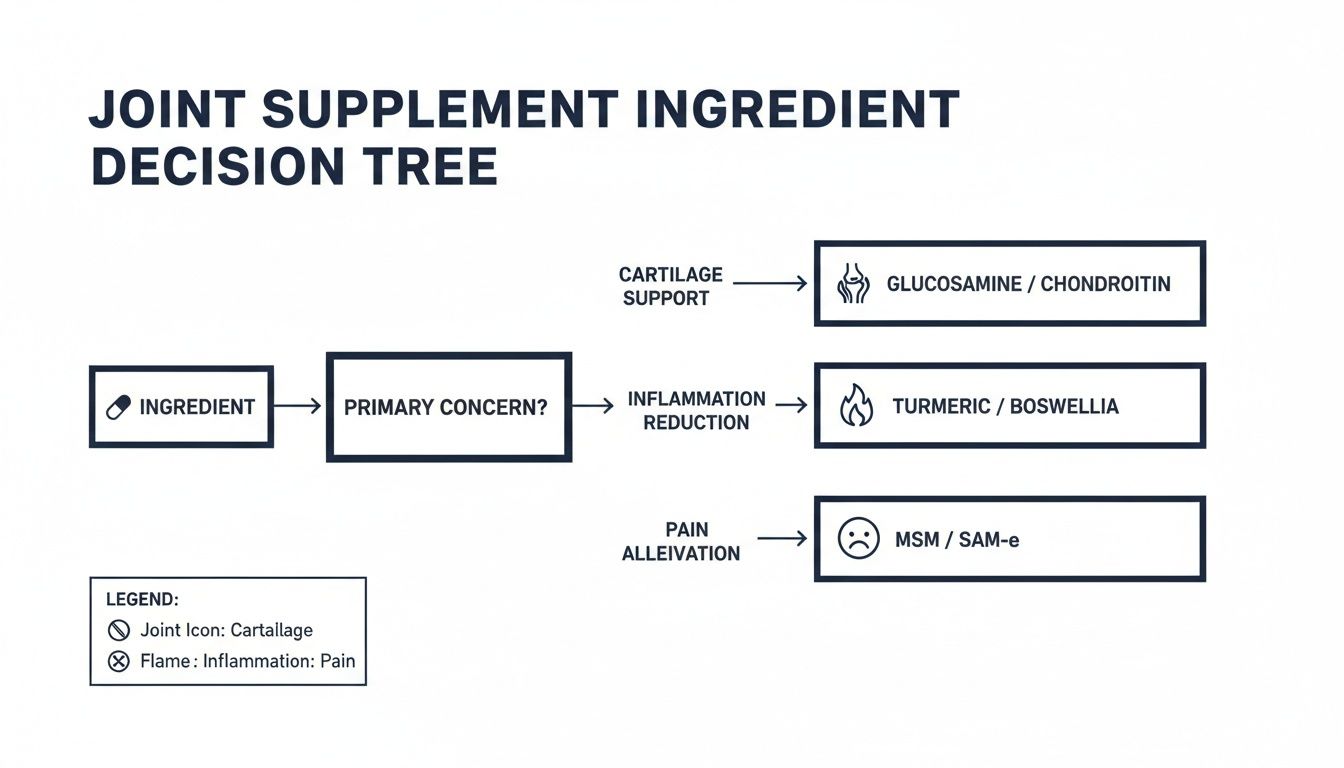
This guide gives you a quick-glance way to decide whether your focus should be on rebuilding cartilage, fighting inflammation, or simply soothing pain when you're comparing products.
H3: Supplement Format Showdown: Chews vs Pills vs Liquids
To help you land on the best option, this side-by-side analysis compares the formats on the things that really matter in your day-to-day life.
| Evaluation Criteria | Soft Chews | Pills & Tablets | Liquids & Oils |
|---|---|---|---|
| Palatability | Excellent. Designed as a treat, so it’s perfect for fussy dogs. | Poor to Fair. Often needs to be hidden in food or given directly, which can be tricky. | Fair to Good. Success depends entirely on whether your dog accepts the new taste in their food. |
| Dosing Accuracy | Excellent. Each chew is a precise, pre-measured dose. No measuring needed. | Excellent. Every tablet contains a specific, consistent amount of active ingredients. | Good. Can be very accurate if measured carefully, but it’s easy to make a small mistake. |
| Convenience | High. It's clean, easy, and feels like giving a reward rather than medicine. | Low to Medium. Can be stressful and time-consuming if your dog puts up a fight. | Medium. Simple to add to meals, but can be messy and might need refrigeration. |
| Ingredient Stability | Good. High-quality chews are formulated to protect the active ingredients effectively. | Excellent. This is the most stable format, usually with the longest shelf life. | Fair. Some oils are sensitive to air and light, potentially requiring special storage. |
At the end of the day, the best dog arthritis supplement is the one that works for your dog and for you. It has to contain effective ingredients in a format your dog will take every single day without a fuss. For the vast majority of owners, the fantastic palatability and sheer convenience of a vet-approved soft chew make it the most reliable and stress-free way to deliver daily joint support.
How to Choose the Right Arthritis Supplement for Your Dog
Choosing the best dog arthritis supplement can feel like a minefield. Walk down any pet aisle or browse online, and you're flooded with options, all making big promises. So, how do you cut through the noise and find something that actually works?
The trick is to have a clear checklist. You need to know what to look for—and what to avoid. Let's break down the essential criteria that separate the truly effective supplements from the rest, so you can make a choice that genuinely supports your dog's joint health and comfort.
Start with Veterinary Approval
First things first: has a vet given it the nod? Before you even consider a supplement, check if it's been approved or formulated by veterinary professionals. This isn't just a fancy sticker on the packaging; it’s a crucial seal of quality.
A vet-approved formula tells you that experts in animal health have scrutinised the ingredients, the dosages, and the overall formulation for safety and effectiveness. It shows the product is based on real science, not just marketing hype. Brands that work closely with vets, like Tipaw, show a commitment to your dog’s well-being that goes far deeper than the label.
Scrutinise the Ingredient List
A top-tier supplement has nothing to hide. The label should be transparent, clearly listing not just what's inside, but the exact amounts of each active ingredient. Be wary of vague terms like "proprietary blend," as they can sometimes be used to disguise low, ineffective doses.
Look for a comprehensive, multi-action formula that tackles joint health from every angle:
- Cartilage Support: Glucosamine and Chondroitin are the essential building blocks for healthy cartilage.
- Anti-Inflammatory Action: Ingredients like Green-Lipped Mussel, Omega-3s, and Curcumin are absolute powerhouses for reducing the inflammation that causes pain and stiffness.
- Pain Relief: Natural compounds like MSM can make a real difference to your dog's day-to-day comfort and mobility.
The best formulas combine synergistic ingredients that work together. A supplement with only glucosamine, for instance, is missing a trick—it’s the powerful anti-inflammatory components that are vital for managing the painful symptoms of arthritis.
Identify and Avoid Unnecessary Fillers
A high-quality supplement is all about function, not fluff. Always flip the tub over and read the "inactive ingredients" list. You're looking for what isn't there. Cheap fillers like artificial colours, synthetic flavours, preservatives, or unnecessary grains like wheat and corn offer zero therapeutic benefit.
Of course, ingredients are needed to bind a soft chew or tablet together, but the best brands opt for natural, healthy alternatives. A clean, minimal list of inactive ingredients is a brilliant sign that you’re getting a premium product, ensuring your dog gets more of what helps and less of what doesn't.
Confirm High Manufacturing Standards
Where and how a supplement is made is incredibly important. You want a brand that is open about its manufacturing process and follows strict quality control standards. In Europe, look for products made in facilities adhering to Good Manufacturing Practices (GMP).
This certification is your assurance that every single batch is pure, consistent, and contains precisely what it says on the label. High manufacturing standards mean safety and reliability, giving you the peace of mind that you're giving your dog a product you can truly trust.
Tailor the Choice to Your Dog's Needs
Ultimately, the best supplement is the one that’s right for your dog. Every dog is an individual, so take a moment to consider their specific situation.
Key Factors to Consider:
- Age and Life Stage: A senior dog with advanced arthritis will likely need a more potent, high-strength formula than a younger dog taking a supplement as a preventative measure.
- Size and Breed: Large breeds like Labradors or German Shepherds are prone to joint problems, so they often benefit from starting a supplement earlier. Dosing is also key here and must be based on their weight.
- Current Mobility Level: Is your dog just a bit stiff in the mornings, or are they really struggling on walks? A dog in more obvious discomfort will need a formula packed with fast-acting natural anti-inflammatories.
By using this simple framework, you can confidently sift through the options. Focus on veterinary approval, a transparent and potent ingredient list, clean formulas without fillers, and high manufacturing standards. This methodical approach will point you straight to a product that will provide real, lasting support for your best friend's health and happiness.
Getting Started: How to Introduce a Supplement and Track Your Dog's Progress

Starting a new supplement is a fantastic step towards making your dog more comfortable, but the real magic lies in consistency. The natural compounds found in the best dog arthritis supplement don't work overnight; they build up in your dog's system over time to soothe inflammation and support their joints. That's why a solid daily routine is non-negotiable if you want to see real results.
The simplest way to stay on track is to "piggyback" the supplement onto something you already do every day. Try giving them their joint chew right after their morning walk or just before their evening meal. This little trick, often called "habit stacking," turns supplement time into a predictable part of the day you're far less likely to forget.
It's a huge issue here in the UK. With a dog population of over 12.5 million, arthritis affects a staggering one in five adult dogs. It’s a top concern for vets, particularly in beloved breeds like Labradors, making effective management with supplements more important than ever.
Setting Realistic Timelines for Improvement
It’s crucial to remember that natural supplements work very differently to fast-acting drugs. They're designed to nourish and support the body from the inside out, which takes time. Patience is your best friend here.
As a general rule, you can expect to see the first subtle signs of improvement within four to eight weeks of consistent daily use. This is a realistic benchmark for most high-quality, vet-approved formulas.
One of the most common mistakes I see owners make is giving up too soon. You need to commit to at least two months to give the ingredients a fair chance to build up and start making a difference. Consistency is what unlocks the long-term benefits of any joint support plan.
How to Spot the Signs of Progress
So, how do you know if it's actually working? Since your dog can't tell you they're feeling better, you'll need to become a keen observer of their behaviour. Keeping a simple weekly journal or taking short videos on your phone is a great way to notice gradual changes you might otherwise miss.
Keep an eye out for these positive signs:
- Easier Mornings: Is your dog getting out of bed with less stiffness or hesitation?
- More Enthusiasm: Do they seem more eager to go for walks, play, or hop up on the sofa for a cuddle?
- Better Stamina: Can they walk a bit further or play for longer without looking tired or sore afterwards?
- Brighter Mood: A dog in less pain is often a happier, more sociable, and more engaged companion.
Noticing these small wins is incredibly rewarding and confirms you're on the right path. For a deeper dive into supporting your dog, have a look at our complete guide on how to help a dog with arthritis.
Common Questions About Dog Arthritis Supplements
When you're looking into joint supplements for your dog, it's natural to have a few questions. To help you feel completely confident in your decision, I’ve put together answers to some of the most common queries I hear from dog owners. Think of this as a quick, practical guide to clear up any lingering doubts.
When Is the Right Time to Start My Dog on a Joint Supplement?
This is a brilliant question because there are really two schools of thought: getting ahead of the problem (proactive care) or managing it once it appears (reactive care). Honestly, there’s no single "right" time; it really comes down to your individual dog.
-
Proactive Care: If you have a breed that's prone to joint trouble—think Labradors, German Shepherds, or Golden Retrievers—or a dog that’s incredibly active, starting a supplement early can be a very smart move. This preventative approach is all about nourishing and protecting healthy cartilage before signs of wear and tear show up, potentially pushing back the onset of arthritis down the line.
-
Reactive Care: More often, owners start looking for a supplement when they spot the first subtle signs of stiffness. Maybe your dog is a bit hesitant on the stairs, takes a moment to get up from their bed, or just isn't as enthusiastic about their walks. This is the perfect moment to introduce a high-quality joint supplement to help manage their discomfort and support their mobility.
The key takeaway is that you don't need to wait for an official arthritis diagnosis from your vet. If you have any concerns about your dog's joints, starting a gentle, natural supplement is a safe and effective first step.
Can I Use Joint Supplements with My Dog's Prescription Arthritis Medication?
This is a crucial point, and the short answer is yes, but always with your vet's input. It's absolutely essential to have a chat with your vet before you mix any supplement with prescription drugs like non-steroidal anti-inflammatory drugs (NSAIDs).
While premium, natural supplements are designed to be safe and are frequently used alongside conventional medicines, only your vet has the full picture of your dog's health. They can confirm that the supplement will work well with the medication and won't cause any negative interactions. This kind of partnership approach almost always gives you the safest and most effective plan for managing your dog's arthritis pain.
Are There Side Effects to Watch For with Natural Joint Supplements?
Thankfully, one of the biggest advantages of using a high-quality, natural joint supplement is that side effects are very rare. Formulas built around well-researched ingredients like Green-Lipped Mussel and Curcumin are generally very well-tolerated by dogs of all shapes and sizes.
That said, just like with any new food, a small number of dogs might experience a bit of mild digestive upset, like looser stools, as their system adjusts. To keep this risk to a minimum, I always suggest introducing the supplement gradually. Start with half the recommended amount for the first few days before working up to the full dose. If you do spot any issues that hang around, a quick call to your vet is always a good idea for peace of mind.
How Long Does It Take to See a Difference in My Dog's Mobility?
When it comes to natural supplements, patience and consistency are your best friends. These ingredients work by nourishing the joints from the inside out, which is a gradual process—it’s not an overnight fix like a painkiller.
Generally, you can expect to see noticeable improvements in your dog's comfort and mobility within four to eight weeks of daily use. Some people see little changes sooner, but that timeframe is a realistic expectation. Sticking with the daily routine is what allows the active ingredients to build up in your dog's system and really start delivering those long-term benefits.
Ready to give your dog the joint support they deserve? The Tipaw Joint Care supplement is a vet-approved, all-natural soft chew designed for maximum effectiveness and taste. With powerful ingredients like Green-Lipped Mussel, it’s the simple, reliable way to help your best friend stay active and comfortable. Explore Tipaw Joint Care today.


