


Let's get straight to it: salmon oil is essentially a health booster in a bottle for your dog. It's packed with Omega-3 fatty acids, which are crucial for everything from a glossy coat to comfortable joints. The real stars of the show are two specific fatty acids, EPA and DHA. Think of them as the active ingredients that deliver powerful anti-inflammatory and cell-supporting benefits – things your dog's body struggles to make on its own.
The Power Behind the Pump: What Is Salmon Oil?
Ever wondered why so many dog owners rave about salmon oil? Imagine it's like a premium engine oil for your dog's body. Just as your car runs better with high-quality oil, your dog's system needs the right kind of fats to operate at its peak. Salmon oil provides these "good fats" in a form their body can use right away.
The secret is its high concentration of those two long-chain Omega-3 fatty acids: Eicosapentaenoic Acid (EPA) and Docosahexaenoic Acid (DHA). These aren't just fancy names; they're fundamental building blocks for healthy cells. They play a massive part in cooling inflammation, supporting brain development, and keeping their heart ticking along nicely.
Why Fish Oils Are Best for Dogs
It's a common point of confusion, but not all Omega-3s are the same – especially when it comes to our dogs. You'll often see plant-based oils like flaxseed mentioned, which contain an Omega-3 called Alpha-linolenic Acid (ALA). The problem is, a dog's body has to convert ALA into the usable EPA and DHA.
This conversion process is incredibly inefficient for dogs. A huge chunk of the goodness is lost along the way, so your dog gets only a tiny fraction of the potential benefit.
Salmon oil cuts out the middleman. It delivers EPA and DHA directly, so your dog’s body doesn't have to perform that wasteful conversion. This means they get a much more potent and readily available dose of the nutrients they need to see real results.
This direct-to-source advantage is why marine oils are so effective. The infographic below neatly sums up the main areas where salmon oil can make a difference.
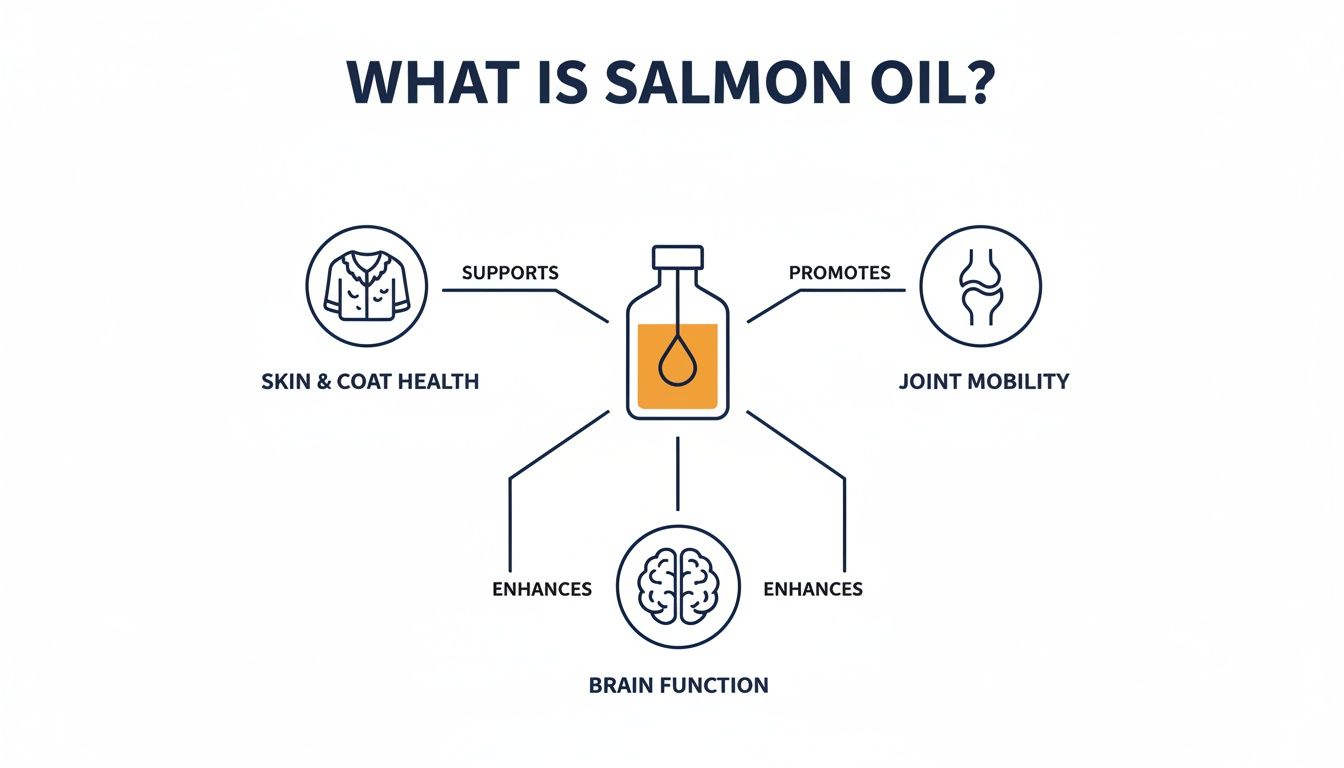
As you can see, a single supplement can work wonders for their skin, joints, and brain, making it a brilliant all-rounder for their overall wellness.
Salmon Oil for Dogs Key Benefits at a Glance
So, what will you actually notice when you start giving your dog salmon oil? The benefits are tangible and often visible within weeks. This table provides a quick snapshot of the key improvements you can expect.
| Area of Benefit | Primary Omega-3 Nutrient | What You Might Notice |
|---|---|---|
| Skin & Coat | EPA & DHA | A shinier, softer coat, less shedding, and reduced flaky or itchy skin. |
| Joints & Mobility | EPA | Your dog moves more freely, seems less stiff, and is more willing to play or go for walks. |
| Brain & Cognition | DHA | Better focus during training (especially in puppies) and maintained sharpness in older dogs. |
| Heart & Immune System | EPA & DHA | Overall improved vitality and a more balanced response to allergens. |
From soothing achy joints to giving them a show-worthy coat, salmon oil offers a broad spectrum of support that addresses many of the common health concerns we see in our dogs.
In the UK, where skin issues like dermatitis and excessive shedding affect 1 in 5 dogs according to Kennel Club health surveys, salmon oil is a game-changer. One study even found that small-breed dogs given a daily supplement showed a 40% reduction in itchiness after just six weeks. If you want to dive deeper into the science of how these fatty acids work, you can learn more about Omega-3 dog food supplements in our detailed article.
A Healthy Coat and Calm Skin: The Most Visible Benefit
Ask any dog owner who's tried salmon oil what they noticed first, and they'll almost always point to their dog's coat. It's one of the most immediate and striking transformations you can see. If you're tired of watching your dog constantly scratch, or finding a trail of dander on your furniture, salmon oil can be a game-changer, working from the inside out.
Many of us see the surface-level signs—the relentless itching, the dull fur, the flaky skin—but the real issue is often cellular. That kind of irritation is usually a red flag for underlying inflammation, and that's precisely where the Omega-3s in salmon oil come in.
Think of Eicosapentaenoic Acid (EPA) as your dog’s personal anti-inflammatory fire brigade. It goes to work calming the overactive responses that cause red, angry skin and that frustrating itch. Meanwhile, Docosahexaenoic Acid (DHA) gets busy reinforcing the skin cells, essentially building a stronger, more resilient skin barrier.
More Than Just a Pretty Coat
A strong skin barrier acts like a fortress for your dog’s body. It’s brilliant at locking moisture in, which helps prevent dry, flaky skin. At the same time, it keeps common environmental troublemakers—like pollen, dust, and certain grasses—out. When that barrier is weak, allergens can sneak through, triggering the immune system and leading to the itching and hot spots we all want to avoid.
By shoring up this natural defence, salmon oil can make your dog less sensitive to these everyday triggers. This is a huge relief for dogs with seasonal allergies, helping to turn an itchy, miserable spring into a much happier one. The payoff isn't just a glossy coat; it's a dog that is genuinely more comfortable.
For a dog with allergies, salmon oil is more than a quick fix. It gets to the root of the inflammation, strengthening their natural defences so they're less reactive to the very things that make them uncomfortable.
The proof is right in front of your eyes. After just a few weeks of adding salmon oil to their dog's diet, many owners tell us they see:
- A lot less scratching and obsessive licking.
- Far less dandruff or flaky skin, especially along the back.
- A noticeably softer and silkier feel to their dog's fur.
- A rich, healthy shine that just wasn't there before.
These aren't just cosmetic improvements. A healthy coat is a fantastic indicator of what's going on inside, showing that your dog has the essential fatty acids their body needs to function at its best.
From Constant Shedding to Soothed Skin
Is your vacuum cleaner constantly full of dog hair? Excessive shedding is another classic sign of poor skin health. Hair follicles need proper nourishment to grow strong hair, and when they don't get it, the hair becomes weak and falls out easily. The Omega-3s in salmon oil feed these follicles, promoting stronger growth and helping to get shedding under control.
Likewise, for dogs who suffer from hot spots—those raw, inflamed patches of skin that seem to appear out of nowhere—the anti-inflammatory punch of EPA can make all the difference. It helps soothe the initial irritation before your dog’s chewing and licking can escalate a minor problem into a major one. Of course, while supplements are a fantastic tool, it’s always smart to look at the bigger picture. For a more complete view, check out our guide on the best dog skin supplements to see how different ingredients can work together.
Ultimately, salmon oil does so much more for your dog's skin than just making it look good. It delivers deep, cellular support that you can see in the form of a calmer, less itchy dog with a coat that truly gleams with health. It’s all about helping your best friend feel completely comfortable in their own skin.
Supporting Your Dog's Joint Health and Mobility
For many dogs, keeping their joints healthy is the key to a happy life. This is especially true as they get older, but even younger, active dogs can put a lot of wear and tear on their bodies. It’s tough watching a once-bouncy companion hesitate before jumping on the sofa or lagging behind on their favourite walk. This is where salmon oil can offer some fantastic, natural support.
Think of it as a lubricant for their joints. It helps soothe the stiffness and aches that can creep in, often making a real difference to their daily comfort and willingness to play. The benefits aren't just for seniors, either. Canine athletes and energetic working breeds also feel the strain, and salmon oil is a great way to help keep them moving freely.
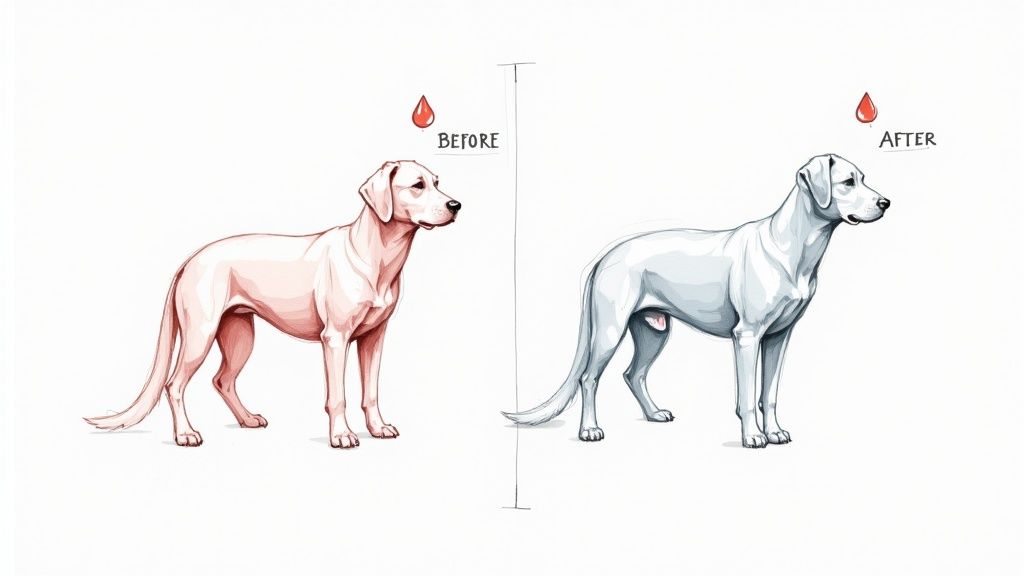
So, what’s the secret? It all comes down to one of salmon oil's star players: Eicosapentaenoic Acid, or EPA. Imagine inflammation is the body’s fire alarm. It's useful in an emergency, but when it’s constantly ringing in the joints, it starts to cause damage. This chronic inflammation breaks down cartilage, leading to the pain and stiffness we see in conditions like arthritis.
How EPA Cools Joint Inflammation
EPA is a master at turning down the volume on that persistent alarm. It gets to work on a cellular level, interrupting the production of the very molecules that fuel joint inflammation. By tackling the source of the problem, it does more than just mask the symptoms—it helps to reduce the underlying cause of the discomfort.
This soothing effect can lead to visible improvements in your dog's mobility. Many owners tell us their dogs seem more limber, are quicker to get up after a nap, and show a renewed interest in activities they used to love.
By directly targeting the inflammatory pathways, salmon oil offers more than temporary relief. It provides foundational support that helps protect joint cartilage and preserve mobility for the long haul, giving your dog a better quality of life.
This isn't just wishful thinking. A study focusing on British working dogs found that after just eight weeks of daily salmon oil, the dogs showed a 25% reduction in markers for joint stiffness. That's a significant improvement in just a couple of months.
What This Looks Like in Everyday Life
The science is great, but what does this actually mean for you and your dog? The changes are often gradual, but they are meaningful. You’ll likely start to notice small but significant shifts in their behaviour and energy.
Here are a few real-world examples of what you might see:
- Easier Mornings: Your dog gets out of bed with less groaning or stiffness.
- Happier Walks: They seem more eager to head out and can keep up for longer without falling behind.
- A Return to Play: You might see them initiate a game of fetch or chase a toy for the first time in ages.
- Conquering the Stairs: They start tackling the stairs with more confidence and less hesitation.
These small wins add up, restoring a sense of youthfulness and fun that may have been missing. For a truly comprehensive approach to mobility, it often helps to combine salmon oil with other proven ingredients. You can learn more in our detailed guide on the best joint supplements for dogs.
Ultimately, supporting your dog's joints is all about preserving their freedom and joy. Consistent use of salmon oil can help ease their discomfort, allowing them to live a fuller, more active, and happier life right by your side.
Boosting Brain and Heart Health for a Longer Life
Beyond the obvious magic salmon oil works on your dog's skin and joints, it's also a powerhouse for their most vital internal systems. It quietly supports the heart and brain, playing a huge part in their long-term wellness and keeping that spark in their eyes. This is where the Omega-3s, especially DHA, really shine, supporting your dog from their boisterous puppy days right through to their golden years.

The Omega-3s in salmon oil are brilliant for your dog's ticker. They help maintain healthy blood pressure and keep triglyceride levels—a type of fat floating around in the blood—in a normal, healthy range. All of this adds up to a more efficient circulatory system, which is the engine for your dog's stamina and overall energy.
Fuelling Your Dog’s Brain with DHA
While both EPA and DHA are important, Docosahexaenoic Acid (DHA) is often called 'brain food' for a very good reason. It’s a primary building block of the brain and central nervous system. Think of DHA as the premium-grade timber and bricks needed to build a puppy's developing mind and later, to maintain the structure of a senior dog's cognitive sharpness.
For a young pup, a diet rich in DHA is like giving a construction crew the best possible materials. It fuels the incredible brain development happening in their first year, which can lead to better memory, quicker learning during training, and sharper problem-solving skills. They just seem to pick things up faster.
As our dogs get older, it's natural for their cognitive function to slow down a bit. DHA helps protect brain cells and keep the connections between them firing properly, which keeps their minds active. For our senior companions, this means helping them stay present, recognise familiar faces, and navigate their home with confidence.
What does salmon oil do for dogs’ brains? It provides the direct building blocks for cognitive function. For puppies, it’s all about development. For seniors, it’s about maintenance and protection, helping to keep their minds as healthy as their bodies.
You can see this cognitive support in action every day. A puppy that’s a star pupil in training class or a senior dog that still greets you with that familiar, excited wag at the door is a wonderful sign of a healthy, switched-on brain.
Supporting Heart and Metabolic Health
The benefits go even deeper, right into your dog's metabolic and heart health. The anti-inflammatory effects of Omega-3s help the entire cardiovascular system run like a well-oiled machine. This is especially important for breeds known to have heart issues or for dogs carrying a few extra pounds.
Scientific studies have consistently linked fish oil supplements to better metabolic markers. For example, one piece of research on highly active UK police dogs found that adding fish oil to their diet led to a 22% reduction in total cholesterol and a 30% drop in 'bad' LDL cholesterol in just 12 weeks. The cognitive benefits are also well-established, with 75% of dogs with cognitive dysfunction showing better sleep patterns after taking supplements. You can dive into the details of these findings on canine health and Omega-3s.
By looking after these two critical organs—the heart and the brain—salmon oil offers a truly holistic approach to your dog's health. It’s about so much more than a glossy coat; it’s about nurturing a longer, happier, and more vibrant life by your side.
How to Choose the Best Salmon Oil for Your Dog
Walking down the pet supplement aisle can be a dizzying experience. So many bottles, all promising a shinier coat and healthier joints. But here’s the thing: not all salmon oils are made equal. To make sure your dog reaps all the rewards without any of the risks, you need to know how to spot a genuinely high-quality product.
Don't worry, it's not as complicated as it sounds. You don’t need a degree in animal nutrition, you just need to know what to look for on the label. A few key details will tell you everything you need to know about the oil's purity, potency, and freshness. Let’s turn you into a savvy shopper.
Wild-Caught vs. Farmed Salmon
First things first, where did the salmon come from? This is a huge deal. You’ll want to look for oil made from wild-caught salmon, often from places like Alaska.
Think of it this way: wild salmon spend their lives swimming in the open ocean, eating a natural diet of smaller fish and krill. This is what loads their bodies with those incredible Omega-3s, EPA and DHA. It’s the diet nature intended.
Farmed salmon, on the other hand, are typically raised in crowded pens on a diet of processed, grain-based pellets. This unnatural diet can lead to a less impressive fatty acid profile, often with more inflammatory Omega-6s and not enough of the good stuff your dog actually needs.
Purity and Third-Party Testing
Sadly, our oceans aren't as clean as they used to be. Pollutants like heavy metals (mercury, for example) and PCBs can build up in the fatty tissues of fish—and that’s exactly where salmon oil is sourced from. A reputable company will go the extra mile to purify their oil.
Look for a clear statement on the bottle or website that the oil is third-party tested for purity. This is your guarantee that an independent lab has checked the oil for contaminants and confirmed it’s safe. It’s a non-negotiable seal of approval.
A brand that proudly displays its third-party testing results is showing you they care about quality and have nothing to hide. If you can't find this information easily, that's a major red flag.
Check the EPA and DHA Concentration
Purity is vital, but so is potency. The magic of salmon oil really lies in two specific Omega-3s: EPA and DHA. A cheaper bottle might seem like a bargain, but if it’s low in these active ingredients, you're mostly just adding fat to your dog's diet without the health benefits.
A good product will clearly state the amount of EPA and DHA per serving (e.g., per teaspoon or pump). This is the only way you can truly compare different brands and ensure you're giving a dose that will actually support your dog's skin, joints, and cognitive health. Without that breakdown, you're flying blind.
Packaging Prevents Rancidity
Omega-3 fatty acids are incredibly fragile. When exposed to heat, light, or air, they start to break down in a process called oxidation. In simple terms, the oil goes rancid. Not only does rancid oil lose its health benefits, but it can actually cause harm, leading to digestive upset and inflammation—the very things you're trying to combat.
Good packaging is your first line of defence.
- Look for an opaque bottle: This shields the delicate oil from damaging light.
- Choose a pump dispenser over a pour cap: A pump lets in minimal air with each use, keeping the oil fresher for longer. A simple screw-top cap lets a rush of oxygen in every single time you open it.
Always follow the storage instructions on the bottle—usually a cool, dark cupboard or even the fridge after opening. And trust your nose! If the oil ever develops a strong, unpleasant, or overly "fishy" smell, it's likely turned. It's best to throw it out.
To make it even easier, here’s a quick comparison of what to look for versus what to avoid.
Comparing High-Quality vs. Low-Quality Salmon Oil
This table breaks down the key features to help you identify a safe and effective salmon oil for your dog.
| Feature | High-Quality Salmon Oil | Low-Quality Salmon Oil |
|---|---|---|
| Source | From wild-caught salmon (e.g., Alaskan). | Often from farmed salmon or an unspecified "fish oil" blend. |
| Purity | Third-party tested for heavy metals, PCBs, and other toxins. | No mention of third-party testing or purification process. |
| Potency | Clearly lists the specific amounts of EPA and DHA per serving. | Vague "Omega-3" content with no specific EPA/DHA breakdown. |
| Packaging | Sold in an opaque bottle, often with an air-tight pump. | May come in a clear or translucent bottle with a simple pour cap. |
| Smell | Has a fresh, mild fish smell. | May have a very strong, "off," or rancid odour. |
| Transparency | The brand is open about sourcing, testing, and processing. | Information is hard to find on the label or company website. |
Ultimately, choosing a premium salmon oil is an investment in your dog’s long-term health. By checking for these key quality markers, you can feel confident you're giving them the very best.
Finding the Right Dosage for Your Dog

Getting the dose of salmon oil right is the secret to seeing all those wonderful benefits without any hitches. It might be a natural supplement, but 'more' isn't always better. Too much can cause problems, and too little won't do much at all.
So, where do you start? The golden rule is simple: always have a chat with your vet before adding anything new to your dog’s routine, including salmon oil. They know your dog’s health history and can give you advice that’s tailored specifically for them.
Once you have your vet's blessing, the manufacturer's label on the bottle is your next best friend. It will give you clear instructions based on your dog's weight, which is the most reliable starting point.
A General Guide to Dosing by Weight
While you should always follow the specific product's instructions, it helps to have a general idea of what to expect. This way, you can go into that conversation with your vet feeling informed.
Think of this as a rough guide, not a strict prescription, for a daily dose of salmon oil:
- Small Dogs (up to 12kg): Usually need around 4ml (that’s about ¾ of a teaspoon).
- Medium Dogs (12-25kg): Often do well with 8ml (roughly 1.5 teaspoons).
- Large Dogs (25-45kg): Might require about 12ml (around 2.5 teaspoons).
- Giant Breeds (over 45kg): Can need up to 16ml (just over 3 teaspoons).
Keep in mind that the concentration of EPA and DHA can differ between brands, which is why checking the bottle is so important.
Starting Slow Is the Secret to Success
Don't be tempted to jump straight to the full dose on day one. Your dog’s digestive system will thank you for a gentle introduction. A sudden flood of rich oil can be a bit of a shock to their system and lead to an upset tummy.
The "low and slow" approach is your best bet. Begin with just a quarter or half of the recommended daily amount for the first few days. Simply mix it into their food once a day to help them get used to the new flavour.
This little bit of patience allows their body to adjust, making digestive issues far less likely. If everything seems fine after about a week, you can slowly work your way up to the full recommended dose.
Watching for Potential Side Effects
For the vast majority of dogs, salmon oil is perfectly safe. Still, it’s always smart to know what to look out for, just in case. The most common hiccup is a bit of stomach upset, usually from giving too much, too soon.
Keep an eye out for these signs:
- Loose Stools or Diarrhoea: This is the number one sign that the dose is a bit too high or was introduced too quickly.
- Weight Gain: Salmon oil is packed with healthy fats, but it's also high in calories. If your dog puts on weight easily, you may need to account for the extra calories in their daily food allowance.
- Fishy Breath: A faint fishy smell is normal, but if it becomes overwhelming, a good dental chew or regular brushing can help.
If you spot any loose stools, don't panic. Just scale the dose back to a smaller amount or take a break for a day or two. Then, you can try reintroducing it even more gradually. If the problem continues, it’s time for a quick call to your vet.
Common Questions About Salmon Oil for Dogs
Even after reading about all the potential benefits, it's completely normal to have a few more questions rattling around. Let’s tackle some of the most common ones we hear from dog owners to clear things up.
Can I Give Salmon Oil to My Puppy?
You certainly can, and it's a great idea! Salmon oil is especially beneficial for growing pups. The DHA it contains is a powerhouse for developing brains and eyes, which can even help with training and overall smarts.
Just remember to start with a very small amount and have a quick chat with your vet first to get the green light for your little one.
How Is Salmon Oil Different from Other Fish Oils?
It's a fair question, as there are lots of fish oils out there. The main difference comes down to the concentration and balance of the good stuff—namely, EPA and DHA.
While oils from fish like cod or pollock also contain Omega-3s, high-quality salmon oil (particularly from wild-caught salmon) is known for its potent and effective profile. You're getting a rich, pure source of the specific fatty acids that really make a difference.
The key difference is potency and purity. A dedicated salmon oil ensures you're getting the specific fatty acids known to deliver the best results for skin, joint, and brain health in canines.
How Long Does It Take to See Results?
This is where a little patience comes in. Every dog is unique, but you can typically expect to see the first positive signs, like a glossier coat and less itchy skin, within three to four weeks of daily use.
For the deeper benefits, such as improved joint mobility, you might need to wait a bit longer—often up to eight weeks—to see the full effect. Consistency is everything!
Are There Any Dogs That Should Not Take Salmon Oil?
For the vast majority of dogs, salmon oil is a safe and healthy supplement. However, it's always wise to consult your vet before adding anything new to your dog's diet.
This is especially important if your dog has a pre-existing health condition like pancreatitis or a blood clotting disorder, or if they are taking certain medications. Your vet knows your dog's history and can give you the best advice.
Ready to see the difference for yourself? Tipaw offers a premium, vet-approved salmon oil formulated with 100% natural ingredients to support your dog’s health from the inside out. Give your best friend the gift of a healthier coat, calmer skin, and more comfortable joints. Explore our supplements at https://www.store-tipaw.com.


