


We’ve all seen it: that sad, droopy look in our dog's eyes, coupled with a worrying lack of their usual happy-go-lucky tail wag. It's often the very first sign that something is off. When it comes to upset stomach remedies for dogs, the best first steps are usually the simplest: a short break for their digestive system, followed by a gentle, bland diet and plenty of fresh water. For most mild tummy troubles, these simple actions are often all it takes to get them back on their paws at home.
Decoding Your Dog’s Tummy Troubles
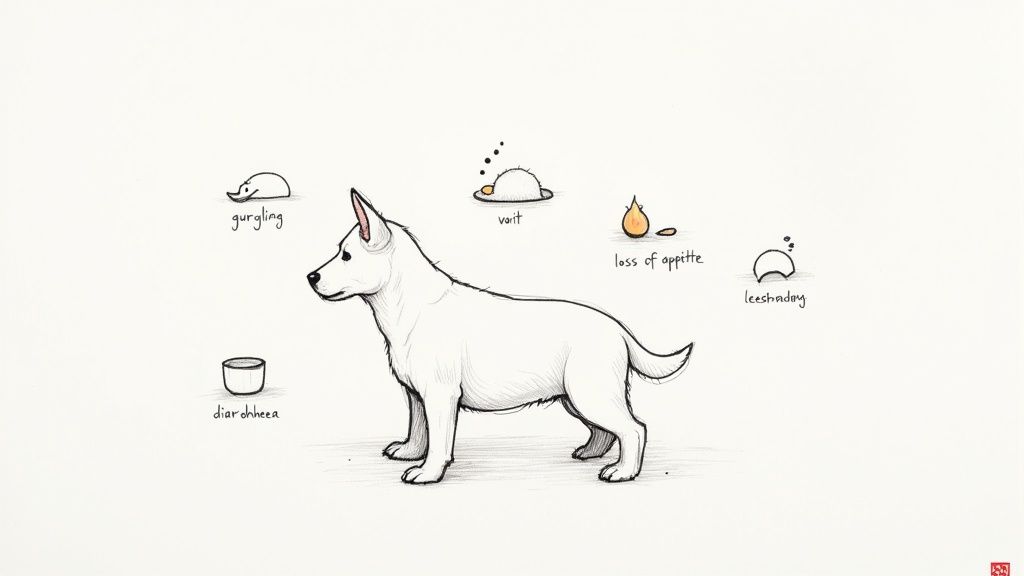
Before you can help, you need to turn into a bit of a detective. Dogs can't tell us what's wrong, but their bodies and behaviours give us plenty of clues. An upset stomach isn't just a single event; it's a collection of signs that their gastrointestinal (GI) tract is irritated and unhappy.
Think of their digestive system like a finely tuned engine. When you put the wrong fuel in—or something disruptive like spoiled food, a foreign object, or even a sudden diet change—the system’s first job is to get it out. That’s why vomiting and diarrhoea are the most common and obvious signs of a problem.
But the signals aren't always so dramatic. Learning to spot the quieter signs means you can catch issues early and provide comfort much sooner.
Recognising the Common Signs
A dog’s stomach ache can show up in all sorts of ways. To really understand what's going on, you need to pay close attention to any changes in their normal routine. Acute gastroenteritis is incredibly common here in the UK. One major study found that around 8.18% of dogs were diagnosed with diarrhoea in a single year, which just goes to show how often owners are faced with these exact symptoms.
To help you spot the signs quickly, here's a breakdown of what to look for.
| Symptom | What to Look For | Common Associated Behaviours |
|---|---|---|
| Vomiting or Regurgitation | Note if it's a forceful heave or a more passive spit-up. The vomit itself can offer clues—is it yellow bile, white foam, or undigested food? | Retching, heaving, drooling beforehand, looking anxious. |
| Diarrhoea | Check the consistency (watery, soft, or 'pudding-like'), colour, and frequency. Any signs of mucus or blood are important to note. | Straining to poo, needing to go out urgently and more often, scooting their bottom. |
| Loss of Appetite | A dog who turns their nose up at their regular food, or even their favourite treat, is sending a very clear message that they feel unwell. | Walking away from their food bowl, sniffing food but refusing to eat, showing no interest at mealtimes. |
| Lethargy | Is your dog suddenly less interested in their walk or playtime? A noticeable drop in energy and spending more time sleeping is a big red flag. | Lying down more than usual, slower to get up, less enthusiastic about activities they normally love. |
This table covers the most obvious signs, but sometimes the clues are much more subtle.
Subtle Symptoms You Shouldn't Ignore
Beyond the classic signs, other behaviours can point directly to digestive distress. Being aware of these can give you a fuller picture and help you explain things clearly to your vet if you need to call them. In fact, many common digestive problems in dogs start with these less obvious symptoms.
Loud gurgling noises coming from their belly (the technical term is borborygmi), excessive drooling, or repeated lip-licking are all signs of nausea. You might also see your dog adopt a "prayer position"—stretching with their front legs out and their bottom in the air. This is a classic attempt to relieve abdominal pain.
Keeping a mental checklist of these signs will put you in a much better position to assess what’s going on and decide what to do next.
Why Do Dogs Get Upset Stomachs?
Figuring out why your dog has an upset stomach is the first step to helping them feel better and, hopefully, stopping it from happening again. It helps to think of their digestive system as a finely tuned ecosystem. When something foreign or disruptive comes along, it can easily knock the whole thing off balance, leading to those all-too-familiar signs like vomiting or diarrhoea.
Often, the reason is surprisingly simple. Dogs, after all, explore the world with their mouths, a habit that can sometimes lead them into a bit of trouble. When you can pinpoint the likely trigger, you start to see the connections between what they're doing, their environment, and how their tummy is feeling.
The Number One Cause: Eating Something They Shouldn't
There's a term vets use for when a dog eats something they shouldn't: dietary indiscretion. Honestly, this is the most common reason we see for a sudden bout of digestive upset. It’s the classic case of a dog’s curiosity (or appetite!) getting the better of them.
This can cover a whole range of scenarios, from grabbing a fatty sausage that’s fallen on the floor to a full-on raid of the kitchen bin. It could even be finding a mouldy bit of sandwich on a walk in the park. These sudden, rich, or spoiled foods are often just too much for a dog's gut to cope with all at once.
As a vet, I can tell you we always see a spike in upset tummies right after Christmas or a big family barbecue. All that extra food around and the chaos of guests creates the perfect storm for a dog to sneak a snack they'll regret later.
This isn't your dog being naughty; it's just them being a dog. Their instinct tells them to eat interesting things they find, but their stomach often pays the price for their adventurous palate.
Sudden Food Changes and Intolerances
Switching your dog’s food too quickly is another guaranteed way to cause digestive chaos. The community of good bacteria in your dog's gut gets used to breaking down their regular food. If you suddenly change the formula, their system doesn't have the time it needs to adjust, often resulting in an upset stomach.
This is exactly why we always recommend a slow transition over 7 to 10 days when you're introducing a new food. You just mix a little bit of the new stuff in with the old, gradually increasing the amount of the new food each day until you’ve fully swapped over.
Beyond a sudden diet change, your dog might have a food intolerance to a specific ingredient. This isn’t a life-threatening allergy, but more of a digestive problem where their body struggles to process a certain component, like a particular protein. This can cause anything from chronic, low-grade grumbling tummies to occasional flare-ups. The most common culprits we see are:
- Beef and dairy
- Wheat
- Artificial additives and preservatives
If you think a food intolerance might be the issue, keeping a simple food diary and chatting with your vet is the best way to start sleuthing for the problem ingredient.
The Impact of Stress and Their Environment
Just like with people, stress and anxiety can have a very real, very direct effect on a dog’s gut. The connection between the brain and the digestive system—the gut-brain axis—is incredibly strong, and emotional turmoil can quickly show up as vomiting or diarrhoea.
Have a think about any recent changes in your dog's world. Have you moved house? Brought home a new baby or a kitten? Has your work schedule changed? Even things that seem fun to us, like having lots of visitors, can be overwhelming and stressful for some dogs.
Other common stressors that can trigger a tummy upset include:
- Separation Anxiety: The stress of being left alone can cause real physical symptoms.
- Loud Noises: Think fireworks, thunderstorms, or nearby construction.
- Travel: For many dogs, a car journey or a stay in an unfamiliar place is a major source of anxiety.
Learning to recognise these environmental triggers is a game-changer. By managing their stress—perhaps through more training, creating a safe space for them, or using calming supplements—you can make a huge difference to their digestive health.
Safe and Effective Home Remedies for Your Dog
When your dog's feeling a bit off, it’s natural to want to do everything you can to make them comfortable. The good news is that for minor tummy troubles, there are several simple and effective things you can do right at home to soothe their digestive system and get them back on all four paws.
It's actually a far more common approach than you might think. A major UK study found that owners managed thousands of cases of vomiting and diarrhoea at home. In fact, nearly two-thirds of diarrhoea episodes and over 70% of vomiting incidents never resulted in a vet visit. This just goes to show how often a little home care is the first—and only—line of defence.
The trick is to follow a gentle, step-by-step process. Think of it as hitting the reset button on their gut, giving it a chance to calm down before slowly reintroducing simple, nourishing foods.
The image below shows how easily things like stress or a change in diet can throw a dog's system out of balance, leading to the symptoms you're seeing.
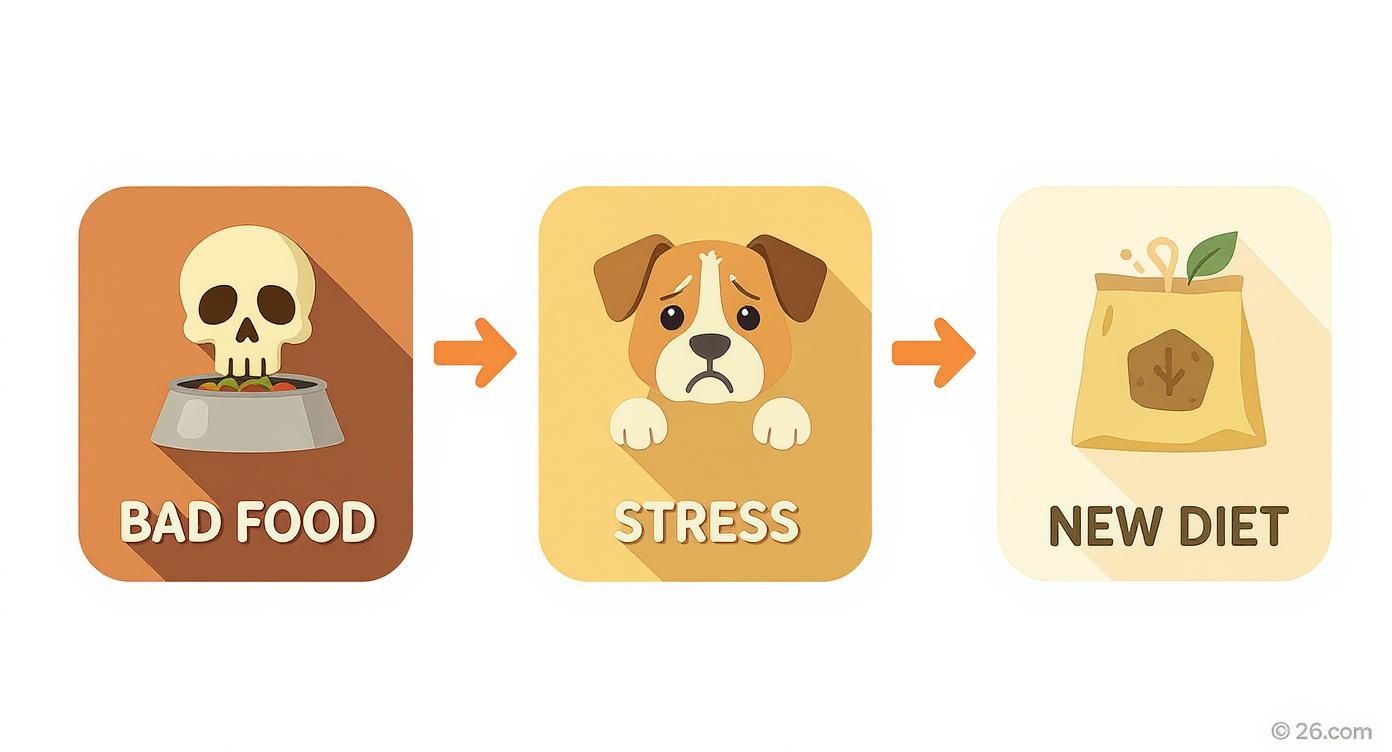
It’s a great reminder of why a gentle recovery plan is so important for tackling the root of the problem.
Step 1: Start with a Short Gut Rest
First things first: give their digestive system a break. For most healthy adult dogs, holding back on food for 12 to 24 hours can make a world of difference. This short fast allows the inflamed lining of their gut to rest and recover without having to work on digesting a meal.
A brief fast is like letting a strained muscle rest. You wouldn't immediately go for a run after pulling a hamstring; you'd give it time to heal. The same principle applies to your dog's irritated stomach and intestines.
It's vital to remember that this isn't for every dog. Puppies, elderly dogs, and those with underlying health issues like diabetes should never be fasted without specific advice from your vet. For these more vulnerable dogs, skipping a meal can be risky.
Step 2: Focus on Proper Hydration
While food is temporarily off the menu, water is absolutely critical. Diarrhoea and vomiting can lead to dehydration alarmingly fast, so keeping your dog drinking is a top priority. The problem is, a queasy dog might gulp down a whole bowl of water only to bring it straight back up.
To prevent this, offer small sips of fresh water frequently throughout the day. You can also get a bit creative to encourage gentle hydration:
- Ice Cubes: Many dogs find licking or crunching on ice cubes fun. It’s a great way to get fluids into them slowly and in a way that’s less likely to trigger more vomiting.
- Bone Broth: A small amount of plain, homemade bone broth can be very tempting. Just be sure it’s completely free of onions, garlic, or a lot of salt. It’s hydrating, gentle on the stomach, and provides a few electrolytes.
Keep a close eye on their hydration levels. A quick check of their gums is a good indicator—they should be pink and slick, not dry or tacky.
Step 3: Introduce a Bland Diet Slowly
Once the fasting period is over and, crucially, the vomiting has stopped, you can start reintroducing food. The goal here isn’t a five-star meal; it’s about providing something incredibly simple that’s a breeze to digest. This is where the tried-and-true bland diet comes in.
The classic bland diet recipe is simple and effective:
- Boiled White Meat Chicken: Make sure it’s skinless, boneless, and completely unseasoned. Boiling the chicken makes the protein extremely easy for their gut to handle.
- Plain White Rice: Cook it until it's nice and soft. This provides simple carbohydrates for a bit of energy without causing further irritation.
Start with a tiny portion—just a tablespoon or two for a medium-sized dog—and see how they handle it. If they keep that down, you can offer another small meal a few hours later. Over the next two to three days, you can gradually increase the meal size back to normal, keeping it spread across several small feedings. For more tips on this, take a look at our guide on at-home remedies for canine diarrhoea.
Step 4: Add Fibre and Probiotics for Support
Once your dog is happily eating the bland diet, you can introduce a couple of extras to help their recovery along. These additions can help firm up their poo and restore the healthy balance of bacteria in their gut.
A small spoonful of plain, canned pumpkin puree (make sure it’s not pie filling!) can work wonders. Its soluble fibre helps to absorb excess water in the gut, which can resolve diarrhoea much faster. Start small with just a teaspoon for little dogs or a tablespoon for larger breeds, mixed right into their food.
Probiotics are also a fantastic tool. An upset stomach throws the gut’s natural flora—the community of good bacteria that supports digestion—into chaos. A vet-approved probiotic supplement for dogs helps to replenish these beneficial microbes, speeding up the return to normal gut function and building better digestive resilience for the future.
What You Should Never Give Your Dog
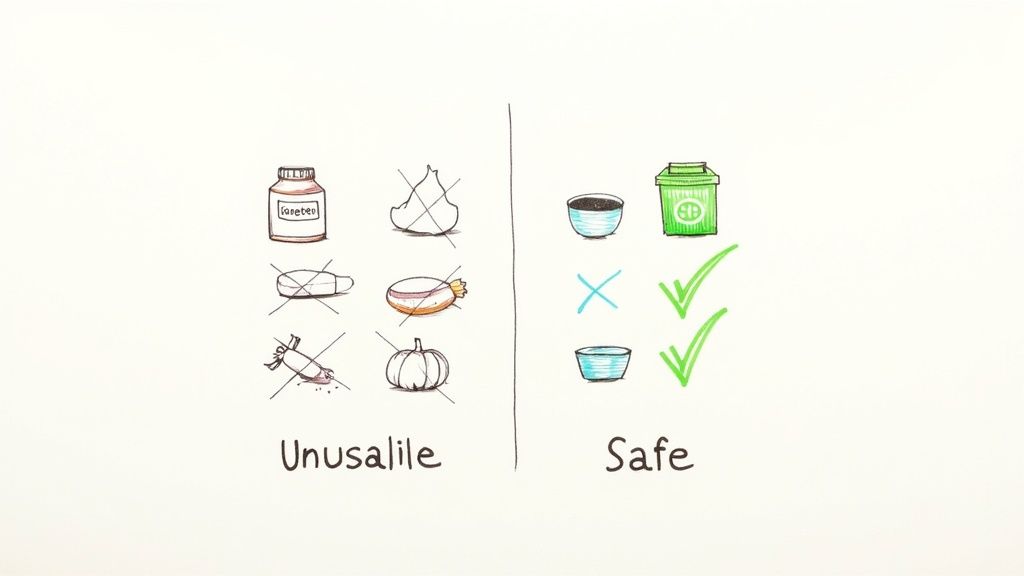
When your dog feels unwell, the instinct to help them fast is overwhelming. In that moment of worry, it's all too easy to reach into your own medicine cabinet for what seems like a quick fix. Honestly, this is one of the most dangerous mistakes you can make, potentially turning a simple tummy ache into a life-threatening emergency.
Many common human medicines are highly toxic to dogs. Their metabolisms are fundamentally different from ours, meaning a dose that’s perfectly safe for a person can cause severe organ damage or even prove fatal for a canine companion. Let this be your golden rule: never give your dog any medication unless your vet has explicitly told you to.
This caution doesn't stop at the bathroom cabinet; it extends right into your kitchen. While some human foods are fine as an occasional treat, many others contain compounds that are downright poisonous to dogs, no matter how healthy they are for us.
Dangerous Human Medicines and Foods
I really can't say this enough: stay away from human medications. A single tablet can have devastating consequences. The same level of caution applies to certain pantry staples that can cause serious harm if your dog gets hold of them.
Here are some of the most common culprits to keep well away from your dog:
- Ibuprofen (found in Nurofen, Advil): This is one of the top causes of accidental pet poisoning. It can lead to stomach ulcers, acute kidney failure, and even neurological damage in dogs.
- Paracetamol (found in Panadol, Calpol): Paracetamol is extremely toxic to dogs. It can cause irreversible liver damage and harm red blood cells, which limits their ability to carry oxygen around the body.
- Onions, Garlic, and Chives: All members of the allium family contain compounds that can damage a dog's red blood cells, leading to a serious condition called anaemia. The danger is cumulative, so even small amounts fed over time can build up to toxic levels.
- Xylitol: This artificial sweetener is a huge threat. It’s lurking in countless products, from sugar-free gum and sweets to some brands of peanut butter. For dogs, it triggers a rapid, life-threatening drop in blood sugar and can cause catastrophic liver failure.
Understanding what to avoid is every bit as important as knowing which home remedies are safe. The difference is stark, which is why a quick call to your vet is always the best course of action.
Safe vs Unsafe Remedies: What to Give and What to Avoid
To make it absolutely clear, it's helpful to see the good and the bad side-by-side. Think of this table as a quick reference guide to help you make the right choices when your dog is feeling under the weather.
| Remedy Type | Safe for Dogs (With Vet Guidance) | UNSAFE for Dogs (Avoid) |
|---|---|---|
| Pain Relief | Vet-prescribed canine NSAIDs or other specific pain medication. | Ibuprofen, Paracetamol, Aspirin. |
| Dietary Additions | Plain boiled chicken, white rice, plain pumpkin puree. | Onions, garlic, fatty table scraps, chocolate, grapes. |
| Gut Support | Vet-approved canine probiotic supplements. | Human anti-diarrhoea medication (e.g., Imodium), unless directed by a vet. |
| Sweeteners | None needed; dogs do not require sweeteners. | Xylitol, found in many sugar-free products. |
This comparison should serve as a crucial reminder to always stop and think before giving your dog anything new. When they’re already feeling unwell is the worst time to experiment. If you have any doubt at all, the safest thing you can do is call your vet.
Boosting Gut Health with Probiotics and Supplements
Think of your dog's gut as its own bustling, vibrant ecosystem. This delicate environment, known as the gut microbiome, is teeming with trillions of microorganisms, most of which are beneficial bacteria. These tiny helpers are absolutely vital for everything from digesting food properly to keeping their immune system in top shape. When everything is in balance, your dog feels great.
But an upset stomach—whether from swiping a forbidden snack or just a bit of stress—can throw that delicate ecosystem into chaos. It's like an unexpected storm that disrupts the natural order, allowing a few 'bad guys' to take over and leading to symptoms like diarrhoea. This is exactly where a good probiotic can step in and make a real difference.
Probiotics are essentially reinforcements for the good bacteria. They are live, beneficial microorganisms that help restore order to the gut. By reintroducing these helpful microbes, you can help crowd out the troublemakers, calm inflammation, and get your dog’s digestive system back on an even keel much faster.
Choosing the Right Digestive Support
It’s crucial to pick a supplement that’s been made specifically for dogs. Human probiotics just aren't a good match, as the gut environments of dogs and people are worlds apart. You'll want to look for a vet-approved product that contains several different strains of beneficial bacteria to provide well-rounded support.
Luckily, these supplements come in a few different forms, so you can find one that works for your dog:
- Powders: These are brilliant for simply mixing into their bland diet or regular food.
- Pastes: Often supplied in a syringe for easy, direct administration – a great option if you have a picky eater on your hands.
- Chews: A convenient and tasty choice that most dogs will happily accept as a treat.
It’s also useful to understand the difference between prebiotics and probiotics. Our guide on prebiotics and probiotics for dogs breaks down how these two work together to promote fantastic gut health.
The Role of Probiotics in Modern Vet Care
For straightforward cases of diarrhoea, supportive care that includes probiotics is fast becoming the go-to approach. In the past, vets might have reached for antibiotics, but that thinking has shifted. A major UK study found that for most simple tummy upsets, antibiotics offered no real clinical benefit. In fact, overusing them can damage the microbiome and contribute to wider antimicrobial resistance. The evidence now points firmly towards supportive care—like bland diets, plenty of fluids, and probiotics—as the best way forward. You can read more about these findings on antibiotic use in dogs.
By focusing on restoring the natural balance of the gut, you’re not just treating the symptoms; you're supporting the body's own incredible ability to heal itself from the inside out.
Bringing a high-quality digestive supplement into your dog's routine isn't just a quick fix. For dogs who are prone to sensitive stomachs, regular use can help maintain a healthy gut environment, making them more resilient to future digestive upsets. It’s a simple, proactive step towards their long-term wellness.
Knowing When to Call Your Vet Immediately
https://www.youtube.com/embed/p_Xw_LaofEQ
While many simple tummy troubles can be managed at home, some situations are absolute emergencies. Learning to spot the difference between a mild upset and a serious medical crisis is one of the most vital skills you can have as a dog owner. Acting fast can make all the difference.
Think of it like knowing when to use a plaster versus when you need to head straight to A&E. A minor issue often gets better with a bit of gentle care at home, but some symptoms are red flags, signalling that something much more serious is going on. Ignoring them can have devastating consequences, so it's crucial to act with urgency.
Urgent Red Flags That Demand a Vet Visit
If your dog shows any of the following signs, stop whatever you're doing at home and get on the phone to your vet or an emergency animal hospital straight away. This is not the time for a "wait-and-see" approach; these are clear signs your dog needs immediate professional help.
Your urgent vet-visit checklist should include:
- Persistent Vomiting or Diarrhoea: A single bout of sickness isn’t usually a cause for panic. But if your dog has been sick multiple times within a few hours or has had diarrhoea for more than 24 hours, it’s time to call the vet. They are at serious risk of dehydration.
- Any Sign of Blood: This is a major red flag. Blood in your dog’s vomit might look like bright red streaks or dark material that resembles coffee grounds. In their stool, it could be fresh red streaks or result in black, tarry-looking poo.
- Signs of Severe Pain: Is your dog whining, yelping when you touch their belly, or adopting a "prayer position" (front legs down, bum in the air)? These are classic signs of significant abdominal pain.
- Bloated or Hard Abdomen: A swollen, tight stomach could be a symptom of bloat (gastric dilatation-volvulus or GDV), which is an extremely dangerous, life-threatening condition that requires emergency surgery.
- Suspected Toxin or Foreign Object Ingestion: If you even suspect your dog has eaten something poisonous (like chocolate, xylitol, or certain plants) or swallowed something they shouldn’t have, like a toy or a sock, treat it as an emergency.
Vulnerable Dogs Need Faster Attention
A dog's age and overall health completely change the game. Puppies, seniors, and dogs with existing health issues simply don't have the same reserves to bounce back from illness or cope with fluid loss.
A puppy under six months or a senior dog over eight years can become critically ill from dehydration in a fraction of the time it would take a healthy adult dog. What might be a simple 48-hour bug for a young adult can become life-threatening for these vulnerable dogs in under 12 hours.
This rule also applies to dogs with pre-existing medical conditions, such as:
- Diabetes
- Kidney disease
- Heart conditions
- Addison's disease
For these dogs, even what seems like a minor case of vomiting or diarrhoea can quickly throw their system out of balance and lead to a rapid deterioration.
Never hesitate to seek professional advice. Your instinct as a dog owner is incredibly powerful; if you feel something is seriously wrong, you're almost certainly right. Making that call to the vet is always the safest and kindest thing you can do for your friend.
Your Questions Answered
When your dog is unwell, it’s completely normal to have questions running through your mind. To give you a bit more confidence as you care for them, we’ve put together clear, straightforward answers to some of the most common things pet owners ask about upset stomachs.
How Long Should My Dog Be on a Bland Diet?
Think of a bland diet as a short-term reset for your dog’s gut. It’s not meant for long-term feeding. A good rule of thumb is to keep them on it for two to three days after the vomiting or diarrhoea has completely stopped.
Once they’re in the clear, the next step is crucial: don't just jump straight back to their regular food. That sudden switch can easily upset their system all over again. The key is to transition them back slowly over about a week.
- Days 1-2: Start with a mix of 75% bland food and 25% of their regular kibble.
- Days 3-4: Move to a 50/50 split.
- Days 5-6: Change the ratio to 25% bland food and 75% regular food.
- Day 7: If all is well, they can go back to 100% of their normal diet.
This gradual approach gives their digestive system the time it needs to get back up to speed without any setbacks.
Can I Give My Dog Yoghurt for Probiotics?
It seems logical, but it’s best to steer clear of yoghurt. While plain yoghurt contains live cultures, it also contains lactose. The problem is, many dogs are actually lactose intolerant, which means their bodies can’t digest it properly. Giving them yoghurt could, unfortunately, make their diarrhoea even worse.
A much safer and more effective choice is a probiotic supplement made specifically for dogs. These are formulated with the right bacterial strains in the right amounts, supporting their gut without the risk of dairy-related trouble.
What Are the Signs My Dog Is Recovering?
It’s a massive relief when you start seeing your furry friend bounce back. The best signs are often the most obvious ones – they just start acting like themselves again. You’ll notice their energy picking up, their appetite returning, and their unique personality starting to shine through.
On the physical side, the vomiting should stop entirely. You should also see their stools begin to firm up, returning to a normal consistency and colour. Seeing these positive changes within 24 to 48 hours is a fantastic sign that your home care is on the right track.
For proactive, daily support of your dog's gut health, explore the range of vet-approved digestive supplements from Tipaw. Our natural formulas are designed to help maintain a balanced microbiome, making your dog more resilient to future tummy troubles. Discover the right solution for your furry friend at https://www.store-tipaw.com.


