


Dealing with a dog’s upset tummy can feel overwhelming, but a few straightforward home remedies usually do the trick. In most cases, pups rally back to their playful selves within 12–24 hours when you rest their stomachs and keep them hydrated.
Quick Remedies For Upset Stomach In Dogs
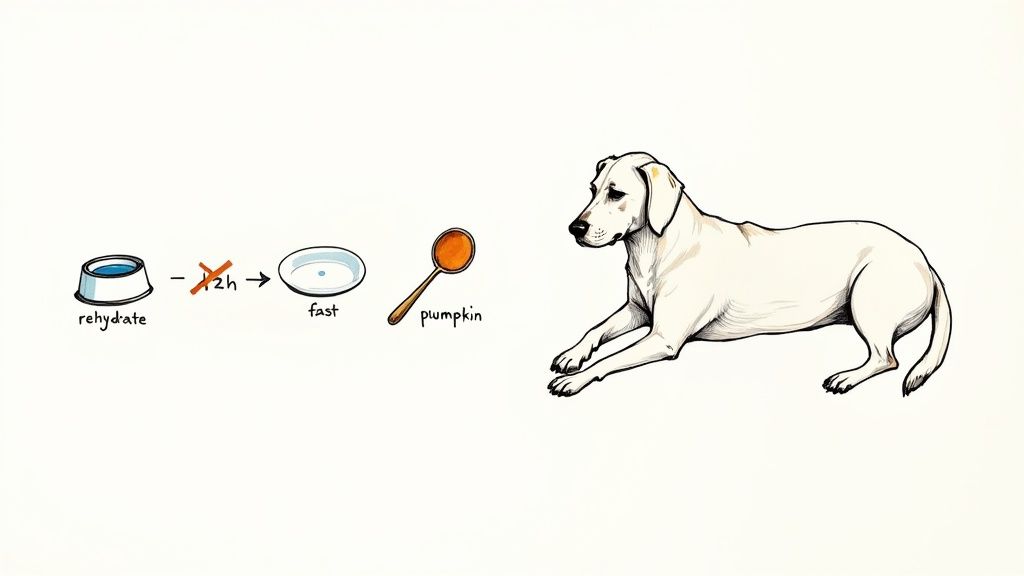
When you spot runny stools or a bout of mild vomiting, pause meals for up to 12 hours and always keep a bowl of fresh water at paw’s reach. A DIY blend of coconut water, a pinch of salt and unsweetened chicken broth makes a gentle rehydration drink that few pups resist.
- Boiled chicken and rice served in small portions often firms things up within 24 hours.
- A teaspoon of plain pumpkin purée can calm irritation and regulate bowel movements.
- If your dog’s symptoms hang around, introduce vet-approved probiotics dosed to their weight.
I’ve also found that a mild ginger infusion soothes nausea effectively. Just steep a few fresh slices in hot water, let it cool fully, then offer 1–2 tablespoons to smaller breeds or up to 50 ml for larger dogs. Always watch for any odd reactions when you try a new remedy.
Remedies At A Glance
Below is a quick summary to keep by your side when your dog’s stomach is rumbling:
| Remedy | Dosage or Duration | Expected Effect |
|---|---|---|
| Short Fast | 12 hours | Gut gets a rest |
| Pumpkin Purée | 1 tsp–1 tbsp | Soothes and firms |
| Electrolyte Mix | Offer hourly | Hydration support |
This table highlights the essentials so you can act fast.
Keep this shortlist at your fingertips for instant support.
Practical Tips
- Start with the lowest dosage and observe any changes.
- Use alarms to remind you when to offer water or reintroduce food.
- Jot down symptoms and improvements—your vet will appreciate the details.
Store this guide where you can grab it in a pinch. If your dog hasn’t perked up by the end of 24 hours, get in touch with your vet to rule out anything more serious.
Recognising Upset Stomach Symptoms And Causes
When your dog’s tummy acts up, you become part detective. Milo’s midnight raid on the bin ended with a few soft vomits beside his mat, and his owner soon traced wet footprints to a bout of diarrhoea.
Meanwhile, Bella’s distress flared during a loud thunderstorm. She turned away from her usual meal—a classic sign that anxiety had unsettled her digestion.
By tuning into these real-life clues, you’ll learn to act swiftly and confidently, matching remedies to the root causes of your dog’s discomfort.
Common Digestive Distress Signals
- Vomit shortly after a snack often means diet indiscretion or sudden treat overload.
- Diarrhoea following intense play or travel usually points to stress or abrupt food changes.
- Audible gurgles and rumbling indicate gas or fluid moving through irritated intestines.
- A loss of appetite lasting over 12 hours suggests more than a minor upset and deserves close monitoring.
Spotting these signals early helps you zero in on likely culprits before selecting the right remedies.
Stool Pattern Comparison
| Stool Type | Possible Cause |
|---|---|
| Runny and Watery | Recent treat binge or foreign object ingestion |
| Mucus-Coated | Mild irritation from a diet switch |
| Blood-Tinged | Severe inflammation or potential infection |
| Hardened | Dehydration or prolonged fasting |
Use this table to link stool appearance with triggers and plan practical at-home interventions.
Major Triggers At Home
Everyday events can spark digestive flares in your pup—even when you least expect it:
- Abrupt kibble swaps without a gradual transition
- Sneaked table scraps rich in fat or seasoning
- Stressors like car journeys or loud noises
- Ingestion of household chemicals or spoiled leftovers
Understanding the connection between these moments and your dog’s symptoms sharpens your approach to relief.
In clinical observations, 44% of dogs with diarrhoea also vomited, 28% experienced a reduced appetite and 24% became lethargic. Nearly 29% of cases were recorded as haemorrhagic diarrhoea. Veterinarians prescribed probiotics in 60% of episodes and recommended dietary changes in 44%, but systemic antibiotics still appeared in 38% of treatments despite guidelines against their routine use for mild-to-moderate acute diarrhoea.
Read the full Earth.com study for more detail. That research highlights the importance of targeted support over broad-spectrum antibiotics.
Early recognition of combined symptoms accelerates tailored care and helps avoid repeat flare-ups.
Noticing your dog’s posture—like the hunched “prayer position”—can confirm abdominal discomfort and guide your next steps.
How To Match Symptoms To Likely Causes
- Vomiting soon after scavenging often signals spoiled scraps or foreign-object ingestion.
- Loose stools after boarding or travel typically link to stress-induced gut upset.
- Appetite loss on hot days usually indicates mild dehydration from reduced water intake.
- Recurring gurgles after a new kibble suggest the need for a slower diet transition.
These patterns steer you towards specific remedies—fasting, bland diets or probiotics—tailored to your dog’s needs.
Real World Case Examples
- Charlie discovered fermenting berries in the park and vomited within two hours.
- Luna refused dinner when her routine changed at the doggy day-care, pointing to stress.
- Max’s sudden diarrhoea followed a neighbour’s BBQ scraps, underscoring the dangers of fatty table foods.
Each scenario shows how timing and environment spark digestive issues and how observing every clue drives both immediate relief and stronger preventive habits.
Spotting these triggers early gives you the confidence to manage minor upsets at home—and reach out to your vet when real red flags appear.
Home Remedies For Minor Upset Stomach In Dogs
When your dog’s stomach is unsettled, you don’t always need a vet visit.
Give the digestive tract a breather with a short, 12-hour fast and keep hydration under close watch.
A gentle sip of lukewarm water every hour does wonders to stave off dehydration.
This simple routine mirrors the conservative care many vets recommend.
- Stick to plain water—save flavoured broths for later.
- Whip up an unsweetened electrolyte solution at home if you spot early signs of dehydration.
- Create a quiet retreat where your dog can relax without interruptions.
Bland Diet At The Right Pace
Once the fast ends, reintroduce food in tiny steps.
- Boiled chicken (skin off) + white rice is a classic pairing.
- Small breeds: 1–2 tablespoons every two hours.
- Medium to large breeds: start with ¼ cup, then increase in small increments.
Always check stool firmness before bumping up the portion size.
Pumpkins Honey And Ginger
Plain pumpkin puree is a firm-stool champion thanks to its soluble fibre.
- Small dogs: stir in 1 teaspoon per meal.
- Larger breeds: boost to 1 tablespoon.
- Only use unsweetened pumpkin.
To ease nausea, try a home-made ginger infusion:
- Thinly slice fresh ginger and steep in boiling water.
- Once cool, give 1 teaspoon to small pups or 2 tablespoons to larger dogs.
- Watch their response for any sensitivity.
“Ginger seems to calm queasiness in no time,” say several experienced dog owners.
For more tips on soothing upset tummies, see our detailed guide on Diarrhea Home Remedies for Dogs at Tipaw Store.
Probiotic Support And Practical Tips
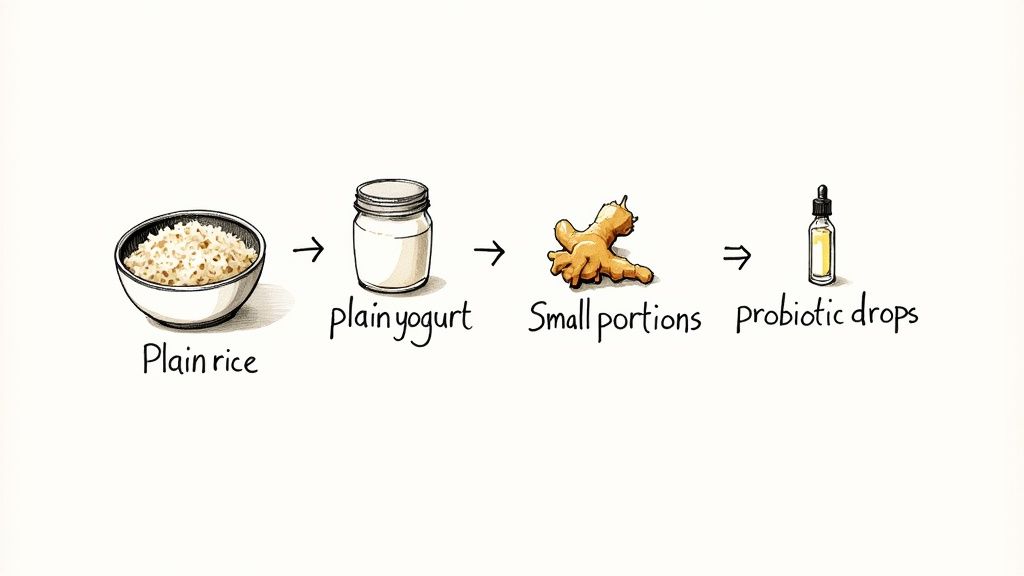
Introducing probiotics can quickly rebalance gut flora and speed recovery.
Research shows over 80% of diarrhoea cases in dogs improve with non-antibiotic support after a vet check.
Probiotics are used in 60% of UK cases, while dietary shifts account for 44%. Read more in PLOS One.
- Look for brands listing precise CFU counts and canine-specific strains.
- Dogs under 10 kg: 1–2 billion CFU per day.
- Larger breeds: 5–10 billion CFU daily.
Safety Notes And Monitoring
Not all pups tolerate dairy. Plain, unsweetened Greek yogurt suits some, but always start with a tiny test portion.
Keep a simple log of remedies given, doses and any changes in symptoms:
| Remedy | Starting Dose | Observation Period |
|---|---|---|
| Chicken and rice | 1–2 tbsp / ¼ cup | 2 hours |
| Pumpkin puree | 1 tsp / 1 tbsp | 4 hours |
| Ginger infusion | 1 tsp / 2 tbsp | 1 hour |
| Probiotics | 1–2 B CFU / 5–10 B CFU | 24 hours |
Quick follow-ups help you spot any adverse reaction early. Most dogs are back to normal within 24 hours.
Real Life Success Stories
Daisy bounced back faster than expected after a 12-hour fast, a small pumpkin-rice mix and a quiet corner. Her owner noted firmer stools in under eight hours.
Rex went from listless to lively following two doses of a probiotic dropper. He was chasing toys again before the next day.
- Daisy Case
Infusion: Pumpkin + rice, 1 tbsp each, check at 6 hours. - Rex Case
Probiotic: 2 billion CFU, morning & evening, symptom check at 12 hours.
Preventing Future Upsets
- Introduce new foods over 7–10 day periods.
- Keep bins sealed to prevent scavenging.
- Maintain a consistent meal and walk routine.
Stay observant—small changes today can mean big peace of mind tomorrow.
Dietary And Hydration Strategies For Upset Stomach
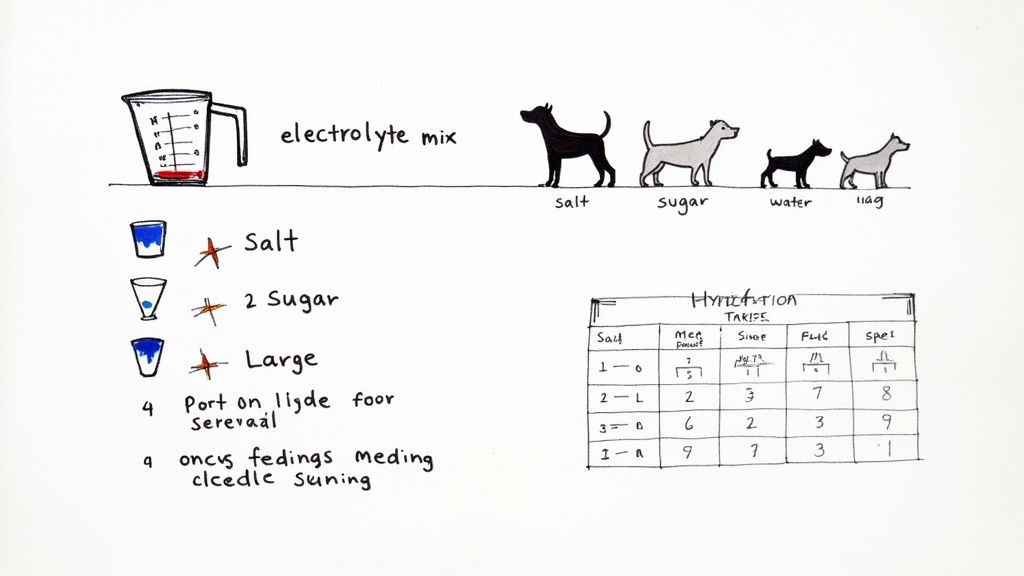
Working out the right balance between what you feed your dog and how you keep them hydrated can make all the difference when they have a queasy tummy. Over the years, I’ve seen how small tweaks at home can soothe digestive distress and prevent repeat flare-ups.
Homemade Electrolyte Blends
A simple kitchen fix often mimics vet-approved solutions without the fuss.
- Combine 1 litre of low-sodium chicken broth, 1 tablespoon of honey and a pinch of salt.
- Serve 1–2 tablespoons every hour in small bowls.
- Keep it chilled and toss any leftovers after 24 hours.
This mix restores vital minerals, calms the gut and costs just pennies—ideal for keeping on standby.
Feeding Schedule Matched To Weight
Tailoring meal sizes and timing to your dog’s frame helps avoid overloading a sensitive stomach.
- Small dogs (under 10 kg): 4–6 mini-meals over 12 hours.
- Medium dogs (10–25 kg): ¼ cup every 2–3 hours, then stretch intervals.
- Large dogs (over 25 kg): Start with ½ cup four times daily, moving to twice a day over 48 hours.
Gradual reintroduction reduces the chance of a second bout of diarrhoea and steadies the recovery.
Commercial Sensitive Stomach Diets
Homemade cooking can’t always be a long-term plan. The right store-bought formula steps in to support lasting gut health.
| Option | Benefit | Usage Tips |
|---|---|---|
| Hydrolysed protein diet | Reduces allergic reactions | Serve as sole food for 2–4 weeks before mixing |
| Limited ingredient novel protein | Eases digestive workload | Transition over 7–10 days with gradual mix |
| High fibre blend | Promotes regularity | Add 1–2 teaspoons of extra fibre per meal |
Compare ingredient lists closely—look for prebiotic fibres and minimal fillers to shield the gut lining. Learn more about gut flora support in our guide on prebiotics and probiotics for dogs at Tipaw Store.
Hydration And Diet Options
Below is a snapshot comparison of some popular homemade and commercial feeding solutions for canine tummy health.
| Option | Benefit | Usage Tips |
|---|---|---|
| Homemade Electrolyte Blend | Replenishes essential minerals | Offer 1–2 tablespoons every hour; discard after 24 hours |
| Bland Rice And Chicken | Soothes inflamed stomach lining | Feed ¼ cup in 4–6 small portions across 12 hours |
| Hydrolysed Protein Diet | Minimises allergic reactions | Use exclusively for 2–4 weeks, then slowly reintroduce |
| Limited Ingredient Novel Protein Diet | Reduces digestive workload | Mix gradually over 7–10 days until fully transitioned |
This table should help you weigh up quick kitchen mixes against store-bought formulas, so you can decide what suits your dog’s routine and recovery pace.
Real Scenario And Key Takeaways
Take Luna, a five-year-old spaniel who suffered repeated tummy upsets. Her owner switched her to a hydrolysed protein diet and kept a strict electrolyte routine. Within days, Luna’s episodes were halved.
Consistency in both diet and hydration can cut repeat stomach issues by over 50% in dogs prone to sensitivities.
By logging every food introduction and every lap of broth, Luna’s owner caught warning signs early—and adjusted portions before a full-blown relapse.
Monitoring Hydration Goals
After a bout of diarrhoea or vomiting, precise fluid goals matter to replace losses without overloading.
An adult dog usually needs about 50 ml per kilogram daily, but during recovery you might push that to 75 ml per kilogram to stay ahead of dehydration.
- Small dogs (under 10 kg): aim for 500–750 ml per day.
- Medium dogs (10–25 kg): 750–1500 ml per day.
- Large breeds (over 25 kg): 1500–2000 ml or more.
Offer water or broth in small intervals and note each serving in a logbook. Ice-cube treats or mild broth can tempt fussy drinkers back to the bowl.
Tracking hydration milestones gives you the confidence that your dog stays safely topped up.
Pairing these fluid targets with smart meal planning rounds out a solid toolkit of upset stomach remedies.
Preventive Feeding Habits
A few simple routines can keep your dog’s tummy on track long term.
- Stick to fixed mealtimes; unexpected hunger can lead to scavenging.
- Introduce new treats one small piece at a time and watch for any reaction.
Clean water, consistent schedules and careful monitoring offer a dependable defence against future flare-ups.
Supplements And Prevention Tips For Dog Digestion
Introducing supplements can shore up your dog’s gut defences over time. Prebiotics, digestive enzymes and herbal blends each play a distinct role in keeping digestion on track. Getting the dosage right by weight—and knowing how to stack them—helps prevent unwanted side effects.
Many dog parents stir 1 g of chicory root powder into breakfast bowls as a prebiotic boost. Others rotate digestive enzymes with a teaspoon of fish oil every other morning to maintain balance.
Supplement Types And Dosage Guide
| Supplement Type | Weight Band | Daily Dosage |
|---|---|---|
| Prebiotics | Small (under 10 kg) | 1 g |
| Digestive Enzymes | Medium (10–25 kg) | 2 g |
| Herbal Blend | Large (over 25 kg) | 3 g |
“Consistency is the unsung hero in digestion support,” notes vet parent Sarah.
Expert Routines
Emma adds 2 g of chicory root to her spaniel’s breakfast each morning to nurture gut flora. Tom alternates digestive enzymes with fish oil every other day, which keeps enzyme activity up without overloading his dog’s liver.
How To Combine Supplements Safely
- Introduce one product at a time and wait 3–5 days before adding another.
- Adjust doses according to your dog’s weight and any reactions.
- Limit your routine to no more than 3 gut-support products at once.
- Keep a simple log of supplement times and any digestive changes.
Prevention Strategies
Small tweaks to your daily routine can cut flare-ups by 50% over a few weeks. Puzzle feeders, short post-meal walks and gentle massage rituals all play their part in smooth digestion.
- Consistent mealtimes anchor your dog’s internal clock.
- Avoid rich table scraps high in fat or seasoning.
- Transition diets gradually over 7–10 days to minimise upset.
- Five-minute walks after eating help move food through the gut.
Check out our guide on digestive enzymes for dogs at Tipaw Store to dive deeper into enzyme selection and dosing.
Herbal Options For Gut Support
Herbs can be a soothing complement when the lining is inflamed.
- Slippery elm powder mixed in water for small dogs: 0.5 g daily.
- Marshmallow root infusion for medium breeds: 1 g daily.
- Peppermint capsules to calm mild nausea.
- Licorice root extracts support mucous membranes—use sparingly.
Case Study On Consistency
Bailey, a terrier mix, suffered recurring diarrhoea until her owner began a daily prebiotic regimen. Within four weeks of steady supplements and strict mealtimes, her episodes dropped to zero.
Timeline for Bailey’s Recovery
- Week 1: Started 1 g prebiotics, recorded two episodes.
- Week 2: Added digestive enzymes, episodes fell by 50%.
- Week 3: Introduced herbal blend, no new occurrences.
- Week 4: Locked in mealtime routine, remained symptom-free.
Why Prevention Matters
Building preventive habits reinforces gut resilience and cuts vet visits in the long run. A stable diet, varied proteins and the right supplements keep the microbiome prepared for anything.
- Keep fresh water available at all times.
- Rotate protein sources monthly to diversify gut flora.
- Track stool quality in a simple digest log.
- Use puzzle toys to reduce mealtime stress.
Monitoring And Adjusting Dosages
Your dog’s stool consistency and energy levels are your best clues. If symptoms persist beyond 7 days, scale back supplements and seek veterinary advice.
- Note each supplement dose and any digestive reactions.
- Compare your dog’s activity and appetite before and after changes.
- Contact your vet if you spot blood in the stool or severe lethargy.
Key Takeaways
Combining supplements with prevention strategies builds lasting gut health in dogs of all ages. Consistency in dosing, mealtime routines and stress relief is the best defence against tummy troubles.
When To Seek Veterinary Care
When home remedies just aren’t cutting it, spotting the real warning signs can mean a faster recovery—and potentially save your dog’s life.
Recognising Critical Symptoms
Catching serious issues early eases your dog’s discomfort and keeps stress levels down.
- Persistent vomiting or diarrhoea lasting more than 24 hours
- Any trace of blood in stools or vomit (bright red or dark)
- Sudden lethargy or outright refusal to drink
“Multiple vomits within hours or bloody stool should never be ignored,” warns veterinary nurse Emma Hayes.
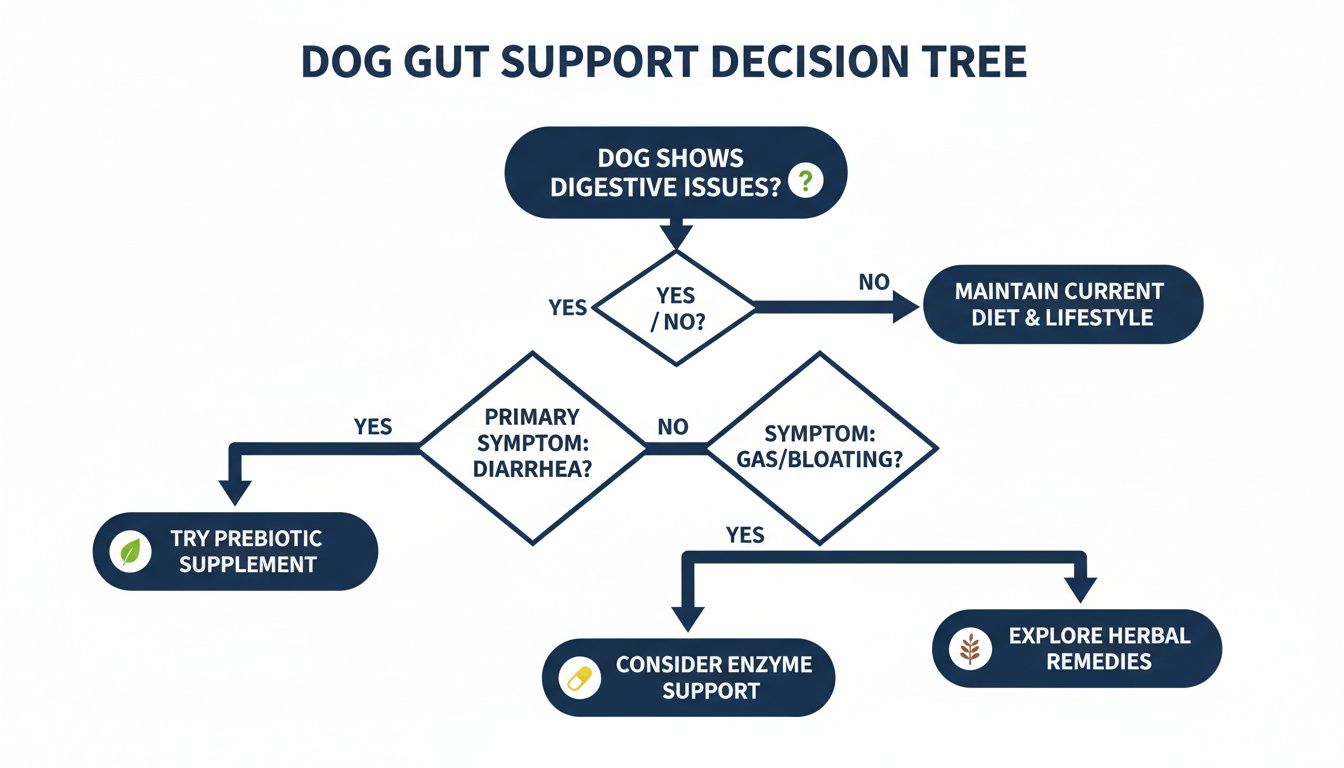
That infographic lays out a decision tree for gut support:
- Start with a prebiotic for mild tummies
- Move to an enzyme if discomfort continues
- Try an herb when you need an extra boost
How To Check Hydration
Even a little dehydration can spiral when your dog is unwell.
- Perform the pinch test: lift the skin on the scruff and see how fast it snaps back
- Check the gums: dry or tacky surfaces often point to fluid loss
If skin returns slowly (over two seconds), it’s time for IV fluids.
Preparing For Your Vet Visit
A bit of organisation can speed up diagnosis and treatment.
- Keep a pet journal with timestamps, symptom counts and volumes
- Note any unusual behaviour—shaking, abdominal pain or collapse
- List every home remedy tried, from bland diets to supplements
Bring along:
- Your dog’s age, weight and breed
- Exact onset and progression of symptoms
- Descriptions of vomit and stool appearance
- Reactions to each remedy
Emergency Checklist
Have this rundown ready so you can act without hesitation:
- Assess breathing rate and overall comfort
- Perform the pinch test and record the result
- Track water intake over two hours
- Scan waste for blood or odd colours
- Call your vet immediately if anything seems off
When To Head To The Clinic
No hesitation if you see these red flags:
- Vomiting persists beyond 12 hours
- Extreme weakness or inability to stand
- Signs of pain when you press the abdomen
- Episodes of collapse or unconsciousness
Case Study On Max
Max hadn’t eaten for two meals and was vomiting every hour for eight hours. A quick pinch test revealed sunken skin and tacky gums. His owner rushed him to a 24-hour clinic where he received IV fluids and electrolytes. Within a day, Max was back to eating small portions.
Case Study On Coco
Coco’s stool turned tarry and her usual zest disappeared. Tracking worsening symptoms led her owner to call the vet and secure an urgent endoscopy. They discovered early gastric ulcers and treated them before any permanent damage occurred.
Early intervention can reduce recovery time by over 50% in critical digestive cases.
Evaluating Severity Levels
| Symptom Level | Example Signs | Recommended Action |
|---|---|---|
| Mild | One or two vomits, normal energy | Home care with monitoring |
| Moderate | Vomiting over 12 hours, mild lethargy | Vet call within 24 hours |
| Severe | Blood in vomit or stool, collapse | Immediate emergency visit |
This table helps you decide fast when stress runs high.
Summing Up Your Next Steps
Trust your gut and never second-guess worrying signs. Keep that digital pet journal, checklist and clear notes at hand. Precise information lets your vet act swiftly.
- Save an electronic copy of this checklist for trips
- Always follow your veterinarian’s instructions first
Prompt action can be the difference between a short recovery and a prolonged hospital stay.
Stay vigilant always.
Frequently Asked Questions
Lingering doubts? We’ve gathered the most pressing queries on canine tummy troubles, mixing vet wisdom with real owner experiences to give you confidence every step of the way.
Avoiding Human Snacks
I learned the hard way that sharing dinner with my Labrador often ended in a messy cleanup. Chocolate breaks down into theobromine, a compound dogs simply can’t process. Dairy can leave them gassy and uncomfortable, while fatty scraps risk triggering pancreatitis.
• Chocolate – High in theobromine, tough on their system
• Dairy – Lactose intolerance leads to gas and diarrhoea
• Fatty Meat Scraps – Can spark pancreatitis
What Snacks Trigger Tummy Trouble
Onions, grapes and garlic may seem harmless, but dogs lack the enzymes to handle them. Instead, stick to treats your vet approves.
After my dog’s last upset, I fasted him for 12 hours, then offered ¼ cup of boiled chicken and rice. Over 2–3 days, I gradually increased portions, keeping a close eye on stool firmness and appetite.
“Slow reintroduction helps monitor tolerance and avoids repeat flare-ups,” advises a UK veterinary nurse.
Safe Probiotic Use
Restoring gut flora isn’t just a trend—it’s about practical recovery. I always choose supplements listing exact CFU counts and canine-specific strains. For small breeds, 1–2 billion CFU daily usually does the trick.
• Check the label for dog-safe bacterial strains
• Give once daily immediately after a meal
• Monitor stool consistency for 48 hours
When Can I Feed Regular Treats Again
If your dog handles normal meals for 48–72 hours without hiccups, sprinkle in tiny treats—think small cheese cubes or freeze-dried liver—and watch for any reaction.
| Question | Best Practice |
|---|---|
| Timing for Bland Diet Reintroduction | Start slow after 12–24 hours fast |
| Probiotic Introduction | 1–2 billion CFU daily, adjust by weight |
| Treat Reintroduction | Wait 48–72 hours, use tiny trial pieces |
Most pups bounce back with firmer stools and renewed appetite within 24–48 hours. If problems persist, it’s time to consult your vet.
Recognising Red Flags
Sometimes, home remedies aren’t enough. Once, my spaniel vomited for 6 hours straight—I ended up at the clinic just in time.
• Vomiting for over 6 hours
• Any blood in vomit or stool
• Severe lethargy or refusal to drink
What Warrants a Vet Call
Ongoing vomiting beyond 12 hours or blood appearing anywhere means an immediate phone call to your vet.
Can Stress Trigger Tummy Upsets
Absolutely. Travel, boarding or fireworks can unsettle their digestion. In those cases, gentle belly rubs, calming supplements and a quiet space can work wonders.
Ready to give your dog the best digestive support? Explore Tipaw Store now for exclusive vet-approved supplements.


