


Supplements for older dogs are concentrated sources of nutrients designed to help with the common bumps in the road that come with ageing. Things like stiff joints, a bit of confusion, or a sensitive tummy can often be supported with ingredients like glucosamine, chondroitin, and omega-3 fatty acids, making their golden years much more comfortable.
Is Your Senior Dog Trying to Tell You Something?
It can be hard to watch our once-bouncy companions start to slow down. That endless enthusiasm for a game of fetch might have been replaced with a slower, more considered pace, and their reactions might not be quite as sharp as they used to be. These aren't just random changes; they're subtle hints that their body's needs are shifting. Learning to read these signs is the first step in giving them the support they need.
Instead of just seeing an "old dog," we can start to connect the dots. Is that stiffness in the morning just a bit of laziness, or could it be a sign of achy joints? Is that moment of confusion just a funny quirk, or is their brain asking for a little extra help? When we link what we see to the real biological changes happening inside, we go from simply watching them age to actively helping them through it.
Common Signs Your Older Dog Might Need a Supplement
Catching these cues early means you can get ahead of them. The aim isn't to turn back the clock, but to help your dog navigate their later years with as much comfort and joy as possible.
Keep an eye out for these common clues:
- Struggling to Get Around: Do they think twice before hopping on the sofa or into the car? Are they a bit slow to get up from a nap? This is often the most obvious sign of joint wear and tear.
- Behavioural Quirks: Does your dog seem a bit lost, wander around the house, or seem less interested in family life? These can be early indicators of cognitive decline, or 'doggy dementia'.
- Dull Coat or Flaky Skin: A lackluster coat is often an external sign of an internal imbalance. It’s frequently tied to a need for more essential fatty acids.
- Tummy Troubles: As dogs get older, their digestive systems can become less efficient, leading to more frequent bouts of diarrhoea or constipation. Learning more about pre and probiotics for dogs can be a great place to start for gut health support.
This visual guide helps connect the dots between your dog's symptoms—like stiff joints or confusion—and the right kind of support.
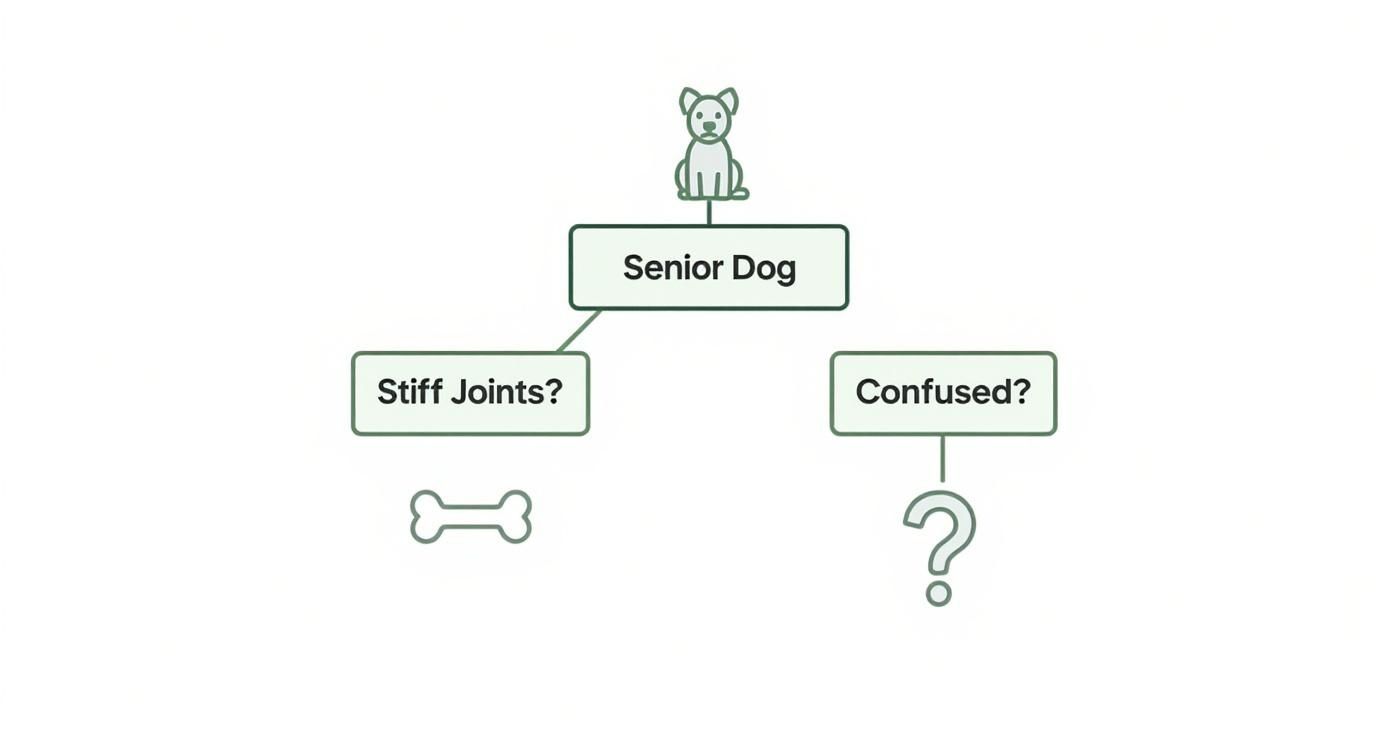
As you can see, specific, observable behaviours are always the best starting point for figuring out what kind of support your dog needs.
To help you quickly match what you're seeing at home with potential solutions, this table provides a handy reference.
Connecting Senior Dog Concerns to Supportive Supplements
| Health Concern | Common Signs You Might Notice | Helpful Supplement Category |
|---|---|---|
| Joint Discomfort | Limping, stiffness (especially in the morning), reluctance to jump or use stairs, slowing down on walks. | Joint Support (Glucosamine, Chondroitin, Green-Lipped Mussel) |
| Cognitive Decline | Disorientation, staring blankly, less interaction, changes in sleep patterns, house soiling accidents. | Cognitive & Brain Health (Omega-3s, Antioxidants) |
| Poor Skin & Coat | Dry, flaky skin (dandruff), a dull or brittle coat, excessive shedding, itchy spots. | Skin & Coat (Omega-3 & 6 Fatty Acids, Biotin) |
| Digestive Issues | Frequent gas, bloating, diarrhoea, constipation, inconsistent stool quality. | Digestive Health (Probiotics, Prebiotics, Fibre) |
| Heart Health | Coughing (especially at night), low energy, difficulty breathing, reduced stamina on walks. | Heart Support (Omega-3s, Coenzyme Q10, Taurine) |
This table is a great starting point, but remember it's always best to chat with your vet before starting any new routine.
Think of supplements as reinforcements for your dog's natural defences. It’s a bit like us taking extra Vitamin C in the winter. For older dogs, supplements provide a concentrated boost right where their bodies need it most, helping them stay balanced and functional.
This proactive approach is becoming more and more common. The UK pet nutraceuticals market, which covers supplements, is expected to grow from USD 279.8 million in 2025 to USD 447.31 million by 2030. This growth is being driven by vets who are increasingly recommending targeted supplements to help with mobility and nutrition in ageing dogs. You can read the full research about the UK pet nutraceuticals market for a deeper dive. It's clear that giving our senior dogs targeted nutritional support is becoming a standard part of excellent care.
The Core Four Supplements for Senior Dog Vitality
Realising your old friend needs a bit of extra support is one thing; figuring out exactly what to give them is a whole different challenge. The world of dog supplements can feel a bit overwhelming, but when it comes to our senior companions, a few key players consistently prove their worth.
Let's break down the four powerhouse groups that tackle the most common hurdles of ageing in dogs.

This focus on targeted support is precisely why the pet supplement market has blossomed. In fact, industry data shows dog supplements are the dominant force, making up about 41.4% of the UK market's revenue share in 2023. A huge driver for this is our greying canine population, who benefit enormously from products aimed at joint health, cognitive function, and digestion.
Think of these core supplements as specialised toolkits. They provide concentrated nutrients that an older dog’s body might struggle to produce or absorb as efficiently as it once did, helping to reinforce specific systems and keep your companion comfortable, sharp, and happy.
Cushioning Their Joints with Glucosamine and Chondroitin
One of the first signs of ageing we often notice is stiffness. That slow, careful movement after a long nap or on a chilly morning is a classic tell-tale sign of joint wear and tear from a lifetime of running, jumping, and playing.
Imagine the cartilage in your dog’s joints is like the cushioned sole of a running shoe. After thousands of miles, that cushioning naturally wears thin, leading to aches and discomfort. That’s where glucosamine and chondroitin come in—they are the very building blocks needed to repair and maintain this crucial cartilage.
- Glucosamine: This natural compound helps to form and repair cartilage tissue. It’s like giving a construction crew the raw materials they need to patch up the worn-out cushioning.
- Chondroitin sulphate: This works by helping cartilage retain water, keeping it spongy and effective as a shock absorber. It also helps block enzymes that can break down cartilage over time.
Used together, they form a powerful partnership for joint health. Our guide on choosing the right joint supplement for your dog dives deeper into how these ingredients work. While they can't reverse arthritis, they can significantly improve joint lubrication and reduce discomfort, helping your dog move more freely and with a bit more of their old spring in their step.
Sharpening Their Mind with Omega-3s and Antioxidants
Have you noticed your older dog seeming a bit lost in the house, being less responsive to their name, or having their sleep patterns all mixed up? These can be subtle signs of canine cognitive dysfunction (CCD), what many of us call doggy dementia. Just as their bodies age, their brains do, too.
Supplements rich in Omega-3 fatty acids and antioxidants can offer vital support for their brain health.
Picture your dog's brain as a complex electrical grid. Omega-3s, especially one called DHA, are like the high-quality wiring that ensures signals travel quickly and efficiently. DHA is a major structural part of the brain, and it's absolutely crucial for keeping nerve cells firing properly.
Antioxidants, on the other hand, act as the grid's maintenance crew. They patrol the system, protecting the brain from damage caused by free radicals—unstable molecules that accelerate the ageing process. This protection helps preserve cognitive function and can slow the progression of CCD symptoms.
By providing a steady supply of these brain-boosting nutrients, you can help lift the "brain fog" that often comes with old age, helping your dog stay more engaged and connected with the family.
Balancing Their Gut with Probiotics
As dogs get older, their digestive systems can become more sensitive and less efficient. You might notice more gas, inconsistent stools, or a general struggle to get the most from their food. This is where probiotics can make a real difference.
Think of your dog's gut as a garden. Probiotics are the "good seeds" you plant to ensure the garden flourishes, naturally crowding out the "weeds" or harmful bacteria. These live microorganisms help restore and maintain a healthy balance in the gut microbiome.
A balanced gut goes far beyond just good digestion. A healthy microbiome is linked to:
- Better Nutrient Absorption: Helping your senior dog get every last bit of goodness from their meals.
- A Stronger Immune System: A huge part of their immune defence actually lives in the gut.
- Less Digestive Upset: Leading to more predictable and comfortable toilet habits for everyone.
For an older dog, keeping their digestive system in harmony is a cornerstone of their overall wellbeing, helping them feel their best from the inside out.
Nourishing Their Skin with Fatty Acids
A dull, brittle coat or dry, flaky skin isn't just a cosmetic issue. It's often an outward sign that their body is crying out for essential fatty acids, particularly Omega-3 and Omega-6.
Think of your dog’s skin as a brick wall. The skin cells are the bricks, and fatty acids are the mortar holding them all together. This mortar is what keeps moisture in and irritants out. If you don't have enough mortar, the wall becomes weak, leaky, and cracked.
In older dogs, the body's ability to produce or process these crucial fats can decline. Supplementing with a balanced ratio of Omega-3s and Omega-6s helps to:
- Strengthen the skin barrier, reducing that tell-tale dryness and flakiness.
- Promote a glossy, healthy coat by nourishing the hair follicles at the source.
- Reduce inflammation, which is often the culprit behind skin allergies and constant itchiness.
By addressing these four core areas—joints, brain, gut, and skin—you can build a fantastic foundational supplement plan that targets the most common needs of older dogs, helping them age with grace and vitality.
How to Choose a Safe and Effective Supplement
Stepping into the world of supplements for older dogs can feel a bit like navigating a maze. With so many bottles making bold claims, how do you sort the genuine quality from the clever marketing? It all comes down to learning how to read a product label like a pro.
This isn't about memorising a long list of complicated chemical names. It's about knowing what to look for—the tell-tale signs of quality. Think of it as developing a simple checklist for safety and effectiveness that lets you cut through the noise and find something that can truly help your old friend.
The right supplement can be a fantastic boost to their wellness routine, but the market is largely self-regulated. This means the responsibility often falls on you, the owner, to do a little homework and verify a product's integrity before you buy.
Become an Ingredient Investigator
First things first, always turn the product over and look at the ingredients list. You want to see specific, high-quality active ingredients listed clearly, not hidden away in vague "proprietary blends" that don't tell you the true amounts of what's inside.
Be wary of products packed with cheap fillers like corn, wheat, or artificial colours and flavours. These add nothing of value and can sometimes trigger digestive upset in a sensitive senior dog. A top-tier supplement will always prioritise purity and potency over bulk.
A great rule of thumb is this: if the active ingredients you actually want (like glucosamine or omega-3s) are buried at the bottom of a long list of fillers, it’s probably not a very potent formula. Ingredients are always listed by weight, from most to least.
Next, think about where those ingredients come from. For instance, with an omega-3 supplement, products made from sustainably sourced cold-water fish or microalgae are far superior to those from plant-based sources like flaxseed. A dog's body simply can't efficiently convert the omega-3s in plants into the usable forms (DHA and EPA) that deliver the real benefits.
Your Supplement Quality Checklist
To make this easier, here's a quick reference table. Use it to check any product you're considering against the standards of a high-quality, trustworthy supplement.
| Quality Factor | What to Look For on the Label | Why It Matters for Your Dog |
|---|---|---|
| Active Ingredients | Specific names and amounts (e.g., "Glucosamine HCl 500 mg"). | Vague "blends" hide low doses. You need to know the exact amount to ensure it’s effective and safe. |
| Manufacturing Standards | Look for a GMP (Good Manufacturing Practices) certification. | This is a strong sign the product is made in a clean, controlled facility with high standards for safety and consistency. |
| Third-Party Testing | Mention of independent lab testing for purity and potency. | This proves an unbiased party has verified that what's on the label is actually in the bottle, and that it's free from harmful contaminants. |
| Label Clarity | Clear, weight-based dosage instructions and a "guaranteed analysis". | This ensures you're giving the correct, safe dose for your dog's size and that you know the precise amount of each active ingredient. |
| Traceability | A clear lot number and expiry date printed on the packaging. | These are crucial for safety. They allow the company to track the specific batch in case of a product recall or issue. |
Keeping these points in mind will give you a massive advantage when you're standing in the pet aisle, trying to make the best choice.
Decode the Label and Dosage Instructions
Finally, any well-designed supplement will have clear, easy-to-follow dosage instructions based on your dog's weight. Vague directions like "give one chew daily" are a red flag—one chew for a Chihuahua is very different from one for a Great Dane!
The label should also list the "guaranteed analysis," which confirms the minimum amount of each active ingredient per serving. This is vital information that helps you and your vet know exactly what your dog is getting. Often, general wellness can be supported with a well-formulated daily chew, and you can learn more about what to look for in our guide to choosing a multivitamin for dogs.
Choosing a great supplement doesn't have to be a guessing game. By focusing on ingredient quality, transparent manufacturing, and clear labelling, you can make an informed decision that truly supports your older dog’s health and wellbeing.
Teaming Up With Your Vet for a Smart Supplement Strategy
Right, so you're now much more clued-up on the world of supplements for older dogs. But even with all this knowledge, your single most important ally on this journey is your vet. Think of them as the manager of your dog’s personal health team; they have the experience and the overview to make the right calls.
Deciding to add a supplement to your dog's diet without chatting to your vet first is a bit like trying to fix a complex engine with just a manual. You might have the right intentions, but you could easily overlook a critical detail and end up doing more harm than good. A quick consultation turns guesswork into a targeted, safe, and effective plan.
Your vet holds the master key to your dog's health history. They know about those little underlying issues or the specific medications your dog is already on. This partnership isn't just a nice-to-have; it's absolutely essential to make sure you're truly helping, not hindering.
Why Your Vet Should Be Your First Port of Call
Before a single new pill or powder goes into that food bowl, a professional consultation is non-negotiable. Vets do so much more than just rubber-stamp a product. They provide a critical safety net and an expert perspective you simply can't get from reading an article online, no matter how detailed.
Here's why their input is so crucial:
- Spotting Dangerous Interactions: It's common for senior dogs to be on prescription meds, like anti-inflammatories (NSAIDs) for their achy joints. Some supplements can actually interfere with how these drugs are absorbed or, even worse, amplify their side effects. Your vet will know these potential clashes inside out.
- Diagnosing the Real Issue: Let's say your dog seems a bit slow or stiff. Is it definitely arthritis? Or could it be something else entirely? A vet can run the right tests to get to the bottom of it, making sure you're tackling the root cause, not just a symptom.
- Getting the Dose Just Right: Dosing isn't a simple case of 'one size fits all'. The correct amount is a careful calculation based on your dog's specific weight, breed, age, and overall health. Your vet can pinpoint the precise dose that's both safe and effective, avoiding the trap of giving too little to make a difference or too much.
Your vet sees the whole picture. They can connect the dots between your dog's diet, their current health status, and any new symptoms you've noticed. This allows them to build a supplement plan that's genuinely tailored to your individual dog, not just a generic plan for any "old dog".
Your Vet Appointment Checklist
To get the most out of your chat with the vet, a little preparation goes a long way. Being organised means they can give you the best advice possible. I always suggest jotting down a few notes and questions before you go in – it's so easy to forget something in the moment.
Here’s a simple checklist to take with you:
- I’ve noticed my dog is [mention specific symptoms, e.g., stiff after walks, seems a bit lost in the house]. Based on this, what supplement ingredients do you feel would help the most?
- Are there any red flags or potential interactions with their current medications or health conditions I should know about?
- For a dog of their weight and with their needs, what would be the correct daily dose?
- Realistically, what sort of improvements should I be watching for, and how long do you think it might take before I see a change?
- Do you have any preferred brands or look for specific quality certifications (like GMP) when recommending supplements?
- When would be a good time to book a follow-up to see how they're getting on?
Working together like this makes sure any supplement you give is part of a well-thought-out, vet-approved health plan. It’s simply the smartest and safest way to give your best friend the support they deserve in their golden years.
Weaving Supplements into Your Dog's Daily Life
Even the best supplement in the world is useless if it just sits in the cupboard. The real magic happens when you make it a simple, stress-free part of your dog's daily rhythm. The aim is to find a method that fits so naturally into your day that it becomes as automatic as filling their water bowl.
Thankfully, today's supplements for older dogs come in all sorts of forms, designed to suit every personality—from the pickiest eater to the one who inhales their food in seconds. Knowing the pros and cons of each format is the first step to choosing something your dog will actually look forward to taking.
Finding the Right Fit for Your Dog
How you give the supplement can make or break the whole experience. What’s a treat for one dog might be a total battle with another. It’s all about playing to your dog’s strengths and matching the supplement to their eating habits and personality.
Let's break down the most common options out there:
- Tasty Chews: These are hands-down the most popular choice, and for good reason. They’re designed to look, smell, and taste like a treat, which takes all the "medicine" drama out of the equation. Most dogs see them as a special reward, making daily dosing a welcome event.
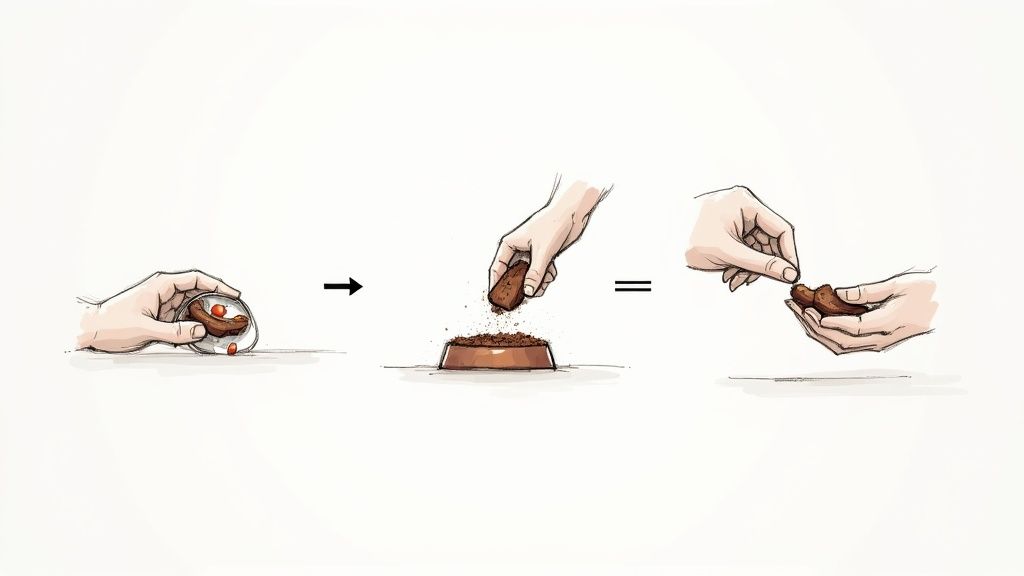
- Powders: A fantastic option if your dog isn't fussy and will happily eat anything you mix into their food. You can just sprinkle it over wet food or kibble. A good tip for dry food is to add a splash of water or broth to help the powder stick, so it doesn't all end up as dust at the bottom of the bowl.
- Liquids or Oils: Much like powders, these mix easily into meals and are especially common for things like omega-3 fatty acids. The only catch is making sure your dog cleans their bowl to get the full dose every time.
- Pills or Capsules: These can be the trickiest of the lot. Some dogs will wolf them down hidden in a bit of cheese or a purpose-made pill pocket. Others, however, become little magicians, somehow eating the treat and spitting out the pill every single time.
Honestly, the best approach is to take the path of least resistance. If your dog lives for treats, a palatable chew is a no-brainer. If they're a bit suspicious of new things, a flavourless powder hidden in their favourite meal is probably the smarter, stealthier move.
The "Slow and Steady" Approach
Once you’ve picked your product, resist the urge to jump straight in with the full dose on day one. A senior dog's digestive system can be a bit sensitive, and any sudden dietary change can cause an upset tummy. This doesn't mean the supplement is a problem—it just means their system needs a little time to get acquainted.
A gradual introduction is always the wisest policy. Here’s a simple schedule that works wonders:
- Days 1-3: Begin with just a quarter of the recommended daily dose.
- Days 4-6: Increase this to half of the recommended dose.
- Day 7 and beyond: You can now move to the full recommended dose.
This gentle ramp-up gives their gut plenty of time to adapt to the new ingredients, which massively reduces the risk of any digestive grumbles.
Finally, remember that consistency is everything. The benefits of most supplements don't happen overnight; they build up over time. Giving it here and there just won't deliver the results you're hoping for. The easiest way to stay on track is to link the new habit to one you already have, like their morning or evening feed. That way, it becomes a solid part of the routine that supports their health for years to come.
Frequently Asked Questions
Even with all the information we've covered, it's completely normal to have a few lingering questions. When it comes to our dogs' health, we want to be absolutely sure we're doing the right thing.
Here, I'll tackle some of the most common questions I hear from owners of senior dogs, giving you straightforward answers to help you feel confident about supporting your companion in their golden years.
How Quickly Will I See a Difference?
This is probably the number one question, and the honest answer is: it depends. Unlike a prescription painkiller that offers fast, noticeable relief, supplements work more subtly by giving the body the building blocks it needs to repair and maintain itself over time.
For joint support with ingredients like glucosamine and chondroitin, you might start noticing small improvements in your dog’s comfort and willingness to move within four to six weeks. For other areas, like cognitive function or skin health, the timeline is often similar.
The real magic is in consistency. The benefits are cumulative, building up in your dog's system day after day. Sticking to that daily routine is what truly makes a difference.
Can I Just Give My Dog My Own Human Supplements?
I know it can be tempting to reach into your own medicine cabinet, but please don't. It's a genuinely risky move. Supplements for humans are designed for our very different physiology, and they can contain ingredients or dosages that are either ineffective or downright dangerous for dogs.
A classic example is xylitol, an artificial sweetener found in many human products that is incredibly toxic to dogs. Beyond that, the ratios of vitamins and minerals are balanced for our bodies, not theirs.
Always, always stick to products specifically made for dogs. This guarantees:
- Safe Dosages: The amounts are calculated for a dog's specific weight and metabolism.
- Canine-Safe Ingredients: The formula is free from anything known to be harmful to dogs.
- Better Bioavailability: The nutrients are in a form that a dog's digestive system can actually absorb and use properly.
My Dog Already Eats High-Quality Food. Are Supplements Really Necessary?
That’s a brilliant question. A top-tier, balanced diet is the absolute cornerstone of your senior dog’s health, but supplements play a very different, more targeted role.
As dogs get older, two things tend to happen. First, their bodies often become less efficient at absorbing certain nutrients from their food. Second, chronic conditions like arthritis create a much higher demand for specific compounds—like glucosamine—than any food could realistically provide.
Think of it like this: their high-quality food is your healthy, balanced three meals a day. A supplement is like taking extra vitamin D during the dark winter months or an iron tablet if you’re anaemic. One supports overall wellness, while the other provides a concentrated boost to address a specific, heightened need.
Are There Any Side Effects I Should Watch For?
When introduced properly, high-quality dog supplements are overwhelmingly safe and side effects are rare. The most common issue, if any, is some mild digestive upset like loose stools or a bit of gas.
This almost always happens when a new supplement is started too abruptly. It's precisely why I always recommend a gradual introduction. Start with a tiny amount and slowly build up to the full dose over a week or so. This gives your dog's system a chance to adjust and usually prevents any tummy troubles.
Of course, if you see any persistent issues or changes that worry you, stop giving the supplement and have a chat with your vet.
What if I Forget to Give a Dose?
Life gets busy—it happens! Don't panic. Missing a single dose isn't going to derail all the progress your dog has made. The benefits come from long-term, consistent use.
Just give them their next dose at the regularly scheduled time. The one thing you must not do is double up on the next dose to "catch up." This is a common mistake that can easily lead to an upset stomach. The goal is simply to maintain a steady level of these supportive nutrients in their system over the weeks and months ahead.
It's clear that more and more owners are taking a proactive approach to their pet's health. In fact, the UK pet supplements market was valued at USD 219.26 million in 2024 and is forecast to grow to a staggering USD 436.65 million by 2033. You can discover more insights about the UK pet supplements market here. This boom shows a real shift in how we care for our senior pets, making supportive supplements a standard part of their routine.
At Tipaw, our mission is to help your dog lead a longer, happier, and more comfortable life. Our range of vet-approved, natural supplements provides targeted support for the most common challenges senior dogs face, from stiff joints to digestive health. Give your best friend the gift of vitality in their later years. Explore our collection of functional chews today.


