


Using a calming supplement for your dog can be a gentle but powerful way to help them feel more secure and settled. Ingredients like L-theanine, chamomile, and probiotics are fantastic for supporting your dog’s natural ability to handle stress, offering a bit of comfort for everything from firework nights to separation fears.
Understanding Canine Anxiety in UK Homes
The first distant rumble of a thunderstorm, and you see it straight away: the slight tremble, the wide, worried eyes, the desperate search for a safe corner. For countless dog owners across the UK, this is an all-too-familiar scene. It’s deeply unsettling to watch a beloved companion struggle with fear, whether it’s triggered by loud noises, being left alone, or the chaos of busy city streets. If this sounds like your dog, you’re not alone.
Canine anxiety isn't just a simple label; it's a whole collection of distressing and sometimes destructive behaviours. It’s the constant pacing by the door when you grab your keys, the frantic barking at every car that drives past, or the chewed-up furniture that greets you after a day at work. These aren't signs of a "bad dog"—they're cries for help from a pet who feels completely overwhelmed. The first step towards helping them is understanding what these actions really mean. Learning to recognise the specific signs of anxiety in dogs is absolutely crucial for giving them the right support.
The Growing Concern for Dog Wellbeing
Here in the UK, this issue has become more noticeable than ever. We have our own unique triggers, like the intensity of Bonfire Night, the spike in post-lockdown separation anxiety as people returned to the office, and the non-stop stimulation of urban life. It all adds up to a challenging environment for our dogs, and the statistics paint a very clear picture.
With 11.1 million pet dogs in UK homes, groundbreaking research reveals that nearly one million are grappling with mental health issues like anxiety and stress. This means approximately 9% of all dogs in the country face these challenges, highlighting a significant and growing concern for pet wellbeing.
This isn't just a minor problem. The Dogs Trust’s National Dog Survey found that a staggering 90% of UK dog owners faced at least one behaviour challenge last year. Things like pulling on the lead (44%) and poor recall (35%) often have roots in underlying anxiety, where a dog is simply too stressed to focus or feel secure. You can explore more about these findings by reading the full PDSA Animal Wellbeing Report.
A Gentle Approach to Finding Calm
Faced with these challenges, many owners are looking for safe, reliable ways to help their pets. While severe cases will always need a vet's input, natural calming supplements offer a gentle, supportive starting point for managing mild to moderate stress. Think of this guide as your trusted resource, here to help you understand how these natural ingredients work and how to choose the best options for your furry friend. By exploring these solutions, you can start paving the way for a calmer, happier life together.
Exploring Science-Backed Calming Ingredients
Trying to find the right supplements for a dog's anxiety can feel like a minefield. With so many ingredients on the market all promising to calm your pet, it’s easy to feel overwhelmed. The best approach is to cut through the noise and understand what these ingredients actually do inside your dog’s body.
Let's demystify the science without getting bogged down in jargon. Think of your dog’s anxious brain as an engine that’s running too fast and too hot. Certain natural compounds act like coolants, helping the system run smoothly and at the right temperature. They don't just put a temporary patch on the problem; they work with your dog's own biology to create a genuine sense of calm from within.
The infographic below gives a great overview of the cycle of anxiety we often see in UK dogs, from the initial triggers to the behaviours they cause and the solutions that can help.
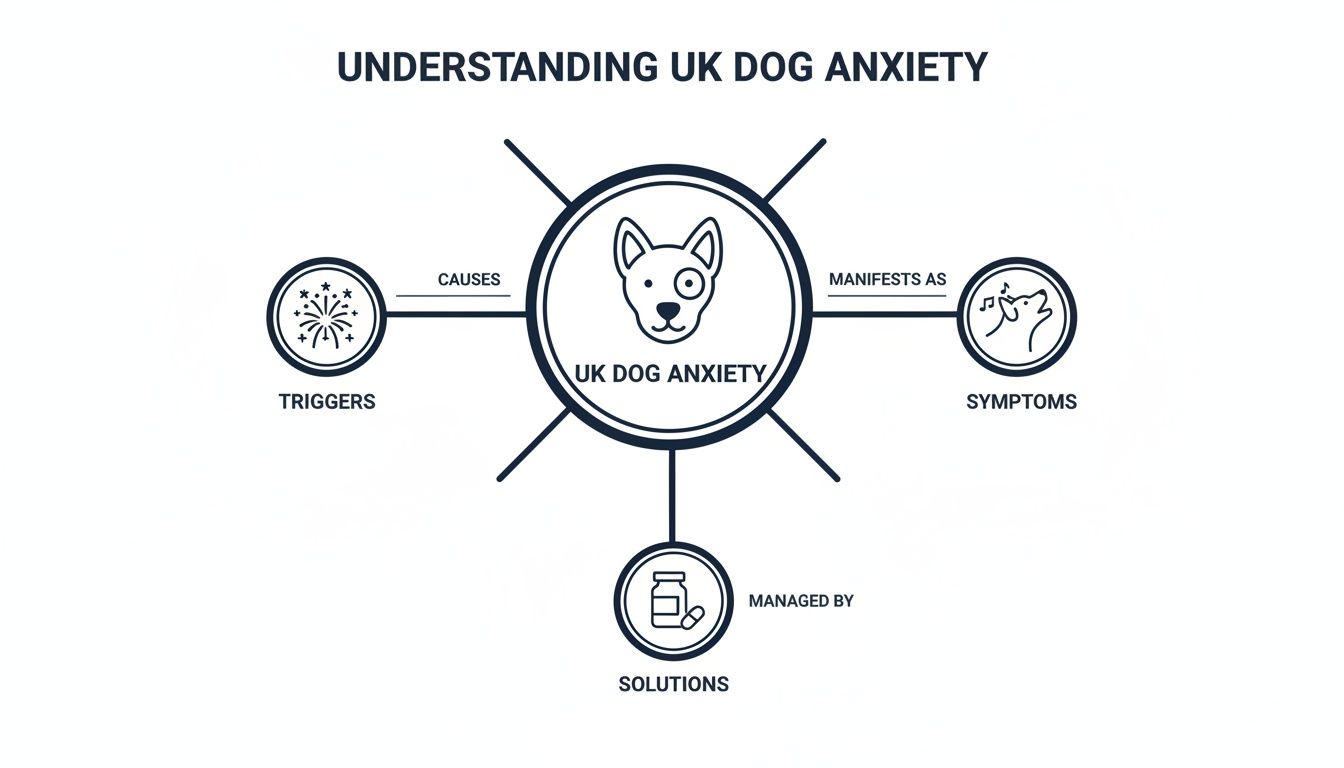
As you can see, something like fireworks can trigger whining or hiding, which points us toward supportive solutions like calming supplements to help manage that response.
L-Theanine and L-Tryptophan: The Mood Balancers
First up, we have a couple of powerhouse amino acids: L-theanine and L-tryptophan.
You can think of L-theanine as a sort of 'mental filter'. Found naturally in green tea, this amino acid promotes alpha brain waves, which are linked to a state of 'calm alertness'. It helps quieten the brain's background static without making your dog drowsy. This makes it brilliant for stressful situations where your dog still needs to be focused, like training sessions or trips to a busy park.
L-tryptophan works a bit differently. It's a building block for serotonin, the brain's "feel-good" chemical. A steady supply of serotonin is like a comforting, stable foundation for your dog's mood. When levels are good, they feel more content and are less likely to overreact to things. L-tryptophan simply provides the raw material the body needs to produce it, helping to maintain that emotional balance.
A study in the Journal of the American Veterinary Medical Association showed that a diet supplemented with L-tryptophan significantly reduced anxiety-related behaviours in dogs after several weeks. This wasn't an overnight fix but demonstrated its real potential for long-term mood support against things like fear of strangers or separation anxiety.
Melatonin and Calming Herbs: Nature’s Sedatives
Sometimes, you need something that works a little more directly, especially when anxiety peaks during a thunderstorm or keeps your dog pacing all night. This is where ingredients like melatonin and traditional herbs really shine.
Melatonin is the body's own sleep hormone. For dogs whose anxiety shows up as restlessness after dark, a melatonin supplement can help reset their body clock and encourage proper sleep. It’s not a heavy sedative but more of a gentle nudge that says, "it's time to rest," breaking that cycle of nighttime stress.
Herbal remedies have been used for centuries for a good reason. Here are a few of the most reliable:
- Chamomile: A well-known classic, this gentle flower acts as a mild sedative. It's like a warm, comforting hug for your dog's nervous system, great for taking the edge off general anxiety. It can also help settle a nervous tummy, which often goes hand-in-hand with stress.
- Valerian Root: This is a more potent option. Valerian root works by increasing a neurotransmitter called GABA (gamma-aminobutyric acid). GABA essentially acts as the brake pedal for an over-revving nervous system, helping to dial down excitability and bring on relaxation.
- Passionflower: Working in a similar way to valerian, passionflower also gives GABA levels a boost. It’s especially helpful for situational anxiety—think car rides or vet visits—as it helps to soothe them without heavy sedation. You can read more about how these work in our complete guide to herbal dog calmers.
Omega-3 Fatty Acids: For Brain Health and Resilience
We often hear about omega-3 fatty acids for joints and coats, but they are absolutely crucial for brain health and emotional stability. If you imagine your dog's brain as a complex electrical grid, omega-3s (especially EPA and DHA) are the high-quality wiring that ensures all the signals travel smoothly.
By supporting healthy brain cells and reducing inflammation, omega-3s can improve how your dog processes information and copes with stress over time. This isn't a quick fix for a panic attack but a long-term strategy for building a more resilient nervous system.
Probiotics: The Gut-Brain Connection
Finally, let's talk about the gut. It might sound strange, but there's a direct and powerful line of communication between your dog's digestive system and their brain. This is often called the gut-brain axis. Probiotics, the 'good bacteria', are the helpful messengers that keep the signals on this line calm and clear.
When the balance of gut bacteria is off, it can cause inflammation and send stress signals straight to the brain, making anxiety worse. By adding beneficial probiotics to their diet, you help restore that delicate balance. This not only calms the gut but also supports the production of mood-regulating chemicals like serotonin—a surprising amount of which is actually made in the gut! It turns out a calm gut really does help create a calm mind.
How to Choose a High-Quality and Safe Supplement
Wandering down the supplement aisle—or scrolling online—can feel completely overwhelming when you’re looking for something to help your anxious dog. The packaging is bright, the promises are bold, and every single brand seems to claim it has the magic formula. To find a product that is genuinely safe and effective, you have to learn to see past the flashy marketing and understand what’s actually in the bottle.
Becoming a savvy supplement shopper is a bit like reading food labels for your own family. You wouldn't settle for vague ingredients or questionable manufacturing for yourself, and the same standard absolutely has to apply to your dog. A top-notch supplement isn't just about the active ingredients; it's about the entire journey, from how it's formulated to the final product that ends up in your hands.
The good news is, there are clear signs of quality that can guide your decision. Once you know what to look for, you can confidently pick a supplement that will truly support your dog’s well-being.
Look for Vet-Approved Formulas
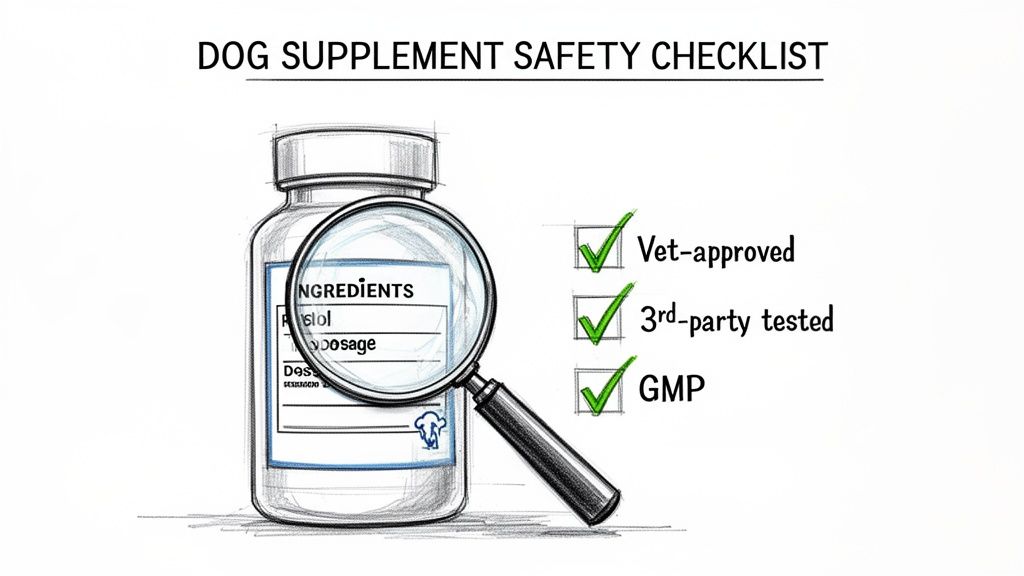
One of the most telling signs of a trustworthy supplement is a professional seal of approval. When a formula is vet-approved or developed with veterinary experts, it adds a massive layer of credibility. This tells you that the ingredients and their dosages have been properly scrutinised for safety and effectiveness by someone who deeply understands canine health.
A vet's involvement means the product is built on a foundation of science, not just passing trends. It ensures the formula is designed to work with your dog’s body to provide genuine support, not cause unintended problems. For me, this is a non-negotiable starting point for any supplement I’m considering.
Prioritise Independent Third-Party Testing
How can you be sure that what's listed on the label is actually what's in the product? This is exactly where third-party testing comes into play. A reputable company will voluntarily send its products to an independent laboratory to verify their purity and potency.
This independent check confirms a few critical things:
- Ingredient Accuracy: It makes sure the active ingredients are present in the amounts claimed. No more, no less.
- Purity: It screens for nasty contaminants you don’t want anywhere near your dog, like heavy metals, pesticides, or microbes.
- Consistency: It demonstrates that every single batch meets the same high standards.
Without this external verification, you're essentially just taking the company's word for it. Always look for a mention of third-party testing on the product’s packaging or website.
A supplement is only as good as the standards it's held to. Third-party testing isn't just a bonus; it's a fundamental pillar of product safety and consumer trust, confirming purity and potency beyond the manufacturer's claims.
Understand Manufacturing Standards
The "how" and "where" a supplement is made matters immensely. You’ll want to look for products manufactured in facilities that follow Good Manufacturing Practices (GMP). These are a set of strict, government-regulated guidelines that control every aspect of the manufacturing process, from sourcing raw materials to the final packaging.
Choosing a GMP-certified product means you're getting something that has been produced in a clean, controlled, and consistent environment. This minimises the risk of cross-contamination and ensures you receive a high-quality product every single time. It's a hallmark of a company that takes quality control seriously.
Choosing a safe and effective supplement doesn't have to be a guessing game. By using a checklist to evaluate potential products, you can systematically review the most important quality factors. The table below breaks down what to look for and why each point is so crucial for your dog's safety and well-being.
Quality Checklist for Canine Anxiety Supplements
| Quality Factor | What to Look For | Why It Matters |
|---|---|---|
| Veterinary Approval | A statement like "Veterinarian Formulated" or "Vet Approved" on the label. | This confirms that a qualified professional has reviewed the ingredients and dosages for safety and efficacy in dogs. |
| Third-Party Testing | A seal or mention of testing by an independent lab (e.g., NASC Quality Seal). | This provides unbiased proof that the product contains what it says it does and is free from harmful contaminants. |
| GMP Certification | "Made in a GMP-certified facility" on the packaging or website. | This ensures the product was made under strict quality control standards, minimising risks of contamination and inconsistency. |
| Clear Ingredient List | A full list of all active and inactive ingredients with specific amounts for each. | Transparency is key. You need to know exactly what you are giving your dog and in what quantity to assess its potential effectiveness. |
| No "Proprietary Blends" | Avoid formulas that group ingredients under a "proprietary blend" without listing individual amounts. | This is a tactic to hide low, ineffective doses of key ingredients. You can't make an informed decision without knowing the specifics. |
| Natural Ingredients | A focus on natural, recognisable ingredients. Avoid artificial colours, flavours, and preservatives. | Unnecessary chemical additives can cause digestive upset or other adverse reactions and offer no health benefit. |
| Clear Contact Info | An easily accessible phone number, email, or physical address for the company. | A reputable company stands by its product and makes it easy for customers to ask questions or report issues. |
Using this checklist as you compare different supplements will help you cut through the noise. It empowers you to move beyond the marketing hype and focus on what truly matters: safety, transparency, and scientific backing.
Spotting Red Flags on the Label
Just as important as knowing what to look for is knowing what to avoid. A confusing or vague label is often a major red flag.
Here are some common warning signs to watch out for:
- Proprietary Blends: This term is used to hide the exact amount of each ingredient in a formula. While it might sound exclusive, it really just stops you from knowing if there’s an effective dose of the important stuff. Transparency is everything.
- Artificial Fillers and Additives: Unnecessary junk like artificial colours, flavours, or chemical preservatives has no place in a health supplement. Stick to products with natural, simple ingredient lists.
- Lack of Contact Information: If you can’t easily find a way to get in touch with the company, be very cautious. Good brands are transparent and want to hear from their customers.
- Exaggerated Claims: Be wary of any product promising an "instant cure" or "miracle" results. Real, effective supplements work by supporting the body's natural processes—they don't perform magic.
Ultimately, choosing the right supplement is about doing your homework. By focusing on vet approval, independent testing, and clear, honest labelling, you can make an informed choice that protects your dog's health and gives you much-needed peace of mind.
Combining Supplements with Behavioural Training
We’ve all been there—hoping a single chew or supplement could magically wipe away our dog’s fear. But it’s crucial to see these supplements for what they are: a powerful support tool, not a complete cure. They truly shine when used as part of a wider, more thoughtful approach that includes positive behavioural training.
Think of it like this: your dog’s anxiety is a bit like loud, distracting static on a radio. That constant noise makes it almost impossible for them to hear you, focus on learning, or feel safe. A good calming supplement helps to tune that static down. It doesn’t turn the radio off, but it lowers the noise just enough for your dog to finally listen and engage.
With that newfound mental quiet, your dog is in a much better headspace for training. A lower baseline of stress means they can think more clearly instead of just reacting out of fear. This is where you can start making real, lasting progress.
Pairing Supplements with Proven Training Techniques
By combining supplements for dogs anxiety with targeted training, you’re creating a powerful, two-pronged strategy. The supplement helps get them into a calmer state of mind, while the training actively rewires how they respond to their triggers.
Here are a few real-world examples of how this works:
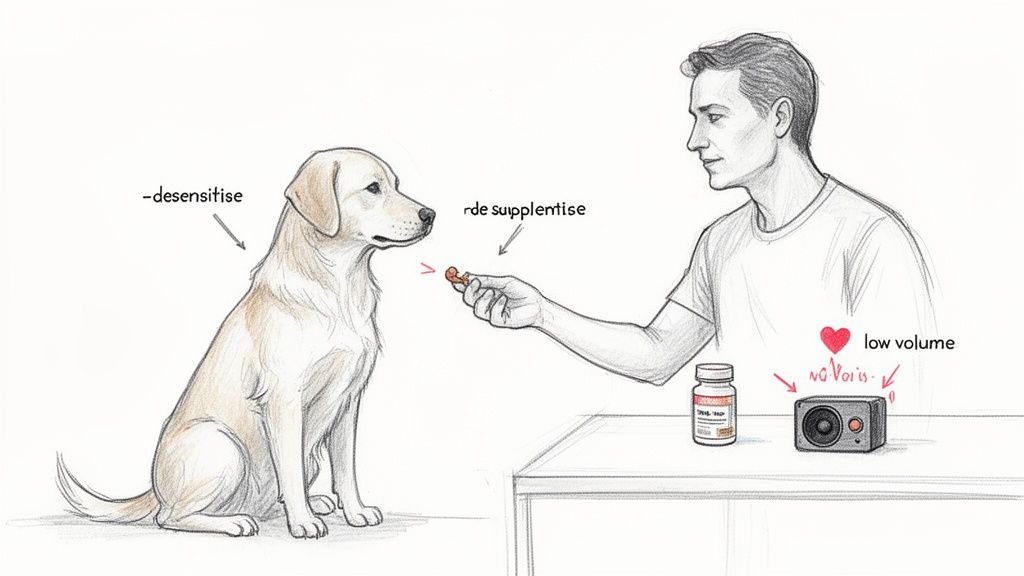
- For Noise Phobias (like fireworks or thunderstorms): Desensitisation is a technique where you gradually expose your dog to their trigger at a very low level they can handle. You might play a recording of thunder at a barely audible volume while giving them a fantastic treat. A supplement can help keep your dog below their panic threshold, allowing them to process the sound without becoming overwhelmed.
- For Separation Anxiety: Counter-conditioning is all about changing your dog’s negative feelings about you leaving into positive ones. You could give them a special, long-lasting puzzle toy stuffed with their favourite food only when you leave. A supplement given beforehand can take the edge off their initial panic, making them more likely to focus on the positive distraction you’ve left behind.
- For Social or Situational Fear: If your dog gets anxious around new people or in busy places, a supplement can make them more receptive to training. It can help them stay relaxed enough to learn that a stranger offering a treat isn’t a threat, or that a bustling high street can be navigated calmly by your side. You can explore more ideas in our guide to natural anxiety relief for dogs.
Building a Holistic Plan for Lasting Calm
A holistic approach is about understanding that real, lasting change comes from tackling both the mind and the behaviour. It’s about building your dog's confidence from the ground up, not just papering over the cracks. This is especially important when you look at the scale of the issue in the UK.
Dogs Trust's National Dog Survey found that a staggering 32% of owners struggle with socialising their pets. With the UK's dog population at 11.1 million, that means over 3.5 million dogs face social challenges often rooted in anxiety—a problem made worse by the lost socialisation opportunities during lockdowns. You can learn more from the full National Dog Survey.
The goal is to do more than just manage anxiety; it's to build genuine resilience. By combining a calmer mind with positive behavioural work, you give your dog the tools to cope with stress long after a supplement has worn off.
This process takes patience and consistency. Progress might feel slow at first, but every calm interaction and positive experience helps to build a new foundation of confidence for your dog.
Of course, sometimes you need to call in the professionals. If your dog’s anxiety is severe, involves aggression, or you just feel like you aren't making progress, it's always best to consult a certified animal behaviourist or your vet. They can help you create a tailored plan and figure out if other steps, like prescription medication, are necessary. Remember, asking for expert help is a sign of being a responsible owner, not a failure.
Giving Your Dog a Supplement: How to Do It Right
Adding a natural supplement to your dog's routine should be a hopeful step, not a stressful one. The trick is to treat it with the same common sense and care as any other part of their health plan. Just because something is labelled 'natural' doesn't mean you can ignore the instructions on the tin. Those dosage guidelines are there for a very good reason—your dog's safety and well-being.
Getting the amount right is the most important part. Supplements are almost always dosed by body weight, and for good reason. A tiny Yorkie needs a completely different amount than a towering Newfoundland. The concentration of the active ingredients matters, too, so never assume the dose for one product is the same as another.
Start Low and Go Slow
Whenever you're introducing something new, a bit of caution goes a long way. A fantastic rule of thumb is to start with a smaller dose than the packaging suggests. Maybe give half the recommended amount for the first few days to see how they get on.
This "start low, go slow" approach lets your dog’s system get used to the new ingredients. It also gives you a chance to watch for any small changes in their behaviour or digestion before you build up to the full dose. It’s a simple step that can prevent an upset stomach and helps you figure out if the supplement is the right choice for them.
Keeping an Eye Out for Side Effects
Even the best natural supplements can have a few mild side effects while your dog adjusts. These are usually short-lived and nothing to panic about, but it’s good to know what you might see.
A few common, mild reactions could include:
- A Bit of Drowsiness: Some calming ingredients, like chamomile, can make a dog a little sleepier than usual when they first start taking them.
- Tummy Grumbles: New ingredients, especially things like probiotics, can sometimes lead to a bit of gas or looser stools as their gut bacteria adapt.
- Small Behavioural Shifts: You might notice their energy levels or appetite change slightly as their body gets used to the supplement.
These things tend to sort themselves out in a few days. If they don't, or if they seem to be getting worse, it’s time to stop the supplement and give your vet a ring.
Here's the golden rule for your dog's health: when in doubt, call the vet. Their advice is gold, ensuring that whatever you’re doing is safe, effective, and right for your individual dog.
Knowing When to Hit Pause
You know your dog better than anyone. Trust that gut feeling when something seems off. If you spot any signs that a supplement just isn't sitting right with them, it’s time to take a break.
Stop giving the supplement and get in touch with your vet if you see any of the following:
- Vomiting or diarrhoea that doesn’t clear up
- Big changes in how much they eat or drink
- Unusual restlessness or, on the flip side, extreme sluggishness
- Any signs of an allergic reaction, like itchy skin, hives, or swelling
Putting your dog’s health first is always the correct move. By sticking to the guidelines, starting slowly, and watching them closely, you can safely add supplements for dogs anxiety to their daily care, giving them the gentle support they need to feel calm and content.
Got Questions About Dog Anxiety Supplements? Let’s Clear Things Up
Diving into the world of supplements for dogs anxiety can bring up a lot of questions. It's completely natural. As a loving owner, you want to be certain you're making the best decision for your dog. So, let's walk through some of the most common queries to help you feel confident.
This is your final checklist, designed to clear up any lingering doubts about how these supplements work, their safety, and where they fit into your dog's overall care plan.
How Long Before I See a Difference?
This is probably the number one question I get asked, and the honest answer is: it depends on the ingredients inside the tub. It’s best to think about supplements falling into two camps: the quick-acting helpers and the long-term builders.
- Fast-Acting Relief (for specific events): Ingredients like chamomile, L-theanine, and valerian root are your go-to for predictable, short-term stress. Think of an upcoming car journey or the distant rumble of a firework display. These typically get to work within 30 to 90 minutes, helping to smooth the edges of a stressful event.
- Long-Term Support (for ongoing anxiety): For a dog who seems to be on edge most days, ingredients like omega-3 fatty acids and probiotics play a different role. They don't offer an instant fix. Instead, they need time to build up in your dog’s system to support a healthy brain and a balanced gut. With these, you’ll want to give them consistently for at least 4 to 8 weeks before you really start to notice a shift in their overall mood and resilience.
The key is to have realistic expectations. While some supplements offer a quick bit of relief, the most profound changes often come from consistent daily use, especially when you pair them with positive training.
Can I Give Supplements Alongside My Dog's Other Medication?
This is a critically important question, and the answer is a firm and simple one: you must speak with your vet before mixing any supplement with prescription medication. Even though the ingredients are natural, they are still bioactive compounds that can have powerful effects.
For example, L-tryptophan influences serotonin levels in the brain. If your dog is already on an antidepressant or anti-anxiety medication prescribed by your vet, adding more could create a risky interaction. Your vet is the only person who has the full picture of your dog's health and can give you the green light.
Your veterinarian's approval is non-negotiable when mixing supplements and medications. Their expertise ensures there are no harmful interactions, creating a safe and effective wellness plan tailored to your dog's specific needs.
Please, never try to make this call on your own. A quick phone call to your vet is all it takes to keep your dog safe and ensure their entire care plan works together as it should.
Are Calming Supplements Safe for Puppies?
You have to be extra careful when giving anything to a puppy. Their little bodies are still growing, and their systems are far more sensitive than an adult dog's. First things first, always check the product label for age recommendations—many are formulated just for adult dogs.
Even if a product is marked as safe for all life stages, I’d still strongly recommend having a chat with your vet before starting a puppy on a calming supplement. For young dogs, the real work lies in positive socialisation and gentle confidence-building training. These early experiences will do far more for their long-term emotional well-being than any supplement ever could.
A supplement might be useful for a specific, stressful one-off event (like a long car ride to their new home), but it shouldn’t be your first port of call for managing typical puppy energy or nerves.
What’s the Difference Between Supplements and Prescription Meds?
Knowing when to reach for a supplement versus a prescription drug is fundamental to managing your dog's anxiety correctly. They simply aren't the same tool and are meant for different jobs.
Here's a straightforward way to think about it:
- Supplements: These are for supporting dogs with mild to moderate anxiety. They work by gently nudging the body's natural calming pathways, helping a dog cope a little better with everyday stressors. They’re a fantastic starting point and work brilliantly alongside behavioural training.
- Prescription Medications: These are powerful drugs prescribed by a vet for severe anxiety or diagnosed disorders. They work directly on brain chemistry to create significant changes and are reserved for dogs whose quality of life is seriously compromised. This is a much more direct veterinary intervention.
Supplements can be an incredible asset for managing common worries and promoting a calmer state of mind. But for deep-rooted phobias or anxiety that's truly debilitating, prescription medication, under the close guidance of a vet, is often the necessary and kindest path forward.
At Tipaw, we believe in empowering dog parents with effective, natural solutions they can trust. Our vet-approved calming chews are formulated with 100% natural, science-backed ingredients to gently support your dog's well-being. Discover how you can bring peace and calm back into your dog's life by exploring our range at https://www.store-tipaw.com.


