


When you see your dog constantly scratching, it's more than just a little annoying—it's heartbreaking. That relentless itching is almost always a sign that something else is going on under the surface. The first real step to helping them find relief is to play detective and figure out why they're so uncomfortable. Most of the time, we can trace it back to environmental allergies, pesky parasites like fleas, or a sensitivity to something in their food.
Why Is My Dog So Itchy? The Common Culprits
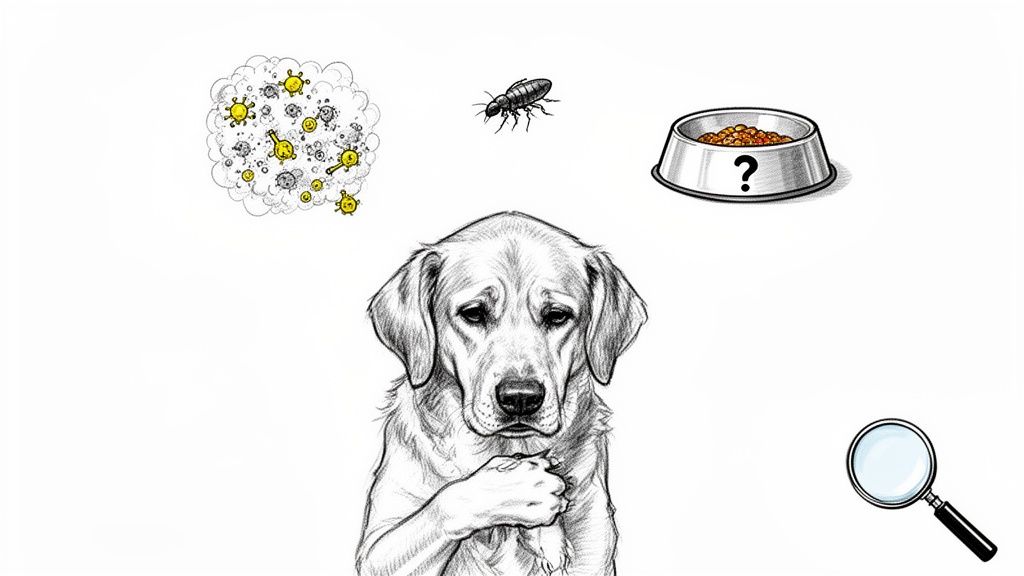
It’s a tough thing to watch your best mate go through that endless cycle of scratching, licking, and chewing. Vets call it 'pruritus', and it can completely take over their life, affecting everything from their sleep to their mood. But you’re not helpless here. By looking at the problem methodically, you can start connecting the dots and get to the bottom of their discomfort.
Think of that itchy skin as your dog's way of telling you something's not right. And you’re certainly not alone in dealing with this. Skin disease is one of the most common health problems for dogs in the UK. In fact, one study found that around 13% of dogs seen by vets are there for a skin disorder. This makes itching one of the top reasons people book a vet appointment, as you can see in this research on skin conditions in dogs.
The Big Three Itch Triggers
To kick off your investigation, it helps to focus on the three main categories of itch-inducers. Getting your head around these will give you a clear framework for what might be bothering your dog.
-
Environmental Allergies (Atopic Dermatitis): Just like us, dogs can react to things in their surroundings. Think pollens from grass and trees, dust mites lurking in the house, mould spores, and even chemicals in cleaning products. This kind of itching often has a seasonal pattern, getting worse in spring or autumn.
-
Parasites: Never, ever underestimate the misery a tiny pest can inflict. Fleas are the number one offender. Many dogs are actually allergic to flea saliva, which means a single bite can set off a massive, itchy reaction. Mites are another culprit, leading to conditions like sarcoptic mange (scabies) that cause unbearable itching.
-
Food Sensitivities: What goes into your dog's bowl can have a direct effect on their skin. These reactions are usually triggered by common proteins like chicken, beef, or dairy, but sometimes grains like wheat can be the problem. Unlike seasonal allergies, itching from food sensitivities tends to be a year-round issue and can sometimes come with an upset tummy.
To help you organise your thoughts, here’s a quick rundown of what to look for.
Common Causes of Dog Itching at a Glance
| Cause Category | Common Triggers | Key Signs | First Action |
|---|---|---|---|
| Environmental | Pollen, dust mites, mould, grass | Seasonal itching, paw licking, face rubbing, ear infections | Limit exposure during high-pollen seasons, wipe paws after walks. |
| Parasites | Fleas, mites (scabies), ticks | Intense scratching, hair loss (especially at the base of the tail), visible bugs or "flea dirt". | Use a flea comb, apply a vet-recommended preventative treatment. |
| Food | Beef, chicken, dairy, wheat, soy | Year-round itching, skin and ear infections, digestive issues (wind, loose stools). | Discuss an elimination diet or food trial with your vet. |
This table should give you a starting point for narrowing down the possibilities based on the signs you're seeing at home.
Key Takeaway: Remember, the itch itself is just a symptom. By methodically working through the possibilities—environment, parasites, and diet—you can stop feeling overwhelmed and start taking targeted action to find a real solution for your dog.
Thinking through these potential causes is your first, most crucial step. Does the itching ramp up after a run through a grassy field? Did it start around the time you introduced a new food? Have you been truly meticulous with your flea checks? Answering these simple questions will set you on the right path to bringing them some much-needed relief.
Bringing Immediate Relief to an Itchy Dog
It’s awful to see your dog in a relentless cycle of scratching, chewing, and misery. Before you can get to the bottom of what's causing it, your first job is to give them some immediate comfort. Think of it as first aid for itchy skin – safe, simple things you can do right now to calm the inflammation and give your poor pup a break.
The key is to soothe the irritation without accidentally making it worse. One of the best and gentlest ways to do that is with a simple cool bath.
The Soothing Power of a Cool Bath
A bath can instantly cool down hot, angry skin and physically wash away surface irritants like pollen, dust, or grass. The temperature is critical, though. Hot water will just dial up the inflammation and make the itch even more intense, so always, always use cool or lukewarm water.
For an extra calming boost, you can’t beat a colloidal oatmeal bath. It’s not just an old wives’ tale. The oatmeal is ground into such a fine powder that it dissolves, creating a milky, moisturising soak that works wonders on irritated skin.
Here’s how to do it properly:
- Prep Your Oats: If you don't have a specific canine oatmeal shampoo, you can make your own. Just whizz up some plain, unflavoured porridge oats in a blender or coffee grinder until they're a fine powder.
- Run the Bath: Fill the tub with a few inches of lukewarm water and stir in the oatmeal powder. You'll see the water turn milky and feel silky.
- Time for a Soak: Get your dog into the tub and use a cup to gently pour the oaty water all over their body, paying special attention to the really itchy spots. If they'll tolerate it, let them soak for a good 5-10 minutes.
- Rinse, Rinse, Rinse: This bit is crucial. Use clean, cool water to rinse every last bit of the oatmeal mix out of their coat. Any residue left behind can dry on their skin and undo all your good work.
- Pat, Don't Rub: Grab a soft towel and gently pat them dry. Rubbing vigorously will just aggravate their already sensitive skin.
Using a Cold Compress for Hot Spots
Sometimes, the itching isn't all over, but focused on specific angry patches that look red, raw, and sometimes even weepy. We often call these ‘hot spots’ (or, more technically, acute moist dermatitis). For these, a cold compress can be a godsend, helping to reduce the swelling and numb the area.
It’s easy to do. Just wrap an ice pack or even a bag of frozen peas in a clean tea towel and hold it gently against the hot spot for 5-10 minutes at a time. Never put ice directly onto their skin. This simple trick can be enough to break the obsessive licking and chewing that makes hot spots so much worse. If you're looking for more ideas, you can explore a variety of trusted dog itching home remedies for extra guidance.
Do a Thorough Parasite Check
Once your dog is a bit calmer and dry, it’s the perfect moment for a proper inspection for fleas, ticks, or mites. These little critters are one of the most common causes of intense itching, so you need to rule them out straight away.
Get a fine-toothed flea comb and carefully work your way through their fur. Pay close attention to the hotspots for fleas: the base of the tail, their tummy, and around the neck and ears.
Pro Tip: Don't just look for live fleas, which can be surprisingly hard to spot. You’re mainly looking for "flea dirt" – tiny black specks that look like dirt but are actually flea droppings. To be sure, comb some specks onto a damp piece of white kitchen roll. If they dissolve and leave a reddish-brown smear, that’s flea dirt.
Finding parasites is a huge step forward. It gives you a clear, immediate plan of action: get in touch with your vet for the best treatment. Discovering these pests is a major breakthrough in your mission to stop your dog's itch.
Finding Your Dog's Itch Triggers at Home
Now that your dog is feeling a little more comfortable, it’s time to put on your detective hat. Getting to the bottom of what’s causing the itch is the only way to find a lasting solution. You’d be surprised how often the culprit is hiding right under your own roof.
This part of the process takes a bit of patience and some keen observation, but it's incredibly empowering. You’ll start to connect the dots between your dog's flare-ups and specific things in their day-to-day life. We'll begin with their immediate environment before diving into the more complex world of food sensitivities.
This simple flowchart breaks down the first moves you should make to provide some comfort and kick off your investigation.
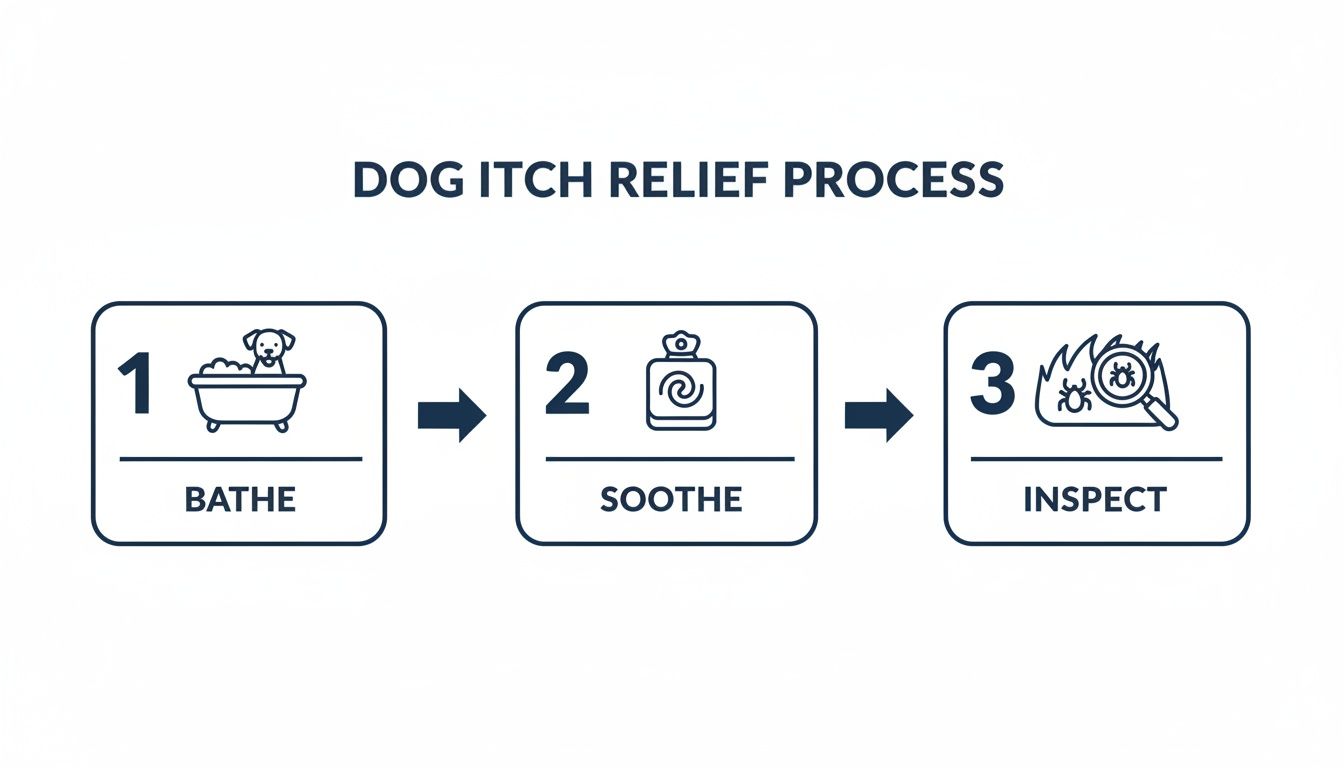
As you can see, the journey starts with immediate care—like a soothing bath—which is then followed by a thorough inspection to hunt for clues.
Scanning for Environmental Allergens
Your home is its own little ecosystem, filled with things that can irritate a dog's sensitive skin. Going room by room is a brilliant way to spot and reduce these common triggers.
Start where your dog hangs out the most. Dust mites are a huge offender, and they love soft furnishings like carpets, sofas, and of course, dog beds. Hoovering thoroughly and washing your dog’s bedding in hot water at least once a week can make a massive difference.
Think about the products you use, too. Scented plug-ins, air fresheners, carpet cleaners, and even your laundry detergent can contain chemicals that trigger contact dermatitis. It's worth switching to unscented, hypoallergenic cleaning products for a few weeks to see if the itching eases up.
A Quick Story from Experience: I once worked with a dog whose constant itching was a complete mystery. It turned out to be the family's new fabric softener. As soon as they switched back to their old, unscented brand, the dog's skin cleared up within a fortnight. It’s often the small things we overlook.
Uncovering Food Sensitivities
If you’ve allergy-proofed your home and there’s still no relief, food is the next likely suspect. Food sensitivities are a very common cause of year-round itching that, unlike seasonal allergies, just doesn't let up.
The most reliable way to figure this out at home is with an elimination diet. This means you'll temporarily switch your dog to a very simple diet made from ingredients they've probably never had before. The idea is to clear out all potential allergens and give their immune system a chance to reset.
Typically, this involves a single novel protein (something new to them) and one carbohydrate source.
- Novel Protein Examples: Venison, duck, rabbit, or kangaroo.
- Carbohydrate Examples: Sweet potato or peas.
You have to be 100% strict for this to work, usually for about 8-12 weeks. That means no treats, no dental chews, no table scraps, and no flavoured toys unless they're made from the approved ingredients. Even one little slip-up can send you right back to square one.
Tracking Seasonal and External Factors
For a lot of dogs, the itching isn't a constant battle but something that flares up at certain times of the year. This seasonal pattern is a huge clue, pointing towards environmental allergies, often called atopic dermatitis. Keeping a little "itch diary" can be a game-changer here.
Jot down notes on when the scratching is at its worst. Does it peak in the spring when all the trees are pollinating? Or does it get bad in late summer and autumn, during ragweed season?
This isn't just a hunch; it's a well-documented issue. In the UK, for example, environmental allergies in dogs are clearly linked to regional pollen levels. One recent report found that more than 8 in 10 dog owners say local pollen counts have a direct impact on their dog's itchiness. You can read more in the full report on canine allergies.
You can also look for links to specific activities. Does your dog come back from a walk through a certain field and immediately start scratching? That could point to an allergy to specific grasses or weeds.
Sometimes, the problem isn't an allergy at all. Persistent itching, a greasy coat, and a musty smell can be signs of a yeast overgrowth. It's often mistaken for allergies, so if that sounds familiar, it's worth reading our guide on how to spot and manage yeast dermatitis in dogs.
By systematically working through your home, your dog's diet, and any seasonal patterns, you can gather the crucial clues you need. This detective work lays the foundation for a targeted plan to finally stop the itch and bring your best friend some lasting relief.
When You Need to Call the Vet
While sorting things out at home is a great first step, some situations are simply non-negotiable and need a professional eye. Trying to tough out a serious skin issue on your own can lead to a world of pain for your dog, not to mention a much longer and more complicated recovery. It’s vital to recognise the red flags that mean it’s time to stop the guesswork and get on the phone to your vet.
Constant scratching is miserable, but it's the physical damage that really escalates the risk. Your dog's claws and teeth can easily break the skin's protective barrier, creating an open invitation for nasty bacteria to move in.
Warning Signs That Demand a Vet Visit
If you spot any of the following, don't wait to see if things improve. These are clear signs that your dog needs a proper diagnosis and a targeted treatment plan. An immediate call to your vet is the quickest way to stop itching for dogs when it gets serious.
- Open Sores or Bleeding: Any break in the skin is a problem. Whether it's from scratching, chewing, or the condition itself, it needs medical attention.
- Signs of Infection: Look for pus, unusual discharge, or significant swelling. Skin that feels hot to the touch is another classic sign of infection.
- A Funky Smell: A strong, musty, or frankly foul odour coming from their skin or ears is a huge indicator of a bacterial or yeast infection.
- Severe Distress: Is the itching so bad they can't sleep, eat, or even be distracted by their favourite toy? That’s a sign of significant distress, and they need professional relief, fast.
- Lethargy or Behaviour Changes: A sudden drop in energy, loss of appetite, or being uncharacteristically grumpy can mean the underlying problem is making them feel properly unwell.
These symptoms mean the problem has moved way beyond a simple irritation. Your vet has the expertise and tools to figure out the root cause and provide effective relief, which might involve anything from medicated shampoos and antibiotics to specific allergy treatments.
Your vet is your greatest ally in this fight. Never feel like you're bothering them. They would much rather see a mild skin issue early than a severe, complicated infection later on.
How to Prepare for a Productive Vet Appointment
To help your vet get to a diagnosis faster, a little prep work goes a long way. The more quality information you bring to the table, the clearer the picture becomes. Think of yourself as a crucial member of the diagnostic team.
Before your visit, try to gather the following information. It will make the appointment so much more effective.
- Keep an "Itch Diary": For a few days before the appointment, jot down notes on when the itching is at its worst. Is it after meals? After a walk in the park? In the middle of the night? Try to rate the intensity on a simple scale of 1-10.
- Take Photos and Videos: It’s true what they say—a picture is worth a thousand words. Get clear photos of the affected skin, rashes, or any sores. A short video of your dog scratching or chewing can also be incredibly helpful for showing the vet the severity of the issue.
- List Their Entire Diet: Write down the brand and flavour of their main food, but don't stop there. Include every single treat, dental chew, and scrap of human food they get. This is absolutely vital if a food sensitivity is on the cards.
- Note Down Medications: Make a list of any flea and worm treatments, supplements, or other medications they’re currently taking.
Understanding Common Diagnostic Tests
Your vet might need to run a few simple tests to get a definitive answer. Knowing what to expect can help you feel more confident in the process.
- Skin Scrapes: This sounds worse than it is. The vet uses a scalpel blade to gently scrape the skin's surface to collect a sample. It’s then popped under a microscope to look for tiny mites, like the ones that cause mange.
- Cytology: For this, a sample of cells is usually taken from the skin's surface with a bit of clear sticky tape. This test is brilliant for identifying yeast or bacteria, which helps your vet choose the right treatment.
- Allergy Testing: If allergies seem likely, your vet might suggest blood tests or intradermal skin testing (very similar to the prick tests humans have) to pinpoint specific triggers in the environment.
Being ready for your visit and understanding these potential steps empowers you to work as a team with your vet. It gets you that much closer to the ultimate goal: providing real, lasting relief for your itchy best friend.
Building a Long-Term Anti-Itch Lifestyle
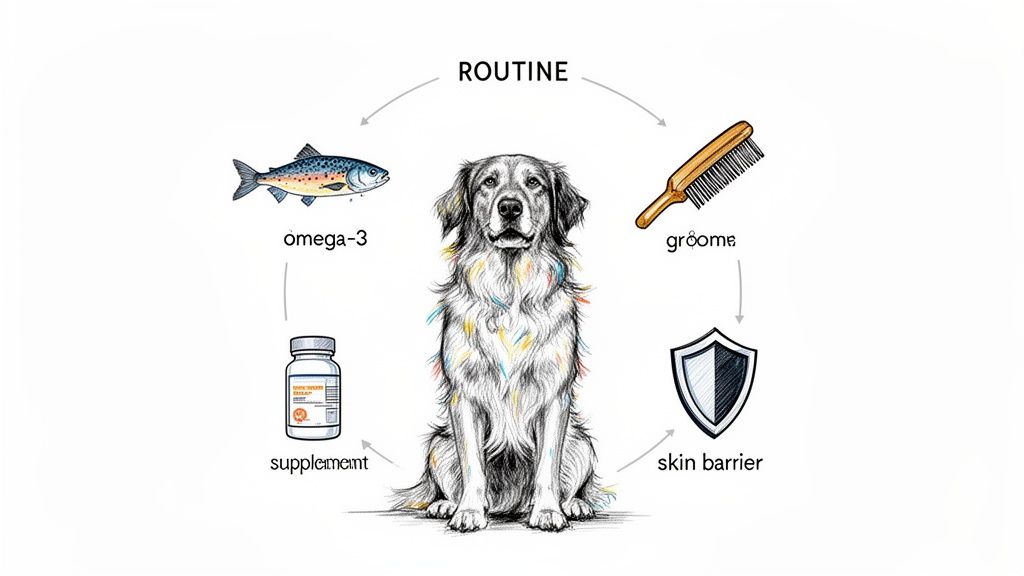
Getting lasting relief from itching isn't about finding one magic cure. It’s about building a sustainable lifestyle that strengthens your dog's skin from the inside out, making them far more resilient to flare-ups. This is a proactive game plan, focusing on nutrition, smart supplementation, and consistent grooming to create a powerful defence against irritation.
Think of your dog's skin as a brick wall. When that wall is strong and healthy, it keeps allergens and irritants out. But if it's weakened by poor diet or chronic inflammation, tiny cracks appear, letting those triggers get in and cause chaos. Our goal is to fortify that wall.
Fuelling a Healthy Skin Barrier
Everything starts with what you put in your dog’s bowl. A diet packed with skin-supporting nutrients can completely transform their ability to fight off the itch. And one of the most powerful tools in your arsenal is omega-3 fatty acids.
You'll find these in abundance in things like fish oil (from salmon, sardines, and anchovies) and flaxseed. These essential fats are absolute superstars for their anti-inflammatory properties. They work right down at a cellular level, calming the body's over-the-top reaction to allergens, which is the real culprit behind most itching.
But they do more than just cool inflammation. Omega-3s are crucial for strengthening the skin barrier itself. They help maintain the natural oily layer of the skin, which is essential for locking moisture in and keeping allergens out. A dog with a robust skin barrier is much less likely to have that dry, flaky skin that so often goes hand-in-hand with constant scratching.
Key Insight: Your dog's diet is more than just fuel; it's information. By providing high-quality, anti-inflammatory foods, you're constantly telling your dog's system to calm down and defend itself. This is a fundamental strategy to stop itching for dogs for good.
The Role of Functional Supplements
Even on the best diet, some dogs just need an extra boost. That's where functional supplements come in. They offer concentrated doses of specific ingredients that are proven to support skin health and get that inflammatory response under control.
Supplements aren’t a replacement for a good diet or a trip to the vet, but they can be an incredibly powerful part of your overall strategy. They give your dog targeted support that’s often difficult to get from food alone.
Key Ingredients to Look For
When you're looking at supplements, a few key ingredients have a fantastic track record for helping itchy dogs. Knowing what they do will help you pick the right one for your dog's needs.
- Omega Oils: As we mentioned, fish oil is a powerhouse. It gives a direct hit of EPA and DHA, which are the most effective types of omega-3s for putting the brakes on skin inflammation.
- Quercetin: People often call this "nature's antihistamine," and for good reason. It's a flavonoid found in plants that helps stabilise the very cells (mast cells) that release histamine during an allergic reaction. Essentially, it helps dampen the itchy response before it even starts.
- Probiotics: A healthy gut is directly linked to a balanced immune system. Probiotics introduce beneficial bacteria that help sort out the gut microbiome, which in turn can stop the immune system from overreacting to everyday allergens.
If you want to explore the options, our detailed guide on the best supplements for itchy dogs takes a much deeper look into how these ingredients can work together to bring relief.
Proactive Grooming for Itch Prevention
Your grooming routine is so much more than keeping your dog looking presentable; it's a vital part of your anti-itch plan. Regular, thoughtful grooming physically removes potential triggers from your dog's coat and skin before they get a chance to cause a problem.
A good brush is your first line of defence. Using a brush that suits your dog’s coat, aim for a few sessions every week. This simple act does more than get rid of loose hair—it lifts away the pollen, dust, and other tiny irritants they’ve picked up on their walks.
When it's bath time, remember that "less can be more," but quality is non-negotiable. Over-bathing, especially with harsh shampoos, can strip the skin's natural protective oils, leaving it dry and even itchier.
Stick to a hypoallergenic, soap-free shampoo, ideally one with soothing ingredients like oatmeal or aloe vera. Unless your vet says otherwise, a bath once a month is plenty for most dogs. It's enough to wash away allergens without disrupting the skin's delicate ecosystem.
Here’s a quick look at the difference between a proactive and reactive approach:
| Proactive Grooming (Prevention) | Reactive Grooming (Treatment) |
|---|---|
| Regular brushing to remove allergens | Bathing only after a major flare-up |
| Using a hypoallergenic shampoo | Using harsh shampoos to "deep clean" |
| Frequent paw wiping after walks | Dealing with inflamed paws and hot spots |
| Routine ear cleaning | Treating painful, established ear infections |
By getting ahead of the problem, you stay in control. Simple habits, like wiping your dog's paws and belly with a damp cloth after every walk, can dramatically cut down on the amount of pollen they track inside. This complete approach—combining diet, targeted supplements, and consistent grooming—creates a powerful, multi-layered defence. It doesn't just manage the symptoms; it builds a foundation of health that makes your dog naturally more resistant to itching, so they can live a much happier, more comfortable life.
Got Questions About Your Itchy Dog?
When you’re desperately trying to figure out why your dog can’t stop scratching, a million questions probably run through your mind. It’s completely normal. Let’s tackle some of the most common ones we hear from dog owners who are right where you are now.
Can I Use Human Creams on My Dog’s Itchy Skin?
It's so tempting, isn't it? You see your dog in distress, and you have something like a hydrocortisone cream in the bathroom cabinet. But please, resist the urge. I strongly advise never to use human anti-itch creams on your dog unless your vet has specifically told you to.
The reason is twofold. First, your dog's skin has a different pH balance than yours, so a product designed for humans can easily make their irritation worse. More worryingly, dogs tend to lick anything and everything you put on their skin. Many of the ingredients in our creams can be toxic if they're ingested, and that's a risk you just don't want to take.
A Quick Word of Advice: Always assume that what’s safe for you isn’t necessarily safe for your pet. Their bodies process things differently, so stick to products made just for them.
How Long Until an Elimination Diet Actually Starts Working?
Ah, the elimination diet. It’s the gold standard for diagnosing food allergies, but it requires a huge amount of patience. Think of it as a marathon, not a sprint. You’ll need to stick with the new, strict diet for at least 8 to 12 weeks before you can really judge if it’s working.
That long window gives your dog’s body enough time to completely flush out any lingering allergens, allowing their immune system to calm down and the skin to finally begin healing.
For this to work, you have to be 100% strict. I mean it. One slip-up can take you right back to square one.
- No other treats: This is where most people go wrong. A single biscuit or dental stick made with the old ingredients can ruin the whole trial.
- No table scraps: Not even that tiny morsel of cheese they’re begging for.
- Watch out for flavoured meds: Double-check with your vet to make sure any medications or supplements are plain and unflavoured.
If the itching gets better after those couple of months, you’ve pretty much confirmed a food sensitivity. The next step, guided by your vet, is to slowly reintroduce single ingredients to figure out exactly what the culprit is.
Do Some Breeds Get Itchier Skin Than Others?
They certainly do. Genetics plays a big role in a dog's predisposition to skin problems, especially atopic dermatitis (allergies to things in the environment like pollen or dust mites). While any dog of any breed can end up with itchy skin, we definitely see it more often in some than others.
A few of the usual suspects include:
- West Highland White Terriers
- French Bulldogs
- Labrador and Golden Retrievers
- Boxers
- German Shepherds
Owning one of these breeds doesn't mean skin issues are a certainty, but it does pay to be extra vigilant. Knowing they're more susceptible means you can be more proactive with their diet, grooming, and environment to hopefully stay one step ahead of the dreaded itch.
At Tipaw, we believe in tackling skin health from the inside out with natural, effective supplements. Our vet-approved formulas are designed to calm irritation and build a stronger skin barrier. Why not explore the Tipaw range today at https://www.store-tipaw.com?


