


If you want to stop your dog licking their paws, you first need to play detective. This isn't just a quirky habit; it's almost always a sign that something is bothering them. Figuring out the why is the single most important step toward finding a real, lasting solution.
Decoding Your Dog's Constant Paw Licking
That slurping sound can be maddening, but it's your dog's primary way of telling you something is wrong. Before you can help, you need to understand what's driving the behaviour. The reasons can be anything from a reaction to the pollen in your local park to a more complex health issue.
Get into a detective mindset. Is the licking focused on just one paw, or are all four getting attention? Does it ramp up after a walk through a grassy field, or perhaps right after dinner? These little observations are the clues that will help you crack the case and get your dog some relief.
The Most Common Culprits
For many of us with dogs in the UK, the culprit is often right outside our front door. Allergies are, by far, one of the most common reasons for itchy, licked paws. Some sources estimate that allergies are involved in 40-50% of cases.
Think about it: the UK has over 27 million acres of grassland, and when spring hits, the pollen count soars. A recent study highlighted that 1 in 4 UK dogs suffers from atopic dermatitis, a skin condition that very often starts with itchy paws. It's also been noted that dogs in urban areas are 35% more likely to have these issues, probably due to higher exposure to pollution and dust.
Of course, it's not always allergies. Other common causes to look out for include:
- Pesky Parasites: Tiny critters like fleas, ticks, or the dreaded harvest mites can cause an intense itch that your dog will try to lick away.
- Hidden Injuries: A small cut from a sharp stone, a thorn stuck between the pads, or even a cracked nail can be surprisingly painful.
- Nasty Infections: When a paw is constantly damp from licking, it becomes the perfect breeding ground for yeast or bacteria, creating a vicious cycle of irritation.
- Boredom or Anxiety: Sometimes, the issue is behavioural. A dog that's bored, stressed, or anxious might start licking as a way to self-soothe.
Quick Guide to Paw Licking Causes
To help you narrow down the possibilities, here’s a quick table summarising the most common causes and what to look for. Think of it as your starting point for your investigation.
| Cause Category | Common Triggers in the UK | Key Signs to Spot |
|---|---|---|
| Allergies | Pollens (grass, trees), dust mites, mould spores, certain food ingredients (e.g., chicken, beef) | Redness between toes, chewing all four paws, seasonal flare-ups, ear infections |
| Injury/Pain | Thorns, glass shards, broken claws, arthritis, insect stings | Licking one specific spot, limping, swelling, reluctance to have the paw touched |
| Infections | Yeast (Malassezia), bacteria (Staphylococcus) | A distinct "yeasty" or "Fritos" smell, reddish-brown fur staining, discharge, inflamed skin |
| Parasites | Fleas, harvest mites (look for orange dots between toes in late summer), ticks | Intense, frantic itching, visible parasites or flea dirt, scabs or hair loss |
| Behavioural | Boredom, separation anxiety, changes in routine (e.g., new baby, moving house) | Licking occurs during downtime, no physical signs of irritation, other anxious behaviours |
Remember, this guide is here to point you in the right direction. If your dog’s licking is persistent or you spot any worrying signs, a trip to the vet is always the best course of action.
The key takeaway here is that you have to treat the source of the problem, not just the symptom. Simply stopping the licking without figuring out why it started is like putting a plaster on a wound that needs stitches—it won't solve the underlying issue. For more insights, you can explore our detailed guide on why dogs lick their paws.
How to Conduct a Thorough Paw Inspection
Before you can get to the bottom of why your dog is constantly licking their paws, you need to play detective. A proper, hands-on check is the first real step to move from guessing to actually knowing what's going on. The trick is to pick a quiet moment when your dog is calm and relaxed – trying to inspect an anxious or hyper dog is just an exercise in frustration.
Start by gently handling each paw, one by one. Keep some tasty treats and plenty of praise handy to make it a positive experience, especially if your dog is a bit funny about having their feet touched. The idea is to make this feel like a normal, calm check-up, not a stressful vet visit.
What to Look For Between the Toes
The little spaces between your dog’s toes and paw pads are often ground zero for problems. You’ll need to carefully and gently spread their toes to get a good look at the skin hidden in there. This is a prime spot for allergens, moisture, and even tiny parasites to gather and cause serious irritation.
Pay close attention to the colour of the skin. Healthy skin between the toes should look pale and calm. Keep an eye out for:
- Redness or Inflammation: This is a classic sign of an allergic reaction or a brewing yeast infection. The skin might look angry, flushed, and feel a bit warm.
- Discolouration: See any reddish-brown stains on the fur? That’s a dead giveaway for chronic licking. It's caused by a pigment in their saliva called porphyrin.
- Moisture or Discharge: Any dampness, stickiness, or – worse – pus is a strong signal that a secondary bacterial infection has set in.
Here's a pro tip: if you notice a distinct, musty smell, a bit like cheesy crisps, you're almost certainly dealing with a yeast infection. This happens when the natural, healthy balance of yeast on the skin gets thrown out of whack, usually because of the constant moisture from licking.
Checking the Paw Pads and Claws
Next, focus on the paw pads themselves and the claws. These areas are tough, but they're also right in the firing line for physical injuries that you might not notice at first glance. Gently run your fingers over the surface of each pad, feeling for anything that seems out of place.
Be on the lookout for little hidden troublemakers like:
- Cuts, Scrapes, or Punctures: It’s amazing what can get stuck in there – tiny bits of glass, sharp stones, or thorns are common culprits.
- Cracks or Dryness: Just like our skin, paw pads can get painfully dry and cracked, leading your dog to lick them for some relief.
- Blisters or Burns: Hot pavements in the summer can cause nasty burns that aren't always obvious right away.
- Broken or Torn Claws: Check the base of each claw where it meets the toe. A split or crack there can be incredibly painful and is a magnet for infection.
- Foreign Objects: You’d be surprised what can get wedged in there. Look carefully for grass seeds, burrs, or even little clumps of matted fur.
This decision guide can help you visualise the process, taking you from a symptom like redness to considering things like the time of year or recent changes at home.
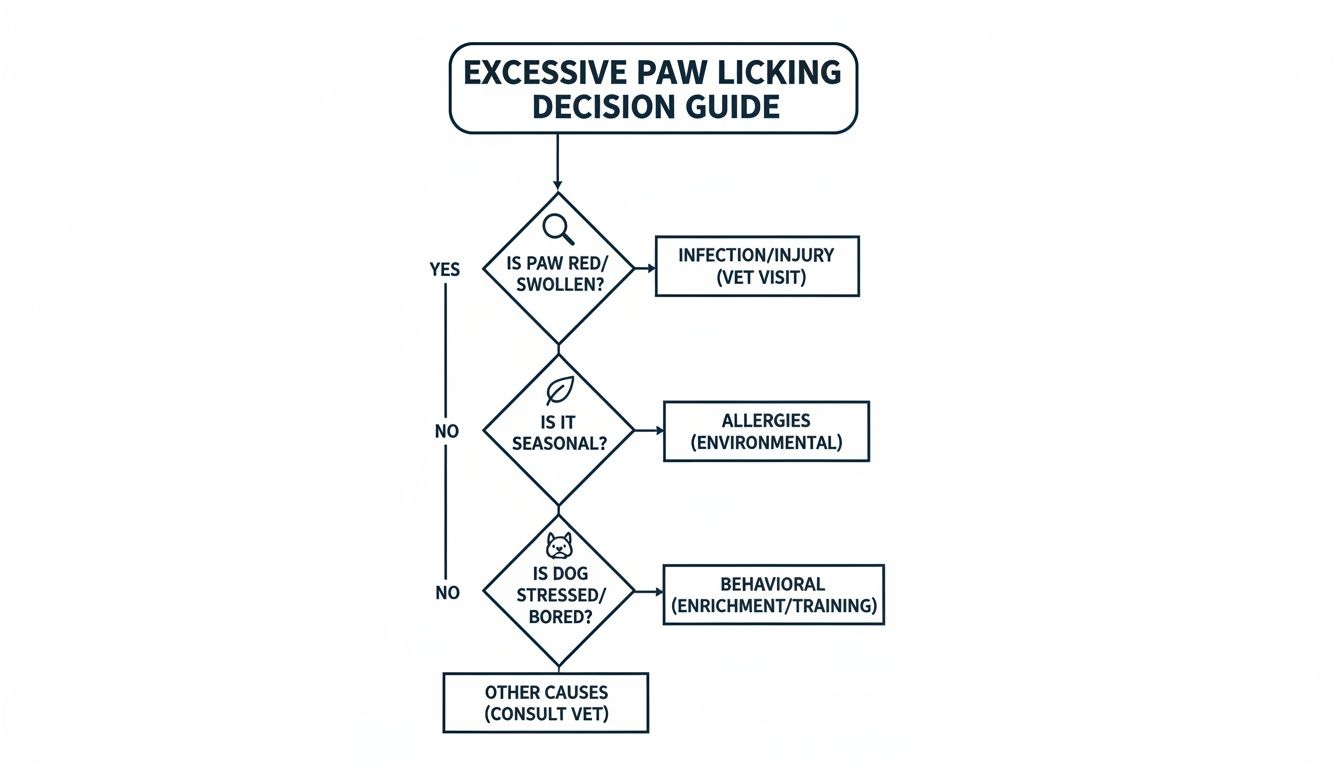
The main takeaway here is that different clues point to very different problems. A red, itchy paw that only flares up in spring suggests a different cause than a dog who started licking obsessively after you moved house.
If you find anything worrying, or if your dog yelps or pulls their paw away in pain, that’s your cue to stop and call the vet. A minor issue can snowball into a major infection if you ignore it. This initial inspection arms you with crucial information to share, helping your vet get to an accurate diagnosis much faster.
Tackling Allergies in the UK: A Common Cause of Itchy Paws
If you're a dog owner in the UK, chances are high that an allergy is the culprit behind your dog's constant paw licking. Our lovely green spaces, perfect for a good runaround, are unfortunately packed with allergens that can make your dog incredibly uncomfortable, especially at certain times of the year.
The UK's distinct seasons each bring their own challenges. Spring and summer walks often mean battling high pollen counts from grasses and trees. Then, as we move into late summer and autumn, we have to contend with harvest mites. These tiny orange pests hang out in long grass and can cause absolute misery, leading to frantic licking and chewing, particularly in the delicate skin between your dog’s toes.
Make Post-Walk Paw Care a Habit
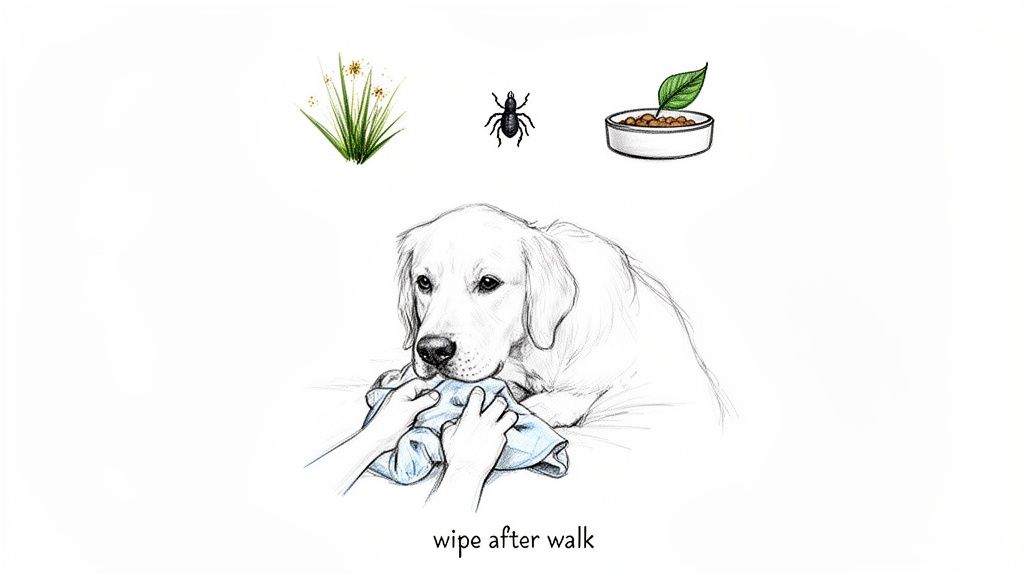
One of the simplest things you can do—and honestly, one of the most effective—is to get into a solid paw-wiping routine. This isn't just about keeping your floors clean; it's your first line of defence. Wiping your dog's paws the moment you get back inside physically removes pollen, mites, and other irritants before they can kick off an allergic reaction.
Here’s how to do it right:
- Choose your tools. A damp cloth with lukewarm water is often all you need. If your dog has particularly sensitive skin, you might want to try some vet-approved hypoallergenic wipes.
- Be thorough. Don't just skim the surface. Gently get in between the toes and pads, as this is exactly where those pesky allergens collect.
- Dry them completely. This part is crucial. Lingering moisture creates a warm, damp environment that’s a perfect breeding ground for yeast infections. Use a clean, dry towel to pat the paws dry, paying extra attention to the areas between the pads.
Connecting the Dots: Diet and Itchy Paws
While the great outdoors is a major source of allergens, what's in your dog's food bowl can play a massive role too. Food sensitivities often show up as skin inflammation, and the paws are a primary target. The most common triggers I see are proteins like chicken or beef, but grains like wheat can also be a problem for some dogs.
If the paw licking seems to be a year-round issue rather than a seasonal one, it’s a good clue that you should probably take a closer look at their diet. The link between gut and skin health is incredibly strong. When a dog's digestive system is out of balance, their immune response can go haywire, making them much more prone to flare-ups. You can learn more by checking out our guide on identifying dog food allergy symptoms.
In the UK, vets see a huge spike in paw-licking cases during summer and autumn. According to the PDSA, skin allergies affect up to 10-15% of all dogs each year, frequently triggered by pollens and mites picked up on daily walks. You can find more insights from the PDSA on paw licking causes.
Building a Stronger Defence from the Inside Out
To really get on top of allergies, you need to tackle them from two angles: managing the external triggers and boosting your dog's internal health. A key part of this is strengthening their skin barrier. Think of it like a wall—if it's weak, irritants get through much more easily, and that's what starts the dreaded itch-lick cycle.
This is where targeted nutrition can be a game-changer. Adding vet-approved supplements with natural anti-inflammatory ingredients, like Omega-3 fatty acids, can make a huge difference. These work from within to calm inflammation and help fortify the skin, turning it into a much more robust barrier against whatever the British countryside throws at it. It's a proactive way to help stop the itch before it even begins.
Looking for Hidden Pain, Parasites, and Injuries
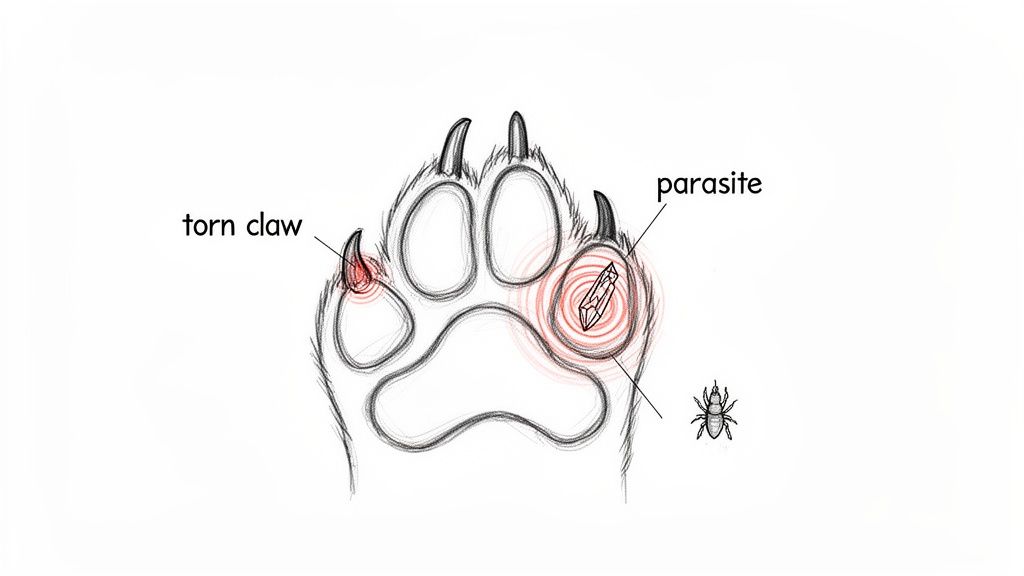
So, you’ve ruled out allergies and obvious irritants. What’s next? It's time to play detective, because persistent paw licking is often a direct response to something painful or pesky that you can't see at first glance. Your dog might be trying to tell you they have an injury or a tiny, unwelcome guest.
It only takes a single flea bite to trigger a cascade of itching, especially if your dog has flea allergy dermatitis. Even if they're on a top-notch preventative, fleas can be notoriously persistent. The bite might not even be on their paw, but the intense allergic reaction to flea saliva can make your dog lick and chew anywhere they can reach for relief.
The stats really highlight this. Fleas are a huge trigger for paw licking in UK dogs. It's thought that around 20% of UK households with dogs get a flea infestation each year, and many don't even realise it until the licking becomes relentless. In fact, pet insurance claims for flea-related dermatitis shot up by 12% in 2023, costing owners over £5 million. The reason is simple: when dogs can't reach the fleas on their back, they often go for their paws. You can learn more about how parasites cause paw problems from Pedigree UK.
Finding the Source of Pain
If your dog is fixated on one specific spot on a single paw, pain is almost certainly the culprit. This isn’t the all-over itchiness you see with allergies; this is your dog trying to soothe a particular ache or wound. You need to take a very close, gentle look.
Common causes of this focused licking include:
- Torn or Cracked Claws: A split nail is excruciatingly painful, especially if it goes down to the quick where the nerves and blood supply are.
- Cuts and Punctures: A tiny piece of glass, a sharp bit of gravel, or a thorn can easily get lodged in a paw pad during a walk.
- Insect Stings or Bites: A bee or wasp sting on the paw will cause instant pain and swelling, which your dog will desperately try to lick away.
- Interdigital Cysts: These are nasty, fluid-filled lumps that can pop up between a dog's toes, causing constant discomfort.
When Licking Points to Deeper Issues
Sometimes, the source of the pain isn't on the surface at all. A dog might lick a paw or a leg joint as a way to self-soothe referred pain from a deeper problem like arthritis. I see this a lot in older dogs. If you notice your dog licking over a joint, particularly after a walk or when they first get up, it could be a massive clue that they have underlying joint discomfort.
Key Insight: Pay close attention to how your dog is licking. A dog obsessing over one spot is screaming "pain!" A dog nibbling at all four paws is more likely signalling a body-wide issue, like an allergy. Understanding this difference is crucial for figuring out what's really going on.
If you suspect any kind of injury, stubborn parasite problem, or hidden pain, please don't wait. It’s time for a vet visit. Trying to manage something like an embedded thorn or a brewing infection at home can quickly spiral into a much more serious problem.
When It’s Not an Itch: Licking From Boredom or Anxiety
So, you’ve checked your dog's paws meticulously. There are no cuts, no redness, no swelling, and no signs of a nasty infection. What now? It’s entirely possible the cause isn’t physical at all. The constant licking could actually be a behavioural habit, stemming from something like boredom, stress, or even anxiety.
Think of it like a person nervously biting their nails. For some dogs, licking is a self-soothing mechanism. It gives them something to do, a way to comfort themselves when they feel unsettled or just plain bored.
You might notice this kind of licking is different. It’s often more rhythmic, almost trance-like, and tends to happen during quiet downtime – perhaps when you’re settled on the sofa for the evening or when your dog is left on their own. If the behaviour popped up after a big life change, like moving house, a new family member arriving, or a shift in your work schedule, that’s a pretty strong hint that emotions are the culprit. The goal here isn't just to stop your dog licking paws but to figure out why they feel the need to do it in the first place.
Boosting Mental Stimulation to Beat Boredom
A bored dog will always find a job to do, and it’s rarely one we’d choose for them. Paw licking can simply be a way to fill the quiet hours. The fix? Give their brain a workout and redirect that pent-up energy into something far more constructive.
This is where enrichment activities come in – they're absolute game-changers. A good brain game can tire a dog out just as effectively as a long run.
- Puzzle Feeders & Snuffle Mats: Ditch the standard food bowl. Making your dog work for their dinner by sniffing it out or solving a simple puzzle can turn a two-minute meal into a 20-minute engaging activity.
- Scent Games: You don't need fancy equipment for this. Just hide a few high-value, smelly treats around the living room and let your dog's powerful nose do the rest. Tapping into their natural instincts is incredibly rewarding for them.
- Learn a New Trick: A five-minute training session each day does more than just teach a new skill. It provides a fantastic dose of mental stimulation and strengthens the bond between you.
Remember, enrichment shouldn't be a special occasion. It needs to be a regular part of your dog's daily life. A mentally fulfilled dog has better ways to use their energy and is far less likely to develop compulsive habits like licking.
Creating a Calmer, More Secure Environment
If you suspect anxiety is the real issue, your focus should shift to creating a predictable and safe space for your dog. Anxious dogs often find immense comfort in routine. Sticking to consistent times for meals, walks, and bedtime can provide an anchor in their day, making their world feel much more predictable and secure.
For dogs who struggle with being left alone or are scared of loud noises, creating a "safe den" can be a huge help. This could be their crate (if they love it) or even just a quiet corner, kitted out with their favourite comfy blanket and a special, long-lasting chew they only get in that space. You might also consider calming pheromone diffusers, which can help lower the general level of stress in your home.
It's also crucial to learn to read their body language. For a closer look at what to watch for, our guide on the common signs of anxiety in dogs can be a great help. By making your dog feel safe and secure, you reduce their need to find comfort in licking.
Paw Licking FAQs: Your Questions Answered
Even with all this information, you might still have a few questions buzzing around. That’s perfectly normal. Let's tackle some of the most common queries we get from dog owners in the UK, so you can feel confident in your next steps.
When Is It Time to Panic? (And When Isn't It?)
A bit of grooming is completely natural, but how do you know when it's crossed the line into a real problem? You should be on the phone with your vet immediately if you spot any of these red flags.
- Open sores or bleeding: Once the skin is broken, the door is wide open for nasty infections.
- Rapid swelling: If a paw suddenly puffs up, it could signal anything from a serious sprain to an insect sting or a hidden abscess.
- Limping: A dog that won’t put weight on their foot is a dog in significant pain. Simple as that.
- A bad smell or any pus: These are the classic calling cards of a bacterial or yeast infection that has already set in and needs professional treatment.
The bottom line? If the paw looks angry, raw, and sore, or if your dog's whole demeanour changes because of the discomfort, don't wait. Make the call.
How Long Until My Dog Stops Licking Their Paws?
Ah, the million-dollar question. The honest answer is: it completely depends on what’s causing it.
If it was something simple, like a bit of grit or some winter road salt stuck between their pads, the licking should stop as soon as you've cleaned the paw thoroughly. Relief is almost instant.
But for the more stubborn, long-term issues, you’ll need to play the long game.
For chronic problems like environmental allergies or deep-seated anxiety, you're looking at a journey, not a sprint. You can expect to see real, gradual improvement over four to six weeks after you’ve started a new plan, be it a diet change, supplements, or new training routines. Consistency is everything here.
Can I Just Use a Bit of My Own Cream on Their Paws?
Please don't. While it might seem harmless to use a little Savlon or E45, many human creams contain ingredients that are toxic for dogs to ingest. And what's the first thing a dog does when you put something on their paw? They lick it. It’s a risk that’s just not worth taking.
Stick to products that have been specifically made for dogs. Your vet is the best person to recommend safe and effective topical options that won't cause an upset stomach (or worse) if licked.
So, It Must Be Allergies, Right?
Paw licking is definitely a hallmark of canine allergies, but it's not the whole story. When allergies are the culprit, you'll usually spot other clues, like your dog constantly getting ear infections, rubbing their face on the carpet, or having generally itchy skin.
Don't forget, intense licking focused on just one paw often points towards pain from an injury. And if there are no physical signs of irritation at all, boredom or anxiety could easily be the driver. The only way to know for sure and get your dog on the right track is to get a proper diagnosis from your vet.
At Tipaw, we're big believers in getting ahead of problems before they start. Our vet-approved supplements are designed to do just that, using natural, effective ingredients to support everything from healthy skin and a glossy coat to comfortable joints and a calmer mind.
Take a look at our range of functional chews and find the perfect daily support for your dog's well-being at https://www.store-tipaw.com.


