


That constant thump, thump, thump of a leg hitting the floor is a sound no dog owner wants to hear. If your dog can't seem to stop scratching, you're not just dealing with an annoyance—you're seeing a clear sign of discomfort. The fastest way to stop dogs from scratching for good is to get to the bottom of why it's happening.
Usually, the culprit falls into one of four main camps: parasites (like fleas), allergies, skin infections, or sometimes even behavioural habits. While you play detective to find the real cause, giving your dog some immediate relief is essential to break that vicious itch-scratch cycle.
Your Guide to Soothing an Itchy Dog
Watching your best friend constantly scratch, bite, and chew at their skin is heartbreaking. You feel helpless, and they're obviously miserable. This guide is designed to cut through that frustration and give you a practical, step-by-step plan to bring them (and you) some much-needed peace.
Our aim here is to shift from just reacting to the scratching to proactively solving the problem. Real, lasting relief rarely comes from a single magic bullet. It's a process of careful observation and elimination.
Decoding the Itch
First things first, you need to become a bit of a detective. Think about the "when" and "where" of the itching. Did it start suddenly? Does it seem to get worse during certain seasons? Are they scratching one specific spot or all over? The answers are your first set of clues.
The most common reasons for all that scratching include:
- Parasites: Fleas are the number one suspect. For a sensitive dog, even a single flea bite can trigger a massive allergic reaction and intense itching. Ticks and mites are other unwelcome guests to look out for.
- Allergies: Just like us, dogs can have allergic reactions to things in their environment (pollen, dust mites, mould) or ingredients in their food (like chicken, beef, or wheat).
- Skin Infections: All that scratching can break the skin's surface, creating the perfect opening for secondary bacterial or yeast infections. These infections often make the itching ten times worse.
- Dry Skin: Sometimes, the cause is as simple as dry, flaky skin, which can be brought on by dry air (hello, central heating in winter!) or a lack of certain nutrients in their diet.
This decision-tree infographic can be a great starting point for narrowing down the possibilities based on what you're seeing.
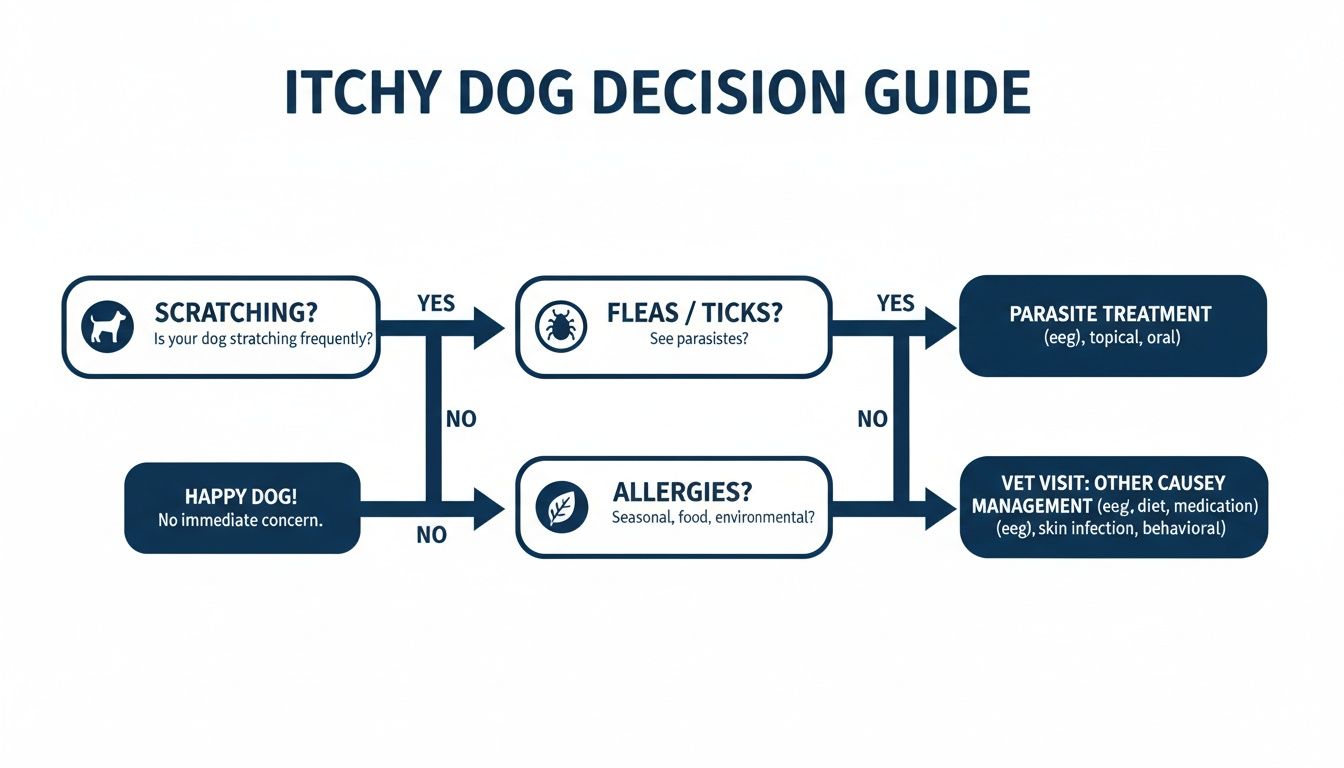
Use this visual guide to work through the common causes, from parasites to allergies, and figure out your next best step.
To help you organise your thoughts, here’s a quick way to connect the symptoms you're seeing with potential causes.
Quick Symptom Checker: What Your Dog's Itch Might Mean
| Symptom Observed | Potential Cause | Immediate Action to Consider |
|---|---|---|
| Intense scratching, especially around the tail and back | Fleas or flea allergy dermatitis (FAD) | Use a flea comb to check for fleas or "flea dirt" (black specks). Treat your dog, your home, and any other pets with a vet-approved flea treatment. |
| Chewing paws, rubbing face, recurrent ear infections | Environmental or food allergies | Try wiping your dog's paws and coat with a damp cloth after walks to remove pollen. Discuss a potential food elimination trial with your vet. |
| Red, inflamed skin with a "yeasty" or foul odour | Bacterial or yeast infection | Schedule a vet visit. Your vet can take a skin sample to confirm the infection and will likely prescribe medicated shampoos, wipes, or oral medications. Do not delay, as these can spread quickly. |
| Flaky, "dandruff-like" skin with generalised itching | Dry Skin or nutritional deficiency | Bathe your dog with a moisturising, oatmeal-based shampoo. Consider adding an Omega-3 supplement (like fish oil) to their diet to support skin health. |
| Scratching without any visible skin issues | Boredom, anxiety, or compulsive behaviour | Increase physical exercise and mental stimulation (like puzzle toys). Try to identify and reduce any new stressors in their environment. If it persists, a vet or veterinary behaviourist can help rule out other causes and offer guidance. |
This table is a starting point, not a substitute for professional advice, but it can help you get a clearer picture before you act.
Finding Relief Now
While you're working on the "why," your dog needs relief now. Soothing that immediate irritation is critical to stop them from causing more damage to their skin.
If you’re looking for some gentle, immediate options to offer comfort, you can find great ideas in our guide on dog itching home remedies. These can help calm the skin while you continue your investigation.
Remember, the goal is twofold: provide instant comfort to stop the scratching and then uncover the real reason behind the itch for a permanent solution.
Winning The Battle Against Fleas and Parasites
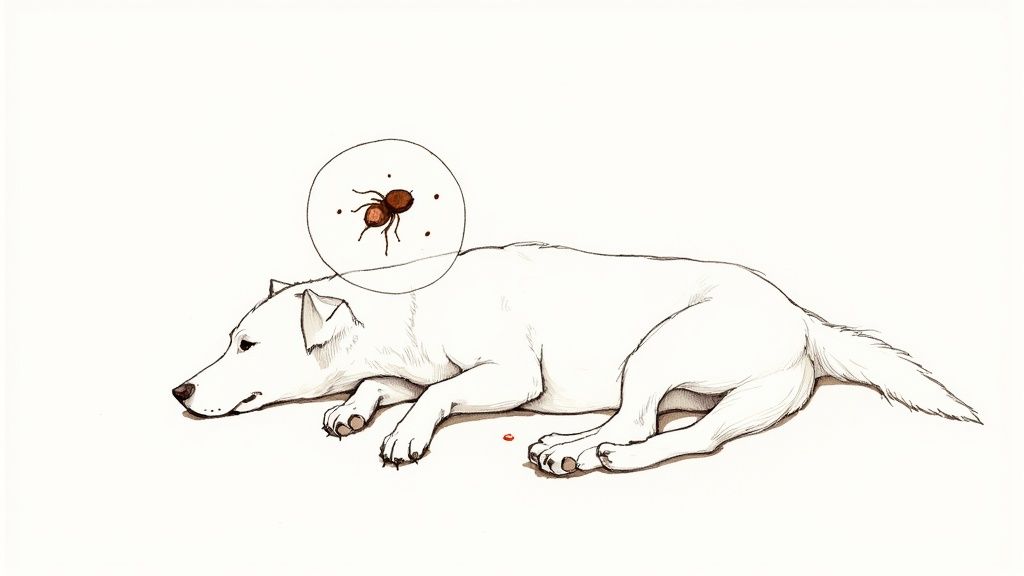
If your dog has suddenly started scratching like mad, chances are high that a tiny, uninvited guest is the culprit. For the vast majority of itchy dogs I see, fleas are public enemy number one. Even if you can't spot them, their presence can trigger a miserable cycle of scratching, chewing, and irritated skin.
A single flea bite is enough to cause a huge reaction in a sensitive dog. This is a condition known as Flea Allergy Dermatitis (FAD), and it’s more than just a simple itch—it’s a full-blown allergic reaction to proteins in flea saliva. This explains why one tiny parasite can lead to widespread misery, often causing a dog to scratch relentlessly, especially around their lower back and the base of their tail.
The scale of this problem is huge. In the United Kingdom, where an estimated 13.5 million dogs live in about 36% of households, parasite control is one of the most common reasons owners bring their scratching dogs to the vet. Vets consistently report fleas as a leading cause of itching, with cases spiking in warmer months when these pests are most active.
How To Perform a Flea Check
Trying to find a live flea on a furry dog can feel like looking for a needle in a haystack. They're fast, tiny, and experts at hiding. A far more reliable method is to search for the evidence they leave behind, often called "flea dirt."
Flea dirt is just flea droppings, and it looks like tiny black specks of pepper scattered in your dog's fur.
To do a proper check:
- Have your dog stand on a large sheet of white paper or a light-coloured towel. This makes it easy to see anything that falls from their coat.
- Using a fine-toothed flea comb, run it through your dog’s fur. Pay close attention to the rump, groin, and neck areas.
- Tap the comb onto the paper. If you see little black specks, you might have found flea dirt.
- To be sure, sprinkle a few drops of water on the specks. If they dissolve into a reddish-brown stain, you've found it—that's digested blood.
A common misconception I hear all the time is that indoor-only dogs can't get fleas. The reality is that fleas can easily hitch a ride into your home on your shoes, clothes, or even other visitors, and quickly start an infestation. Year-round prevention is absolutely crucial for every dog.
Understanding The Flea Life Cycle
To truly stop dogs from scratching due to fleas, you have to get to grips with their life cycle. Only about 5% of the total flea population is made up of the adult fleas living on your pet. The other 95% is lurking in your home as eggs, larvae, and pupae, hidden away in carpets, bedding, and furniture.
- Eggs: A single adult female flea can lay up to 50 eggs per day. These eggs aren't sticky; they fall off your dog and into their environment.
- Larvae: The eggs hatch into tiny, worm-like larvae that instinctively burrow deep into carpets and upholstery to avoid light.
- Pupae: The larvae then spin a cocoon and become pupae. This stage is incredibly tough and can stay dormant for months, just waiting for the right signals (like warmth and vibrations from a potential host) to hatch.
- Adults: Once they emerge, adult fleas jump onto the nearest host to feed, and the entire cycle starts all over again.
This is exactly why just treating your dog is a losing battle. To be successful, you have to treat your home at the same time to break the cycle and stop them from coming back.
Choosing The Right Flea Treatment
Your vet is always your best port of call for recommending a flea treatment that's both safe and effective for your dog. Thankfully, the products available today are a world away from the old-school flea collars.
Modern options are highly effective and come in a few different forms:
| Treatment Type | How It Works | Examples of Administration |
|---|---|---|
| Spot-On | A liquid applied to the skin on the back of the neck, which spreads across the skin's natural oils. | Pipette applied directly to the skin. |
| Oral Tablet | A chewable tablet given monthly or every three months that works through the bloodstream. | A flavoured chew or pill. |
| Flea Collars | Modern medicated collars release their active ingredients slowly over several months. | A collar worn alongside their regular one. |
| Flea Shampoos | Great for killing adult fleas currently on your dog, but they offer no lasting protection. | Used during a bath for an immediate kill. |
Consistency is everything. A single missed dose can leave a window of opportunity for fleas to move back in, kicking off another frustrating bout of scratching. A year-round prevention plan is, without a doubt, the best way to keep your dog comfortable and your home flea-free. While tackling parasites is a critical first step, you might also be wondering, why is my dog scratching and how to help naturally. Exploring supportive supplements can be a fantastic complementary approach.
Investigating Food and Environmental Allergies
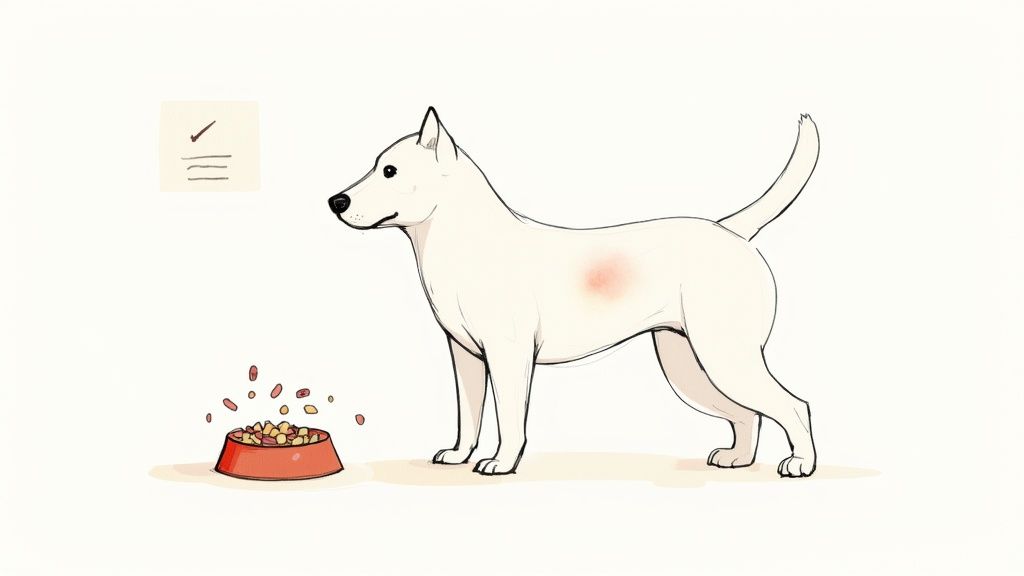
So, you've done a thorough check and you're confident fleas aren't the problem. What’s next on the list of suspects for that relentless scratching? It's time to look at allergies.
Allergies are a massive topic, but they generally fall into two camps: what your dog is eating, and what's in their environment. Figuring out which one is causing the issue is key.
It helps to know the difference between a genuine food allergy and a simple food intolerance. A true allergy is an immune system meltdown over a specific protein, leading to classic signs like maddening itching, inflamed skin, and even chronic ear infections. An intolerance is more of a digestive protest that might cause an upset tum, but it can still make their skin feel uncomfortable.
Either way, what’s going into that food bowl could be the root cause of all this misery. A deep dive into your dog's diet is one of the most effective things you can do to stop dogs from scratching for good.
The Elimination Diet: Your Key to Finding Answers
When it comes to pinpointing a food allergy, the gold standard is the elimination diet. The concept is simple: you strip your dog’s diet right back to basics to clear out all potential triggers. Then, you slowly reintroduce ingredients one by one to see what causes a reaction.
I won't lie, this isn't a quick fix. It takes time, patience, and a bit of military-grade strictness from you. But the reward—a comfortable, itch-free dog—is absolutely worth it. This is a process you should always start with your vet, who can help you choose the right food and guide you through the steps.
There are two common paths you can take:
- Novel Protein Diets: These diets use a protein your dog has never had before. Think venison, duck, or even kangaroo. The logic is simple: their immune system can’t react to something it has never seen.
- Hydrolysed Protein Diets: These are clever, prescription-only foods where the protein molecules are broken down into pieces so small the immune system doesn't even recognise them as a threat.
For this to work, you have to be 100% committed. And I mean 100%. No treats, no dropped scraps from the dinner table, no dental chews, not even a lick of flavoured toothpaste. One little slip-up can ruin the whole trial and put you right back at the beginning.
How to Conduct a Successful Food Trial
A proper food trial is a marathon, not a sprint. In UK veterinary practice, we typically recommend a strict trial of 6-8 weeks. It can take that long for the old, problematic ingredients to fully clear out of your dog’s system and for all that built-up inflammation to finally settle down. You can read more about these protocols in UK veterinary guidance and clinical studies.
Here’s a breakdown of what to expect:
- Choose the Diet: Chat with your vet and decide on the best novel or hydrolysed protein food for your dog.
- The Strict Trial Period: For the next 6-8 weeks, your dog gets nothing but that specific food and water. This is the toughest part. Get everyone in the house on the same page.
- Monitor Symptoms: Keep a diary. Rate the scratching on a scale of 1-10 each day. Snap photos of any red patches so you can track the changes.
- Watch for Improvement: If a food allergy is the culprit, you should see a real difference by the end of the trial. Their skin should look calmer, and the constant itching should have eased off significantly.
Real-World Example: I once worked with a West Highland Terrier named Alfie who had been scratching himself raw for over a year. His owner was at her wit's end. We started a strict hydrolysed protein diet. For the first three weeks, nothing changed. But by week six, the change was remarkable. Alfie’s frantic scratching had stopped, and his skin was finally healing.
The Rechallenge Phase: Pinpointing the Culprit
If the scratching stops during the elimination diet—fantastic! The next step is what we call the "rechallenge." This is how you confirm exactly what your dog is reacting to.
You'll reintroduce just one of their old food ingredients—let’s say chicken—for about two weeks, while keeping everything else the same.
If the itching comes roaring back, you've found your trigger. You stop the chicken, let their skin calm down again, and then you can move on to testing the next ingredient if you need to. This methodical approach gives you a definitive answer and lets you create a safe, long-term diet that finally brings their allergic misery to an end.
What About Skin Infections or Other Medical Problems?
So, you've checked for fleas and you're pretty sure it's not an allergy. What's next? It's time to look at the possibility of a skin infection. All that scratching and licking creates tiny breaks in your dog’s skin, which is like rolling out the welcome mat for bacteria and yeast to crash the party.
These secondary infections are incredibly common and can quickly turn a minor itch into a painful, full-blown problem. They almost never go away on their own, so spotting the signs early is key to getting your dog the right treatment.
Could It Be a Bacterial Infection (Pyoderma)?
One of the most frequent follow-up problems from constant scratching is a bacterial infection called pyoderma. It’s a fancy word that just means "pus in the skin," and it happens when the skin's natural defences are down. You’ll often find it in warm, damp spots like their tummy, armpits, or within skin folds.
Keep an eye out for these tell-tale signs:
- Pimple-like bumps: Small, red, pus-filled spots that look a bit like human acne.
- Crusty scabs: You might see yellowish or brown crusts forming on the skin.
- Circular patches of hair loss: These often have a red, scaly ring around the edge.
- A bit of a smell: The area might have a mild but unpleasant odour.
Pyoderma isn't something you can fix with home remedies. Your vet will need to take a look, maybe even take a quick skin sample, and will likely prescribe a course of antibiotics—either as a cream, a medicated shampoo, or tablets.
Or Maybe a Yeast Infection (Malassezia Dermatitis)?
The other common culprit is a yeast called Malassezia. This fungus lives on your dog’s skin all the time in small numbers. But when things get out of balance—thanks to allergies or too much moisture—it can multiply like crazy and cause a real headache.
Yeast infections have some very distinctive symptoms that are hard to miss once you know what you’re looking for.
One of the biggest giveaways for a yeast infection is the smell. Owners often say it’s a musty, cheesy, or even a corn-chip-like odour coming from their dog’s skin or ears. If you catch a whiff of that along with serious itching, yeast is a prime suspect.
Other clues that point to a yeast problem include:
- Greasy, oily fur: Their coat might feel waxy or oily when you pet them.
- Thickened, dark skin: With chronic infections, the skin can become thick, leathery, and turn grey or even black. This is common in the armpits and groin area.
- Redness and inflammation: Look closely between their paw pads, inside the ear flaps, and around their face.
Treating this properly requires antifungal medications, usually in the form of special shampoos or medicated wipes from your vet. If you want to dive deeper into this topic, you can learn more about yeast dermatitis in dogs and how to get it under control.
Less Common, But More Serious, Conditions
While yeast and bacteria are the usual suspects, sometimes persistent scratching is a red flag for a more serious underlying medical issue. These conditions really need a vet's expertise to diagnose and manage correctly.
| Medical Condition | Key Signs and Symptoms | Why It Causes Itching |
|---|---|---|
| Sarcoptic Mange (Scabies) | Incredibly intense, frantic itching, often starting on the ears, elbows, and belly. Crusty ear tips are a classic sign. | Caused by a microscopic mite that burrows into the skin, triggering a severe allergic reaction and non-stop irritation. |
| Hypothyroidism | Dry, brittle hair, symmetrical hair loss, tiredness, and weight gain. The skin often becomes flaky and prone to infections. | An underactive thyroid gland messes with the body's metabolism, weakening the skin's natural barrier and making it dry and vulnerable. |
| Cushing's Disease | Thinning skin, hair loss, a "pot-bellied" look, and increased thirst and urination. The skin becomes fragile and easily infected. | The body produces too much of the stress hormone cortisol, which suppresses the immune system and damages skin health. |
These potential issues show just how important a proper diagnosis is. Just trying to soothe the itch without finding the real cause is like mopping up a flood while the tap is still running full blast. If your dog is still scratching after you've dealt with fleas and tried dietary changes, a trip to the vet is the only way to get to the bottom of it.
Looking Beyond the Bowl: Behavioural and Environmental Triggers
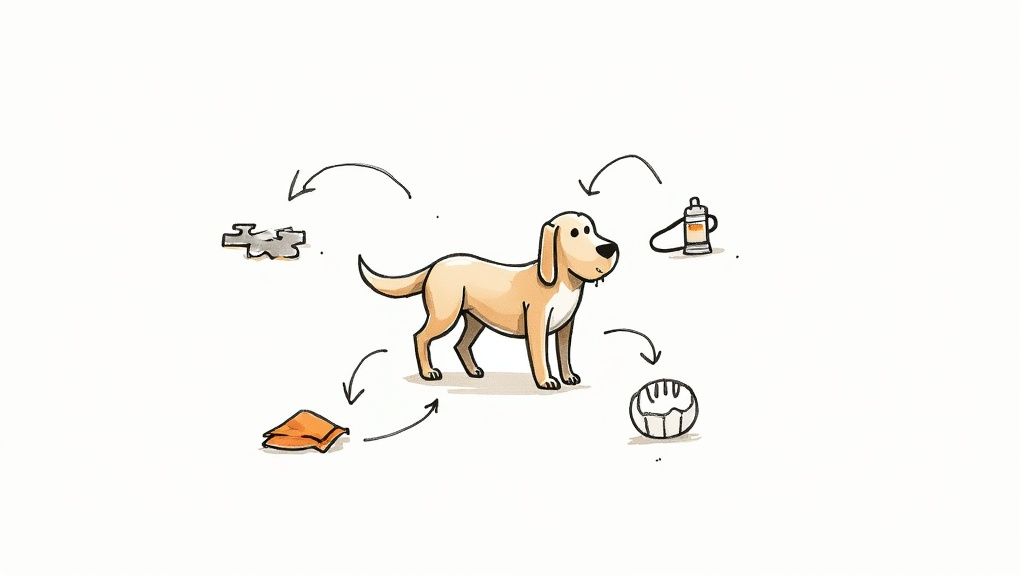
So, you’ve ruled out fleas, ticks, and food sensitivities, but your dog is still scratching relentlessly. What now? It’s time to look beyond the obvious physical causes and consider two other major culprits: their mind and their surroundings.
It can be baffling when there’s no clear medical reason for the itch. But behavioural scratching is a very real problem, often born from anxiety or boredom. In the same way, invisible triggers in your home and garden, like pollen or dust mites, can make a dog just as miserable as any food allergy. Getting to grips with these factors is a huge step towards helping your dog stop scratching for good.
When The Itch Comes From Within
Just like a nervous person might bite their nails, some dogs develop physical habits to cope with emotional turmoil. This is called psychogenic scratching (or licking), and it can quickly spiral into a compulsive, self-harming cycle. The act of scratching can actually release endorphins, giving the dog a brief moment of relief from their anxiety, which only reinforces the behaviour.
What’s going on in their head? It could be one of several things:
- Separation Anxiety: Many dogs find it incredibly stressful to be left alone, and all that nervous energy has to go somewhere. For some, it comes out as scratching or licking.
- Boredom: A dog without a 'job' or enough mental stimulation will often invent one. Compulsive grooming can easily become their go-to activity to pass the long hours.
- Stress: A new baby, moving house, or even just tension between household pets can create a stressful atmosphere that manifests physically as itchy skin.
To tackle these behavioural itches, we need to shift our focus from their skin to their state of mind. The aim is to provide positive, healthy outlets for all that mental and physical energy.
A tired dog is a happy dog, but a mentally fulfilled dog is even happier. Simply adding another 10 minutes to your walk probably won't cut it if their brain isn't being challenged.
Try weaving some new enrichment activities into their day. Instead of just putting their food in a bowl, scatter it in the grass for them to sniff out. Play a game of "find it" with their favourite toy. These simple games are fantastic for burning mental energy, redirecting their focus from the itch, and boosting their confidence.
Managing Invisible Environmental Allergens
Beyond what’s happening inside your dog’s head, their everyday world is full of potential irritants. Environmental allergies, known in the vet world as atopic dermatitis, are incredibly common. This is when a dog's immune system has an over-the-top reaction to substances in the air that are normally harmless, often leading to chronically itchy paws, ears, and bellies.
Unlike a food allergy, these triggers are usually inhaled or absorbed right through the skin. Sometimes they're seasonal, flaring up when the pollen count soars in spring or summer. But indoor allergens, like dust mites, can cause trouble all year round.
The main environmental culprits to watch for are:
- Pollen: From trees, grasses, and weeds.
- Dust Mites: Tiny creatures that love to live in our bedding, carpets, and sofas.
- Mould Spores: Often found in damp areas like bathrooms and basements.
- Household Cleaners: The harsh chemicals in some floor cleaners, detergents, or air fresheners can be very irritating to a dog's sensitive skin.
While you can't exactly bubble-wrap your dog, you absolutely can take practical steps to minimise their exposure at home. This kind of proactive management can make a massive difference, often reducing the need for medication and giving them long-term relief.
Here are a few simple but effective ways to reduce allergens at home:
| Allergen Type | Management Strategy | Why It Helps |
|---|---|---|
| Pollen | Wipe your dog's paws and coat with a damp cloth after walks. | This physically removes pollen before they can lick it off or track it through the house. |
| Dust Mites | Wash their bedding weekly in hot water (above 60°C). | Hot water is needed to effectively kill both the mites and their eggs. |
| Indoor Air Quality | Use a vacuum cleaner that has a HEPA filter. | HEPA filters are brilliant for trapping tiny allergens and stopping them from being blown back into the air. |
Creating a low-allergen home is a powerful, drug-free way to support your itchy dog. It’s a vital piece of the puzzle in breaking the scratch-itch cycle once and for all.
Your Questions About Dog Scratching, Answered
When your dog is scratching non-stop, it's natural to have a million questions running through your head. To give you some peace of mind, I've pulled together some of the most common queries I hear from dog owners and provided clear, practical answers based on years of experience and veterinary advice.
Can I Use Human Anti-Itch Creams on My Dog?
It’s incredibly tempting to grab that tube of hydrocortisone from your own medicine cabinet when you see your dog in such discomfort. Please don't. While the intention is good, it's a move that can easily backfire.
A dog's skin has a completely different pH balance to ours, so human products can often make the irritation or dryness even worse. The bigger problem, though, is that dogs lick. What's harmless on our skin can be toxic if your dog ingests it. It's far safer to stick with products specifically formulated and approved for our canine friends.
How Quickly Should Flea Treatment Stop the Itching?
This is a really common source of frustration for owners. You've applied a top-notch flea treatment, and it likely started killing fleas within just a few hours. So why is your dog still scratching like mad?
If your dog has Flea Allergy Dermatitis (FAD), they're not just reacting to a bite; they're having an intense allergic reaction to the proteins in flea saliva. Even after the fleas are dead and gone, the skin inflammation they caused can take days, sometimes even a couple of weeks, to fully settle down. You should see a gradual improvement, but it won't be an overnight fix.
A key point to remember: If you're dealing with a home infestation, newly hatched fleas will keep jumping on your dog. This is why treating both your pet and your home is the only way to truly break that miserable flea life cycle.
Why Is My Dog Scratching More at Night?
If it feels like the scratching gets dialled up to eleven as soon as you turn the lights out, you're not imagining things. It's a pattern many dog owners report.
When the house quiets down and the distractions of the day fade away, your dog simply has less to focus on besides that nagging itch. It becomes all-consuming. On top of that, the sound of scratching just seems so much louder in a silent house, making it impossible to ignore.
There can also be biological reasons. Certain parasites, like the mites that cause sarcoptic mange, are known to become more active at night. Allergens like dust mites are also more concentrated in bedding, which can easily trigger a reaction when your dog curls up to sleep. If you notice this pattern, it's a really helpful clue to share with your vet.
Is a Little Bit of Scratching Normal?
Absolutely. A bit of scratching is completely normal. Just like us, dogs get the occasional itch. They'll scratch, shake their ears, and groom themselves as part of their daily routine. It’s nothing to worry about.
The time for concern is when that scratching becomes something else entirely. Watch out for scratching that is:
- Persistent: It’s happening again and again, all day long.
- Intense: They’re frantic, unable to settle, and seem truly distressed by it.
- Disruptive: It’s interrupting their sleep, stopping them from playing, or putting them off their food.
- Damaging: You're seeing hair loss, red or inflamed skin, scabs, or those raw, weepy "hot spots."
An occasional, casual scratch is just a dog being a dog. It’s that chronic, obsessive scratching that tells you there’s a deeper issue that needs solving.
At Tipaw, we're all about helping your dog live a happier, healthier life. Our vet-approved, natural supplements are crafted to support your dog's skin and coat from the inside out. Explore our solutions and find the right support for your best friend.
Discover the difference at https://www.store-tipaw.com


