


That constant, rhythmic slurp, slurp, slurp of your dog licking their paws isn't just a quirky habit. It’s almost always a direct signal that something is wrong. The most common reasons a dog won't stop licking their paws are rooted in irritation from allergies, pain from an injury, or even psychological distress like anxiety or boredom. Figuring out the real cause is the critical first step to finding a solution that works.
Why Your Dog Constantly Licks Their Paws
If you've noticed your dog is obsessively licking their paws, they're trying to tell you something. While a quick clean-up after a walk is perfectly normal, repetitive, focused licking is their primary way of dealing with an underlying issue. Think of yourself as a detective – your job is to decipher what their behaviour is communicating.
More often than not, the chief culprit is dermatitis, a catch-all term for inflamed, itchy skin. This is frequently kicked off by allergies, which generally fall into three camps:
- Environmental Allergies (Atopy): Your dog could be reacting to things they encounter every day, like pollens, grasses, mould spores, or even dust mites in your home. If the licking seems to flare up with the seasons, you've got a strong clue.
- Food Allergies or Sensitivities: Sometimes, an ingredient in your dog's diet can trigger an immune response that shows up as itchy skin, especially on the paws and ears.
- Contact Dermatitis: This is a more immediate reaction to something their paws have physically touched. Think harsh floor cleaners, winter road salt, pesticides on the lawn, or even a specific type of grass.
To help you quickly sort through the possibilities, here’s a quick guide.
Quick Guide to Paw Licking Causes
Use this table to quickly identify the potential reason your dog is licking their paws and what your immediate next steps should be.
| Potential Cause | Key Symptoms to Look For | What You Can Do Now |
|---|---|---|
| Environmental Allergies | Generalised itching, seasonal patterns, redness between toes. | Wipe paws after walks; consider an air purifier at home. |
| Food Allergies | Licking plus ear infections or digestive upset. | Discuss an elimination diet with your vet. |
| Pain or Injury | Licking is focused on a single paw; limping or reluctance to walk. | Gently and carefully inspect the paw for foreign objects or cuts. |
| Yeast/Bacterial Infection | A "cheesy" or musty smell, redness, greasy discharge. | Book a vet visit; avoid moisture and keep the area dry. |
| Behavioural Issues | Licking occurs during downtime, when you're leaving, or during storms. | Increase exercise and mental stimulation (puzzle toys, training). |
This table is a starting point, but observing your dog's specific symptoms is the best way to narrow down the cause.
The decision tree below offers a great visual walkthrough to help you connect the dots between your dog's symptoms and the potential causes.
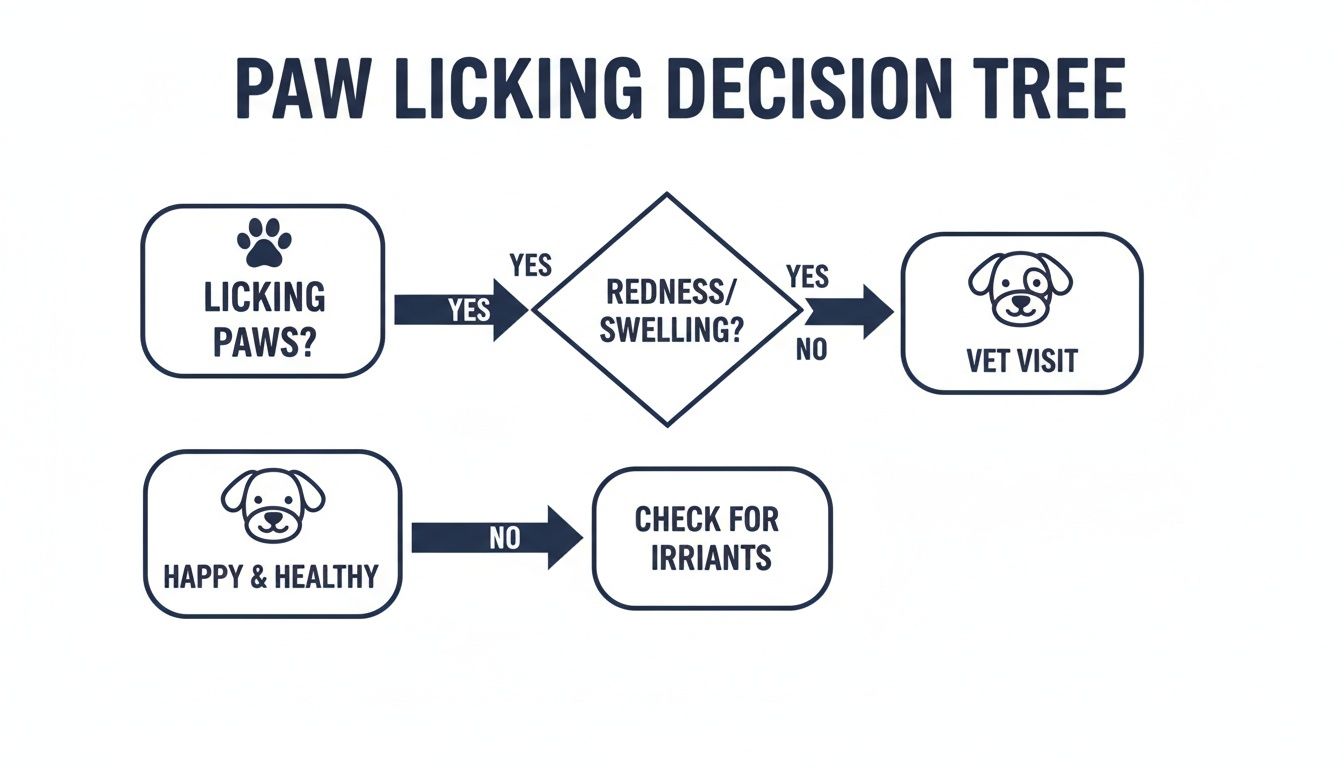
As the flowchart shows, symptoms like redness or highly localised licking can point you in very different directions, from a simple splinter to a more complex health problem.
Pinpointing Pain and Injury
If the licking is laser-focused on just one paw, pain is the most likely suspect. Your dog could be dealing with anything from a tiny, hidden splinter or a cut from sharp gravel to something more serious. It's time for a gentle but thorough inspection. Check the entire paw, looking carefully between the toes and on the pads for:
- Cuts, scrapes, or puncture wounds
- Thorns, glass shards, or other embedded bits
- Insect stings or bites
- Broken or split nails
- Blisters from hot pavement
- Any signs of swelling or heat, which might suggest a sprain or even arthritis
A Word of Warning: The constant moisture from saliva creates the perfect breeding ground for nasty secondary infections. What might start as a simple lick to soothe an itch can quickly spiral into a painful bacterial or yeast infection, making the whole situation much worse.
Recognising Behavioural Triggers
Sometimes, the root cause isn't physical at all. Licking can easily become a self-soothing mechanism for dogs dealing with stress, boredom, or anxiety.
This kind of licking is often triggered by:
- Boredom: A dog with not enough to do will invent a job. For some, that job is paw licking.
- Anxiety: Big triggers like separation anxiety, thunderstorms, or even just a change in routine can cause a dog to lick anxiously.
- Compulsive Habits: What starts as a response to a real problem can stick around long after the initial issue is gone, becoming a deeply ingrained habit.
Here in the UK, skin problems are incredibly common in our dogs. A major 2021 VetCompass™ study found that dermatitis – often the driver behind paw licking – was a frequent diagnosis among a group of over 22,000 dogs. This really underscores how prevalent environmental triggers are in starting the itch-lick cycle.
The persistent dampness from licking often paves the way for secondary issues, which is why it's so vital to understand the link between licking and yeast dermatitis in dogs.
Managing the Itch From Allergies
When allergies are the hidden culprit behind your dog's constant paw licking, you’re looking at a sign of genuine discomfort. It’s not just a passing habit. For your dog, it can feel like a relentless, maddening itch that makes them lick, chew, and nibble just to get a moment of peace. The first step towards bringing them that relief is figuring out exactly what kind of allergy we're dealing with.
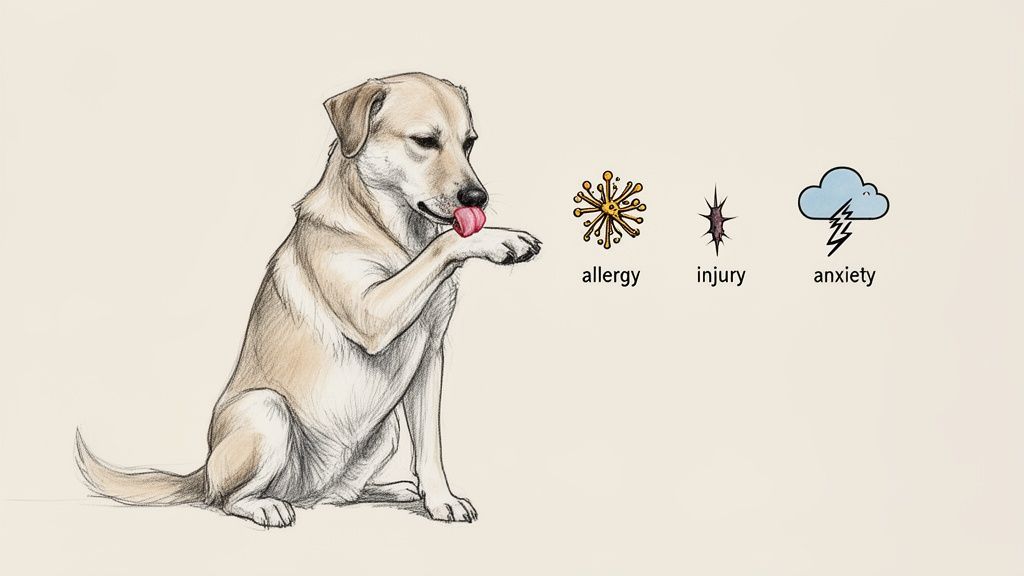
At its core, an allergic reaction is just the immune system overreacting to something it sees as a threat. These triggers, or allergens, usually fall into a few key categories, and each one needs a slightly different game plan to successfully stop your dog licking its paws.
Environmental Allergens: The Invisible Irritants
One of the most frequent reasons for itchy paws is environmental allergies, often called atopic dermatitis. It helps to think of your dog’s paws as little mops, picking up irritants from every single surface they walk on.
Some of the usual suspects include:
- Pollens and Grasses: If the licking really ramps up in spring or summer, seasonal allergies are a pretty safe bet.
- Mould Spores: You'll find these in damp spots inside the house and out in the garden.
- Dust Mites: These tiny critters live in our carpets, bedding, and sofas, causing year-round trouble.
- Household Chemicals: Those harsh floor cleaners or chemicals used on the lawn can cause an immediate reaction on their paws, known as contact dermatitis.
Here’s a simple trick that works wonders: set up a "paw cleaning station" by your door. Wiping your dog's paws with a damp cloth or a gentle, pet-safe wipe after every single walk physically removes these allergens. Honestly, this one small change can make a massive difference in preventing flare-ups.
Uncovering Food Sensitivities
Food sensitivities can also show up as itchy paws, though it’s less common than environmental triggers. The immune reaction often zeroes in on the skin, turning their paws, ears, and tummy into itchy hot spots.
The most common food culprits are often proteins like beef, chicken, dairy, and wheat. Pinpointing the trigger isn't about guesswork; it requires a proper plan. Your vet will likely recommend an elimination diet, which is the best way to get a clear answer. You'll switch your dog to a food with a new, simple protein for several weeks. If the symptoms clear up, you then reintroduce the old ingredients one by one to see which one causes the reaction. Being able to spot the other signs of dog allergies can also help you and your vet connect the dots much faster.
The key thing to remember is that managing allergies is all about reducing the total "itch load." A dog can often tolerate a little bit of an allergen, but when multiple triggers pile up—pollen from the park, dust mites in their bed, and an ingredient in their dinner—it pushes them over the edge into a non-stop licking frenzy.
The Role of Parasites in Paw Irritation
Don't forget about parasites. Here in the UK, fleas are a huge cause of itchy skin. The PDSA often highlights them as a top irritant. Even if you don't spot any fleas on the paws themselves, a single bite somewhere else on the body can set off a whole-body allergic reaction, causing your dog to focus their chewing and licking on their feet. In fact, VetCompass™ Programme data showed flea bite hypersensitivity in 0.48% of UK dogs, a condition directly linked to this kind of compulsive behaviour.
Building Resilience From the Inside Out
To really get on top of the itch, you need to support your dog's body from within. This means strengthening their skin barrier and calming down that inflammatory response.
Omega-3 Fatty Acids: I’m a big fan of supplements rich in Omega-3s, like fish oil. They are fantastic for skin health, helping to fortify the skin barrier to make it less vulnerable to allergens. Plus, they have natural anti-inflammatory properties that soothe irritated skin.
Targeted Nutrition: A high-quality diet is the foundation of good health. Making sure your dog gets the right balance of vitamins and minerals—especially skin-supporting nutrients like zinc and biotin—can make a world of difference in their ability to fight off allergic reactions.
By combining diligent cleaning and management with this kind of internal support, you build a solid plan to tackle your dog’s allergies. This approach does more than just soothe the symptoms; it gets to the root of the problem, helping you finally break the cycle of licking and bring your dog the comfort they deserve.
When It’s Not an Itch: Tackling Licking from Anxiety or Boredom
Sometimes, the constant licking has nothing to do with itchy skin or a hidden thorn. Once you and your vet have ruled out any physical causes like allergies, infections, or injuries, it's time to put on your detective hat and look at your dog's emotional world. Paw licking can be a powerful self-soothing habit, a bit like how we might bite our nails when we're stressed. It's often triggered by boredom, anxiety, or general stress.
A dog without enough to do will often invent their own job, and for many, that job becomes obsessively grooming their paws. This isn't a sign of a "bad" dog; it's a huge signal that their mental and emotional needs aren't being fully met. The licking itself releases endorphins – the body’s natural feel-good chemicals – which creates a rewarding cycle that can be incredibly tough to break.
This has become a more noticeable issue across the UK, especially for urban dogs who might face more isolation. In fact, some anecdotal reports from the PDSA suggest that up to 20-30% of vet visits for paw problems are actually rooted in anxiety. This situation was made worse for many pets after the major routine shifts of the post-2020 lockdowns. To get another perspective on this common behaviour, you can find some great insights on dog behaviour from Pedigree UK.
Is It a Habit or a Compulsion?
It's really important to figure out if you're dealing with a simple habit or a genuine compulsion. A dog licking out of sheer boredom will probably stop the moment you offer a favourite toy or start a game. You can redirect them pretty easily.
A compulsive licker, however, is a different story. They’ll often carry on licking despite your best efforts to distract them. They might seem "zoned out" or even become distressed if you try to interrupt. This is a much more serious sign, often pointing to deeper anxieties like separation issues or noise phobias. Learning to spot the subtle signs of anxiety in dogs is your first step to getting to the bottom of it.
Give Their Brain a Workout
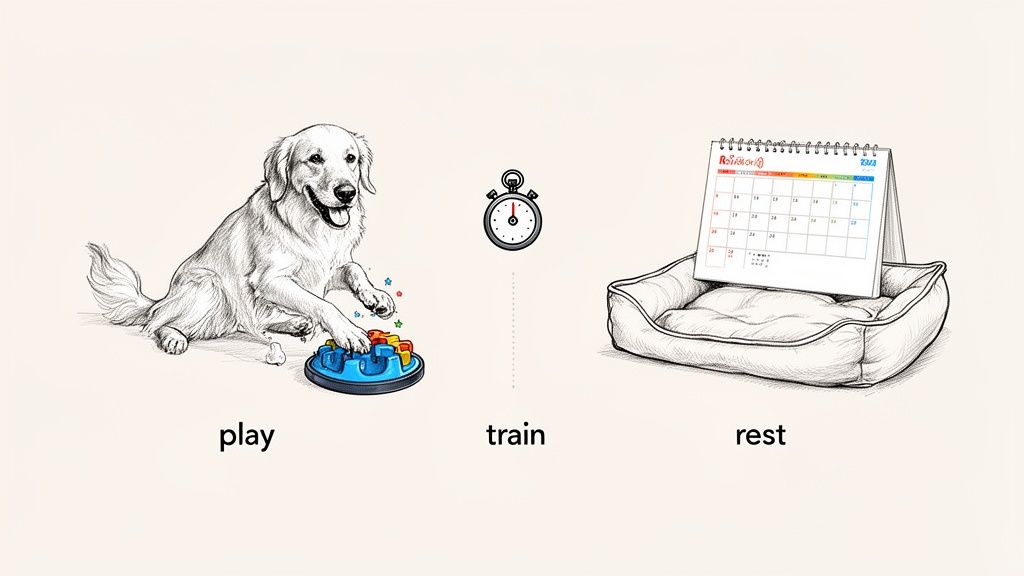
To truly stop a dog licking paws for behavioural reasons, you have to give their brain something positive to focus on. A longer walk is great, but it’s not always enough. Their mind needs a job to do.
- Puzzle Feeders and Snuffle Mats: These are fantastic. They turn mealtime into a fun challenge, forcing your dog to sniff, nudge, and problem-solve to get their food. It’s a brilliant way to burn off mental energy.
- Quick, Fun Training Sessions: You don't need hours. Just five or ten minutes a day reinforcing old commands or teaching a fun new trick does wonders for their confidence and strengthens your bond.
- Play "Find It": Hide a few tasty treats around a room and encourage your dog to use their nose to find them. This taps into their most powerful natural sense and is incredibly rewarding for them.
These activities do more than just kill time. They fulfil your dog's deep-seated instincts to work and solve problems, which leaves far less room for idle paws and anxious licking.
A tired dog is a happy dog, but a mentally fulfilled dog is a calm one. Enrichment isn't just about preventing boredom; it's about building a more resilient and confident companion.
Create a Calm, Predictable World
Dogs are creatures of habit; they thrive on predictability. A consistent daily routine for feeding, walks, and playtime can dramatically lower their baseline anxiety because they know what to expect and when.
If you notice the licking spikes around specific triggers – like thunderstorms, fireworks, or you leaving for work – look into calming aids. Pheromone diffusers, calming supplements with natural ingredients, or even putting on some calming classical music can help create a more serene atmosphere. For more severe cases, working with a certified dog behaviourist is the best path forward. They can give you a structured plan to help change your dog’s response to these triggers, making them feel more secure and, finally, breaking that lick cycle for good.
Immediate Relief and Safe Home Remedies
Watching your dog endlessly lick their paws can be distressing. Your first instinct is to find a way to make them comfortable, and fast. While you're working on figuring out the root cause, there are several safe and effective things you can do at home right now to offer some relief and break that nagging lick-itch cycle. These first steps are vital for stopping a minor irritation from spiralling into a painful infection.
A Gentle But Thorough Paw Inspection
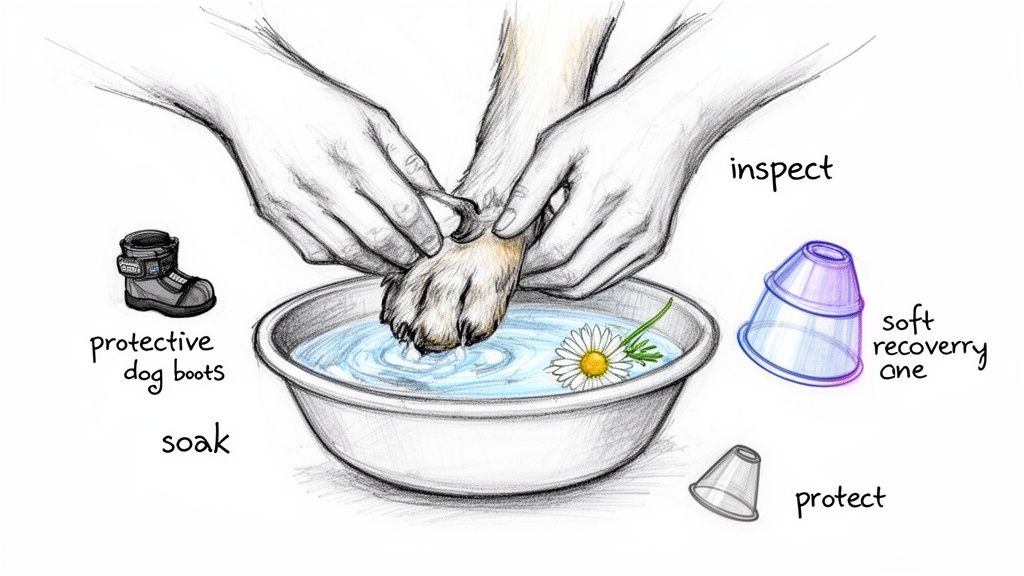
Before you try any remedies, you need to play detective. Grab some treats, find a spot with good lighting where your dog feels relaxed, and take a really good look at their paws. Gently hold one up and carefully check every nook and cranny.
Pay close attention to these key areas:
- Between the Toes: This is a prime spot for trouble. Look for redness, swelling, or any sneaky intruders like grass seeds, thorns, or bits of grit.
- The Paw Pads: Check for any cuts, scrapes, or blisters, which can be common after a walk on hot pavement. Dry, cracked pads can also be very uncomfortable.
- The Nails: A broken, split, or overgrown nail can cause a surprising amount of pain, often leading to focused licking.
If you spot a tiny, superficial splinter you can easily get out with clean tweezers, go for it. But if something is lodged deep in there, or if the paw is bleeding or looks infected, it’s time to stop and call the vet. It’s not worth the risk of making it worse.
The Soothing Power of a Paw Soak
Never underestimate the power of a simple paw soak. It’s a fantastic way to clean the area, wash away surface allergens like pollen, and calm down inflamed, itchy skin. You don’t need anything fancy, just a simple, vet-approved solution.
Here’s how to do it:
- Get the Soak Ready: Fill a shallow basin or your bath with a few inches of lukewarm water.
- Add a Soothing Agent: Mix in either Epsom salts (about one tablespoon per litre of water) for their anti-inflammatory magic, or a capful of chlorhexidine antiseptic solution, which is great for tackling bacteria and yeast.
- Soak and Soothe: Gently guide your dog’s paws into the water and try to keep them standing there for five to ten minutes. A smear of dog-safe peanut butter on the wall of the tub can be a great distraction!
- Dry Thoroughly: This is the most important step. Once they're done, pat their paws completely dry with a clean towel, paying extra attention to the gaps between their toes. Any lingering moisture can create the perfect breeding ground for yeast and bacteria, undoing all your good work.
Doing this once or twice a day can make a huge difference in your dog's comfort levels.
A quick word of warning: please steer clear of human products. Antiseptic creams or lotions aren't formulated for dogs and will almost certainly be licked off, which could lead to an upset stomach. Stick to what's known to be safe for canines.
Using Protective Gear to Break the Cycle
Sometimes, the simplest way to stop a dog licking its paws is to put up a physical barrier. This gives the sore skin a fighting chance to heal without the constant, abrasive irritation from your dog's tongue.
- The "Cone of Shame": No dog is a fan, but the infamous E-collar is incredibly effective. It’s a lifesaver for preventing licking, especially overnight or when you can’t be there to supervise.
- Dog Boots or Socks: For walks outside, or even just for pottering around the house, soft dog boots can be brilliant. They not only stop the licking but also protect sore paws from dirt and allergens on the ground.
These tools are meant to be a temporary fix, not a permanent solution. But for short-term management, they are invaluable. They interrupt that compulsive licking behaviour, buying you precious time for other remedies and treatments to start working.
Building a Long-Term Paw Health Strategy
You’ve managed to stop the immediate licking—that’s a huge win. But the real goal is to make sure it doesn't come back. The secret is shifting from a reactive mindset to a proactive one, which is the key to lasting comfort for your dog. A long-term strategy isn't about complicated treatments; it's about weaving simple, consistent care habits into your daily routine.
This whole approach is about building resilience, both inside and out. By keeping the paw's physical structure in top shape and strengthening the skin’s natural defences, you create an environment where irritants just can't get a foothold. This makes it far less likely your dog will turn to licking in the first place.
The Non-Negotiables of Paw Maintenance
Think of your dog’s paws like the tyres on your car. They need regular checks to perform their best and avoid a breakdown. It's easy to overlook the basics, but doing so can lead to the kind of discomfort that directly triggers licking.
Two simple grooming tasks are absolutely essential for paw health:
-
Routine Nail Trims: This is so much more than cosmetic. When nails get too long, they constantly push back into the nail bed, creating a persistent, annoying pressure. This forces the toes to splay out, which can mess with the entire posture of the foot and lead to joint pain. A dog might start licking their paws simply because they ache from this low-grade discomfort.
-
Trimming Paw Pad Hair: For any breed with furry feet, the hair between their paw pads can act like a little sponge. It’s a magnet for moisture, dirt, burrs, and allergens, trapping them right against sensitive skin. Keeping this hair trimmed short improves airflow, helps the paws dry faster, and stops irritants from getting stuck. This one step dramatically lowers the risk of fungal infections and contact dermatitis.
Fuelling Healthy Skin from Within
What goes into your dog’s bowl has a direct line to the health of their skin. A strong, resilient skin barrier is their first line of defence against the environmental allergens that often kickstart the whole itch-lick cycle. This is where targeted nutrition, especially omega fatty acids, really shines.
Omega-3 fatty acids are incredible, natural anti-inflammatories. They work on a cellular level to calm the body's inflammatory reaction to allergens. A diet rich in these essential fats, often found in high-quality fish oil, helps to fortify the skin barrier, making it less porous to irritants like pollen and dust mites.
Think of a strong skin barrier as a well-built brick wall, keeping allergens out and moisture in. When a diet lacks essential fatty acids, that wall develops cracks, allowing irritants to sneak in and trigger an itchy, inflammatory reaction.
Your Paw Health Preventative Care Checklist
Consistency is your secret weapon in the mission to stop your dog licking its paws for good. Instead of just reacting to flare-ups, this simple checklist helps you stay one step ahead of potential issues. Integrating these small actions can prevent major problems down the line.
| Frequency | Preventative Action | Why It Matters for Paw Health |
|---|---|---|
| Daily | Quick paw check after walks. | Catches small cuts, thorns, or irritants before they become a big problem. |
| Weekly | Check nails for length. | Prevents discomfort from overgrown nails that alter foot posture. |
| Bi-Weekly | Trim hair between paw pads. | Reduces trapped moisture and debris, lowering the risk of infections. |
| Monthly | Give paws a thorough inspection. | A deeper check for any changes, cracks, or signs of wear and tear. |
This proactive schedule transforms paw maintenance from a chore into a simple routine. It also strengthens your bond, as your dog gets used to you handling their feet calmly and positively.
By combining diligent grooming with supportive nutrition, you build a powerful defence system for your dog's paws. This long-term strategy tackles paw health from every angle, ensuring your dog’s feet are not just free from irritation but are genuinely healthy and ready for any adventure. It's the most effective way to make obsessive paw licking a distant memory.
Common Questions About Dog Paw Licking
Even with a solid plan in place, you’re bound to have a few nagging questions as you try to get to the bottom of your dog's paw licking. Let's tackle some of the most common queries I hear from owners, giving you clear, straightforward answers to help you feel more confident.
Why Does the Licking Get Worse at Night?
Noticing the licking seems to kick into overdrive once the lights go out? You’re definitely not imagining it. This is a classic pattern, and there are a few good reasons for it.
During the day, your dog has plenty to keep them occupied – walks, games, the general buzz of the household. But when everything goes quiet, a small itch or a bit of discomfort that was barely noticeable before can suddenly become their sole focus.
It's also worth considering that allergens like dust mites, often found in bedding, are more of an issue at night. For an allergic dog, settling down for a sleep can actually trigger a reaction. And for dogs with a nervous disposition, the stillness of the night can amplify their anxiety, making them turn to licking as a way to self-soothe.
Can a Certain Food Really Cause Paw Licking?
It absolutely can. While things like pollen and dust mites are more frequent culprits for allergies, we can’t rule out what's in their food bowl. A food sensitivity or allergy can easily show up as itchy skin, and the paws are a prime target for licking.
The immune system can sometimes go into overdrive reacting to certain ingredients, most often proteins like beef and chicken, but sometimes grains or dairy are to blame. If you’ve noticed the paw licking goes hand-in-hand with recurrent ear infections or tummy troubles, food is a strong suspect. The best way to find out for sure is to work with your vet on an elimination diet – it's the gold standard for pinpointing the problematic ingredient.
Key Takeaway: If your efforts to stop your dog licking its paws are hitting a wall, take a closer look at their diet. A properly managed food trial might just be the breakthrough you need.
How Long Until I See an Improvement?
This is the million-dollar question, and the honest answer is: it completely depends on the cause. A little patience goes a long way.
- For minor injuries or irritants: If it was just a pesky thorn you’ve now removed or some road grit you've washed off, the relief should be almost instant. The licking ought to stop straight away.
- For infections: Once your vet has prescribed the right treatment, you should start to see a real difference within 7-10 days as the antibiotics or antifungals get to work.
- For allergies or behavioural issues: This is more of a marathon than a sprint. Be prepared for a longer journey. It can often take a good 4-6 weeks of consistent management – whether that’s a new diet, supplements, or dedicated training – before you see a significant drop-off in the licking.
Is It Okay to Use Human Creams on Their Paws?
I would strongly advise against it. Human products like antiseptic creams or moisturisers simply aren't designed for dogs. For one, their skin has a different pH balance. More importantly, your dog is guaranteed to lick off whatever you put on their paws.
Ingesting ingredients not meant for them could lead to anything from an upset stomach to something more serious. Always, always stick to products that are specifically made for veterinary use. If you think a topical cream would help, your vet can recommend one that’s both safe and effective. For a safe home remedy, a simple paw soak in Epsom salts can provide fantastic, soothing relief without the risks.
At Tipaw, our focus is on proactive pet health, using natural yet effective solutions. Our vet-approved supplements are formulated to support your dog from the inside out, helping to tackle underlying issues like allergies and anxiety that so often lead to paw licking. Explore our range and start building a foundation for healthier paws and a happier dog. Learn more at https://www.store-tipaw.com.


