


Finding a raw, angry patch of skin on your dog can be pretty alarming. These sores, officially called acute moist dermatitis but known to most of us as hotspots, can pop up out of nowhere and get bigger in what feels like the blink of an eye.
A hotspot is really just a localised patch of skin inflammation that gets infected, usually because your dog won’t stop licking, scratching, or chewing it. The trick is to spot it early and jump into action straight away.
How to Spot a Hotspot and What to Do First
So, what are you actually looking for? A hotspot is a very distinct-looking sore.
- Red and Inflamed: The skin will look raw, sore, and seriously irritated.
- Moist or Oozing: They often weep a clear or yellowish fluid. This discharge is what mats the fur down and makes everything worse.
- Painful and Itchy: This is the key sign. Your dog will be obsessed with the area, unable to leave it alone.
- Hair Loss: You’ll usually see a bald patch right in the middle of the irritation where the fur has been licked or fallen away.
- A Bit Smelly: A foul odour is a big clue that a bacterial infection has set in.
You'll see these sores most often on dogs with thick coats or floppy ears, and they’re particularly common during warm, humid weather when bacteria love to multiply.
Your Immediate Action Plan
As soon as you find what looks like a hotspot, your one and only goal is to stop your dog from making it worse. That constant licking and scratching creates the perfect warm, moist playground for bacteria, turning a small irritation into a nasty infection in just a few hours.
Your first job is to gently prevent your dog from getting to the sore. This might mean digging out the "cone of shame" (an Elizabethan collar), trying a softer inflatable recovery collar, or even using a pet recovery suit. It might seem a bit drastic, but it's the single most important thing you can do to stop the hotspot from spiralling.
A dog’s instinct is to lick a wound, but their saliva is full of bacteria that can kick off an infection. On top of that, their rough tongue can do more damage to the already fragile skin. Preventing them from touching it is non-negotiable for healing.
Figuring Out the Triggers
Hotspots don't just appear for no reason; they're always a sign of an underlying problem. The initial itch might be something simple, like a flea bite, an insect sting, or an allergic reaction to food or pollen.
Here in the UK, where there are around 13 million pet dogs, skin problems like this are an incredibly common reason for a vet visit, especially in summer. Getting it treated properly means getting professional advice. A vet will often clip the fur away from the sore, which is vital for letting the skin breathe and stopping bacteria from thriving in trapped moisture. They’ll also recommend a specific cleaning solution that can eliminate up to 99% of common skin pathogens, and might prescribe pain relief to break the self-trauma cycle that worsens 80% of cases. You can read more about the UK's canine population and their health in these recent pet population studies.
Sometimes the root cause is harder to spot, like a hidden ear infection or a different skin condition. For instance, yeast dermatitis can cause intense itching and inflamed skin that looks a lot like a hotspot, making a proper diagnosis from your vet essential. To learn more about that, you might find our guide on how to identify and manage yeast dermatitis in dogs helpful.
For a quick reference on what to do in those first critical moments, have a look at the table below.
Immediate Hotspot First Aid At a Glance
This table breaks down the essential do's and don'ts for that crucial initial response when you first discover a hotspot.
| Action | What to Do (The 'Do's') | What to Avoid (The 'Don'ts') |
|---|---|---|
| Observation | Closely inspect the area for size, colour, and discharge. Take a photo to track its progress. | Don't assume it will get better on its own. Hotspots can worsen very quickly. |
| Intervention | Prevent your dog from licking or scratching with a cone or other barrier. | Don't wrap the area with a bandage. This traps moisture and can make the infection worse. |
| Environment | Keep the area as clean and dry as possible. | Avoid applying any human creams or ointments like hydrocortisone or antiseptic creams without veterinary approval. |
| Next Steps | Contact your vet for advice, especially if the hotspot is large, painful, or spreading. | Don't delay seeking professional help. Early treatment leads to a faster, more comfortable recovery. |
Getting these initial steps right sets your dog up for a much quicker and more comfortable recovery.
How to Clean a Dog's Hotspot Without Causing Pain
Discovering a hotspot on your dog is one thing, but knowing how to tackle it is another ball game entirely. The cleaning process is probably the single most important step you can take at home. It’s all about removing nasty bacteria, letting the skin breathe, and creating the right environment for healing to begin.
But here’s the thing: hotspots are incredibly painful. You absolutely must approach this with a lorry-load of patience and the right technique, otherwise, you'll just cause your dog more stress.
Before you even think about starting, get all your supplies ready. Trust me, trying to rummage for clippers while holding a distressed dog is a recipe for disaster. You’ll want electric clippers (not scissors!), a gentle antiseptic solution, some clean cloths or cotton wool, and a good supply of very tasty treats to help make the whole experience a bit less awful for them.
Preparing the Area for Cleaning
Your first job is to get air to the hotspot by clearing away the surrounding fur. That matted, damp fur is a five-star hotel for bacteria. You’ll often find that once the hair is gone, the sore is much, much bigger than you first thought.
- Clipping the Fur: Grab your pet-safe electric clippers, pop on a guard, and carefully trim the hair starting from the middle of the hotspot and working outwards. Take it slow. You're aiming to create a clear margin of about an inch of healthy skin all the way around the sore. This simple step stops the fur at the edges from tickling and irritating the wound.
- Keeping Your Dog Calm: This is where a second pair of hands is invaluable. One person can be on treat and comfort duty while the other focuses on the delicate task of clipping. If your dog is in a lot of pain or is getting too anxious, do not force it. It's far better (and safer) to let your vet handle this part, as they can use a mild sedative if needed.
A quick but vital tip: Always use clippers, never scissors. Inflamed skin can be swollen and lumpy, making it dangerously easy to accidentally snip the skin with scissors. That would only make things worse and cause a lot of pain.
Gently Cleansing the Sore
With the fur cleared, you can now clean the area. The goal here is to get rid of bacteria and any sticky discharge without harsh scrubbing, which would only damage the fragile tissue more. Your vet can recommend the best cleaning solution, but a diluted chlorhexidine or povidone-iodine wash is usually a safe bet.
Definitely avoid things like hydrogen peroxide or rubbing alcohol. They sting like mad and can actually kill healthy cells, which slows down the healing process.
- Start by soaking a clean cloth or cotton ball in your chosen antiseptic solution.
- Gently dab the hotspot, moving from the centre outwards. This motion helps to draw bacteria away from the middle of the wound.
- Be sure to use a fresh piece of cotton for each wipe so you aren't spreading germs back onto the clean area.
- Keep going until the whole area is clean and there's no more gunk coming away on the cloth.
This simple first-aid flow is a great mental checklist for managing a hotspot at home.

As the infographic shows, once you’ve found the sore, the key pillars are preventing more self-trauma and keeping your dog comfortable. Get those right, and you're well on your way.
Drying and Protecting the Skin
After a thorough but gentle clean, the final step is to pat the area completely dry with a clean, soft towel. When it comes to healing a hotspot, air circulation is your best friend. For that reason, you should never cover it with a bandage, which will only trap moisture and create the perfect environment for infection to thrive.
Let it breathe! This is where the dreaded "cone of shame" (an Elizabethan collar) or a recovery suit becomes non-negotiable. It's the only way to stop your dog from licking the freshly cleaned wound and undoing all of your hard work.
Once the skin is totally dry, you can apply a thin layer of any topical treatment your vet has prescribed. Later on, to help protect the healing skin barrier, a quality product like a soothing pet balm can be a brilliant addition to your pet's first-aid kit, especially once the initial raw infection has cleared up.
Choosing the Right Topical Treatments for Relief
Once you've managed to clean and dry the hotspot, you’ve won the first battle. Now, the mission shifts to healing. The main goal is to soothe that maddening itch that’s tormenting your dog while protecting the raw skin so it can actually recover. This is where a good topical treatment and the right protective gear make all the difference.
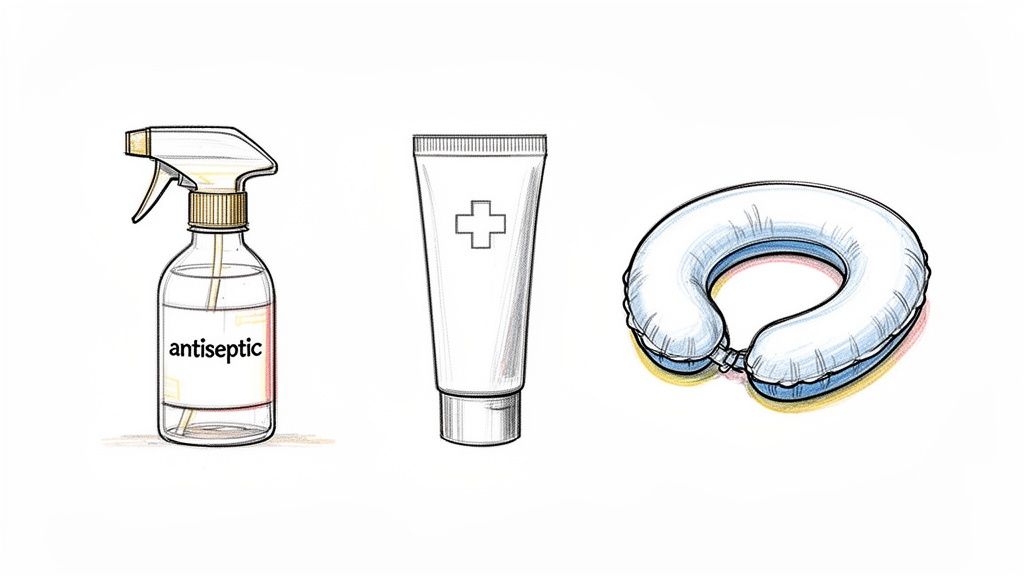
Walking into a pet shop or looking online, you'll see a dizzying array of sprays, creams, and gels. It helps to know what you’re looking for. Your vet should always be your first call, but understanding the basics will help you have a much better chat with them about the best plan for your dog.
Antiseptic and Antibacterial Solutions
First things first, you need to keep the area clean and stop opportunistic bacteria from making things worse. These solutions are your first line of defence and should be part of your daily care routine until the skin is fully healed.
- Chlorhexidine Sprays or Wipes: Vets use these constantly for a good reason. Chlorhexidine is a fantastic antiseptic that kills off bacteria and yeast without being too harsh on sore, healing skin. It's a real workhorse in any doggy first-aid kit.
- Povidone-Iodine: You might recognise this from a hospital setting. A very diluted solution can be a powerful cleanser, but getting the dilution wrong can cause more irritation, so it's best used with veterinary guidance.
Remember, these products tackle surface-level infections. If the hotspot is deep, angry, and oozing, your vet will likely prescribe a course of oral antibiotics to fight the infection from the inside.
Soothing and Anti-Inflammatory Applications
With the area disinfected, it’s time to bring relief. Calming the inflammation is key to breaking that relentless cycle of licking and scratching that caused the hotspot in the first place.
Often, the most effective vet-prescribed treatments are combination products. They’ll usually contain an antibacterial agent plus a mild steroid, like hydrocortisone, to knock down both the infection and the inflammation in one go. This two-pronged attack is often what’s needed to get a really aggressive hotspot under control fast. It’s absolutely vital to only use steroid creams prescribed by your vet, as the wrong type or overuse can actually slow down healing.
As the hotspot starts to improve, or for dogs with very sensitive skin, you might want to look at gentler, more natural options. If you're keen to support your dog’s skin health from all angles, you can learn more about natural anti-inflammatory options for dogs that work from the inside out.
My Two Cents: The best topical treatment is one that cleans without stinging and calms the itch without getting in the way of the body's own healing process. Always, always follow your vet's specific advice.
Essential Protective Gear to Stop Licking
Let's be blunt: the best cream in the world is useless if your dog can lick it off two seconds after you apply it. Preventing your dog from getting to the wound is non-negotiable. The old-school "cone of shame" certainly works, but thankfully we now have some more comfortable alternatives.
Comparing Your Options:
| Protective Gear | Pros | Cons | Best For |
|---|---|---|---|
| Elizabethan Collar (Cone) | The most reliable way to prevent access to any part of the body. Inexpensive. | Clumsy, loud, and stressful for many dogs. Can make eating and drinking a challenge. | The most determined lickers, or for hotspots on the head, face, or anywhere else. |
| Inflatable Collar | Much more comfortable, allows for peripheral vision, and doesn't scrape on walls. | A clever dog can still reach paws, lower legs, or their tail. Can be punctured. | Dogs with hotspots on their torso or upper body who get really distressed by a traditional cone. |
| Recovery Suit/Onesie | Covers the whole body comfortably and allows complete freedom of movement. | Must be removed for toilet breaks. Can be too warm in hot weather. | Dogs who find any kind of collar stressful, or for hotspots on the back, chest, or belly. |
The right choice really comes down to your dog's personality and where the hotspot is located. A chilled-out Labrador with a hotspot on his side might be perfectly happy in an inflatable collar. A feisty Border Terrier with a sore on his back leg, however, will likely need the maximum security of a proper E-collar. The goal is simple: find what works to give that wound the peace and quiet it needs to heal.
When You Absolutely Need to See a Vet
While a bit of careful first aid at home can often nip a small hotspot in the bud, it’s just as important to know when you’re out of your depth. Some situations simply need a professional, and waiting too long can turn a minor irritation into a serious, painful infection for your dog.
Knowing the red flags is a massive part of responsible dog ownership. Your own eyes and nose are the best guides here. A small, slightly pink patch that your dog is licking a bit is one thing. A large, angry-looking lesion that’s weeping, bleeding, or spreading like wildfire is a completely different story. That’s a vet-now situation.
Another huge giveaway is the smell. A clean wound shouldn't really smell of anything. If you catch a pungent, unpleasant odour coming from the area, that's a sure sign a nasty bacterial infection has set in and needs prescription-strength treatment to knock it on the head.
Key Signs That Demand a Vet Visit
It's time to pick up the phone and book an appointment if you spot any of the following. Don't fall into the "wait and see" trap; these signs mean the problem is getting worse, not better.
- It’s Spreading Fast: The hotspot has visibly grown, maybe even doubled in size, in 24 hours or less.
- They're in Real Pain: Your dog yelps, growls, or tries to snap if you even gently touch near the sore.
- Nasty Discharge: You see thick, coloured pus (yellow or green) instead of a clear, watery fluid.
- They're Not Themselves: Your dog is lethargic, has gone off their food, or just seems generally down and unwell.
- It’s Not Getting Better: You’ve been carefully managing it at home for 48 hours, but there’s no sign of it drying up or improving.
A vet can properly assess how deep and severe the infection is. Often, a dog in a lot of pain might need a little sedation just to allow for a proper, painless clipping and cleaning of the wound—something that’s frankly impossible and unsafe to attempt at home.
What to Expect at the Vets
A vet visit for a hotspot is usually pretty straightforward. They’ll start by examining the sore, and will almost certainly clip away more fur to see the true extent of the problem. They’ll also want to get to the bottom of why it happened in the first place.
This deeper look is vital. For example, skin health is often tied to a dog's overall immunity. It’s fascinating how interconnected everything is. A 2023 survey of UK vets and owners revealed that nearly 80% of owners forget about routine monthly worming. That’s a big deal when you learn that 87% of vets have seen lungworm locally—a parasite that can weaken a dog's immune system and increase dermatitis issues by a staggering 30%. It really shows how vet-led care is about the whole picture, not just the obvious symptom. You can read more about the surprising links between parasites and skin health in UK dogs.
After a good look, the treatment plan will likely be a multi-pronged attack:
- A Professional Clean: They'll give it a thorough clean with powerful, veterinary-grade antiseptics that are far stronger than what you have at home.
- Prescription Medications: This is the game-changer. Your vet can prescribe oral antibiotics to fight the infection from the inside out, often alongside anti-inflammatories or steroids to quickly break that miserable itch-scratch cycle and give your dog some real relief.
- Targeted Topical Treatments: You’ll likely be sent home with a specific cream or spray containing a potent mix of antibacterial and anti-inflammatory ingredients.
Deciding to go to the vet isn't a sign you’ve failed. It’s the exact opposite—it's a sign of being a great, responsible pet owner. It means your dog gets fast, effective pain relief and the right treatment to get them back on their paws as quickly and comfortably as possible.
Preventing Hotspots by Tackling the Root Cause
Treating a hotspot is one thing, but stopping them from coming back is the real win. To do that, we need to shift our focus from the sore itself to whatever is making your dog so itchy in the first place. It’s the classic difference between mopping up a puddle and fixing the leaky pipe.
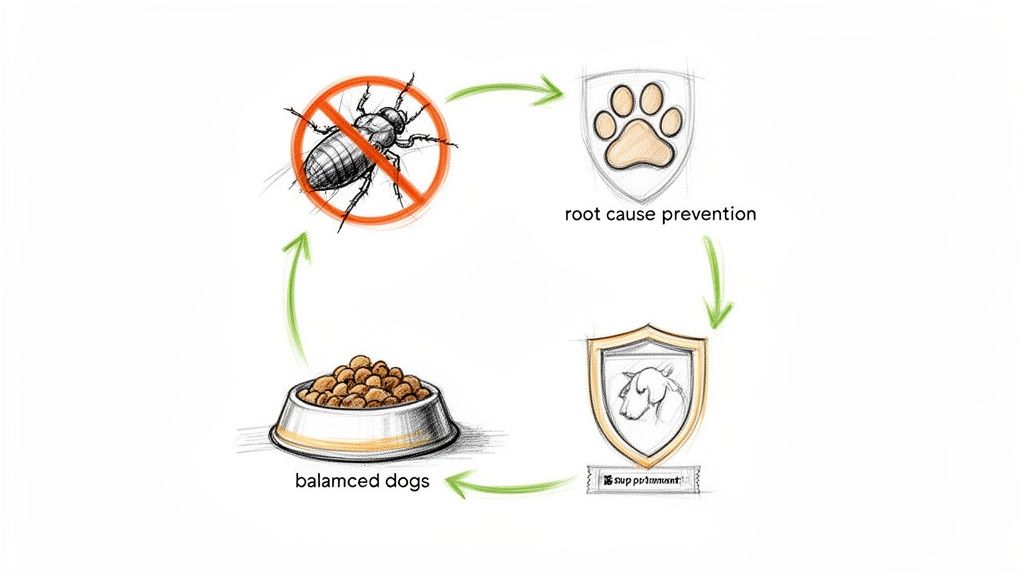
If your dog keeps getting hotspots, it's a huge red flag that something else is going on under the surface. It could be an allergy, a parasite problem, or even a behavioural habit. Time to play detective, uncover that root cause, and build a long-term plan for healthy, calm skin.
Uncovering Environmental Allergies
Just like us, dogs can be allergic to things in their environment. Pollen, dust mites, and mould are common culprits that can send a dog's immune system into overdrive, leading to that frantic, relentless itchiness. This condition, known as atopy, is a major cause of hotspots, especially the ones that pop up seasonally on their paws, belly, or around their ears.
Does your dog’s skin get angry every spring or autumn? If so, environmental allergies are a prime suspect. You can’t exactly get rid of all the pollen in the air, but you can definitely minimise your dog’s exposure.
- Wipe Down After Walks: Keep a damp cloth by the door. A quick wipe of their paws and belly after every walk can remove a surprising amount of allergens.
- Bathe Regularly: A weekly bath using a gentle, vet-approved hypoallergenic shampoo is brilliant for washing irritants right out of their coat.
- Manage Your Home: An air purifier can make a big difference indoors. It's also a good idea to wash your dog's bedding frequently in hot water to tackle dust mites.
Investigating Food Sensitivities
Sometimes, the problem isn’t what’s on your dog, but what’s going into their food bowl. A sensitivity to a specific ingredient—often a protein like chicken or beef—can show up as chronic skin irritation and recurring hotspots. Unlike seasonal allergies, these issues tend to cause trouble all year round.
If you think food is the trigger, the most reliable way to find out is with an elimination diet, which you absolutely must do with your vet's guidance. This involves switching your dog to a special food with a single, new protein and carbohydrate for a strict 8-12 weeks. No treats, no table scraps, not even flavoured toys! It takes serious discipline, but it’s the best method we have for pinpointing the offending ingredient.
The Flea Allergy Factor
For some poor dogs, a single flea bite is enough to unleash a massive allergic reaction. We call this flea allergy dermatitis (FAD), and it’s a nightmare. The flea’s saliva sends their immune system into a complete frenzy, causing an itch so severe they traumatise their own skin, leading to hotspots, especially around the base of their tail.
You might never even see a flea. For a highly sensitive dog, the flea can bite and jump off long before you notice anything is wrong. The intense allergic reaction, however, can linger for weeks.
Consistent, year-round flea prevention is a non-negotiable for all dogs, but for a dog with FAD, it's absolutely critical. Chat with your vet about the most effective prescription products, as many over-the-counter options just aren't strong enough to break the cycle.
Supporting Skin Health from the Inside Out
A dog's skin is their first line of defence. When that natural barrier is strong and healthy, it's much harder for allergens and irritants to cause trouble. This is where targeted nutritional support can become a game-changer in your prevention strategy.
This is especially true during peak allergy season. In fact, data from UK pet insurers shows that allergy-related hotspot claims can spike by 40% in July and August, often setting owners back £150-£300 per incident. When you consider that up to 25% of UK dogs are thought to suffer from flea allergies, prevention starts to look pretty essential. You can learn more about UK pet health statistics and trends to get the full picture.
Supplements formulated for skin health can help build that resilience from within. Products like Tipaw’s vet-approved Allergy & Itch Chews, for instance, use natural ingredients to help fortify the skin barrier and calm the body’s inflammatory response.
- Omega-3 Fatty Acids: Famous for their powerful anti-inflammatory properties that help soothe irritated skin.
- Probiotics: A happy gut is closely linked to a balanced immune system, which can help tone down allergic reactions.
- Antioxidants: Ingredients like quercetin can help stabilise the very cells that release histamine, calming the allergic itch right at the source.
By combining proactive management of their triggers with powerful support from within, you're not just treating a hotspot. You’re building a solid, long-term plan to stop them from ever starting, keeping your dog comfortable, happy, and itch-free.
Common Questions About Treating Dog Hotspots
Even with the best plan, you’re bound to have a few questions when you're dealing with a hotspot for the first time. It’s completely normal. Seeing that sore, angry patch on your dog is worrying, and you’ll naturally wonder about the healing process and what to expect next. Let’s tackle some of the most common queries we hear from fellow dog owners.
Knowing the answers will help you feel more confident as you guide your dog through recovery and, hopefully, prevent these nasty sores from ever coming back.
How Long Until My Dog's Hair Grows Back?
This is often one of the first things people ask, especially after seeing that big, bare patch left behind after clipping the fur away. The good news is, yes, the hair will grow back. It just takes a bit of patience.
Generally, you can expect to see the first signs of soft, fuzzy regrowth within two to four weeks, but only after the skin itself has fully healed. For the coat to return to its original length and texture, you’re looking at a full two to three months. Just hang in there; the most important thing is that the skin underneath is healthy and no longer inflamed.
Don't be surprised if the healed area looks a bit different at first. For some dogs, particularly those with pale skin, the patch might appear darker than the surrounding skin—a harmless condition called post-inflammatory hyperpigmentation. This is perfectly normal and usually fades over several months. It's a significant issue, too; UK statistics show hotspots affect roughly 1 in 10 dogs each year. A solid prevention plan, which can include vet-approved supplements, has been shown to slash vet visits by up to 45% for these recurring skin problems. You can discover more insights on UK pet health to get a bigger picture of common canine concerns.
Can I Use Human Antiseptics Like Savlon or TCP?
It’s tempting, I get it. You see the sore, you open your medicine cabinet, and you think, "This should help." But please, don't. You should never use human antiseptic creams, wipes, or liquids on your dog's hotspot unless your vet has specifically told you to.
Here’s why it’s such a bad idea:
- It really stings. Products with alcohol or other harsh chemicals can be incredibly painful on raw, inflamed skin, causing your dog a lot of unnecessary stress.
- They can be toxic if licked. Many ingredients in our products are poisonous to dogs if ingested. And you can bet your bottom dollar that your dog will try to lick whatever you put on that sore spot.
- It can make things worse. Some formulations are simply too harsh and can damage the delicate new skin cells, actually slowing down the healing process.
Always, always stick to products specifically made for dogs, like a diluted chlorhexidine solution recommended by your vet.
Crucial Takeaway: What’s safe for you isn't automatically safe for your dog. The risk of pain, toxicity, and delayed healing just isn't worth it. Stick to vet-approved products, every time.
What if the Hotspots Keep Coming Back?
Recurring hotspots are maddening, but they're also a massive clue. A hotspot that keeps returning to the same area, or new ones that pop up all the time, are a clear sign that you haven't dealt with the underlying trigger.
If you find yourself stuck in this cycle, it's time to stop just treating the sore and start playing detective with your vet. The root cause is almost always one of three things.
Top 3 Culprits for Recurring Hotspots:
| Underlying Cause | Key Indicators | Next Steps with Your Vet |
|---|---|---|
| Allergies | Itching, skin redness, or ear infections that flare up seasonally or all year. | Talk about allergy testing or an elimination diet to nail down food or environmental triggers. |
| Parasites | Hotspots are often found around the lower back and base of the tail. | Double-check that your flea and tick prevention is effective and that you're using it year-round. |
| Pain or Stress | Licking a specific joint (a sign of arthritis) or compulsive licking from boredom or anxiety. | Look for sources of hidden pain or discuss behavioural strategies to ease their stress. |
Tackling recurring hotspots is a team effort between you and your vet. By working together to find and manage the real cause, you can finally break the cycle and give your dog some lasting relief.
At Tipaw, we believe proactive support is the best defence for long-term skin health. Our vet-approved supplements are made with natural ingredients to help strengthen your dog's skin barrier from the inside out, building resilience against common triggers. Explore our range of health solutions at https://www.store-tipaw.com and take the first step towards fewer flare-ups and a happier, more comfortable dog.


