


A hip joint supplement is essentially a dietary top-up designed to help your dog's body maintain healthy cartilage, keep inflammation in check, and support smooth, easy movement. These supplements aren't a cure-all for joint diseases, but they're a brilliant tool for managing existing discomfort and, just as importantly, for being proactive about long-term joint health. This is especially true for breeds known for having dodgy hips.
Why Your Dog’s Joint Health Matters
Imagine your dog's joints are like the hinges on a well-used door. With every bound after a tennis ball, every happy dash around the park, and every trip up the stairs, those hinges are working hard. Over a lifetime, that constant motion can lead to a bit of wear and tear, causing stiffness, pain, and making them think twice about the activities they used to adore. Keeping those joints in good nick is absolutely fundamental to your dog's happiness and overall quality of life.
Several things can speed up this wear and tear, putting your dog at a much higher risk for mobility problems down the line. Getting to grips with what these are is the first step in giving them the right support.
Common Causes of Joint Stress
Just like us, dogs face various things that challenge their joint health. The main culprits are often predictable and, thankfully, can be managed with a bit of forward-thinking. This is where a hip joint supplement for dogs really comes into its own as part of that management plan.
Key risk factors include:
- The Natural Ageing Process: As dogs get older, their bodies naturally slow down production of the compounds that keep cartilage plump and joints well-oiled. It's a normal part of the ageing journey.
- Breed Predisposition: It's no secret that certain breeds are genetically wired for joint issues. Large and giant breeds like German Shepherds, Labradors, and Golden Retrievers put a huge amount of stress on their hips simply due to their size. You can learn more about how this affects them in our guide on what is hip dysplasia in dogs.
- Previous Injuries: An old injury, like a torn ligament or a fracture, can permanently change the way a joint works. This imbalance often leads to faster cartilage wear and future problems.
- Excess Body Weight: Every extra pound your dog carries puts significant, constant strain on their hip joints. This relentless pressure can massively accelerate the breakdown of joint tissues.
Think of a joint supplement as a vital part of your dog's wellness toolkit. It isn’t a magic cure, but rather a foundational element that helps maintain the body's natural repair mechanisms, ensuring the "hinges" stay as smooth as possible for as long as possible.
Being proactive is about so much more than just waiting for a limp to appear. It's about preserving that playful, energetic spirit and comfortable movement that we all love to see in a happy dog. By understanding these risks, you can take real, meaningful steps to protect your best friend's mobility for years to come.
What's Actually Inside a Good Joint Supplement? A Look at the Science
When you first glance at the ingredient list on a packet of hip joint supplements for dogs, it can feel a bit like reading a chemistry textbook. Glucosamine, chondroitin, methylsulfonylmethane… these aren't exactly everyday words. But getting to grips with what they do is the key to picking a product that will genuinely help your dog feel more comfortable and mobile.
Think of it like this: keeping your dog's joints healthy is a bit like a construction project. You need a good crew, the right building materials, and a solid maintenance plan to keep everything working smoothly. Each key ingredient in a quality joint supplement plays a very specific role in that ongoing project.
Let's break down the science behind the most common ingredients and take the mystery out of the label.
The diagram below shows the main factors that put stress on a dog's joints over time – things like getting older, their breed, and any old injuries they might have picked up.
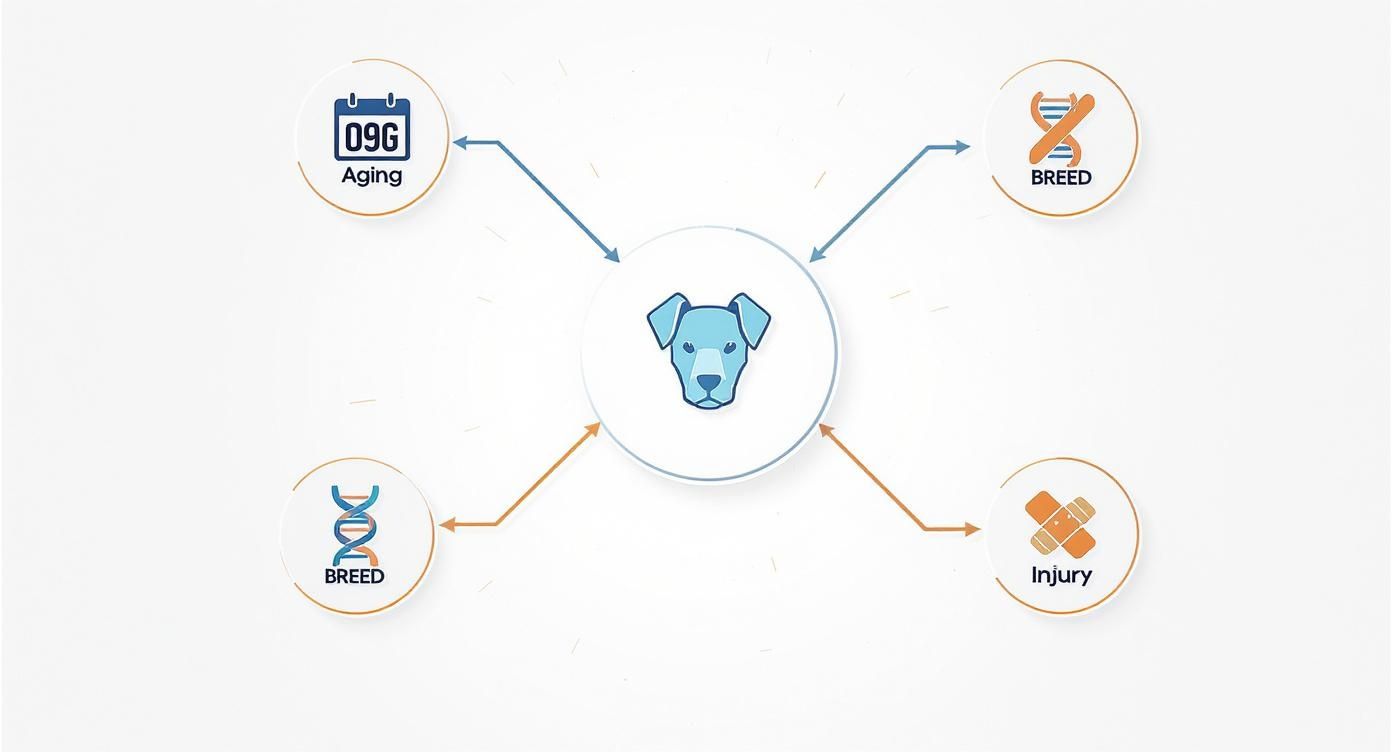
This is exactly why we need targeted ingredients – to help manage the inevitable wear and tear that life throws at our dogs' joints.
The Cartilage Repair Crew: Glucosamine and Chondroitin
Glucosamine and chondroitin are the undisputed power couple of the joint supplement world, and for very good reason. They are the natural building blocks of cartilage, which is the tough, spongy tissue that cushions the ends of bones inside a joint.
Imagine cartilage as the rubber tread on a car tyre. Glucosamine provides the raw materials to build and repair that tread, keeping it thick and springy. Chondroitin, on the other hand, acts like a sponge. It pulls water into the cartilage, which is crucial for absorbing shock and resisting all the pressure from running and jumping.
When you put them together, they form a brilliant partnership to maintain the structure of your dog’s joints. A supplement with both ensures the "construction crew" has everything it needs. It's such a trusted combination that it dominates the market.
In fact, the glucosamine and chondroitin segment is projected to hold 52% of the UK market share in 2025. It’s a testament to how well-established their benefits are. The UK as a whole is a huge player in this space, representing about 22.8% of the global dog joint supplement market. If you're interested, you can discover more insights about the UK's growing pet supplement market on FactMr.com.
The Inflammation Soother: MSM
While glucosamine and chondroitin are busy rebuilding, Methylsulfonylmethane (MSM) tackles a different problem: inflammation. MSM is a natural sulphur compound that’s brilliant at helping to reduce the pain and swelling that come with stiff, achy joints.
Think of MSM as the fire brigade for your dog’s hips. When joints get overworked or damaged, inflammation is the body’s natural alarm system. But if that fire is left to smoulder, it causes pain and can break down cartilage even further. MSM helps to put out the flames by blocking inflammatory signals and providing the sulphur needed to repair connective tissues.
It’s more than just a pain reliever. By supporting the ligaments and tendons around the joint, MSM helps with overall stability and comfort, making every step a little easier for your dog.
To give you a quick overview, here’s a simple breakdown of the most common ingredients you'll find.
Key Ingredients in Dog Hip and Joint Supplements
| Ingredient | Primary Function (Simplified) | Best For |
|---|---|---|
| Glucosamine | Provides the building blocks to repair and create new cartilage. | All-round cartilage maintenance and repair. |
| Chondroitin | Helps cartilage absorb water, providing essential shock absorption. | Dogs needing better joint cushioning and flexibility. |
| MSM | A natural anti-inflammatory that helps reduce pain and swelling. | Dogs showing signs of stiffness, discomfort, or inflammation. |
| Hyaluronic Acid (HA) | Lubricates the joint by thickening the synovial fluid. | Improving joint mobility and reducing friction in stiff joints. |
| Green-Lipped Mussel | A whole-food source of omega-3s, glucosamine, and antioxidants. | A multi-action approach to reducing inflammation and supporting cartilage. |
| Omega-3s (EPA & DHA) | Potent fatty acids that help manage the body's inflammatory response. | General joint health and dogs with widespread stiffness. |
This table helps show how a well-formulated supplement uses a team of ingredients, each with a specific job, to provide comprehensive support for your dog's joints.
The Joint Lubricant: Hyaluronic Acid
If cartilage is the cushion, then synovial fluid is the oil that keeps the whole joint moving smoothly. The main component of this vital fluid is Hyaluronic Acid (HA). Its superpower is its ability to hold onto huge amounts of water, which is what gives synovial fluid its thick, slippery, lubricating quality.
The best analogy is engine oil. Without it, the moving parts would grind and wear each other out. HA does the same for your dog’s joints, allowing bones to glide over one another without friction. As dogs get older, they naturally produce less HA, which can lead to "drier," stiffer joints. Adding it back in through a supplement helps top up this essential lubricant.
Nature’s Powerhouses: Green-Lipped Mussel and Omega-3s
Beyond the core structural ingredients, some of the best joint support comes straight from nature. Green-Lipped Mussel (GLM), found only in New Zealand, is a genuine superfood for joints. It's a natural, whole-food source of:
- Omega-3 Fatty Acids: Including a rare one called ETA, which is known for its powerful anti-inflammatory properties.
- Glucosamine and Chondroitin: To provide those all-important cartilage building blocks.
- Antioxidants: To help protect the joint tissues from damage.
This unique combination means GLM tackles joint health from several angles at once. Similarly, Omega-3s from sources like fish oil (specifically EPA and DHA) are famous for their ability to help manage inflammation throughout the body, including in the joints. For anyone keen to learn more, we have a detailed guide on natural anti-inflammatories for dogs.
Including these natural powerhouses gives a supplement a more rounded, holistic approach. It’s this synergy between science-backed compounds and potent natural ingredients that makes a truly effective hip joint supplement for dogs.
How to Select a High-Quality Supplement
Walking down the pet aisle or browsing online, the sheer number of hip and joint supplement options can feel overwhelming. With so many brands making bold claims, how do you cut through the flashy marketing and choose a product that will genuinely make a difference for your dog? The key is to become a savvy label-reader and focus on what truly matters.
This isn’t just about picking the most popular brand; it's about investing in a product with proven ingredients, transparent manufacturing, and a format your dog will actually take. After all, the best supplement in the world is useless if it ends up collecting dust in your cupboard.

Look Beyond the Brand Name
A reputable brand is a good starting point, but what’s inside the container provides the real value. The best supplements are defined by their commitment to safety, purity, and effectiveness. Your first port of call should be to scrutinise the manufacturing standards.
Look for products made in facilities that follow Good Manufacturing Practices (GMP). This isn't just a buzzword; it's a rigorous system of quality control ensuring that products are consistently produced and controlled according to strict standards. It means every single batch has the correct ingredients at the correct strength.
Equally important is transparency about where those ingredients come from. A company that is proud of its high-quality, pure ingredients will be happy to tell you about their sourcing.
The Non-Negotiable Third-Party Test
Because the supplement industry isn’t regulated as tightly as the pharmaceutical world, independent verification is your best friend. Third-party testing is a process where an outside, unbiased laboratory analyses a product to confirm a few crucial details:
- Potency: Does the supplement actually contain the amount of active ingredients claimed on the label?
- Purity: Is it free from harmful contaminants like heavy metals, mould, or bacteria?
- Accuracy: Does the product contain exactly what it says it does, with no undisclosed fillers?
A brand that invests in third-party testing is showing you they stand behind their product's safety and quality. If a company doesn’t make its test results readily available, you have to ask yourself what they might be hiding.
This level of scrutiny is vital in a booming market. Hip and joint supplements are the largest segment of the UK pet supplement market, which is expected to be valued at around £177 million in 2025. With projections showing this market growing at a compound annual growth rate of 9% through to 2035, more and more products will appear on the shelves. You can read the full research about the UK pet supplement market on Fortune Business Insights.
Choosing the Right Format for Your Dog
The science and quality control are essential, but practical considerations matter just as much. A hip joint supplement for dogs comes in several forms, and the best one is simply the one your dog will take without a fuss, day in and day out.
Comparing Supplement Forms
| Format | Pros | Cons |
|---|---|---|
| Soft Chews | Highly palatable and often seen as a treat, making administration easy. | Can be more expensive and may contain more calories or fillers. |
| Liquids | Easy to mix into wet or dry food and allows for very precise dosing. | Can be messy, and some dogs may dislike the taste or smell. |
| Powders | Cost-effective and simple to sprinkle over meals. Good for multi-dog households. | Can be difficult to mix evenly, and picky eaters may turn their noses up. |
| Tablets | Often the most concentrated and economical option with minimal fillers. | Can be difficult to administer to dogs who are skilled at spitting them out. |
When making your choice, think honestly about your dog's personality and your daily routine. Do you need the convenience of a chew that doubles as a treat? Or does your dog eat wet food, making a liquid or powder the easiest option? For additional guidance, check out our in-depth analysis and dog joint supplement reviews. Selecting the right format is the final, practical step in ensuring your investment leads to real, noticeable results.
Getting Supplements into Your Dog and Seeing Real Results
So you’ve chosen a great hip and joint supplement for your dog. That's a fantastic first step, but the real magic happens with consistent, long-term use. Getting the supplement into them reliably and knowing what to look for is how you turn a good product into a great result for their joint health.
Consistency is everything. Think of it like a fitness routine for their joints—you can't expect to see a difference after just one session. A daily dose allows the active ingredients to build up in their system, where they can get to work supporting cartilage and soothing inflammation.
Loading Dose vs. Maintenance Dose: What's the Difference?
When you first look at the instructions, you'll likely see a "loading dose" followed by a "maintenance dose". Don't skip this part! It's a proven strategy designed to get your dog feeling better, faster.
The loading dose is a higher amount you give for the first 4-6 weeks. The goal here is to quickly build up the concentration of ingredients like glucosamine and chondroitin in your dog’s joints. It’s like front-loading their system to kick-start the benefits.
Once that initial period is over, you can drop down to the lower maintenance dose. This is the perfect amount to keep those beneficial compounds topped up for long-term support. Trying to skip the loading phase will seriously delay how long it takes to see a change.
Practical Tips for Easy Dosing
Some dogs will happily munch down anything you put in front of them. Others… not so much. If you've got a fussy eater on your hands, the key is to make supplement time a positive, stress-free routine.
Here are a few tricks I’ve seen work time and again:
- Mix it with a High-Value Food: A spoonful of wet food, plain yoghurt, or even some warm bone broth can turn a boring powder into a delicious gravy. This works for liquids, too.
- Use Pill Pockets: These soft, mouldable treats are brilliant for hiding tablets or capsules. From your dog's perspective, it’s just a tasty snack. A small piece of cheese or cooked sausage can do the same job in a pinch.
- Try the "Treat Sandwich": Give a normal treat, then the supplement (maybe hidden in a tiny bit of cheese), followed immediately by another normal treat. This simple trick often outsmarts even the most suspicious dogs.
A quick word of advice: always introduce a new supplement gradually over a few days. Mixing in a quarter dose, then a half, gives their digestive system time to adjust and helps avoid any potential tummy upsets.
Realistic Timelines and How to Track Progress
Unlike painkillers that offer immediate relief, joint supplements work with the body's natural repair processes. Patience is key. While some people notice small changes in just a few weeks, you should expect it to take 4-8 weeks of consistent daily use to see a real, noticeable improvement in your dog’s mobility and comfort.
Because the improvements are gradual, they can be easy to miss day-to-day. That’s why keeping track of their progress is so incredibly helpful. It gives you an objective way to see if it’s working and provides brilliant information to share with your vet.
Try keeping a simple mobility journal:
- Take short videos: Once a week, grab your phone and record a quick video of your dog walking, trotting, or getting up from their bed. When you compare the clips side-by-side a month later, the difference can be surprisingly clear.
- Give them a "mobility score": On a scale of 1 to 5, how are they doing with specific challenges? Think about climbing stairs, jumping in the car, or how keen they are to head out for a walk.
- Note their mood and energy: Jot down a few words about their general demeanour. Are they more playful? Happier to see you? An uplift in their overall mood is often one of the very first signs that they're feeling more comfortable.
This simple log turns your gut feeling into real evidence, giving you the confidence that the hip joint supplement for your dog is genuinely making a difference in their quality of life.
A Complete Joint Care Strategy: More Than Just Supplements
A top-notch hip joint supplement for dogs can be a game-changer, but it works best as part of a team effort. Think of it as a star player in a well-coached squad. For your dog to enjoy real, lasting comfort and mobility, you need to combine that supplement with smart weight management, the right kind of exercise, and other supportive therapies. It's this all-around approach that truly protects your dog's joints from every angle.
Building a complete plan doesn't have to be complicated. It’s about making small, consistent lifestyle changes that, together, make a world of difference.

Why Weight Management is Everything
If you do just one thing to protect your dog's hips, it should be keeping them at a lean, healthy weight. Every extra pound they carry puts a constant, amplified strain on their joints, speeding up the wear and tear of that all-important cartilage.
Imagine you had to carry a heavy rucksack around all day, every day. That’s exactly what excess weight feels like to your dog’s hips. In fact, studies show that even a small weight loss of just 6-8% can lead to a huge, noticeable improvement in a dog’s movement and reduce their lameness. This one change eases the daily burden, letting supplements and other therapies do their job much more effectively.
Smart Exercise for Stronger Joints
It’s tempting to stop exercising altogether when a dog seems sore, but that can often do more harm than good. The right kind of movement is vital for building strong muscles, which act like natural shock absorbers for the hips. The trick is to swap out high-impact activities for gentle, controlled exercise.
Here are a few brilliant low-impact options to try:
- Controlled Leash Walks: Regular, steady walks on soft ground like grass or a woodland path maintain muscle tone without jarring the joints.
- Swimming or Hydrotherapy: Water is a fantastic medium. It provides gentle resistance to build muscle while making your dog feel almost weightless, taking all the pressure off their sore hips.
These activities strengthen the muscles that cradle the hip joint, giving it the stability and support it needs to function without pain.
Your vet is the perfect person to help you create an exercise plan that’s just right for your dog. It's this combination of targeted movement and a daily hip joint supplement that forms the bedrock of any successful joint care strategy.
Adding Therapies and Home Comforts
Beyond diet and exercise, a few other things can massively improve your dog's quality of life. These additions work alongside the supplement to provide external relief and comfort. This is something more and more dog owners are focusing on.
You can see this trend in the market itself. In the UK, the pet nutraceuticals market, which includes joint care products, was worth around USD 498.7 million in 2023. This figure is expected to keep growing, which just shows how much owners value these supportive strategies. You can learn more about the pet nutraceuticals market growth on GrandViewResearch.com.
Consider adding these to your own plan:
- Physiotherapy: A qualified animal physiotherapist can work wonders with massage, gentle stretches, and specific exercises to improve flexibility and ease pain.
- An Orthopaedic Bed: A supportive, memory-foam bed is a brilliant investment. It cushions sore joints, prevents pressure points, and makes getting up in the morning that much easier.
- Ramps and Rugs: Simple changes like adding a ramp to the car or putting non-slip rugs on wooden floors can prevent the painful slips, stumbles, and jumps that aggravate joint problems.
When you bring all these elements together, you're not just giving your dog a supplement; you're creating a complete support system that addresses their joint health from the inside out.
Your Top Questions About Dog Joint Supplements Answered
Dipping your toes into the world of hip and joint supplements can feel a bit overwhelming. If you’re like most dog owners, you’ve probably got a dozen questions swirling around. That’s a good thing! It means you’re taking your dog's health and comfort seriously.
Let’s cut through the noise and get straight to the practical answers you're looking for. We'll tackle everything from the "when" and "why" to safety and how supplements fit into the bigger picture of your dog's care.
When’s the Right Time to Start My Dog on a Joint Supplement?
This is easily the most common question I hear, and it’s a great one. People often wonder if they should wait until they see a problem. My advice? It's often better to be proactive, especially if your dog fits a certain profile.
Think of it less as a treatment and more as a long-term investment in their mobility. Consider starting a hip joint supplement for dogs early if your companion is:
- A Breed Prone to Joint Problems: Let's be honest, breeds like German Shepherds, Labradors, Golden Retrievers, and Rottweilers are poster children for joint issues like hip dysplasia. Once they're fully grown (usually around 12-18 months), introducing a maintenance dose can provide crucial foundational support for their cartilage.
- A Canine Athlete or Working Dog: If your dog is constantly running, jumping, or working, their joints are under a lot of repetitive stress. A good supplement helps support cartilage health and can even aid in recovery, keeping them comfortably active for longer.
- Carrying a Few Extra Pounds: Even a little extra weight puts a surprising amount of strain on a dog's hips. Your top priority should always be getting their weight in a healthy range, but a supplement can offer much-needed support for those overworked joints in the meantime.
- Hitting Their Golden Years: Just like with people, wear and tear is a normal part of ageing. For most medium-sized dogs, this might be around age seven or eight. Starting them on a supplement can help keep them moving more freely as they get older.
Of course, if your dog is already showing signs of stiffness, slowing down on walks, or struggling to get up, a supplement is a definite next step. In these cases, you’ll want to follow the product’s instructions for a "loading dose" to help build up the active ingredients in their system more quickly.
Are There Any Side Effects I Should Worry About?
For the most part, high-quality joint supplements are incredibly safe. The key ingredients—glucosamine, chondroitin, and the like—are substances naturally found in healthy cartilage, so true adverse reactions are rare. Most dogs tolerate them without a hitch.
That said, whenever you introduce something new to your dog’s diet, there's a small chance of some mild digestive upset. It's not common, but you might see:
- Loose stools or diarrhoea
- Vomiting
- A bit of gas
These issues are almost always temporary and tend to pop up if the supplement is started too abruptly. To avoid this, just introduce it gradually. Start with half the recommended dose for a few days and slowly work your way up. This gives their system a chance to adjust. Also, a quick heads-up: if your dog has a known shellfish allergy, be sure to pick a formula that doesn't use green-lipped mussel or certain types of glucosamine.
Can My Dog Take Joint Supplements with Their Other Medications?
This is a really important question, and the answer is simple: always, always check with your vet before mixing any supplement with a prescription medication.
While interactions are uncommon, they can happen. For instance, some joint-supporting ingredients can have a very mild blood-thinning effect. This is usually no big deal on its own, but it could be a concern if your dog is already on a non-steroidal anti-inflammatory drug (NSAID) or other specific medications. Your vet has the full picture of your dog's health and is the only one who can give you the all-clear.
It's also helpful to think about the different jobs these products do. Supplements are for the long haul—they provide the building blocks for structural support and joint maintenance. Prescription meds like NSAIDs are for knocking down active pain and inflammation right now. They often work beautifully together, but that partnership needs to be managed by your vet to keep your dog safe and feeling their best.
By getting answers to these questions and partnering with your vet, you can make a smart, confident choice. A joint supplement isn't just another treat; it's a key part of a thoughtful strategy to help your dog stay happy, active, and comfortable for many years to come.
Ready to give your dog the joint support they deserve? At Tipaw, we've developed vet-approved, all-natural functional chews designed to support mobility and comfort. Explore our range of high-quality supplements and find the perfect fit for your best friend today.


