


That non-stop scratching. The frantic licking. The chewing at their own paws. It’s a sight that makes any dog owner's heart sink. More often than not, these behaviours are classic signs of dog seasonal allergies, a frustrating and uncomfortable immune reaction to things like pollen and mould. Just like we get hay fever, our dogs can suffer from intense itchiness as the seasons shift.
Why Your Dog Suddenly Can't Stop Scratching
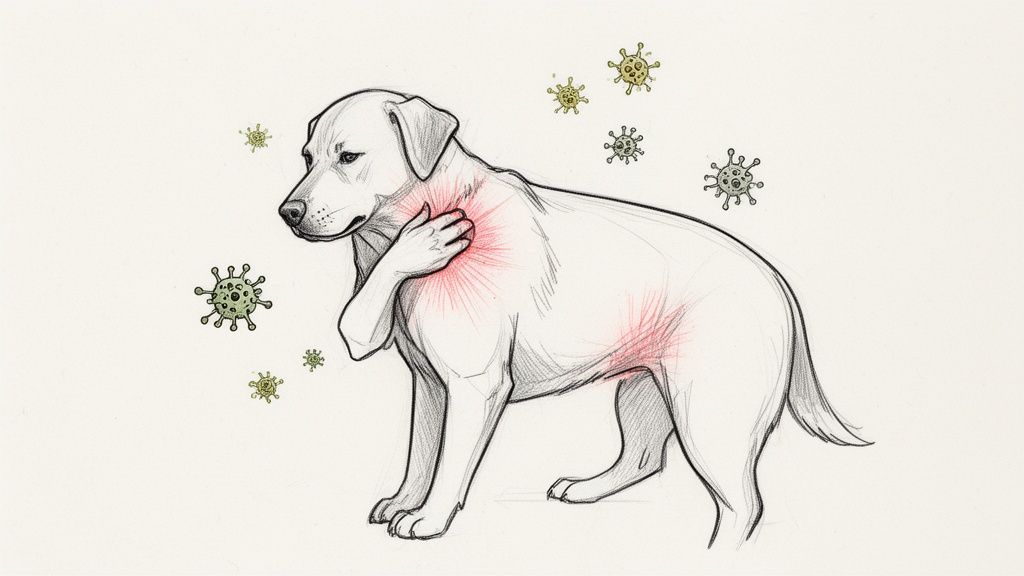
It’s tough to watch your best mate go from perfectly happy to desperately uncomfortable in what feels like an instant. This abrupt turn is often down to canine seasonal allergies, known in veterinary circles as atopic dermatitis. In fact, it's one of the top reasons dogs end up at the vet, particularly when spring and summer roll around.
Think of your dog's immune system as a slightly over-the-top bouncer. When completely harmless particles like grass pollen or mould spores come along, this bouncer mistakenly identifies them as major threats and goes into full-on attack mode. All that internal chaos shows up on the outside as red, inflamed skin and a maddening itch that your dog just can't shake.
A Common Canine Concern
If you're dealing with this, you're definitely not alone. Seasonal allergies are a huge issue for dogs across the UK, where our lovely changing weather and high pollen counts create the perfect conditions for a flare-up. It's not a rare problem by any stretch; skin allergies from the environment affect a huge chunk of the dog population.
It's estimated that around 12-15% of all dogs are affected by atopic dermatitis from allergens like pollen, dust, and mould. The tell-tale signs—intense itching, red skin, paw licking, and repeat ear infections—usually hit their peak between April and September when pollen is at its highest. You can read more about UK allergy statistics to get the full picture.
The first step is simply realising this is a common, manageable condition. This guide is here to walk you through everything, from spotting the symptoms to finding treatments and home care strategies that actually work. We'll give you clear, practical advice to help bring some much-needed relief to your four-legged friend.
2. Decoding Your Dog's Allergy Symptoms
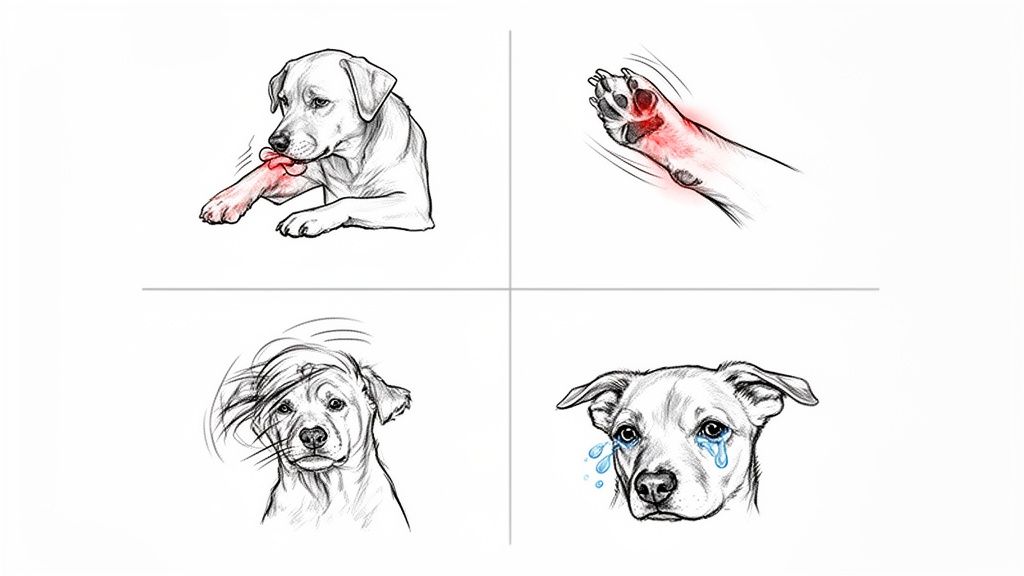
When we get hay fever, we reach for the tissues. Sneezing, a runny nose, and itchy eyes are the classic signs. But for our dogs, seasonal allergies tell a very different story.
Their allergic reaction to things like pollen and mould primarily explodes on their skin. Think of the maddening, all-consuming itch of a bad rash—that’s a good way to imagine what your dog might be feeling. This intense, body-wide itchiness, known to vets as pruritus, is the absolute hallmark of seasonal allergies in dogs.
From there, the discomfort shows up in a few key ways, usually concentrated in specific hotspots on their body. Learning where to look and what you’re looking for is the first real step toward helping your dog find relief.
Skin and Paw Problems
Your dog's skin is the main battleground. That constant irritation kicks off a whole chain reaction of symptoms that are pretty hard to miss once you know the signs. Their paws are especially prone to problems, as they’re walking directly through pollen and grass every day.
Keep an eye out for these tell-tale signs:
- Intense Itching and Scratching: This goes beyond a normal scratch. We're talking about dogs rubbing their entire body against the sofa, dragging their face along the carpet, or constantly digging at their ears and belly.
- Paw Licking and Chewing: Have you noticed your dog obsessively cleaning their feet? This constant licking can even stain the fur on their paws a reddish-brown colour, which is caused by enzymes in their saliva.
- Red, Inflamed Skin: Take a moment to check their belly, armpits, groin, and in between their paw pads. These areas have less fur, making redness, rashes, or even little bumps easier to spot.
- "Hot Spots": These are nasty, raw, and often infected patches of skin that can seem to appear out of nowhere. Known as acute moist dermatitis, they’re a direct result of the dog’s frantic attempts to soothe the itch by licking or scratching one spot raw.
Head and Ear Irritation
The head and ears are another prime target. Irritation here can be incredibly frustrating for a dog, leading to some very obvious and persistent behaviours.
In fact, recurring ear infections are one of the most classic clues that an underlying allergy is at play. The allergic inflammation changes the environment inside the ear canal, making it the perfect place for yeast and bacteria to thrive.
A dog that gets an ear infection like clockwork at the same time every year is a huge red flag for seasonal allergies. Vets see this pattern all the time and it’s a massive piece of the diagnostic puzzle.
You'll know there's a problem if you see:
- Persistent Head Shaking: This is a dead giveaway that something is bothering them inside their ears.
- Rubbing Their Face on Things: Your dog might press their face into the carpet, furniture, or even your leg to try and scratch that impossible-to-reach itch.
- Redness or Discharge from Ears: Look inside the ear flap for any redness. A smelly, waxy build-up is often a sign of a brewing infection.
Respiratory and Eye Symptoms
While skin issues are far and away the most common symptom, some dogs do show signs that look a bit more like human hay fever. These usually pop up alongside the relentless itching.
- Watery Eyes: You might notice a clear discharge from their eyes or an increase in the dark tear staining on the fur just below their eyes.
- Runny Nose: This isn't a snotty cold, but rather a clear, watery drip from the nose.
- Sneezing or Reverse Sneezing: An occasional sneeze is perfectly normal. A sudden uptick in sneezing, however, can be linked to inhaling allergens. You might also witness a reverse sneeze, which is a dramatic (but harmless) spasm where the dog rapidly sucks air in through their nose, creating a loud snorting sound.
To help you quickly spot the signs, here’s a simple breakdown of what to look for and where.
Dog Seasonal Allergy Symptoms at a Glance
This quick reference table can help you identify potential allergy symptoms based on where they appear on your dog's body.
| Affected Area | Common Symptoms to Watch For |
|---|---|
| Skin, Paws & Body | Intense scratching, rubbing on furniture, hot spots (raw skin), red or inflamed skin (especially on the belly, armpits, and groin), obsessive paw licking, reddish-brown saliva stains on fur. |
| Head & Ears | Frequent head shaking, rubbing face on carpet or furniture, smelly ears, redness inside the ear flap, waxy discharge, recurring ear infections. |
| Eyes & Respiratory | Clear, watery discharge from eyes, increased tear staining, runny nose (clear discharge), sneezing fits, reverse sneezing (loud, rapid inhalations). |
Remember, while this table is a helpful guide, your dog might show a unique combination of these signs. The key is noticing what's new or excessive for your dog and seeing if it lines up with a change in the seasons.
Pinpointing Your Dog’s Seasonal Allergy Triggers
Figuring out what is actually causing your dog's discomfort is the first, and most important, step towards getting them some relief. Think of your dog’s allergies as a predictable calendar of misery—once you know the schedule, you can start to prepare for the itchy seasons ahead. The culprits are usually invisible, floating around in the very air your dog breathes.
Just like people get hay fever, dogs can react to airborne allergens that shift with the seasons. Here in the UK, this cycle follows a pretty distinct pattern, making certain times of the year a real challenge for sensitive dogs. Learning this timeline helps you get ahead of the problem, so you can manage your dog’s comfort proactively instead of just reacting to a miserable, itchy flare-up.
The UK's Seasonal Allergy Calendar
The type of pollen blanketing the country changes dramatically as we move through the year. If you can map your dog’s flare-ups to a specific time, you’re well on your way to identifying the likely trigger.
Here’s a rough guide to the UK’s main culprits:
- Spring (March - May): This is prime time for tree pollen. Birch, oak, and ash are the big offenders, releasing clouds of fine pollen that can travel for miles on the wind. If your dog starts scratching just as the trees are coming back to life, tree pollen is a strong suspect.
- Summer (June - August): As tree pollen subsides, grass and weed pollens take centre stage. For many dogs, this is the absolute worst time of year. Grass is everywhere—parks, gardens, and along every country footpath. The main culprits are usually ryegrass and timothy grass.
- Autumn (September - November): Pollen counts generally drop off, but now you have to worry about mould spores and certain weed pollens like ragweed. Mould absolutely loves damp, decaying leaves, turning those crisp autumn walks into a potential minefield for an allergic dog.
Why Weather and Location Make a Difference
It’s not just the calendar that dictates your dog's symptoms; the daily weather plays a huge part, too. For example, UK dogs often have a much rougher time during hot, humid spells. We're also seeing how climate change is extending pollen seasons and encouraging mould growth, leading to a noticeable rise in cases of Malassezia dermatitis—a particularly nasty yeast infection that causes intense itching in the paws and ears. Vets have linked this to our increasingly long, wet springs and humid summers, which create the perfect conditions for allergens to thrive. You can learn more about how weather impacts dog allergies on Editiondog.com.
Keeping a simple "itchy diary" for your dog can be a game-changer. Just jot down when their symptoms are at their worst and compare it with the local pollen count and the weather. This log can give your vet invaluable clues to crack the case.
Where you live matters, too. A dog in a rural, grassy part of the country might suffer most in the summer, whereas a city dog surrounded by parks full of birch trees could have a terrible spring. Understanding these seasonal and environmental patterns is key. It allows you to anticipate the high-risk periods and take action before the frantic scratching really begins.
Is It Allergies or Something Else Entirely?
When your dog starts scratching like there’s no tomorrow, it’s natural to point the finger at seasonal allergies. But that relentless itch can be a sign of several different problems, and figuring out the real cause is the first, most crucial step to getting your dog some relief. Guessing wrong can lead to weeks of using the wrong treatments, leaving you with one very unhappy, and still very itchy, dog.
Think of it like being a detective. The clues are all there in how, where, and when your dog’s symptoms appear. Does the itching seem to come and go with the seasons, or is it a year-round battle? The timing is often the biggest giveaway.
Food Allergies Versus Seasonal Allergies
One of the most common mix-ups is between environmental allergies (atopy) and food allergies. They can look surprisingly similar—both cause some serious itching—but their timelines are usually a dead giveaway. Seasonal allergies, true to their name, tend to flare up during certain times of the year when specific pollens or moulds are in the air.
On the other hand, food allergies don't take a break for winter. They cause consistent, year-round problems because the trigger ingredient is likely in your dog's food bowl every single day. If the non-stop scratching is also paired with tummy troubles like diarrhoea or vomiting, a food allergy should be high on your list of suspects. You can get a better handle on this by reading about the main dog food allergies symptoms in our other guide.
This chart can help you connect the dots between the time of year and your dog’s symptoms, showing common allergen timelines here in the UK.
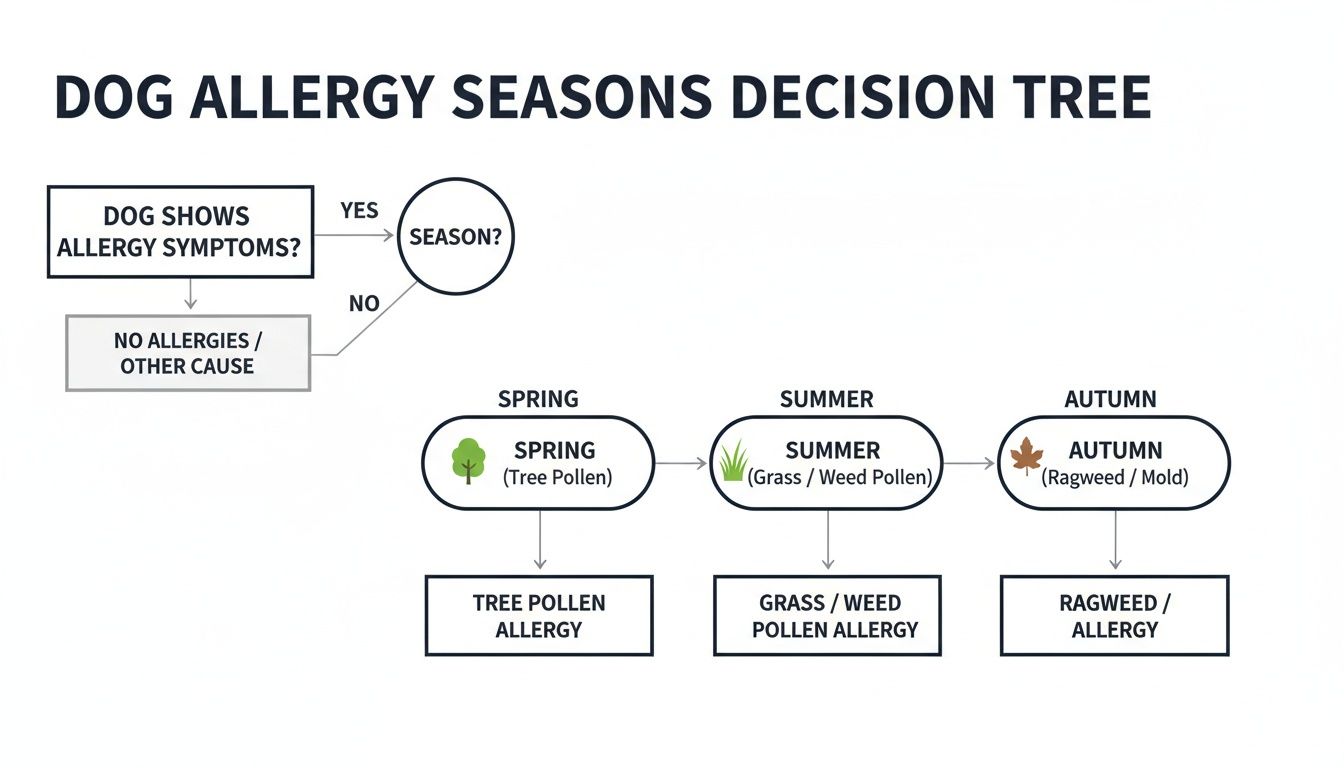
As you can see, things like tree, grass, and weed pollens each have their peak seasons, which can be a massive clue in your detective work.
Ruling Out Fleas and Infections
Before you settle on seasonal allergies, you have to rule out other common culprits. Flea Allergy Dermatitis (FAD) is a big one. This isn't just a normal itch from a flea bite; it's a severe allergic reaction to the proteins in flea saliva. For a sensitive dog, a single bite can trigger an explosive chain reaction of frantic scratching, chewing, and hair loss. A classic sign of FAD is intense itching centred around the base of the tail and down the back legs. If you spot any "flea dirt" (those little black specks) in their coat, you've almost certainly found your culprit.
Finally, don't overlook secondary infections. All that scratching and licking damages the skin’s natural barrier, basically rolling out the welcome mat for bacteria and yeast to set up shop.
An underlying skin infection can make your dog’s itching a hundred times worse, trapping them in a vicious cycle. What might have started as a manageable seasonal allergy can quickly spiral into a painful bacterial or yeast infection that needs its own specific treatment from the vet.
To help you sort through the possibilities, here’s a quick comparison of the usual suspects.
Comparing Common Causes of Itching in Dogs
| Condition | Key Distinguishing Signs |
|---|---|
| Seasonal Allergies (Atopy) | Symptoms flare up at the same time each year. Itching is focused on paws, belly, ears, and face. |
| Food Allergies | Itching is consistent and year-round, often accompanied by gastrointestinal issues (diarrhoea, vomiting). |
| Flea Allergy Dermatitis (FAD) | Intense itching and hair loss concentrated on the lower back, base of the tail, and hind legs. Symptoms can occur year-round but may worsen in warmer months. |
| Contact Dermatitis | Redness and rash appear on areas with less fur that touch an irritant, like the belly, paws, or muzzle. The reaction happens soon after exposure. |
| Skin Infections (Yeast/Bacterial) | Often a secondary problem. Look for smelly, greasy skin, sores, pustules, or crusts. The itching becomes much more severe. |
Sorting through these different causes is vital. By carefully observing your dog’s specific symptoms and patterns, you can give your vet the best clues to uncover the true source of their discomfort and, finally, get them on a treatment plan that actually works.
Finding Real Relief for Your Allergic Dog
Once you’ve got a strong inkling that seasonal allergies are making your dog miserable, the next step is figuring out how to manage their symptoms. There's no single silver bullet, I'm afraid. The best results almost always come from a two-pronged attack: combining smart veterinary treatments with consistent, supportive care at home.
The goal isn't just to stop the itch for a day or two. It's about calming down that overactive immune system and strengthening your dog's natural defences so they're less likely to have a flare-up in the first place. Think of it as creating a personalised comfort plan with your vet, tackling the problem from every angle.
Veterinary Treatments for Allergy Relief
Your vet is your number one ally in this fight. Once they've confirmed what's going on, they have a whole arsenal of medical options to help break that maddening itch-scratch cycle and give your dog some proper relief from their dog seasonal allergies symptoms.
Some of the most common treatments they might suggest include:
- Antihistamines: These don’t work for every dog the way they do for us, but some pooches get great relief from them. It's all about finding the right one, and your vet will know which are safe and what the correct dosage should be.
- Corticosteroids: Drugs like prednisone are the big guns. They are incredibly effective at shutting down severe itching and inflammation fast. Because of potential side effects, vets usually reserve them for short-term use to get a really bad flare-up under control.
- Immunotherapy: You might have heard of this as "allergy shots." It’s a long-term game plan where your dog is exposed to tiny, gradually increasing amounts of the very things they're allergic to. Over time, this process helps their immune system chill out and stop overreacting. It takes patience, but for many dogs, it's a game-changer.
Supporting Your Dog from the Inside Out
While medications tackle the immediate crisis, what you do every day can make a massive difference in the long run. One of the best strategies is to focus on strengthening your dog's skin barrier. A healthy, resilient skin is simply better at keeping allergens out.
This is where nutrition and supplements really shine. A diet packed with the right fatty acids can work wonders for skin health, helping to soothe inflammation and bolster that protective outer layer.
Think of your dog’s skin as a brick wall. When it’s healthy, the bricks (skin cells) and mortar (lipids) form a solid barrier, keeping allergens out. Allergies are like having crumbling mortar, letting irritants get through and cause chaos. Good nutrition helps to rebuild that wall from the inside.
Adding specific nutrients gives this process a powerful boost. For instance, omega-3 fatty acids, typically from fish oil, are famous for their natural anti-inflammatory effects, which help to cool the allergic reaction at its source. For a deeper dive into how different ingredients can help, check out our guide on the best supplements for dogs with allergies to see how they contribute to long-term skin health.
By pairing your vet's medical plan with the right nutritional support, you create a comprehensive strategy. The medicine puts out the fire, and the supportive care helps prevent new ones from starting, leading to a much happier and more comfortable best friend.
Simple Home Care Tips to Soothe Your Dog
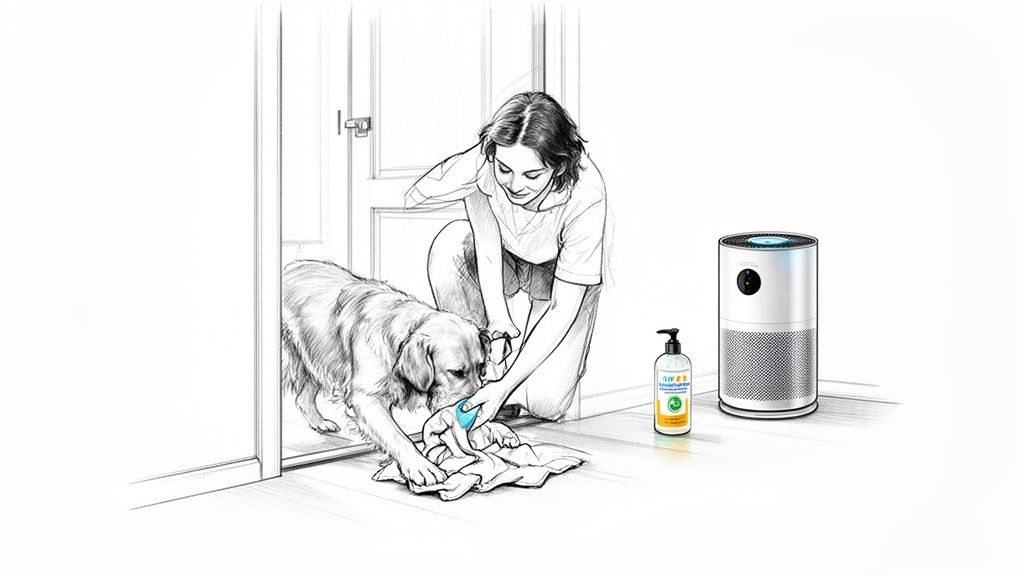
While your vet's guidance is absolutely key to managing your dog’s seasonal allergies, what you do at home can make a world of difference. Creating a low-allergen sanctuary and offering immediate, soothing care can genuinely ease their day-to-day discomfort.
These are simple, practical steps that focus on one main goal: getting allergens off your dog and out of your home. Think of it as your first line of defence when the pollen count starts to climb.
Create a Low-Allergen Haven
Your home should be a safe space where your dog gets a real break from the constant assault of outdoor allergens. With a few proactive habits, you can dramatically cut down on the pollen and mould spores floating around inside.
- Wipe Down After Walks: Keep a damp cloth or some pet-safe wipes right by the door. After every trip outside, give their paws, legs, and belly a quick wipe. This physically removes pollen before it gets tracked through the house or licked off their fur.
- Invest in an Air Purifier: An air purifier with a HEPA filter, especially in the room where your dog sleeps, is fantastic for trapping those tiny airborne particles and cleaning the air they breathe.
- Regular Cleaning Routine: Stepping up your cleaning game helps enormously. Frequent vacuuming (using a machine with a HEPA filter) and washing your dog's bedding in hot water at least once a week will get rid of dust mites and settled pollen.
A simple daily habit, like wiping your dog's paws, can prevent a significant amount of pollen from ever becoming a problem. It’s one of the easiest and most effective ways to manage their exposure.
Provide Soothing Topical Relief
Going straight to the source of the irritation—the skin—can bring instant comfort and help break that frustrating itch-scratch cycle. The right bathing routine is a huge part of this.
Bathing your dog regularly with a hypoallergenic or medicated shampoo recommended by your vet does more than just get them clean. It actively washes away the allergens stuck to their fur and helps calm inflamed, angry skin. Just be careful not to overdo it, as too many baths can strip natural oils and dry their skin out.
For more ideas on bringing them immediate comfort, you can explore various dog itching home remedies that work well alongside your vet's advice.
By weaving these simple home care strategies into your vet's treatment plan, you’re building a powerful, multi-layered defence against the misery of seasonal allergies.
Your Dog Allergy Questions Answered
Can I Give My Dog Human Antihistamines, Like Piriton?
This is a question I hear a lot, and the answer is a firm "only with your vet's explicit say-so". It's tempting to reach for something in your own medicine cabinet, but human antihistamines are a minefield for dogs.
The doses are completely different, and some formulations contain ingredients like decongestants that are toxic to our pets. Please, don't ever guess – a quick call to your vet will give you a safe, effective plan for your dog.
Do Dog Seasonal Allergies Get Worse With Age?
Unfortunately, yes, this is often the case. Think of it like a snowball effect. Each season your dog is exposed to their trigger allergens – like pollen or mould spores – their immune system can become a little more reactive.
Over the years, this can lead to the dog seasonal allergies symptoms becoming more intense and lasting longer. It's why catching and managing them early on is so important for their long-term comfort.
Are Some Breeds More Likely to Get Seasonal Allergies?
Absolutely. While any dog can develop allergies, genetics definitely play a part. We see it time and time again in certain breeds.
Breeds like French Bulldogs, Labradors, Golden Retrievers, German Shepherds, and many of the Terrier breeds are often at the top of the list. If you have one of these dogs, just be extra watchful for those first signs of itchiness or irritation when the seasons change.
It's crucial to remember that every dog is an individual. A breed's predisposition is just a heads-up, not a diagnosis. Your mixed-breed rescue could be just as itchy as a purebred Frenchie. The most important thing is always to watch your dog's specific symptoms.
For a natural way to support your dog's skin health and help build resilience against allergens, have a look at the vet-approved supplements from Tipaw. You can find the right support for your best friend at https://www.store-tipaw.com.


