


It’s a sight that can stop any dog owner in their tracks: your dog is limping, but they don't seem to be in any pain. They might still be wagging their tail, keen for a walk, or happy to have a cuddle. This can be incredibly confusing, but it’s a classic example of your dog’s deep-seated instinct to mask any sign of weakness.
A limp is your dog’s most direct way of telling you something isn't right, even if they’re not crying out or whining. Ignoring this subtle but important signal can sometimes mean a small problem develops into something much more serious down the line.
Why Dogs Hide Pain and What a Limp Really Means
So, why does your dog put on a brave face? It’s a behaviour hardwired into their DNA, a leftover from their wild ancestors. In the wild, any animal that showed obvious signs of pain or injury would immediately become a target for predators. Our dogs may live cushy lives on our sofas, but that ancient survival instinct is still very much alive.
When you see your dog limping, try to see it through this lens. The limp is the sign of discomfort. Your dog is cleverly adjusting how they walk to shift weight off a sore joint, a pulled muscle, or something stuck in their paw, all while trying to act as normal as possible.
This guide will walk you through everything you need to know, giving you the confidence to figure out what's going on. We'll cover:
- The most common reasons behind a "painless" limp.
- How you can safely perform a gentle check at home.
- The red flags that mean you need to ring your vet right away.
- What to expect when you get to the vet clinic.
Musculoskeletal issues are one of the top reasons for limping in dogs here in the UK. What’s interesting is that many of these conditions start with very subtle signs that owners might not recognise as pain. A study of primary-care vet records revealed that musculoskeletal problems affected 8.64% of dogs, making it a hugely common health issue. While we might expect a yelp or a whimper, often the first clue is just a slight change in how they walk. If you're interested in the data, you can read more about these canine health trends.
The Bottom Line: A limp isn't your dog being dramatic—it's communication. Learning to read this silent signal makes you a better advocate for their health, helping you catch problems early and get them the care they need.
How to Perform a Safe Home Check
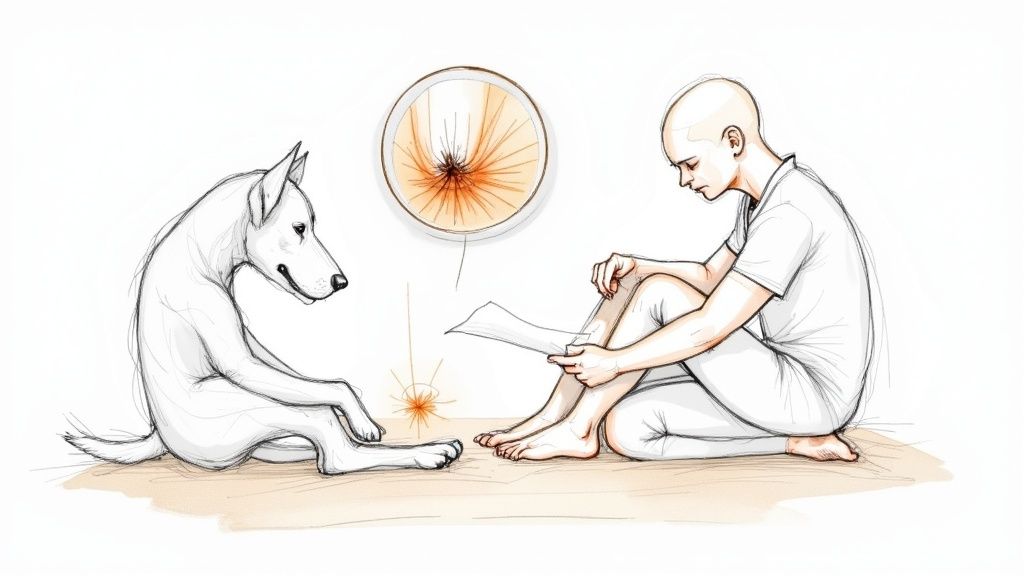
When you first spot that tell-tale limp, it’s easy to feel a jolt of worry. But before you jump to conclusions, a calm, gentle home check can give you some vital clues. The trick is to approach it like a detective—you're simply gathering facts without stressing your dog or aggravating a potential injury.
First things first, set the scene. Find a quiet, well-lit space where your dog feels relaxed, away from the hustle and bustle of the house. Use a soft, reassuring tone of voice. The best time for this is when they're already lying down and settled, not when they're amped up or distracted.
A Step-by-Step Guide to a Gentle Leg Check
The idea here is to be methodical, starting from the ground up on the leg that seems to be bothering them. You’re not trying to be a vet, just a careful observer.
- Inspect the Paws and Nails: Gently cup their paw in your hand. Have a good look at the pads for any cuts, thorns, bits of glass, or even blisters. Don’t forget to carefully check the webbing between their toes for any redness, swelling, or hidden objects.
- Check Each Nail: Look closely at every single nail. A cracked, torn, or overgrown nail is a really common cause of limping and can be incredibly sore for them.
- Feel for Heat or Swelling: Using the back of your hand (it's more sensitive to temperature changes), gently glide it down the entire leg. Now do the same on the other "good" leg. Is there a spot on the limping leg that feels noticeably warmer? Heat is often a sign of inflammation.
- Look for Lumps, Bumps, or Bites: Slowly run your fingers over the muscles and bones of the leg, feeling for anything out of the ordinary. Part the fur as you go to get a better look at the skin; you might find a hidden insect bite, tick, or small wound.
Crucial Safety Note: This is all about looking and feeling, not manipulating. Don't try to bend or straighten any of your dog's joints. If they flinch, pull away, tense up, or make a sound, stop immediately. Their reaction is the most important piece of information you can gather.
What Not to Do During a Home Check
Knowing what to avoid is just as critical as knowing what to do. Pushing your dog too far will only cause them pain and distress.
- Don't force movement: Never try to test their range of motion by bending their knee or hip. You could cause serious pain or worsen the injury.
- Don't put pressure on the leg: Avoid pressing hard on any area, especially if you have any inkling it might be a fracture or a bad sprain.
- Don't give any medication: This one is non-negotiable. Never give your dog human painkillers (many are toxic to them) or any other medication unless specifically instructed by your vet.
The details you pick up from this gentle check are gold dust for your vet. Being able to say, "I found a small cut on their back-left paw pad," or "the area around their knee feels warm to the touch," helps them pinpoint the problem much faster. Think of yourself as the field agent, gathering the intel for the real expert to analyse.
Uncovering the Hidden Causes of a Pain-Free Limp
When your dog starts limping but isn’t yelping or whining, it can be a real head-scratcher. You’re seeing a clear problem—the limp—but their stoic behaviour seems to suggest everything is fine. This is because the reasons behind a limp are incredibly varied, ranging from a minor annoyance to the very first hint of a more significant health problem.
It helps to think of a limp not always as a sign of agony, but as a mechanical adjustment. Your dog is simply changing how they move to protect a part of their body that isn't working at 100%. To figure out what’s going on, we need to look beyond the obvious and consider the full spectrum of possibilities.
Soft Tissue Injuries: The Invisible Culprits
More often than not, a subtle limp points to a soft tissue injury. This is a catch-all term for things like sprains (damage to ligaments) and strains (damage to muscles or tendons). These are the classic "weekend warrior" injuries, common after a particularly boisterous run at the park or an awkward jump off the sofa.
Because there are no broken bones, you often won't see dramatic swelling or a leg at an odd angle. The discomfort is more of a dull, persistent ache that your dog manages by simply putting less weight on that leg. It’s a bit like when you slightly twist your ankle—you can still walk, but you do it carefully to avoid that little twinge of pain.
Orthopaedic Conditions: The Deeper Story
Sometimes, a quiet limp is the first chapter in a much longer story about your dog's joint health. Many serious orthopaedic conditions don't start with a bang; they begin with a barely noticeable change in your dog’s gait.
- Early-Stage Arthritis: This is a huge one, especially for older dogs. The protective cartilage in their joints wears down over time, causing a low-grade, chronic ache. Dogs are masters at adapting to this kind of discomfort, so instead of crying out, they might just show it as stiffness after a nap or a slight limp. Recognising the early signs of arthritis in dogs is the key to managing their comfort for years to come.
- Hip or Elbow Dysplasia: These are developmental problems where the joint socket doesn't form correctly. This instability can cause a subtle, rolling limp or even an unusual "bunny hop" run, often long before any serious pain kicks in.
- Cruciate Ligament Issues: The cruciate ligament is a vital stabiliser inside the knee joint. It can weaken gradually, leading to minor instability and an on-again, off-again limp well before it fully tears. A dog might limp for a few days, seem to get better, and then start limping again a few weeks later.
A persistent limp, no matter how mild, should never be written off as "just old age." It's an active signal from your dog that something is wrong, and it’s almost always something that can be managed with veterinary help to massively improve their quality of life.
Something Stuck: A Simple Fix
Never underestimate the power of a tiny intruder! A surprising number of "pain-free" limps are caused by nothing more than something small wedged in your dog's paw.
Have a gentle but thorough look for:
- Thorns or splinters
- Tiny shards of glass
- Sharp stones or grit
- Chewing gum or tar stuck between their pads
These little things can create a weird sensation that makes your dog walk awkwardly to avoid the feeling, even if it's not truly painful.
Neurological and Other Systemic Issues
Less commonly, a limp isn't about the leg itself but about the wiring that controls it. Neurological issues can mess with a dog's coordination, causing them to drag a paw or walk with an unsteady, limp-like gait. This is less about pain and more about a communication breakdown between the brain and the limb.
On top of that, certain illnesses can show up as joint soreness and limping. Tick-borne diseases, for example, can cause inflammation in the joints that leads to a "shifting leg" limp where the soreness moves from one leg to another. Another strange one is limber tail syndrome, often seen in working breeds after swimming in cold water. Research from the Dogslife project pointed out that while this condition affects a dog's gait, about 74% of cases are not reported to vets, suggesting owners often don't connect the mild symptoms to a specific problem. You can explore more about these under-recognised canine conditions and how often they occur.
Getting to know these hidden causes is the first step. The limp is the clue, and by investigating these possibilities, you're on your way to solving the mystery and getting your companion the right support.
When to Contact Your Vet Immediately
While a subtle limp might not always seem like a big deal, some signs are absolute red flags. These are the moments when your dog is telling you, in no uncertain terms, that they need a professional. Acting quickly can make all the difference.
Knowing when to switch from "wait and see" to dialling the vet is a key part of looking after your dog. Even if they aren't yelping, their body language can scream that something is seriously wrong. Your job is to listen with your eyes and trust your gut.
Unmistakable Signs of an Emergency
If you spot any of the following, it’s time to call your vet or the nearest emergency clinic right away. These symptoms often point to serious problems like fractures, dislocations, or severe sprains that won’t get better on their own.
- Completely Non-Weight-Bearing: Your dog is holding the leg up completely, refusing to put even a toe down for balance.
- Obvious Deformity: The leg just looks wrong. You might see a visible break, a joint sticking out at a weird angle, or a clear dislocation.
- Severe Swelling: The limb is puffy and swollen, and it might feel tight or hard compared to the other leg.
- Dragging the Paw: As they try to walk, they drag the top of their paw along the ground. This can be a sign of a neurological issue or a significant injury.
- Extreme Lethargy or Collapse: The limp is paired with a sudden crash in energy levels, profound weakness, or an inability to even stand.
- Audible Sounds: You heard a distinct snap, pop, or yelp when the injury happened, even if your dog has gone quiet since.
It’s also crucial to see the limp as part of the bigger picture. If it shows up alongside other worrying symptoms, the situation becomes much more urgent.
A limp combined with systemic signs like vomiting, diarrhoea, loss of appetite, pale gums, or difficulty breathing is always an emergency. These symptoms could point to anything from a nasty infection to internal trauma.
Understanding When to Seek Care
Interestingly, how owners react to a limp can depend on where the injury is. A UK-based study found that while owners sought vet care for over 80% of injuries, the sense of urgency varied. For example, consultation was highest for stifle (knee) injuries at 97%, which often start as a very subtle limp.
In contrast, care was sought far less often for injuries to smaller areas like the paws (22-34%). You can learn more about how owners react to different dog injuries from the full study.
This visual guide breaks down the potential sources of a hidden limp, helping you think through the possibilities, from the paw right up to the joint.
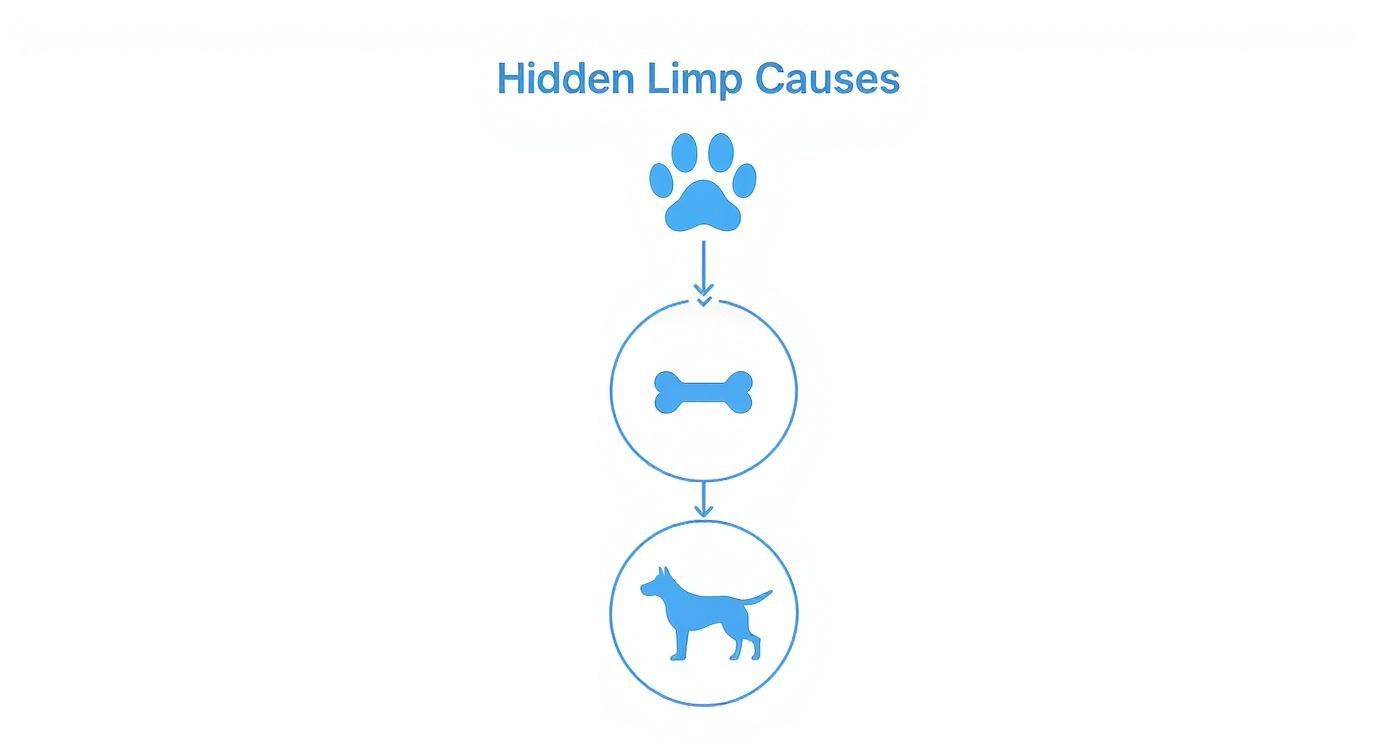
As the flowchart shows, a limp can start with something as simple as a thorn in the paw, or be rooted in a more complex joint problem or even a body-wide condition. Your vet will follow a similar process, checking the most likely spots first before widening the search. The takeaway is simple: when in doubt, let a professional figure it out. It's always the safest bet for your best friend.
What to Expect at the Veterinary Clinic
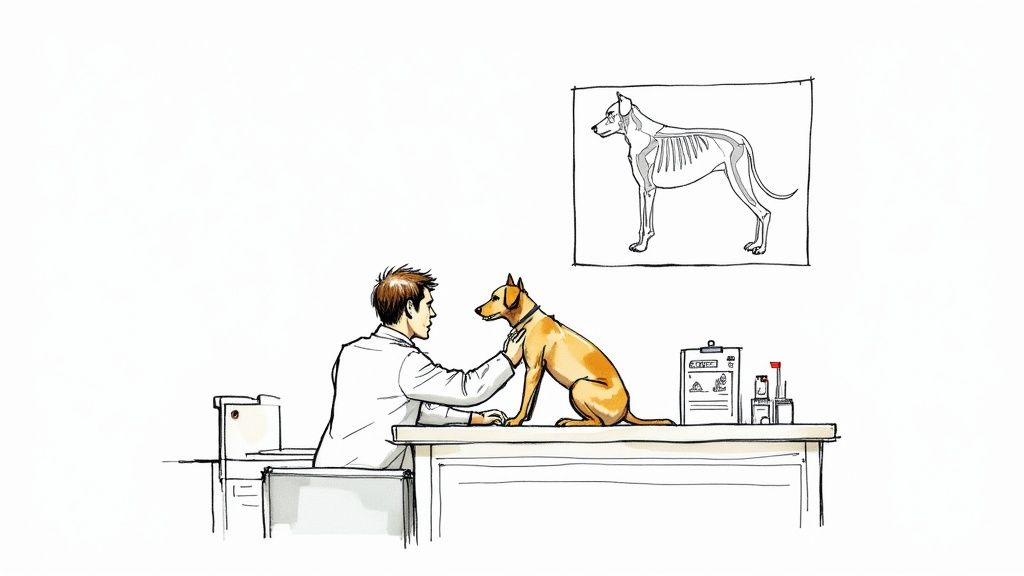
It’s completely normal to feel a bit worried when you take your dog to the vet for a limp, especially when the cause is a mystery. Knowing what to expect during the visit can help calm those nerves and prepare you for a productive chat about your dog's care. Think of it as teamwork: your firsthand observations combined with the vet’s expertise are the key to figuring out what’s going on.
The appointment will almost certainly kick off with a good conversation. Your vet will want to know everything—when you first noticed the limp, if it gets worse after a long walk or a nap, and what your dog has been up to lately. This background story is incredibly valuable as it gives them important clues before they even begin the physical check.
The Physical Examination and Gait Analysis
First things first, your vet will perform a thorough hands-on exam. They’ll gently feel along the bones, joints, and muscles of the affected leg, starting right down at the toes and working their way up. They’re looking for subtle giveaways like a bit of heat, slight swelling, or even a tiny flinch from your dog that points to a sore spot.
Next up is the gait analysis. This involves watching your dog walk and maybe trot down a corridor. It might look casual, but your vet is actually conducting a detailed assessment of your dog’s movement. They’re looking for things like a shortened stride, a head bob (a classic sign of a front-leg limp), or how your dog shifts its weight to take the pressure off.
Your vet is trained to spot minute abnormalities in movement that are easily missed by an untrained eye. This simple observation is one of the most powerful tools for narrowing down the potential causes of your dog's limp.
Diagnostic Imaging and Further Tests
If the hands-on exam doesn’t reveal an obvious culprit like a torn nail or a cut pad, your vet will likely suggest getting a look "under the bonnet" with diagnostic imaging. This is how they can see what’s really happening with the bones and soft tissues.
To get to the bottom of a limp, vets have several tools at their disposal. The choice depends entirely on what they suspect might be the problem based on the initial exam.
Common Veterinary Diagnostic Tools
| Diagnostic Tool | What It Helps Diagnose | Anesthesia Required? |
|---|---|---|
| X-rays (Radiographs) | Bone issues: fractures, dislocations, arthritis, bone tumours, or developmental problems like dysplasia. | Often requires sedation or anaesthesia for precise positioning. |
| Ultrasound | Soft tissue problems: muscle strains, ligament tears (like cruciate tears), or issues with tendons. | Usually not required, but light sedation can help anxious dogs. |
| Blood Tests | Systemic issues: infections (like Lyme disease), inflammatory conditions, or other underlying illnesses. | No, a quick blood draw is all that's needed. |
| CT Scan / MRI | Complex joint, spinal, or neurological problems that need highly detailed, 3D images. | Yes, general anaesthesia is necessary as the dog must be still. |
These tests aren't about guessing; they're about gathering concrete evidence to ensure the treatment plan is exactly right for your dog.
Discussing Treatment Options
Once a diagnosis is made, your vet will sit down with you and explain the recommended treatment plan. The goal is always twofold: relieve any discomfort and fix the underlying issue. The options can vary dramatically depending on what they find.
For a simple sprain or strain, the plan might be quite straightforward:
- Strict Rest: Keeping your dog from running and jumping is often the single most important part of healing.
- Anti-inflammatory Medication: Your vet may prescribe dog-safe medication to reduce swelling and manage any hidden discomfort.
For more complex or long-term problems, the conversation will be a bit different. Conditions like hip dysplasia usually need a multi-faceted management plan. Learning more about what is hip dysplasia in dogs can help you better understand the journey ahead.
More advanced treatments could include:
- Physiotherapy: A bit like for humans, specialised exercises can help rebuild muscle, improve joint stability, and get your dog moving properly again.
- Hydrotherapy: Swimming or using an underwater treadmill is fantastic for building strength without putting any stress on sore joints.
- Surgery: For serious injuries like a cruciate ligament rupture or severe joint dysplasia, surgery might be the best path to a full and lasting recovery.
At the end of the day, this visit is about creating a clear roadmap for your dog's health. By understanding each step of the process, you can feel confident you’re making the best decisions for your four-legged friend.
Supporting Your Dog's Joint Health at Home
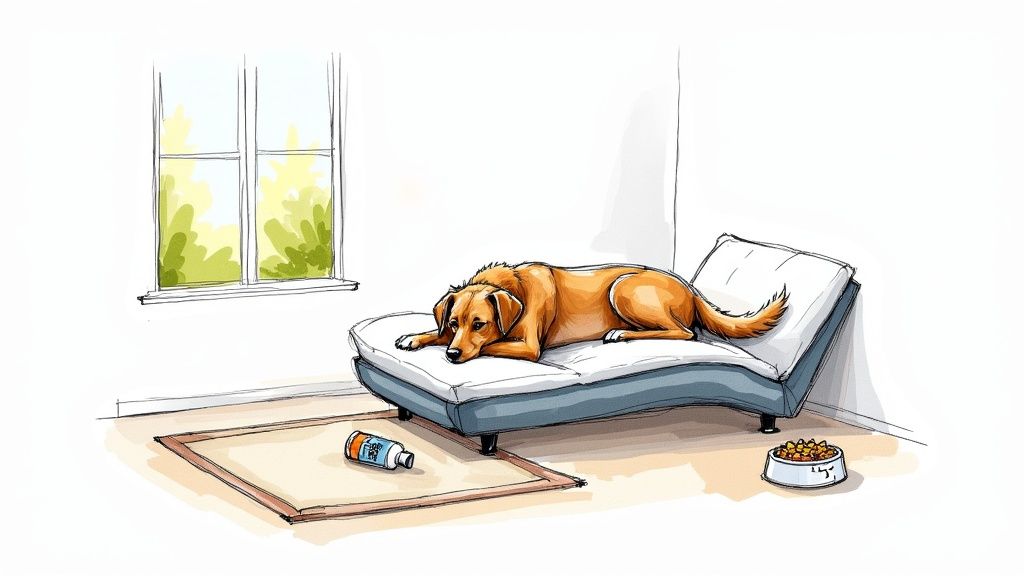
Once you've dealt with the immediate reason for your dog’s limp, your focus will naturally shift to the bigger picture: long-term support and prevention. One of the most effective things you can do is create a home environment that actively supports their joint and muscle health. This isn't just about reacting to problems; it's about getting ahead of them to improve their quality of life.
The absolute foundation of good joint health is keeping your dog at a healthy weight. Any extra pounds put a constant, grinding pressure on their joints, speeding up the wear and tear that can lead to issues like arthritis. It’s amazing what a difference even a small amount of weight loss can make to their comfort and mobility.
Building Strength Through Consistent Exercise
Regular, sensible exercise is just as crucial. The aim here is to build strong muscles that act like a natural support system for the joints, keeping them stable and secure. It's the consistency that counts, not the intensity.
We often see "weekend warrior" dogs—mostly inactive during the week, then pushed into a long, frantic run on a Saturday. This is a classic recipe for sprains and strains. A much better approach is to stick to daily walks and gentle play that's right for your dog's age, breed, and general fitness. This steady routine keeps their body conditioned and far less vulnerable to injury.
Simple Home Adjustments for Better Mobility
Your house might seem perfectly safe, but it can be full of little hurdles for a dog with underlying joint soreness. A few small tweaks can make a massive difference, turning your home into a much more comfortable space for them.
- Improve Traction: Slippery floors, like wood or tile, can be a real struggle. Your dog’s muscles and joints have to work overtime just to keep their balance. Putting down a few non-slip rugs or runners along their main routes gives them the grip they need to walk with confidence.
- Provide an Orthopaedic Bed: A good orthopaedic bed is a game-changer. It’s designed to cushion their body and relieve pressure points, unlike a soft, saggy bed that offers no real support. This makes it much easier for them to get up after a rest.
- Use Ramps or Steps: Jumping on and off the sofa or into the car creates a jarring impact that can be tough on the joints, especially for older dogs. Pet ramps or steps are a simple solution to reduce this daily strain.
A supportive home isn't about making grand, expensive changes. It’s about thoughtfully removing small, everyday obstacles that can contribute to a dog limping, even if there's no obvious pain.
The Role of Nutrition and Joint Supplements
Lastly, never underestimate the power of what goes into their food bowl. A high-quality, balanced diet provides the essential building blocks for healthy bones, cartilage, and tissues. For some dogs, particularly seniors or breeds known for joint problems, a targeted supplement can provide that extra layer of support.
Ingredients like glucosamine and chondroitin are famous for their role in helping maintain healthy cartilage. Others, such as green-lipped mussel, are brilliant for their natural anti-inflammatory properties. These work together to help lubricate the joints and support the body’s own repair mechanisms.
Taking the time to explore a range of natural dog joint supplements can help you find a quality product tailored to your dog’s needs. When you combine all these proactive steps—weight management, sensible exercise, a joint-friendly home, and great nutrition—you're building a powerful defence for your dog's long-term mobility and wellbeing.
A Few Final Questions, Answered
It's natural to have a few lingering questions when you see your dog limping, especially when they don't seem to be in pain. Here are some quick, clear answers to the most common things UK dog owners ask, helping you feel more confident about what to do next.
Can a Dog's Limp Just Go Away On Its Own?
Sometimes, a very minor stumble or tweak might clear up on its own within a day. But if the limp sticks around for more than 24 hours, it’s your dog’s way of telling you something isn’t right. Waiting it out can sometimes turn a small problem into a much bigger one, so it’s always best to get a vet’s opinion and prevent something more serious from developing.
Can I Give My Dog Paracetamol or Ibuprofen?
No, absolutely not. You should never give your dog human painkillers. Medications like ibuprofen and paracetamol are toxic to dogs and can lead to severe kidney failure, stomach ulcers, and even death. Only ever give your dog medication that has been prescribed specifically for them by a vet.
It's important to remember that just because your dog isn't yelping, it doesn't mean they're not feeling discomfort. Giving them your own medicine could hide important clues, making it much harder for your vet to figure out what's really going on.
Is It Normal for My Senior Dog to Start Limping?
While it’s true that stiffness and limping are common in older dogs, often due to arthritis, we should never write it off as just a part of "getting old." It’s a definite sign of discomfort that's affecting their quality of life. The good news is that your vet can diagnose the problem and put together a plan—involving pain relief, simple changes at home, or physical therapy—that can make a massive difference to their comfort and mobility.
My Dog Only Limps After a Nap or a Big Walk. Is That a Problem?
This pattern is a classic tell-tale sign of an underlying issue. If your dog is stiff after a rest but seems to "walk it off," or only shows a limp after a long run, it often points to a developing chronic condition like arthritis or a persistent soft tissue strain. The fact that it's a predictable limp means there's a problem that needs looking at. It's a great idea to book a non-urgent vet check to get on top of it before it gets worse.
At Tipaw, we're passionate about proactive care as the foundation for a long, happy life with your dog. Our range of natural, vet-approved supplements is designed to support your dog's joint health and overall wellbeing. Explore our solutions to help keep your best friend moving comfortably for years to come. Find the perfect support for your companion at https://www.store-tipaw.com.


