


A good gut health supplement isn't just a quick fix for an upset tummy; it's one of the best things you can do to support your dog's long-term health and happiness. I like to think of their gut as the garden from which their entire wellbeing grows. When that internal garden is flourishing, your dog thrives.
Why a Healthy Gut Is the Secret to a Happier Dog
When we think about a healthy dog, we usually picture the obvious signs: a glossy coat, endless energy at the park, or a tail that never stops wagging. But the real command centre for their health is hidden away inside their digestive system. A balanced gut is ground zero for their overall wellness, influencing everything from their immune system and mood to the condition of their skin.
This isn't just a small detail—it's one of the most important principles of canine health. When your dog's gut is out of balance, it can set off a chain reaction of problems that go way beyond a bit of diarrhoea. It can show up as itchy paws, low energy, or even anxious behaviour, leaving you stumped as to what's really going on. This is exactly why a dog gut health supplement can become such a crucial part of their daily care, rather than just something you reach for in an emergency.
The Growing Focus on Proactive Pet Wellness
These days, we see our dogs as part of the family, and that means shifting from just treating problems as they pop up to proactively keeping them well. This change in thinking is easy to spot in the market. In the UK, the pet dietary supplement market is on track to hit £224.8 million in 2025 and is estimated to reach a massive £531.8 million by 2035. Probiotics, the cornerstone of gut health, already make up a huge 29% of that market, which shows just how vital they've become. You can discover more insights into the growing UK pet supplement market and see how digestive health is now a top priority for pet parents everywhere.
By focusing on the gut, you are nurturing the very core of your dog's health. It's the most effective way to support their immune system, enhance their nutrient absorption, and ultimately, boost their quality of life.
More Than Just Digestion
Once you understand this connection, you can start looking past the symptoms and get to the root of the problem. A balanced gut makes sure your dog can actually absorb all the good stuff from their food, turning their meals into the high-quality fuel they need to live their best life.
Here’s a quick rundown of what a healthy gut really does:
- A Strong Immune System: Believe it or not, around 70% of your dog's immune system is located in their gut. A balanced microbiome is their first line of defence against germs and illness.
- Stable Mood and Behaviour: The gut has a direct line to the brain (it's called the gut-brain axis). This means a happy digestive system often leads to a calmer, happier dog.
- Healthy Skin and Coat: So many skin issues and dull coats are actually linked to an internal imbalance. A healthy gut helps your dog shine from the inside out.
When you invest in your dog's digestive health, you're doing so much more than just managing the odd stomach upset. You're building a foundation for a happier, more resilient, and energetic friend for years to come.
Exploring Your Dog's Inner World: The Microbiome
To really get to grips with how a gut health supplement can help your dog, we need to take a little tour of their digestive system. Tucked away inside is a bustling, microscopic world known as the gut microbiome. This isn’t just a random collection of germs; it’s a complex and lively ecosystem, home to trillions of microorganisms like bacteria, fungi, and viruses.
Think of this microbiome as a thriving city that lives inside your dog. Like any city, it needs a population of skilled workers, a reliable food supply, and the valuable goods they produce to keep everything running. When this tiny city is in harmony, it supports your dog’s entire body—from their immune system right through to their mood. But if things get out of balance, it can cause problems everywhere.
This community of microbes does far more than just help with digestion. It’s responsible for creating essential vitamins, fending off nasty pathogens, and it even sends signals to your dog’s brain. Keeping it balanced is one of the best things you can do for their long-term health.
The Key Players in Your Dog’s Gut City
Let's meet the main residents of this internal city to see what they do. Breaking it down this way makes it much easier to understand how they all work together. A good dog gut health supplement is designed to support every one of these key players.
-
Probiotics: The Skilled Workers
These are the "good guys"—the beneficial bacteria. Think of them as the city’s essential workforce: the builders, doctors, and security guards. They’re busy performing critical jobs like breaking down food, fighting off infections, and generally keeping the whole system in good working order. -
Prebiotics: The Nutritious Food Source
These are special plant fibres that your dog can't digest on their own. Instead, they act as the perfect food, or "fuel," for the probiotic workers. Without a steady supply of prebiotics, the good bacteria would essentially starve, and the city’s workforce would grind to a halt. -
Postbiotics: The Valuable Goods
When probiotics munch on prebiotics, they produce incredibly useful compounds as a by-product. These are the "goods" manufactured in the city—things like short-chain fatty acids, enzymes, and vitamins. These postbiotics are a game-changer, helping to strengthen the gut wall, reduce inflammation, and support the immune system all over the body.
The connection between a happy gut and a happy dog is powerful, as you can see below.
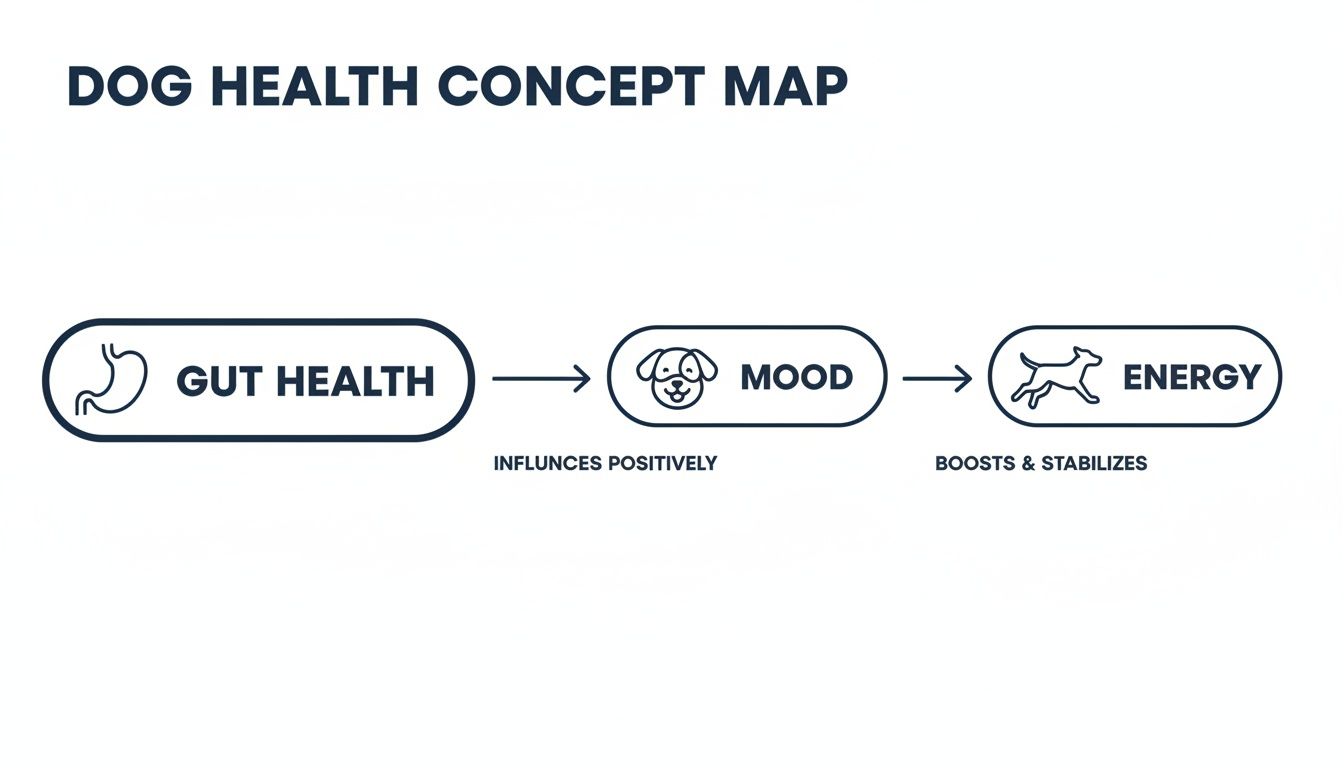
This just shows how looking after their gut has a direct impact on their mood, which in turn fuels the energy they have for walks, play, and just being their happy selves.
Why Harmony is So Important
A healthy microbiome is all about balance, a state scientists call symbiosis. This is where the good microbes vastly outnumber the bad ones. When that balance gets knocked off-kilter—a condition known as dysbiosis—trouble can start. This upset can be triggered by all sorts of things, like stress, a course of antibiotics, a poor diet, or illness.
When the "bad" bacteria start to take over the city, they create chaos. This can lead to inflammation, poor nutrient absorption, and a weaker immune system, often showing up as symptoms like diarrhoea, itchy skin, or just a general lack of energy.
This is exactly where the teamwork of probiotics and prebiotics comes in. By adding more skilled workers (probiotics) and giving them their favourite food (prebiotics), you help restore order and get the city thriving again. This powerful duo is the foundation of good digestive health. If you want to get into the nitty-gritty, you can learn more about prebiotics and probiotics for dogs in our detailed guide.
Ultimately, supporting your dog's microbiome isn’t just about dealing with an upset tummy. It's about nurturing a strong internal ecosystem that underpins their entire wellbeing, making sure they feel their absolute best from the inside out.
How to Spot a Troubled Tummy in Your Dog
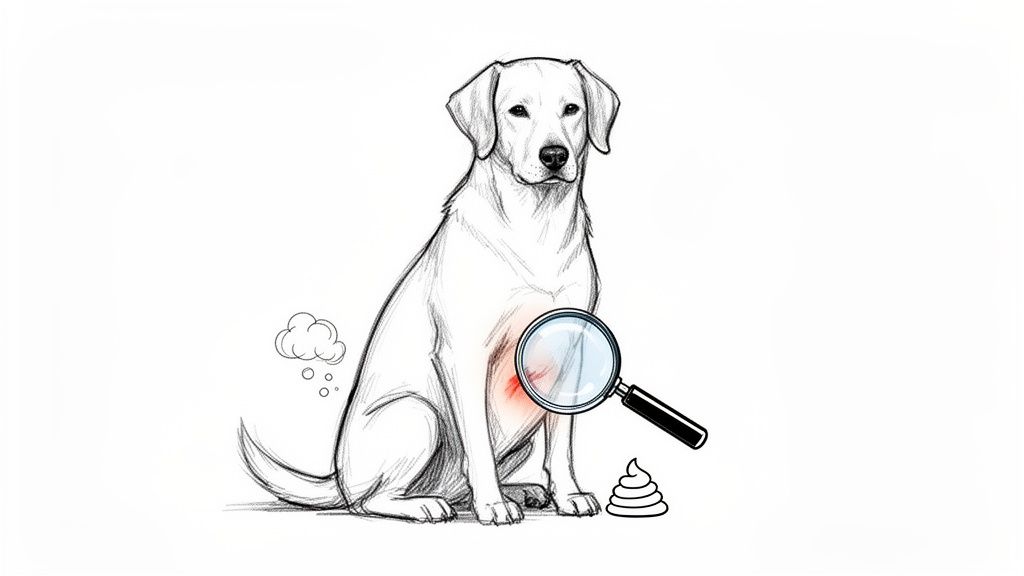
Since your dog can't tell you when something feels off, it's up to you to become a bit of a gut-health detective. Learning to recognise the signs of an unhappy microbiome is about more than just spotting an obvious stomach ache. The clues are often surprisingly subtle and can easily be mistaken for simple personality quirks or behavioural issues.
By tuning into these signals, you can start connecting the dots between what you're seeing on the outside and what's really going on inside their gut. This awareness is key to acting early and stopping small issues from spiralling into bigger problems.
It’s no surprise that proactive care is on the rise. In 2022, UK dog owners spent a massive USD 39.5 million on pet digestive health supplements alone, a number projected to climb to USD 59.1 million by 2030. This trend shows a real shift in understanding just how fundamental gut health is for our dogs.
To help you become a better gut detective, we've broken down the signs into two categories: the obvious tummy troubles and the more surprising signals that something is amiss.
The Clear Digestive Clues
Let's start with the most direct signs that your dog's digestive system is struggling. These are usually the first red flags that owners notice, and they clearly point to a microbiome that could use some support.
-
Dodgy Poo: This is the number one indicator. Healthy stools should be firm, log-shaped, and easy to pick up. Anything else—from diarrhoea and constipation to mucus-covered or strangely coloured poo—is a direct sign of an internal imbalance.
-
Excessive Gas: A bit of wind is normal, but frequent or unusually foul-smelling gas often means food isn't being digested properly. Think of it as the "bad" gut bacteria having a party and producing a lot of smelly by-products.
-
Vomiting or Regurgitation: While dogs can be sick from time to time for simple reasons, if it becomes a regular event, it's a clear signal that something is irritating their digestive tract.
The More Surprising Gut-Related Signs
This is where your detective skills really shine. An imbalanced gut, or dysbiosis, can show up in ways that seem completely unrelated to digestion. But make no mistake, it's all connected.
A dog’s gut health is directly linked to their skin, mood, and immunity. When their internal ecosystem is out of sync, the effects ripple outwards, often appearing as issues you wouldn't immediately associate with their tummy.
Keep an eye out for these less obvious symptoms:
-
Itchy Skin and a Dull Coat: Constant scratching, red or irritated skin, and a coat that's lost its lustre can all stem from inflammation that starts in the gut. The "gut-skin axis" is a real thing—an unhappy digestive system often shows itself on their skin.
-
Low Energy Levels: If your usually peppy dog seems tired or less excited about walks, it could be because they aren't absorbing nutrients properly from their food. An imbalanced gut can be a major drain on their energy.
-
Changes in Appetite: Suddenly becoming a picky eater or, on the flip side, acting ravenously hungry all the time can signal gut discomfort. Pain or bloating can make eating unpleasant, leading to fussiness.
-
Behavioural Shifts: An uptick in anxiety, irritability, or even listlessness can be tied to the "gut-brain axis." An unhealthy gut environment can disrupt the production of crucial mood-regulating neurotransmitters like serotonin.
Recognising this wide range of signs is the first step toward providing targeted support with a dog gut health supplement. To learn more about specific ailments, our guide on common digestive problems in dogs is a great next read.
Common Signs of Canine Gut Imbalance
To make things even clearer, here’s a quick summary table to help you spot potential digestive health issues.
| Symptom | What It Could Mean for Gut Health | Severity Indicator |
|---|---|---|
| Diarrhoea/Constipation | Microbiome imbalance, inflammation, or poor nutrient absorption. | High: Persistent issues require immediate attention. |
| Excessive Gas/Wind | Poor digestion and fermentation by "bad" bacteria. | Moderate: If frequent and foul-smelling. |
| Vomiting | Gut irritation, inflammation, or a food intolerance. | High: If it becomes chronic or contains blood. |
| Itchy Skin/Dull Coat | Systemic inflammation originating from the gut (gut-skin axis). | Moderate: A persistent, non-seasonal issue. |
| Low Energy | Malabsorption of nutrients, leading to a lack of fuel. | Moderate: A noticeable and lasting change in activity. |
| Anxiety/Irritability | Disruption of mood-regulating chemicals (gut-brain axis). | Low to Moderate: When it's a new or worsening behaviour. |
This table is a starting point, but remember, you know your dog best. Any persistent or severe symptom is always worth a discussion with your vet.
What Makes a Dog Gut Health Supplement Effective?
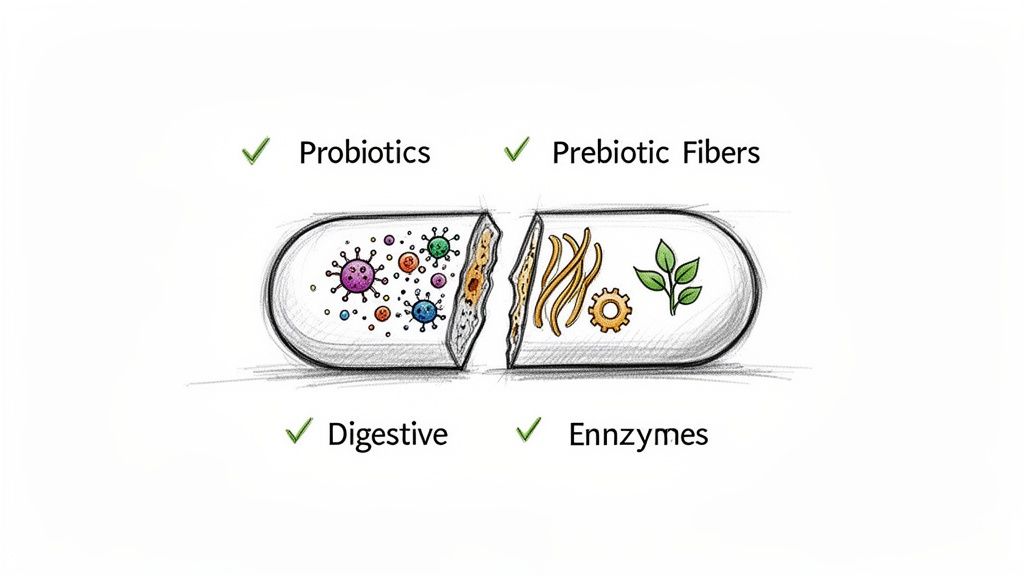
Staring at a supplement label can feel a bit like trying to read a foreign language. But once you know what to look for, you can quickly tell the difference between a genuinely helpful formula and a well-marketed jar of fluff. The secret to a truly effective dog gut health supplement isn't just one magic ingredient; it's a team of them working together.
Think of it like tending to a garden. You can’t just throw seeds on barren ground and expect a beautiful lawn. You need the seeds (probiotics), the fertiliser (prebiotics), and a team of gardeners (enzymes) to help everything grow. It’s this combination that creates a thriving gut ecosystem for your dog.
Let’s get familiar with these powerhouse ingredients so you can feel confident you’re choosing the best for your companion.
Probiotics: The Good Bacteria Workforce
Probiotics are the 'good guys'—live, friendly bacteria that join forces with your dog's natural gut flora. They’re the frontline workers, busy keeping harmful bacteria in check, supporting the immune system, and making digestion run smoothly.
But just seeing the word "probiotics" on a label is only half the story. The specific strains of bacteria matter immensely, as different strains have different jobs.
Look for dog-specific strains that have been well-researched, such as:
- Lactobacillus acidophilus: A fantastic all-rounder for maintaining microbial balance.
- Bifidobacterium animalis: Known for its role in supporting a robust immune response.
- Enterococcus faecium: Often used to help manage diarrhoea and restore order in the gut.
You'll also see a CFU count, which stands for Colony-Forming Units. This tells you how many live microbes are packed into each dose. While a bigger number isn't always better, you need a substantial amount—usually in the billions—to ensure enough of these tiny workers survive the acidic trip through the stomach and reach the intestines where they can get to work.
Prebiotics: The Fuel for the Workforce
So, if probiotics are the workers, prebiotics are their packed lunch. These are specific plant fibres that your dog can't digest, but they happen to be the favourite food of the good gut bacteria.
By feeding the beneficial microbes, prebiotics help them thrive, multiply, and do their jobs more effectively. It’s a simple but brilliant way to boost not only the probiotics you're adding but also the friendly bacteria already living in your dog’s gut.
When a supplement contains both probiotics and prebiotics, it's called a synbiotic. This one-two punch is incredibly effective because you’re not just introducing new workers; you’re also providing everything they need to flourish.
Keep an eye out for ingredients like inulin (often from chicory root), Fructo-oligosaccharides (FOS), or Mannan-oligosaccharides (MOS). These are all top-tier fuel sources for your dog's internal ecosystem.
Digestive Enzymes: The Efficiency Experts
While the 'biotics' focus on microbial balance, digestive enzymes are the efficiency experts. Their sole job is to break down food, ensuring your dog wrings every last drop of nutrition from their meals.
Dogs produce their own enzymes, of course, but factors like age, a sensitive stomach, or a diet of highly processed kibble can mean they need a little extra help. That's where supplemental enzymes can be a game-changer.
The key players to look for are:
- Amylase: Tackles carbohydrates.
- Protease: Breaks down proteins.
- Lipase: Handles fats.
By improving how well your dog absorbs nutrients, enzymes take a huge load off the digestive system. The result? Often, you’ll see firmer stools, less gas, and a more energetic dog who is truly getting the most from their food. If you want to dive deeper, our guide explains more about the benefits of digestive enzymes for dogs.
What to Avoid on an Ingredient List
Knowing what shouldn't be in a supplement is just as crucial as knowing what should. A high-quality dog gut health supplement will have a clean, focused formula, free from cheap additives that could cause more trouble than they're worth.
Be on the lookout for and steer clear of:
- Artificial Colours and Flavours: Your dog doesn’t care what colour their supplement is. These ingredients are unnecessary and can be a source of sensitivity.
- Common Fillers: Ingredients like corn, wheat, and soy are often used to bulk out a product cheaply but provide zero benefit and are known allergens for many dogs.
- Chemical Preservatives: Avoid products with artificial preservatives like BHA or BHT. Natural alternatives like mixed tocopherols (a form of Vitamin E) are a much better sign.
At the end of the day, a shorter, more transparent ingredient list is usually a sign of a superior product. You want a supplement packed with active, beneficial components, not one bogged down with fillers and synthetics. With this knowledge, you can cut through the marketing noise and find a supplement that will genuinely help your dog on their journey to a happy, healthy gut.
How to Introduce a New Supplement to Your Dog
So, you’ve done your homework and picked out a top-notch dog gut health supplement. That’s a brilliant first step. But getting the product is only half the battle. How you actually introduce it to your dog’s diet is just as critical for making sure it helps, rather than hinders.
Even the best supplements can cause a bit of temporary tummy trouble if you spring them on your dog's system all at once. The trick is to start slow, pay close attention to how they react, and make the whole experience feel more like a treat than a chore.
Getting this right from the beginning helps your dog’s body adapt smoothly and sets you both up for success in the long run. Let's walk through the best way to get started.
Start Low and Go Slow
When it comes to adding anything new to your dog’s diet, the golden rule is always “start low and go slow.” Instead of giving the full recommended serving on day one, begin with a much smaller amount. This gives their digestive system—and that all-important gut microbiome—a chance to get used to the new ingredients without being overwhelmed.
A good rule of thumb is to start with just a quarter or half of the suggested dose for the first few days. Keep an eye on them. If everything seems normal (no dodgy poos or signs of an upset stomach), you can slowly increase the amount over the next week or so until you reach the full daily serving.
This gradual approach is especially important if you have a dog with a sensitive stomach. It’s the best way to avoid any setbacks and help their system welcome the new support.
Nail the Correct Dosage
Once your dog is comfortably settled into their new routine, it's vital to stick to the correct dosage recommended for their weight. The instructions on the label aren't just a vague guideline; they're carefully calculated to deliver the right amount of active ingredients—like the specific number of CFUs in a probiotic—to actually make a difference.
To get it right every time, just follow these simple steps:
- Weigh Your Dog: Get an accurate, up-to-date weight. Don’t just guess!
- Read the Label: The packaging will tell you exactly how much to give based on weight ranges.
- Use the Right Tools: If a scoop is provided, use it. If they're chews, count them out. Precision is your friend here.
Giving too little might mean you never see the benefits you’re hoping for, while giving too much is a waste of a good supplement and could lead to an upset tummy.
A supplement's effectiveness is directly tied to consistent and correct dosing. Think of it as a daily investment in their gut health—every dose builds on the last to create a balanced internal ecosystem.
Make It a Tasty Treat
Let’s be honest: the best dog gut health supplement is one your dog will actually eat without a fight. Thankfully, many modern supplements are designed to be genuinely delicious, turning a daily health task into a moment of joy.
Functional chews, for example, are often a complete game-changer. They look, smell, and taste like a treat, so you don’t have to worry about hiding powders in their food. This makes life so much easier for you and a lot more pleasant for your dog. For the truly fussy ones, you can always crumble it into their meal, but most dogs will gobble it right out of your hand.
Remember, consistency is what gets results. By making supplement time a tasty and positive part of their daily routine, you're far more likely to stick with it. It should feel like a reward, not a chore. Find a time that works for you both—maybe after their morning walk or alongside their dinner—and make it a habit. Patience and persistence will pay off.
When It’s Time to Talk to Your Vet About Digestive Health
While a top-notch dog gut health supplement can be a brilliant addition to your dog's daily routine, it's just one piece of the puzzle. Think of your vet as the most important partner you have in your dog's long-term wellness. Knowing when to reach for a supplement versus when to pick up the phone is the cornerstone of great dog ownership.
Supplements are fantastic for supporting and maintaining a healthy gut, but they aren't a replacement for professional veterinary care. If your dog suddenly develops severe or persistent symptoms, your first move should always be to call the vet. These are often red flags pointing to a deeper issue that needs a proper diagnosis and medical treatment.
When a Vet Visit is a Must
Minor, occasional tummy troubles can often be managed at home, but some situations are non-negotiable and need a vet’s immediate attention. Don’t wait and see if you notice any of these signs:
- Sudden or Severe Symptoms: We’re talking about acute diarrhoea, repeated vomiting, a sudden drop in energy, or signs of serious pain, like a hunched-over posture or constant whining.
- Blood in Stool or Vomit: Any trace of blood is a serious warning sign. This requires a professional check-up right away.
- No Improvement: If you’ve started a supplement and things aren't getting better after a reasonable amount of time—or worse, they're getting worse—it’s time to consult your vet.
- Existing Health Conditions: For dogs already managing conditions like pancreatitis, IBD, or kidney disease, always have a chat with your vet before adding anything new to their diet.
How to Have a Good Chat with Your Vet
To get the most out of your appointment, it helps to be prepared. When your vet has the full picture, they can give you the best possible advice on whether a supplement is the right move.
Before you head in, try to gather a few things:
- A list of symptoms: Jot down exactly what you've noticed, when it started, and how often it's happening.
- Dietary details: Make a quick list of everything your dog eats—their main food, all their treats, and any other supplements they might be taking.
- The supplement label: Bring the bottle or a clear photo of the ingredients list and guaranteed analysis with you.
Your vet's job is to make sure any supplement you're considering is safe and genuinely suitable for your dog's individual health needs. Being open and prepared helps them guide you effectively, turning your dog’s care into a true team effort.
This partnership is the key to ensuring your dog benefits from both smart nutritional support and expert medical care.
Your Questions, Answered
Alright, so you've got the basics down on canine gut health. But it's completely normal to have a few lingering questions before you add a new supplement to your dog's routine. Let's tackle some of the most common ones we hear from dog owners just like you.
We'll get into the practical side of things—timing, how long it takes to see a difference, and long-term use—so you can feel totally confident.
How Long Until I See Results?
This is probably the number one question on every dog owner's mind, and the honest answer is: it depends on the dog. Some pups might have better-looking poo or seem less gassy within just a few days. But for the bigger, more noticeable changes, you need to play the long game.
Think of it like tending to a garden. You can't just sprinkle some seeds and expect a full bloom the next day. For issues related to skin health or their immune system, you'll want to stick with it for at least four to six weeks. This gives the supplement enough time to really get to work rebalancing their gut. Consistency is everything here.
Can I Give My Dog a Supplement Every Day?
Yes, absolutely! In fact, that's exactly how they're meant to be used. A good-quality dog gut health supplement isn't a one-off treatment; it's designed for daily use to keep your dog's gut in a happy, stable place.
Your dog's gut microbiome is constantly changing, influenced by everything from their food to a stressful trip in the car. Giving them a daily supplement helps to keep the good bacteria topped up and supports their digestion day in, and day out. It's about proactive wellness, not just putting out fires.
What Is the Best Time to Give the Supplement?
The best time is simply the time you won't forget. Consistency is far more important than the exact hour on the clock.
Most people find it easiest to mix it in with a meal, either breakfast or dinner. This makes it part of the established routine and can even help with absorption. If your dog has a sensitive tummy, giving the supplement with food is definitely the way to go. Just pick a time and make it a habit.
The goal is to make supplement time a simple, positive habit. Whether it's a tasty chew after their morning walk or mixed into their dinner, consistency is far more important than the specific time of day.
Can Puppies Take Gut Health Supplements?
They can, but you have to be careful to choose a product that is either made for puppies or clearly states it's safe for them. A puppy's digestive system is still a work in progress, and giving them the right support early on can do wonders for their long-term health.
Look for formulas with gentle ingredients that have been properly researched. Always begin with the smallest dose recommended for their weight. And with any young dog, it's always smart to have a quick chat with your vet before you start something new.
Ready to support your dog’s digestive wellness from the inside out? Tipaw offers vet-approved, functional chews made with 100% natural ingredients to promote a balanced gut and a happy dog. Give your companion the gift of great health and explore our effective, tasty solutions today. Visit us at https://www.store-tipaw.com.


