


Digestive enzymes are the unsung heroes of your dog’s gut. Essentially, they are specialised proteins that act like tiny biological scissors, snipping large food molecules into smaller, absorbable nutrients.
Think of it like this: your dog’s food is a complex puzzle made of proteins, fats, and carbohydrates. Digestive enzymes are the key to breaking that puzzle down into individual pieces the body can actually use. Without them, even the highest-quality diet would just pass through their system, its goodness wasted. This is where a good supplement can make all the difference, particularly for older dogs or those with touchy tummies.
The Inner Workings of Your Dog's Digestion
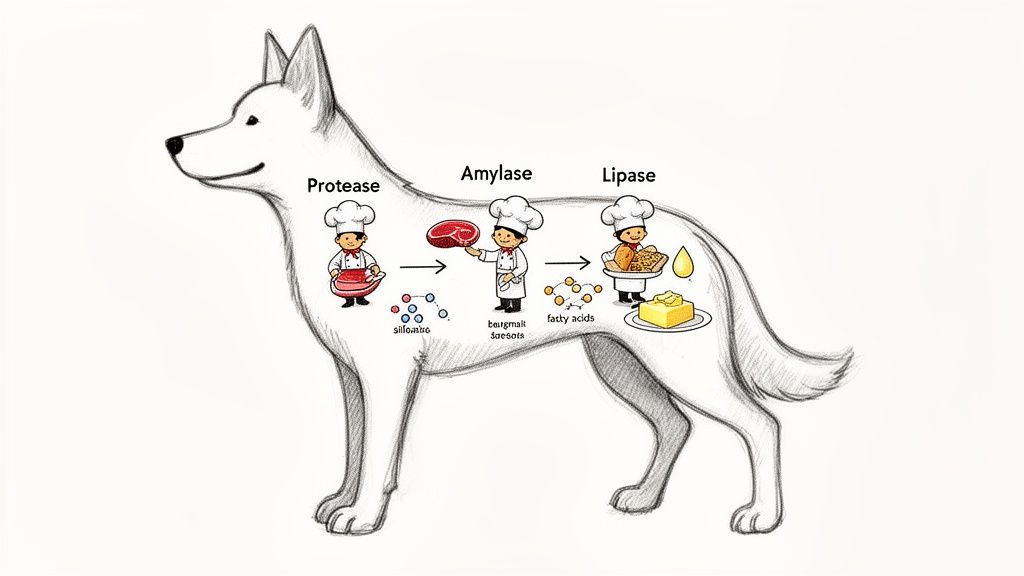
To really get your head around why these enzymes are so crucial, let's look at what happens after your dog wolfs down their dinner. That bowl of food is full of big, complex molecules that are far too large for their intestinal wall to absorb.
This is where the digestive enzymes, produced mainly by the pancreas, spring into action. They're like a highly efficient deconstruction crew, each member having a very specific task. The second food hits the stomach, they get to work, dismantling every morsel so it can be absorbed into the bloodstream. This single process fuels everything, from their boundless energy at the park to the healthy shine on their coat.
The Key Players on the Enzyme Team
The core of this internal digestive crew is made up of three main types of enzymes. Each is a specialist, perfectly designed to break down a specific part of your dog’s meal. For digestion to run smoothly, all three need to be present and working together.
Here’s a look at the all-star lineup:
- Protease: This is the protein powerhouse. It breaks down the proteins from meat and fish into their fundamental building blocks, amino acids. These are vital for building strong muscles, repairing tissue, and maintaining a healthy immune system.
- Amylase: This is the carbohydrate converter. Amylase takes starches found in ingredients like sweet potatoes or peas and turns them into simple sugars, giving your dog a readily available source of energy for walkies and zoomies.
- Lipase: This enzyme is the fat specialist. Lipase breaks down fats and oils into fatty acids, which are essential for absorbing important vitamins (A, D, E, and K), keeping cells healthy, and even supporting brain function.
A dog’s ability to get the maximum nutrition from their food hinges on having the right balance of these three enzymes. When there’s a shortage, nutrients get lost, often leading to familiar digestive upsets.
Why Some Dogs Need Extra Support
While a healthy dog’s pancreas is a fantastic little enzyme factory, some things can throw a spanner in the works. Age is a big one. As dogs get older, their natural enzyme production can start to slow down, just like it does in humans. Some breeds are also just naturally more prone to digestive issues.
Modern diets don't always help, either. Highly processed kibble, in particular, can put a strain on the digestive system. The intense heat used in manufacturing often destroys the natural enzymes that would be present in raw ingredients, forcing the pancreas to work much harder to compensate.
This is where a high-quality digestive enzyme dog supplement can be a game-changer. It steps in to lighten the load on the pancreas, helping to bridge the nutritional gap and ensure your furry friend gets every last bit of goodness from their meals.
Here’s a quick rundown of your dog's primary digestive toolkit and what each enzyme brings to the table.
Your Dog's Digestive Enzyme Toolkit
| Enzyme | What It Digests | Why It's Important |
|---|---|---|
| Protease | Proteins | Builds and repairs muscle, supports the immune system, and promotes healthy skin and coat. |
| Amylase | Carbohydrates & Starches | Converts carbs into simple sugars for immediate energy and helps maintain stable blood sugar levels. |
| Lipase | Fats & Oils | Crucial for absorbing fat-soluble vitamins, supporting brain health, and maintaining healthy cell membranes. |
Having this team working in perfect sync ensures your dog's body can unlock and use all the vital nutrients packed into their food.
Signs Your Dog Could Benefit From Digestive Enzymes
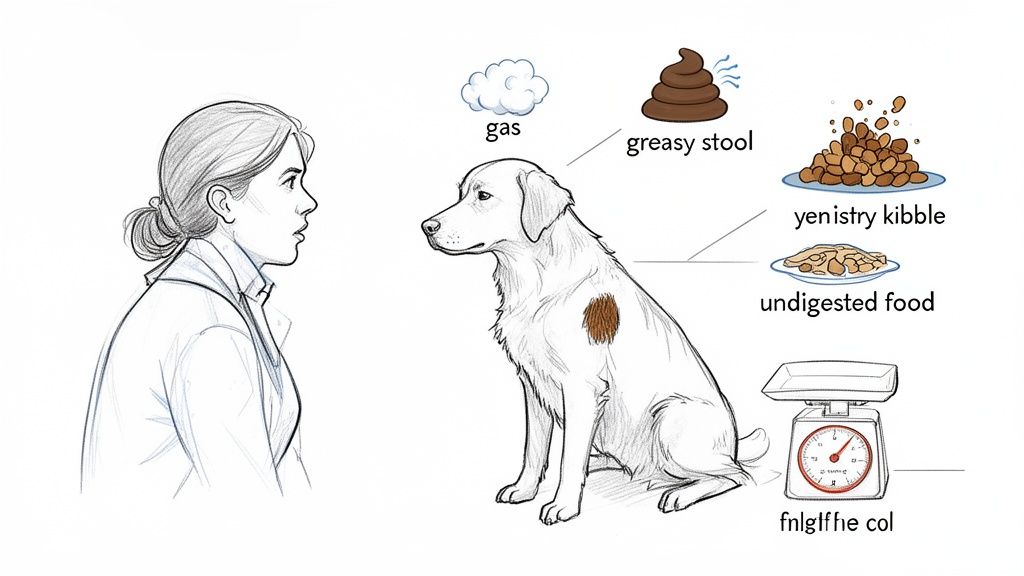
Your dog can’t exactly tell you when their stomach is churning, but they have their own ways of showing it. Learning to spot these clues—some subtle, others… not so much—is the first step to figuring out if their digestive system is running smoothly. Think of these symptoms as your dog's way of saying their internal "kitchen crew" might be short-staffed.
And it’s a surprisingly common issue. Here in the UK, diets for digestive sensitivity make up a whopping 20% of the entire pet diet market, and that number is expected to climb. This just goes to show how many dog owners are looking for answers, often turning to solutions like digestive enzymes dog supplements to get things back on track.
Obvious Tummy Troubles
Often, the clearest signs that something's wrong with digestion are all about, well, what comes out the other end. These symptoms are a direct indication that food isn't being broken down and absorbed as it should be, causing both discomfort and messy clean-ups.
Be on the lookout for these tell-tale signs:
- Excessive Gas or Flatulence: A bit of wind is normal for any dog, but if your pup is constantly gassy and clearing the room, it could mean carbohydrates aren't being properly digested by amylase.
- Loose Stools or Diarrhoea: A bout of diarrhoea is a pretty clear signal that the digestive system is overwhelmed and struggling to process a meal.
- Greasy, Smelly Stools (Steatorrhea): If your dog’s poo looks oily, bulky, or is particularly foul-smelling, it’s a classic sign that lipase enzymes are having trouble breaking down fats.
Paying close attention to your dog's toilet habits gives you a direct window into how well their digestive system is working. Any changes in frequency, consistency, or smell are usually the first red flags that something is amiss internally. You can explore more about common digestive problems in dogs in our detailed guide.
Less Obvious Physical and Behavioural Clues
When digestion isn’t efficient, the effects ripple outwards, impacting your dog's entire body and even their behaviour. If vital nutrients aren't being absorbed from their food, other systems start to show the strain.
Here are some of the less-obvious signs to watch for:
- Dull Coat and Flaky Skin: That beautiful, shiny coat relies on a steady supply of absorbed fatty acids and vitamins. Without enough lipase to process fats, their skin and fur are often the first to suffer.
- Weight Loss Despite a Good Appetite: Is your dog always hungry and cleaning their bowl, yet still losing weight? This is a major sign that they simply aren't getting the nutritional benefit from their meals.
- Coprophagia (Eating Poop): It’s a habit we’d rather not think about, but it can have a nutritional cause. Some dogs resort to this in a desperate attempt to reclaim the undigested nutrients they missed the first time around.
- Undigested Food in Vomit or Stool: Finding recognisable chunks of kibble hours after a meal is a dead giveaway that the digestive enzymes didn't do their job.
Spotting one or two of these signs doesn't automatically mean you need to rush out and buy a supplement. It does, however, strongly suggest that your dog's digestive system could use a helping hand.
So, Why Does Enzyme Insufficiency Happen in Dogs?
A drop in digestive enzymes isn't something that just happens overnight. It’s usually a sign of something else going on under the bonnet, from a specific medical issue to the simple, natural process of getting older. Figuring out the root cause is the first step to getting your dog the right support.
One of the big medical culprits is Exocrine Pancreatic Insufficiency (EPI). This is a serious condition where the pancreas just can't produce enough of the enzymes needed to digest food properly. While any dog can develop it, some breeds, like German Shepherds, are particularly prone to it.
But it's not always about a diagnosed illness. Often, a combination of everyday factors can put a real strain on your dog's digestive system, slowly chipping away at its natural enzyme production.
The Everyday Factors Draining Your Dog’s Enzymes
For lots of dogs, making fewer enzymes is just a normal part of ageing. Think of it like this: just as our joints get a bit creaky with age, a dog's pancreas can start to slow down, too. This is where a digestive enzymes dog supplement can step in to lend a helping hand at mealtimes.
But age isn't the only thing at play. Several other common factors can contribute to a deficiency:
- Getting Older: As dogs head into their golden years, it's completely normal for their bodies to dial down the production of key enzymes.
- Processed Diets: Most commercial kibbles are made using very high heat, which completely destroys any natural enzymes that were in the original ingredients. This forces your dog's pancreas to work in overdrive to break down every single meal.
- Chronic Stress: We all know stress can give us an upset stomach, and it's no different for our dogs. Long-term anxiety can throw their whole digestive system out of whack, including enzyme output.
You can think of a dog's digestive system as a finely tuned orchestra. If one key player—like the pancreas—is overworked or struggling due to age or diet, the whole symphony of nutrient absorption can fall apart.
Carrying extra weight is another major factor, and it's a bigger problem than many of us realise. The UK is in the middle of a pet obesity crisis; recent studies show a staggering 1 in 2 UK dogs are now overweight. The pandemic certainly didn't help matters, as many owners admit their pets piled on the pounds during lockdown.
This extra weight puts an enormous strain on the entire body, especially the digestive system. It can slow down enzyme production and disrupt the delicate balance of good bacteria in the gut. You can dive deeper into these trends in pet wellness on FoodManufacture.co.uk.
Once you understand what might be causing the problem, you can start taking real, proactive steps to support your dog’s gut health and make sure they're getting every last bit of goodness from their food.
How To Choose The Right Digestive Enzyme Supplement
Walking down the pet aisle or browsing online, the sheer number of digestive enzyme supplements can feel a bit overwhelming. How do you know which one is right for your dog? The trick is to know what to look for on the label, making sure you pick a product that’s not just safe, but truly effective. A well-chosen supplement doesn't just help with digestion; it contributes to your dog’s overall health and happiness.
First off, it helps to understand that not all enzymes are the same. They generally come from two sources: animal or plant. Animal-based enzymes, like pancreatin, are typically sourced from pigs or cows and are incredibly effective. On the other hand, you have plant-based options like bromelain (from pineapple) and papain (from papaya), which also do a brilliant job breaking down food and are a fantastic choice for many dogs.
This flowchart highlights some of the common reasons a dog might need that extra digestive support in the first place.
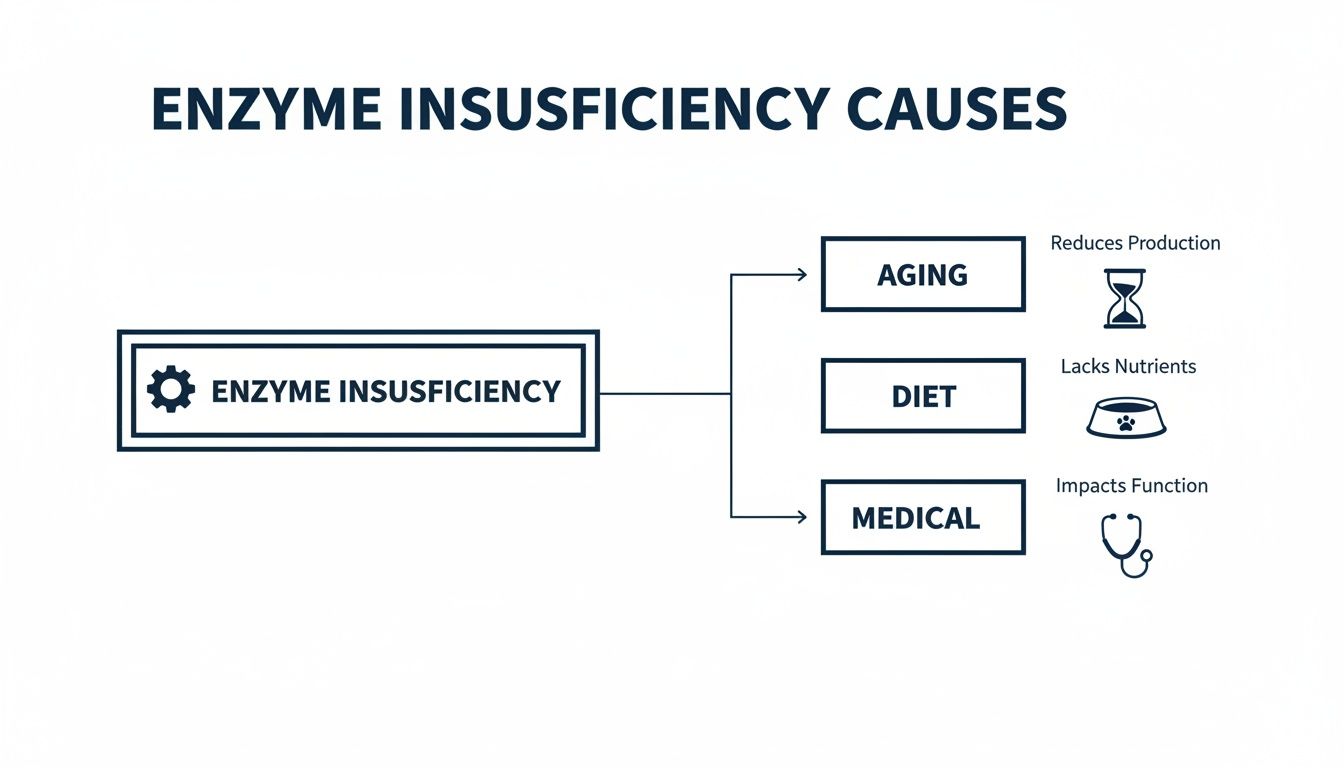
As you can see, things like the natural ageing process, a diet that's lacking key nutrients, or underlying health conditions can all mean your dog’s system could use a helping hand.
Comparing Plant-Based and Animal-Based Enzymes
To help you decide which type might suit your dog best, here’s a quick side-by-side comparison.
| Feature | Plant-Based Enzymes (e.g., Bromelain, Papain) | Animal-Based Enzymes (Pancreatin) |
|---|---|---|
| Source | Derived from fruits like pineapple and papaya. | Sourced from porcine or bovine pancreas. |
| Best For | Dogs with sensitive stomachs or food intolerances. | Severe enzyme deficiencies like EPI. |
| pH Range | Effective across a broader pH range. | Works best in the alkaline small intestine. |
| Allergy Risk | Generally lower risk of allergic reactions. | Can be a concern for dogs with pork/beef allergies. |
Ultimately, the best choice depends on your dog’s specific needs and any sensitivities they might have. For most general digestive support, a plant-based formula is an excellent starting point.
Look for a Broad-Spectrum Formula
For a supplement to offer complete support, it absolutely must be broad-spectrum. This just means it contains different types of enzymes to break down all the main components of your dog's food: proteins, carbs, and fats. It’s the only way to ensure their system has all the tools it needs for proper digestion and nutrient absorption.
When you're checking the label, make sure you see these three key players:
- Protease: This is for breaking down proteins into essential amino acids.
- Amylase: Needed to convert carbohydrates into simple sugars for energy.
- Lipase: Crucial for digesting fats and oils correctly.
A formula with this trio is non-negotiable. Without all three, you’re only solving part of the digestive puzzle.
The Power of Added Prebiotics and Probiotics
Here's where things get really clever. While enzymes are busy breaking down the food, prebiotics and probiotics get to work on improving the gut environment itself. Think of it as a team effort: the enzymes are the chefs, expertly preparing the food, while the prebiotics and probiotics are the gardeners, cultivating a healthy, thriving gut flora.
Prebiotics are essentially the "food" for the good bacteria in the gut, helping them flourish. Probiotics, on the other hand, are the good bacteria themselves. Putting them together creates a powerful synergy that fosters a balanced and resilient gut microbiome.
This powerful combination is fast becoming the gold standard for high-quality digestive supplements. The UK market is certainly reflecting this trend, holding a 4.5% share of the entire global dog intestinal health supplement industry. What’s more, 26% of new products launched in this space now feature clinically-backed blends of enzymes with prebiotics and probiotics, which have been shown to help with issues like gas and bloating.
If you'd like to learn more about how these ingredients support your dog's gut, our guide explaining the benefits of prebiotics and probiotics for dogs is a great place to start. And, of course, always stick with trusted, vet-approved brands that are upfront about their ingredients and manufacturing processes. It’s the best way to guarantee you’re giving your dog a safe, high-quality product that will deliver real results.
Safely Introducing Enzymes Into Your Dog's Diet
So, you've done your research and picked out a quality digestive enzyme supplement. Great! Now, let's talk about how to add it to your dog’s routine safely and effectively. The most important rule to remember is to always give enzymes with food.
Think of it like adding a tenderiser to a marinade—it needs to be mixed in with the meat to do its job. Enzymes are designed to break down the meal your dog is eating, so giving them on an empty stomach won't do any good. Mixing the supplement right into their food bowl ensures it’s ready to work the second that meal hits their stomach.
Start Low and Go Slow
Whenever you're introducing something new to your dog's diet, the golden rule is "start low and go slow." This gives their digestive system a chance to get used to the new addition without being overwhelmed. A sudden change, even a good one, can sometimes cause a bit of a temporary upset.
We always recommend starting with half the recommended dose for the first 3-5 days. This simple precaution helps avoid any initial tummy troubles, like a bit of gas or looser stools, as their gut gets accustomed to the extra help. If your dog handles the smaller amount just fine, you can then move up to the full dose.
This gentle introduction is the secret to a smooth transition. You’re allowing your dog’s body to adjust to the new digestive support, setting them up for long-term success without any hiccups.
Choosing the Right Form for Your Dog
Doggy digestive enzymes usually come in two main forms: powders and chews. Neither is better than the other; it really just boils down to what works best for you and your dog.
-
Powders: These are super easy to sprinkle over and mix into wet or raw food. If your dog eats dry kibble, just add a splash of water or some tasty bone broth to help the powder stick to the biscuits. Most are flavourless, so your dog won't even notice it's there.
-
Chews: For fussy eaters, chews can be a game-changer. Most dogs see them as a treat, which makes supplement time a breeze. They're also perfectly pre-measured, so there's no guesswork involved.
Pay attention to how your dog reacts. The goal is to find a method that’s completely stress-free for both of you. A happy, consistent routine is what will deliver the best results in the long run.
When It’s Time to Call Your Vet
While a good digestive enzyme supplement can be a fantastic tool in your dog's wellness kit, it’s vital to see it as a support system, not a substitute for professional veterinary advice. Knowing the difference between a minor tummy grumble and a genuine medical problem is a cornerstone of responsible dog ownership.
Supplements are often brilliant for tackling those ongoing, low-grade digestive hiccups—think mild gas, the odd loose stool, or just general digestive sluggishness. But some symptoms are more like flashing red lights, signalling that you need to pick up the phone and call your vet right away.
Critical Signs That Warrant a Vet Visit
These are not "wait and see" symptoms. If you spot any of the following, it’s a clear sign that something more serious could be going on and your dog needs urgent medical attention.
- Persistent or Severe Vomiting: Especially if it’s happening repeatedly over a few hours or a day.
- Blood in Stool or Vomit: Any trace of blood is an immediate red flag.
- Extreme Lethargy or Collapse: A sudden, dramatic drop in energy or an inability to get up is an emergency.
- Sudden, Unexplained Weight Loss: If the pounds are dropping off even though their appetite seems normal.
- Signs of Abdominal Pain: Look for a hunched-over posture, whining, or a painful reaction when you touch their belly.
Your vet is the only one who can run the right tests to rule out serious conditions like Exocrine Pancreatic Insufficiency (EPI), pancreatitis, or severe gut infections. They can give you a proper diagnosis and a complete treatment plan.
In some cases, they might recommend pairing enzyme supplements with other therapies. For example, understanding how probiotics can help with diarrhoea in dogs can be a useful part of a broader digestive health strategy. The golden rule is simple: always have a chat with your vet before introducing any new supplement to make sure it’s the right and safe move for your dog.
Got Questions? Let's Talk Digestive Enzymes
It's completely normal to have a few questions when you're thinking about adding a new supplement to your dog's routine. To help you feel more confident, I've put together some straightforward answers to the questions I hear most often from dog parents.
Can I Just Give My Dog My Own Digestive Supplement?
That’s a definite no-go. It might seem convenient, but human supplements are a bad idea for a few key reasons. Our digestive systems are wired differently, so the dosages are often completely wrong for a dog's size and needs.
The bigger danger, though, is the ingredients. Many human products contain additives like xylitol, an artificial sweetener that is incredibly poisonous to dogs. Stick with a formula made just for canines – it’s the only way to be sure it's both safe and effective.
How Long Until I See a Difference?
Every dog is different, so the timeline can vary. For immediate issues like gas, a bit of bloating, or less-than-perfect poo, you might notice an improvement in just a few days to a week.
But the real magic happens over time. For those deeper benefits – think better nutrient absorption leading to a shinier coat and more get-up-and-go – you'll want to give it several weeks of consistent, daily use. A little patience goes a long way here, as your dog’s system gets used to the extra help.
Think of it this way: digestive enzymes are a meal-by-meal support crew. The key to seeing real, lasting change in your dog's comfort and health is consistency.
Should I Worry About Side Effects?
When introduced properly, side effects are very rare. The best approach is always "low and slow." Some dogs might have a day or two of mild gas or slightly looser stools as their system adjusts, which is perfectly normal.
This is exactly why we suggest starting with half the recommended dose for the first few days. If you see any reactions that seem severe or don't clear up quickly, stop giving the supplement and have a chat with your vet.
Does Every Single Dog Need an Enzyme Supplement?
Not at all. A young, healthy dog thriving on a high-quality, fresh diet probably has all the enzymes they need.
However, supplements can be a real game-changer for certain dogs:
- Senior dogs often see a natural drop in their enzyme production as they age.
- Certain breeds are just more susceptible to digestive troubles.
- Dogs on a diet of highly processed kibble, which is stripped of natural enzymes during manufacturing.
At the end of the day, a digestive enzymes dog supplement is a fantastic tool for giving targeted gut support right where it’s needed.
Ready to give your dog the digestive boost they deserve? Take a look at the vet-approved, all-natural supplements from Tipaw and help your best mate feel fantastic from the inside out. Visit us at https://www.store-tipaw.com to find out more.


