


When you're looking for the best natural chews for your dog, the first question is usually, "what does 'natural' even mean?" At its core, it’s about treats made from single, recognisable ingredients—think beef tendon or a slice of sweet potato—that have been minimally processed. This way, you know your dog is getting a wholesome, easy-to-digest snack, not something packed with the artificial additives you often find in synthetic options.
What Makes a Dog Chew Truly Natural?
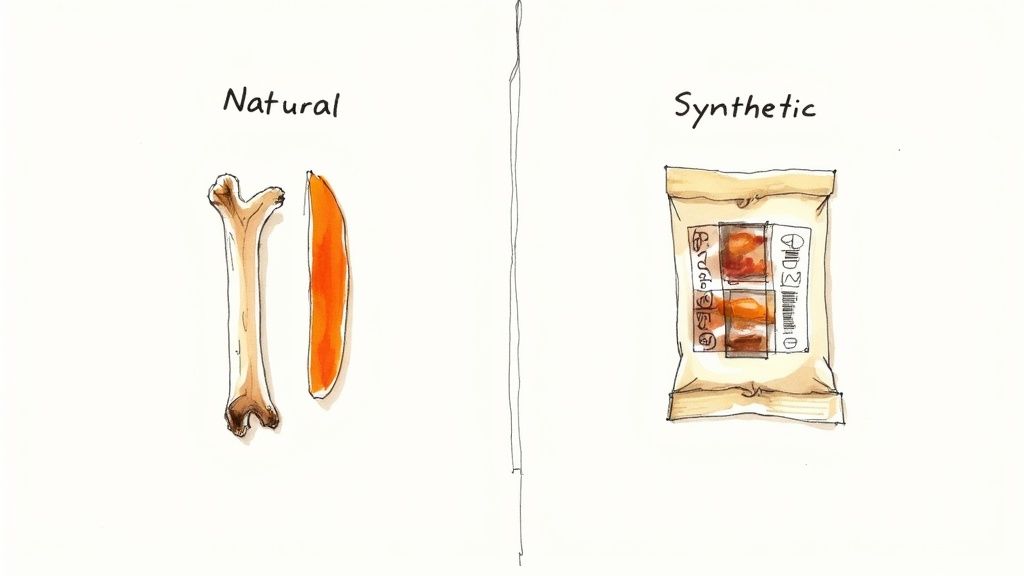
When you pick up a chew labelled 'natural', it should be as close to its original form as possible. It’s the same logic as choosing whole foods for yourself over highly processed snacks. These chews typically come from a single animal or plant source and are prepared simply, often just by air-drying or smoking to lock in their flavour and nutrients.
This simple approach draws a clear line between them and synthetic chews or chemically treated products like many rawhides. The idea is to give your dog a treat that satisfies their deep-seated instinct to chew while also adding something genuinely good to their diet.
The Shift Towards Healthier Choices
There’s a major trend shaping how UK pet parents shop, often called 'pet humanisation'. More and more, we see our dogs as proper family members who deserve the same high-quality, clearly sourced products we'd buy for ourselves. This change in thinking is driving a massive shift away from treats with mystery ingredients and long lists of chemical preservatives.
You can see this demand for quality in the market’s explosive growth. The UK pet treats market is projected to be worth USD 1.04 billion in 2025 and is on track to hit USD 1.38 billion by 2030. A huge part of this is the soaring demand for premium, organic, and functional treats, with natural dog chews leading the pack. If you're interested, you can explore more data on this trend and its impact on the UK pet food industry.
This isn't just about spending more; it reflects a fundamental change in how we see our pets. A recent survey found an astonishing 89% of UK owners now consider their pets to be like their children. This directly shapes what they buy, putting health and wellness right at the top of the list.
Why Natural Chews Are Gaining Popularity
So, why are so many of us on the hunt for the best natural dog chews? The appeal goes way beyond just being a simple treat. They genuinely contribute to a dog's overall well-being.
- Dental Health: The simple act of gnawing on a natural chew helps scrape away plaque and tartar buildup. This keeps gums healthier and breath a lot fresher.
- Mental Stimulation: Chewing is a deeply ingrained canine behaviour. It gives them something to focus on, which is fantastic for busting boredom, easing stress, and preventing destructive habits around the house.
- Nutritional Support: Unlike snacks full of empty calories, many natural chews are packed with valuable nutrients. They can provide a great source of protein, omega fatty acids, and essential minerals that complement your dog’s main meals.
Getting to grips with these basics is the first step towards making a great choice for your companion. By thinking about the ingredients, how the chew is made, and what your dog actually needs, you can confidently find an option that’s both safe and genuinely beneficial.
The Complete Guide to Natural Chew Types
Walking down the dog chew aisle can feel a bit like being in a gourmet deli – the choice is staggering, and it's hard to know where to start. To cut through the confusion, let’s simplify things. Natural dog chews generally fall into two camps: animal-based and plant-based. Each has its own unique texture, hardness, and set of benefits for your dog.
This explosion in variety isn't an accident. Here in the UK, dog owners are driving a huge demand for high-quality treats, with our canine companions accounting for a massive 68.4% market share of the pet treats and chews market in 2025. We're all looking for clean, ethically sourced ingredients – think air-dried venison or salmon skins – without any nasty artificial additives. It’s a trend you can learn more about by exploring the dynamics of the pet treats market.
Getting to grips with the different types is the first real step to finding the perfect chew for your dog.
Animal-Based Chews
Animal-based chews are a firm favourite for a reason. They’re high in protein and bursting with a rich, meaty flavour that taps right into a dog’s primal instincts. Most are single-ingredient treats, meaning you know exactly what you’re giving your companion.
Here are a few of the most popular choices you'll come across:
- Bully Sticks (Pizzle): A classic for a reason. Made from dried bull muscle, they’re easy to digest and loved by dogs of all sizes. They hit that sweet spot of being tough enough to last but not so hard they risk damaging teeth.
- Beef Tendons: These are wonderfully fibrous, and as your dog gets to work on them, those fibres act like a natural toothbrush, helping to scrub away plaque. They're a fantastic long-lasting option for most moderate chewers.
- Fish Skins: Usually made from cod or salmon, fish skins are a brilliant pick for dogs with allergies to common proteins like chicken or beef. They’re also packed with Omega-3 fatty acids for healthy skin and a glossy coat.
- Antlers: Naturally shed from deer or elk, antlers are the heavyweights of the chew world. They are incredibly durable and best reserved for powerful, experienced chewers. You'll want to keep a close eye on your dog with these to avoid any chance of tooth fractures.
- Yak Chews (Himalayan Chews): These are crafted from an ancient recipe using yak and cow milk. They're rock-hard, low in odour, and last for ages. As your dog gnaws, the chew slowly softens, providing a satisfying, long-term project for persistent chewers.
It's also worth remembering that some modern chews are designed to do more than just keep your dog busy. If you’re interested in how certain ingredients can boost your dog’s health, our guide on probiotic dog chews is a great place to learn how functional treats can support digestion while cleaning teeth.
To make things a little easier, here's a quick table to help you compare these options at a glance.
Quick Comparison of Popular Natural Dog Chews
| Chew Type | Source | Hardness Level | Best For | Key Benefit |
|---|---|---|---|---|
| Bully Sticks | Bull Muscle | Medium | All chewers | Highly digestible, universally loved |
| Beef Tendons | Beef Tendon | Medium-Hard | Moderate chewers | Excellent for dental cleaning |
| Fish Skins | Cod or Salmon Skin | Soft-Medium | Sensitive dogs, all ages | Rich in Omega-3s, low-allergen |
| Antlers | Shed Deer/Elk Antler | Very Hard | Power chewers | Extremely long-lasting durability |
| Yak Chews | Yak & Cow Milk | Very Hard | Persistent chewers | Low-odour, long-lasting |
This table gives you a starting point, but remember to always consider your own dog's unique chewing style and preferences.
Plant-Based Chews
What if your dog has a sensitive tummy, needs a low-fat diet, or you simply prefer a meat-free option? That’s where plant-based chews come in. They provide a fantastic alternative that still satisfies that deep-seated need to chew.
Think of these as the vegetarian options on the chew menu. They provide dental cleaning and mental stimulation without the higher fat and protein content of their animal-based counterparts, making them a great choice for weight management.
Some excellent plant-based choices include:
- Sweet Potato Chews: These are often just one ingredient: dehydrated sweet potato. They’re naturally low in fat, high in fibre, and full of vitamins. Their chewy, softer texture makes them a safe bet for puppies, senior dogs, and more gentle chewers.
- Olive Wood: If you have a dog who makes a beeline for furniture legs or sticks in the garden, this is your answer. Olive wood is a dense, natural wood that flakes away safely instead of splintering, offering a satisfying and much safer alternative.
- Coffee Wood: Very similar to olive wood, coffee wood is another super-dense wood that won't splinter into dangerous shards. It's a sustainable by-product of coffee farming and is completely free of caffeine, providing a safe, long-lasting chew.
By understanding the key differences between these animal- and plant-based chews, you’re already well on your way to picking something your dog will not only love but will also benefit from.
How to Choose the Perfect Chew for Your Dog
Picking the right natural chew for your dog isn't as simple as grabbing the most appealing bag off the shelf. It’s more like being a personal shopper for your best mate. You wouldn't buy a toddler a pair of steel-toed boots, and you wouldn't give a marathon runner flimsy slippers. In the same way, a tiny Chihuahua and a powerful German Shepherd have completely different needs when it comes to a good, satisfying chew.
To get this right, you need to put on your detective hat and look at three key clues that make up your dog's unique profile. By looking closely at their size, age, and personal chewing style, you can stop guessing and start making a choice that’s safe, satisfying, and perfectly suited to them every single time.
Consider Your Dog's Size and Breed
The most obvious place to start is with size. A fantastic chew for a large breed could be a serious choking hazard for a little one. On the flip side, a chew designed for a toy breed would disappear in seconds with a Great Dane, offering none of the lasting benefits.
- Small Breeds (e.g., Dachshund, Pug): Look for smaller, lighter chews that won’t overwhelm their jaws. Things like dried fish skins, smaller beef tendons, or thin bully sticks are great choices. Steer clear of anything too hard or big that could damage their teeth.
- Medium Breeds (e.g., Cocker Spaniel, Beagle): These dogs are pretty versatile. Standard-sized bully sticks, yak chews, and coffee wood are often a perfect fit, offering a good balance of durability and safety for their jaw strength.
- Large Breeds (e.g., Labrador, Rottweiler): Durability is everything here. You need something that can stand up to some serious jaw power without splintering into dangerous pieces. Think large antlers, thick beef knucklebones, or the biggest yak chews you can find to ensure they have a safe, long-lasting chew.
Match the Chew to Their Age and Life Stage
A dog's dental health and what they need from a chew change dramatically over their lifetime. A tough chew that’s perfect for a boisterous adult dog could be totally wrong for a teething puppy or a senior with more delicate teeth.
A puppy's jaws and baby teeth are still developing, so they need softer chews that soothe their sore gums without causing any damage. As they mature into adulthood, their jaws get stronger, and they can handle tougher, more durable options that present a real challenge.
Then, as they reach their golden years, their dental health can become fragile again. Teeth might be worn or more brittle, making softer, more forgiving chews the safest bet to avoid any painful fractures.
A simple rule of thumb is to prioritise gentleness for puppies, durability for adults, and safety for seniors. This approach ensures the chew provides enrichment without creating unnecessary risk at any life stage.
For a deeper dive into expert advice, our guide on vet-recommended dog chews offers additional insights that can help you make an informed choice.
Decode Their Chewing Style
Finally, and this might be the most important piece of the puzzle, you have to get to know your dog’s personal chewing style. This isn't really about their size; it's all about their personality and sheer determination.
-
The Gentle Nibbler: This dog likes to savour their treats. They’ll spend ages licking and gently gnawing, with no real drive to destroy the chew in one sitting. Softer options like sweet potato chews or fish skins are perfect for them.
-
The Moderate Chewer: This is your average dog. They love a good chew session and will work away at it steadily, but they aren’t on a mission to demolish it in record time. Bully sticks, beef tendons, and olive wood are fantastic matches here.
-
The Power Chewer: This dog has one goal: conquer and destroy. They have incredibly strong jaws and can make short work of most standard chews. For these dogs, you need the toughest options available, like antlers or very dense yak chews—and always with close supervision.
To help simplify your decision, the diagram below gives you a quick breakdown of animal-based chews, which are generally higher in protein, versus plant-based ones, which are often lower in fat.
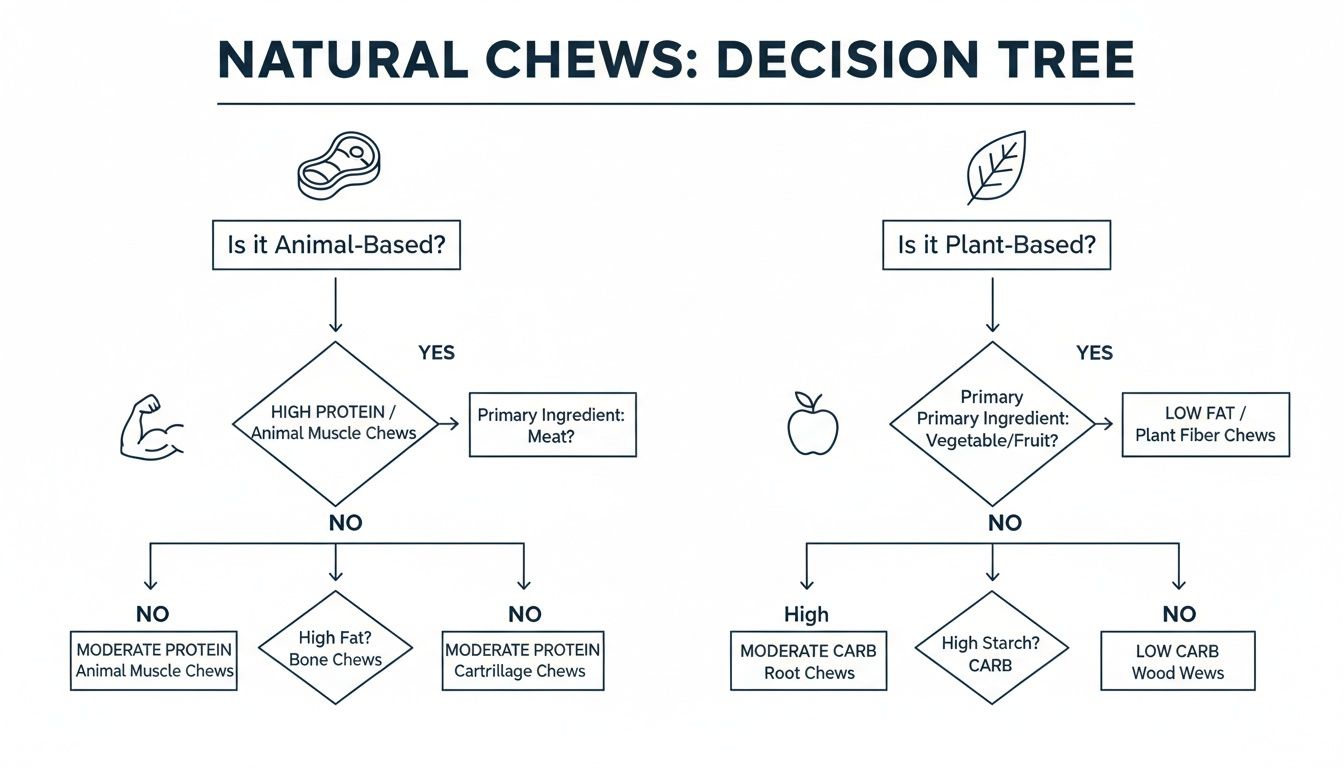
This visual guide can help you quickly match your dog's dietary needs with the right kind of natural chew, whether they need more protein for an active lifestyle or a lower-fat option for weight management.
Health and Dietary Considerations
Beyond those three main factors, don’t forget to consider your dog’s overall health. If your dog is watching their weight, it’s best to stick to low-fat, plant-based options like vegetable chews. For dogs with common protein allergies, trying a novel protein like fish skin can be a brilliant solution.
By layering all these considerations—size, age, chew style, and health—you build a complete picture of your dog. And with that picture in mind, finding the "perfect" chew becomes clear and simple.
To make it even easier, here's a handy table to guide your choices.
Chew Recommendations by Dog Profile
| Dog Profile | Chew Style | Recommended Natural Chews | Chews to Approach with Caution |
|---|---|---|---|
| Small Breed Puppy | Gentle, Teething | Soft rubber chews, thin bully sticks, softened vegetable chews | Hard plastics, cooked bones, anything large or too tough |
| Large Breed Adult | Power Chewer | Large antlers, XL yak chews, coffee wood, tough beef bones | Small or brittle chews, rawhide, chews that can be swallowed whole |
| Senior Dog | Gentle Nibbler | Fish skins, soft dental chews, sweet potato slices | Antlers, very hard bones, dense yak chews that could crack teeth |
| Overweight Adult | Moderate Chewer | Vegetable-based chews, coffee wood, fish skins, lean protein like turkey tendons | High-fat chews like pig ears, marrow bones, cheese-based chews |
| Dog with Allergies | Varies | Novel proteins (e.g., venison, fish), single-ingredient plant-based chews | Common allergens like beef or chicken, chews with multiple unknown ingredients |
This table acts as a great starting point, but always remember that your dog is an individual. The best approach is to observe them, see what they enjoy, and always prioritise their safety above all else.
Weighing the Benefits Against Potential Risks
Choosing the right natural chew for your dog feels a bit like a balancing act, doesn't it? On one hand, they offer some brilliant perks for your dog's health and happiness. On the other, you need to know what to look out for to keep them safe. A smart approach means understanding both sides of the coin, so every chew session is a good one.
Let’s start with the good stuff. The reason so many of us give our dogs natural chews is because they’re far more than just a tasty treat. They're genuinely functional, turning a simple snack into an activity that boosts your dog’s well-being.
The Major Benefits of Natural Chews
The positive impact of a great chew usually shines through in three key areas of a dog's life. From their sparkling teeth to the contented sigh they let out after a good session, the advantages are pretty clear.
1. Superior Dental Health
Think of a good chew as nature's toothbrush. When your dog gets to work on a fibrous beef tendon or a rough bit of fish skin, the chewing action literally scrapes away plaque and tartar. This is huge for preventing periodontal disease, which is incredibly common in dogs, and it helps keep their breath much fresher too.
Good dental hygiene is a big deal in the pet world. In fact, dental chews are expected to make up a whopping 36.9% of all pet treats by 2025. It’s no wonder when you hear that some studies show they can slash tartar by as much as 70% with regular use. This focus on health is a key reason the UK Pet Treats Market is projected to hit USD 1.38 billion by 2030, with natural, healthy options leading the way. You can discover more insights about the UK pet treat market to see how our choices as owners are shaping better products.
2. Essential Mental Stimulation
We’ve all seen it: a bored dog is a recipe for mischief. Chewing is a fantastic, natural outlet for their instincts. It gives them a focused job to do, which can seriously cut down on boredom and even anxiety. It's like handing them a satisfying puzzle that keeps their mind engaged and away from your favourite shoes.
3. Added Nutritional Value
Unlike plastic or synthetic toys, the best natural dog chews are more than just empty calories. They can be a fantastic source of high-quality protein for muscle support, or even provide beneficial nutrients like the omega-3 fatty acids found in fish skins, which are brilliant for a healthy coat and skin.
Chewing isn’t just a habit; it’s a biological need. Providing a safe and appropriate outlet for this instinct is one of the most effective ways to support your dog’s mental and emotional health, promoting relaxation and contentment.
Understanding and Mitigating Potential Risks
While the benefits are fantastic, being a responsible owner means being honest about the potential hazards. The idea isn't to scare you off chews, but to give you the knowledge to sidestep problems before they even start.
Choking Hazards
This is the number one worry for most dog owners, and for good reason. As your dog works a chew down, it can get small enough to be swallowed whole. This poses a serious choking risk or could cause an internal blockage.
- Prevention Tip: Simple—always watch your dog when they have a chew. I use the 'thumb rule': if the chew is small enough to fit entirely in your dog's mouth or is shorter than your thumb, it’s time to swap it for a new one.
Dental Fractures
Some natural options, like antlers or very hard-baked bones, can be incredibly tough. For an enthusiastic, powerful chewer, these can sometimes be too hard and lead to a painful (and expensive) cracked tooth.
- Prevention Tip: Try the 'thumbnail test'. If you can't press your thumbnail into the chew and make a slight indent, it might be too hard for your dog. For strong chewers, consider something a little more forgiving, like a good-quality bully stick or coffee wood.
Digestive Upset
Jumping in with a new, rich chew can sometimes cause a bit of a tummy upset, especially for dogs with sensitive stomachs. A sudden hit of high-protein or high-fat chew might lead to diarrhoea or vomiting.
- Prevention Tip: Go slow. When you introduce a new type of chew, let your dog have it for just 10-15 minutes at first. See how their system handles it. If you notice any trouble, it's a clear sign to find a different option. If tummy troubles are a recurring theme, it’s always a good idea to support their gut health. You can learn more in our guide on how probiotics can help with dog diarrhoea.
By keeping both the rewards and the risks in mind, you can choose natural dog chews with confidence and make them a safe, happy, and healthy part of your dog's life.
The Golden Rules of Safe Chewing
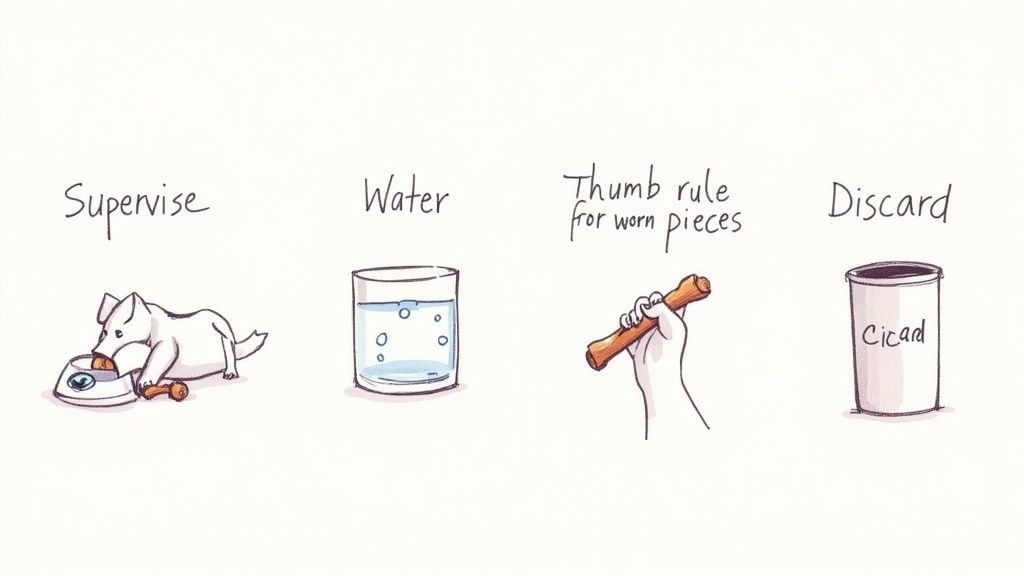
Even the safest natural chew needs one crucial ingredient you can't buy: your supervision. Just because something is 'natural' doesn't mean it's completely risk-free. Think of yourself as the lifeguard on duty—your watchful eye is what keeps chew time fun and safe.
This doesn't mean you need to stare at your dog without blinking. It's simply about being present and aware in the same room, ready to step in if something looks off. This simple habit is hands down the best way to prevent accidents and keep chewing a positive experience for everyone.
How to Introduce a New Chew
When you bring home a new type of natural chew, the key is to start slow. Treat it like a 'test drive'. A rich, novel protein can sometimes be a bit much for a dog's tummy all at once, so a gentle introduction is always the smart move.
For the first couple of times, let them have it for just 10-15 minutes. This is long enough to see how their digestive system handles it and how they tackle the new texture. If everything seems fine after a few sessions, you can slowly start letting them chew for longer.
Knowing When to Take It Away
Learning to spot when a chew is 'finished' is one of the most important skills you can have. As your dog works on it, the chew naturally gets smaller, and that's when it can go from a safe treat to a serious choking hazard.
A great little trick I always recommend is the 'Thumb Rule'.
Hold what’s left of the chew next to your thumb. Is it shorter than your thumb? If so, it’s now small enough for your dog to potentially swallow whole. It’s no longer a chew; it’s a risk. Time to say goodbye and pop it in the bin.
This simple check takes all the guesswork out of the equation. It's always, always better to be overcautious and take a chew away a bit early than to risk an emergency vet visit.
Spotting Signs of Trouble
Most chew sessions will go off without a hitch, but it pays to know what trouble looks like. Recognising the signs early means you can act fast.
Keep an eye (and an ear) out for these warning signals while your dog is chewing:
- Gagging or Retching: This is the most common sign that a piece is stuck somewhere it shouldn't be.
- Pawing at the Mouth: If your dog is frantically scraping at their face, something is definitely wrong inside their mouth.
- Difficulty Breathing: Listen for any wheezing, coughing, or laboured breaths. This is an emergency.
- Excessive Drooling: A bit of drool is normal, but a sudden, heavy flow can signal distress.
Being familiar with these signs helps you stay calm and react appropriately. It’s also a good idea to always have a bowl of fresh water nearby. Sometimes, a quick drink is all that's needed to help wash down a small, awkwardly-shaped piece. In the end, nothing beats you being there to keep them safe.
Your Questions About Natural Chews Answered
Even with all the information in the world, it's totally normal to have a few lingering questions when picking out the right chew for your dog. Getting into the nitty-gritty details is what being a great dog owner is all about. This section is here to tackle those common "what ifs" and "how oftens" head-on, giving you clear, straightforward answers to help you feel confident in your choice.
Think of this as our little fireside chat. We'll clear up any confusion around how often to give a chew, whether super-hard options are truly safe, and what really separates a natural chew from rawhide. Let’s get you fully equipped to make the best decision for your dog.
How Often Should I Give My Dog a Natural Chew?
This is easily the most common question I hear, and the honest answer is: it depends. There’s no magic number or one-size-fits-all schedule. The right frequency is a careful balance between the chew’s calorie count, your dog's diet, their size, and just how enthusiastically they chew.
A brilliant rule of thumb that vets often share is the 10% rule. This simply means that treats, including chews, shouldn't make up more than 10% of your dog's daily calorie intake. It’s a great way to prevent piling on extra pounds and ensures their main meals are still doing the heavy lifting nutritionally.
To find your rhythm, try offering a chew two or three times a week and just watch your dog. Keep an eye on their digestion and their weight. If everything seems happy and healthy, you’ve probably hit the sweet spot. Of course, for a plan that's perfectly tailored to your dog's specific needs, nothing beats a quick chat with your vet.
Are Hard Chews like Antlers Always Safe?
Antlers and other extremely hard chews are incredibly popular for a reason—they last ages! But "durable" doesn't automatically mean "safe" for every dog. While they can be a great option for some, they do carry a real risk of fracturing a tooth, especially for dogs who chew with intense, focused power or those who already have sensitive teeth.
There’s a handy trick you can use to check if a chew is too hard: the 'thumbnail test'.
Press your thumbnail firmly into the chew. If you can't make even a slight dent, it’s likely too hard and could pose a risk to your dog’s teeth.
For those true power chewers, it's often safer to look for alternatives that are tough but have a bit more give. Things like coffee wood, which flakes away safely instead of splintering, or high-quality, durable rubber toys can satisfy that urge to gnaw without putting their pearly whites in jeopardy. The goal is to challenge their jaws, not to risk a painful and expensive trip to the dentist.
What Is the Difference Between Rawhide and Natural Chews?
Understanding the line between rawhide and a genuine natural chew is one of the most important things you can learn for your dog's safety. They might look a bit similar on the shelf, but where they come from and how they're made are worlds apart.
-
Rawhide: This is essentially a byproduct of the leather industry, made from the inner hide of cows or horses. To turn it into a dog chew, it’s often treated with a cocktail of chemicals to clean and preserve it. Because of this, it’s notoriously difficult for dogs to digest.
-
Natural Chews: On the other hand, the best natural chews are what they say they are—single-ingredient items from animal or plant sources. We're talking about things like air-dried fish skins, beef tendons, or yak milk. The processing is minimal, which means they hold onto their natural flavour and nutrients.
The real difference comes down to digestibility and nutrition. A natural chew is food; it's meant to be broken down and digested, often providing a boost of protein or other nutrients. Rawhide offers little to no nutritional value and can swell in the stomach, creating a dangerous risk of blockage if a dog swallows a large piece.
For these reasons, a minimally processed, single-ingredient natural chew is, without a doubt, the healthier and safer choice.
What Should I Do If My Dog Swallows a Piece of a Chew?
First things first: don't panic. Dogs swallow small bits of chews all the time, and most of the time, these little pieces pass straight through without any trouble at all. This is especially true for highly digestible chews like fish skins or bully sticks.
The real concern is when a dog gulps down a larger chunk that's big enough to cause a blockage in their throat, stomach, or intestines. This is where you need to put your detective hat on and become a diligent observer for the next day or two.
Keep a close eye out for any of these warning signs of an obstruction:
- Vomiting, or trying to vomit without bringing anything up
- Sudden lethargy or a total lack of energy
- Refusing to eat or drink
- Straining to go to the toilet
- A painful or sensitive tummy when you touch it
If you spot any of these signs, or if you know for a fact the piece they swallowed was big and indigestible, it’s time to call your vet immediately. Don't wait. They will give you the best advice and let you know if an examination is needed.
At Tipaw, we believe informed choices lead to healthier, happier dogs. Our functional, natural chews are crafted to support your dog’s well-being from the inside out, addressing everything from joint health to digestion with 100% natural ingredients. Explore our vet-approved solutions and find the perfect chew to complement your dog's health routine.


